

Two setups consistently catch Pacific albacore: high-speed cedar-plug and feather trolling with 30–50 lb main line and a short heavy topshot, and fly-trolling with 10–12 wt rods, large-arbor reels, and aggressive Clouser or Deceiver patterns. Both are proven, both are copyable, and this albacore tuna gear list gives you the exact specs to load the boat today.
Quick-copy checklist (screenshot this):
- Trolling: 7’–8’ medium-heavy rod, conventional reel (300+ yds capacity), 30–50 lb mono or 50–65 lb braid, 50 lb fluoro topshot, cedar plugs/Nomad Madmacs, Owner ST-66 trebles, Owner Ultrawire size 10 split rings, Rosco barrel swivels
- Fly: 10–12 wt fast-action rod, large-arbor reel (300+ yds backing), intermediate or fast-sinking line, 40–60 lb fluorocarbon tippet, large Clouser/Deceiver patterns in white, chartreuse, or sardine silver
- Both: VHF radio, EPIRB, lifejackets, gaff, bleed kit, ice chest, sun protection, layers
Trolling vs. fly-trolling: Run the conventional spread when you have a full crew, mixed lure sizes, and fish that are holding 20–60 feet down. Switch to fly-trolling when albacore are surface blitzing, the school is tight, or you want the fight of your life on a 12 wt. Fly-trolling shines on smaller boats with two to three anglers who can manage lines quickly. Conventional trolling covers more water and hooks more fish per hour when the school is scattered.
Table of Contents
- When and where to find albacore on the West Coast
- Complete packable gear checklist for your albacore trip
- Trolling rods, reels, and line classes that get the job done
- Lures and plugs: what to run, when to run them, and how to rig them right
- Spread design and deployment: how to set up 3–6 rods for maximum coverage
- Terminal tackle: exact specs and clean rigging steps
- Fly-fishing for albacore: rods, reels, lines, and deployment
- Hookset, fighting technique, drag settings, and landing
- Boat safety essentials and what to pack for a 3-day trip
- Copy-and-paste sample setups by method and fish size
- Highclasstackleco recommended components and how to swap them in
- What the best albacore anglers actually prioritize
- What most albacore gear guides get wrong
- Highclasstackleco has the terminal gear to build every rig on this list
- Sources
When and where to find albacore on the West Coast
Pacific albacore run the U.S. West Coast during the summer and fall months, with peak action typically in late summer off California, Oregon, and Washington. Fish generally are of a size typical for sport fishing during this period, making them a legitimate big-game target on mid-weight gear. The bite pushes north as the season progresses, so Oregon and Washington anglers often see their best action in late August and September while California boats can start connecting in early July.
Water temperature is your most reliable locator. Albacore follow warm-water tongues pushed offshore by seasonal upwelling patterns, typically hunting in surface temps between 60°F and 68°F. Watch for sharp temperature breaks and color changes where blue offshore water meets greener coastal water. That edge is where bait concentrates and albacore hunt.
Key water and forage indicators to watch:
- SST breaks of 2°F or more over a short distance
- Bait slicks, floating kelp paddies, or foam lines on the surface
- Bird activity, especially diving birds working bait balls
- Porpoise or other marine mammals feeding at the surface
- Floating debris lines that concentrate bait
Pro Tip: After your first hookup, keep trolling. Experienced Pacific captains continue trolling after the first strike to hook multiple fish in the spread simultaneously, then throttle down and start chumming to hold the school for casting and jigging. Chasing one fish and stopping kills the opportunity.
Complete packable gear checklist for your albacore trip
Pack this list for a 1–3 day offshore trip. The trolling and fly sections are separate so you can grab only what applies.
Trolling rig checklist:
- 2–4 trolling rods (7’–8’ medium-heavy to heavy, roller-tip preferred)
- Conventional reels sized for 300+ yards of 50–65 lb braid
- 50 lb fluorocarbon topshot (50–100 yards per reel)
- Cedar plugs (5"–6"), Nomad Madmac 160/200/240, feather jigs, spoons
- Owner ST-66 treble hooks (3/0–5/0 depending on lure size)
- Owner Ultrawire split rings, size 10
- Rosco barrel swivels, 300 lb rated
- Fluorocarbon bite leaders, 80–150 lb, pre-rigged in 6"–18" lengths
- Crimping tool and sleeves (matched to leader diameter)
- Snap swivels and heavy-duty clips
- Extra lures (doubles of your top producers)
Fly-trolling rig checklist:
- 1–2 fly rods, 10–12 wt fast-action
- Large-arbor reels (Hatch-class or equivalent) with 300+ yards of 30 lb backing
- Intermediate or fast-sinking fly lines
- 40–60 lb fluorocarbon tippet, 4–6 foot leaders
- Large Clouser Minnows and Deceivers (white/chartreuse, sardine silver, 4"–6")
- Planer boards or downrigger clips for trolled fly deployment
Shared boat and safety items:
- VHF radio (handheld backup recommended)
- EPIRB or PLB
- Lifejackets for every person on board
- Flares (current and in-date)
- First-aid kit
- Kill switch
- Gaff (6’–8’ preferred for albacore)
- Bleed knife and bleed bucket
- Ice chest or RSW system with enough capacity for your target catch
- Sun protection: SPF 50+ sunscreen, sun gloves, neck gaiter
- Layers for cold mornings and night runs (offshore temps drop fast)
- Food, water, and seasickness medication for multi-day trips
3-day trip additions:
- Double your terminal tackle supply (leaders, split rings, hooks, swivels)
- Spare rod tip and guide repair kit
- Extra spool of main line
- Battery-powered aerator or live-bait tank if running live anchovies
- Fuel plan with reserve margin for extended offshore runs
Trolling rods, reels, and line classes that get the job done
The right trolling outfit for albacore balances backbone for fast runs with enough sensitivity to feel the lure working at speed. A 7-foot medium-heavy conventional rod with a roller tip handles most situations. Go to 8 feet with a bent butt when you’re running heavier lures like the Nomad Madmac 240 or large feather jigs, since the extra length keeps lines separated in a multi-rod spread.
Rod recommendations:
- 7’–7’6" medium-heavy, straight butt: standard cedar plug and feather jig work
- 7’6"–8’ heavy, bent butt: large plugs, Madmac 200/240, heavy spreader bars
- Roller tips strongly preferred to reduce line wear at high trolling speeds
Reel recommendations:
Conventional lever-drag reels are commonly used for albacore trolling for their smooth drag capabilities. You need smooth, consistent drag pressure during long screaming runs, and lever-drag systems deliver that without the angler having to manage a star-drag under pressure. The Penn International 50 class is a proven workhorse for this fishery. The Avet 6.3 custom-style reels offer a lighter option with strong drag systems for anglers who want less weight. The Shimano TLD-30 sits in the mid-size range and works well for standard 30–50 lb class trolling with cedar plugs and feather jigs.
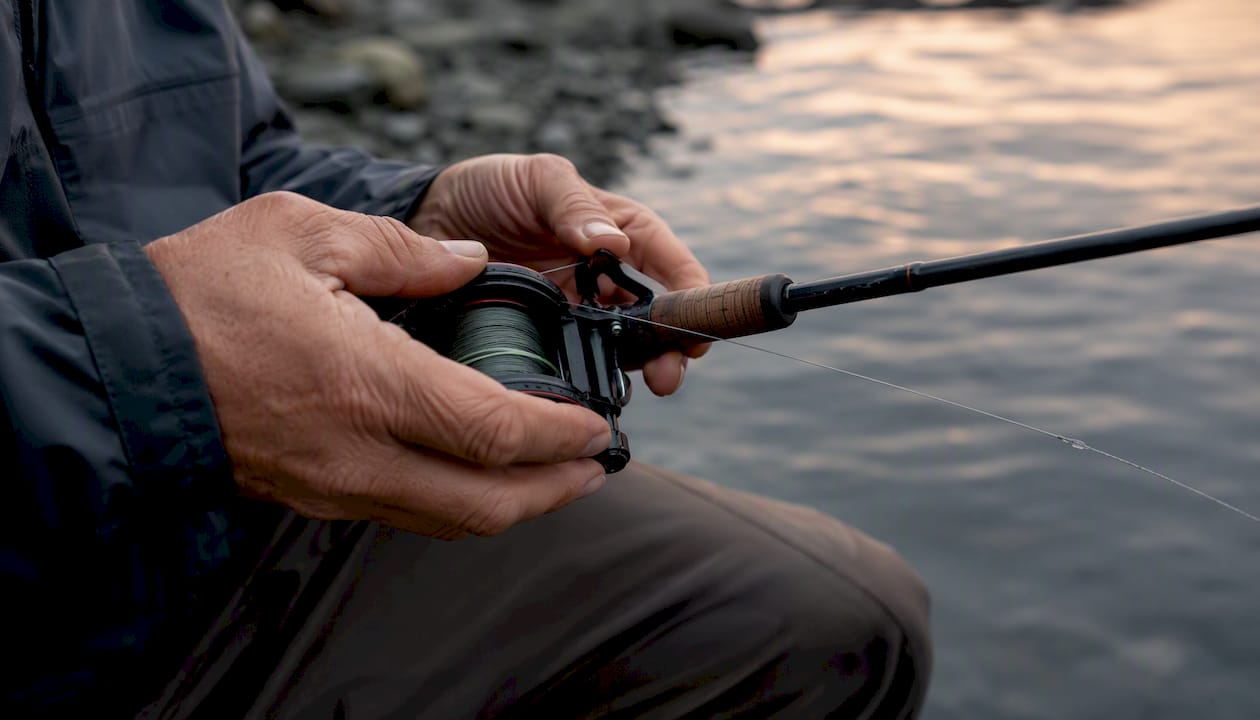
Spool capacity matters more than most anglers realize. Albacore run hard and fast. You need sufficient main line capacity, recommend a minimum of several hundred yards, with more for targeting larger fish or running heavier braid.
Line class recommendations:
| Lure / Method | Main Line | Topshot | Expected Fish Size | Trolling Speed |
|---|---|---|---|---|
| Cedar plug (5"–6") | 30-pound class monofilament | 50 lb fluoro (50 yds) | 15–25 lb | 6–8 knots |
| Feather jig / small spoon | 50–65 lb braid | 40–50 lb mono (30 yds) | 15–30 lb | 5–7 knots |
| Nomad Madmac 160/200 | heavier braided line | 60–80 lb mono (30 yds) | 20–35 lb | 7–10 knots |
| Nomad Madmac 240 / large plug | very heavy braided line | heavy monofilament topshot | 30–40+ lb | 8–12 knots |
High-speed trolling for large tuna typically uses very heavy braided line with a short mono topshot to absorb shock while keeping spool capacity high. For standard albacore work, 50–65 lb braid with a 40–50 lb fluorocarbon topshot covers most situations per Island Fisherman Magazine’s tackle charts.
Lures and plugs: what to run, when to run them, and how to rig them right
Cedar plugs are the backbone of West Coast albacore trolling. A 6-inch cedar plug on 30-pound class monofilament with a 50 lb fluorocarbon topshot, trolled at 6–8 knots, is one of the most time-tested setups in the Pacific fishery. Simple, durable, and deadly when fish are feeding on the surface.
The Nomad Madmac earns its reputation at higher speeds. The 160 mm version suits 20–30 lb fish and runs clean at 8–10 knots. The 200 mm handles bigger fish and rougher water. The 240 mm is a big-fish weapon, best run on heavy braid with a short topshot when you’re targeting 35 lb and up. Rapala Magnum Xtreme and Marauder-style plugs fill a similar role and have long track records in the Pacific albacore fishery.
Lure selection by condition:
- Cedar plugs: calm to moderate seas, fish feeding near surface, 6–8 knots
- Nomad Madmac 160/200: active schools, moderate to rough conditions, 7–10 knots
- Feather jigs: slower trolling speeds (5–7 knots), fish holding slightly deeper
- Spoons: when fish are keyed on small baitfish, slower presentations
- Daisy-chain lures: surface commotion to draw fish up from depth
- Vertical metal jigs and knife jigs: when albacore are holding deep and not responding to trolled lures
Rigging modifications that actually matter:
Stock rear hooks on most high-speed plugs are the weakest link in the system. Replace them with high-quality strong treble hooks in appropriate sizes for the lure. Pair those with high-quality split rings sized to the lure. to replace the factory rings, which can open under the load of a hard-running albacore. This single upgrade prevents the most common failure point in high-speed plug fishing.
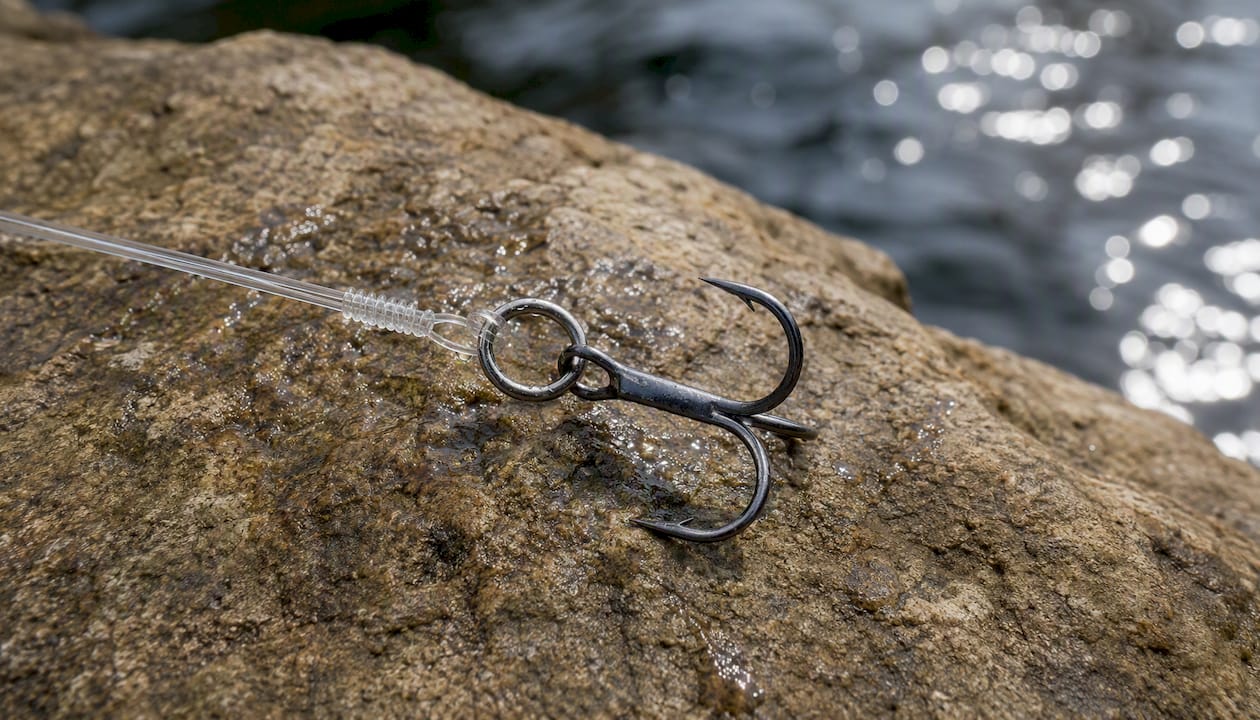
Pro Tip: Keep terminal rigging clean. Short, direct connections between lure and leader outperform complex multi-swivel rigs. Every extra piece of hardware near the lure adds flash, bulk, and potential failure points. Albacore have sharp eyes, and a clean rig gets more bites.
For leader connections, a single quality Rosco barrel swivel rated at 300 lb or better is all you need between your topshot and bite leader. Crimp it clean, test it before launch, and leave the extra hardware in the tackle box.
Spread design and deployment: how to set up 3–6 rods for maximum coverage
A well-set spread is the difference between one fish and a full cooler. The standard Pacific albacore spread runs 4–6 lines with a mix of lure types at staggered distances. Newport-area captains typically run this spread at 5–8 knots with cedar plugs, feather jigs, or Rapala-style lures.
3-rod spread (small boat, 2–3 anglers):
- Short rigger (20–30 feet back): cedar plug or small Madmac
- Long rigger (50–60 feet back): feather jig or spoon
- Center flat line (40–50 feet back): daisy chain or spreader bar
6-rod spread (larger boat, 4–6 anglers):
- Two short riggers (20–30 feet): matching cedar plugs or Madmac 160s
- Two long riggers (60–80 feet): feather jigs or Madmac 200s
- Two flat lines (40–50 feet): daisy chains or spreader bars with birds
Birds and spreader bars: A spreader bird on the surface ahead of a daisy chain creates commotion that pulls fish up from depth. Run the bird 10–15 feet ahead of the first lure in the chain. Tuna spreader bars work the same way on a larger scale, creating a wide bait school illusion. Deploy them on the flat lines where they have room to work without tangling the rigger lines.
Lure speed and depth reference:
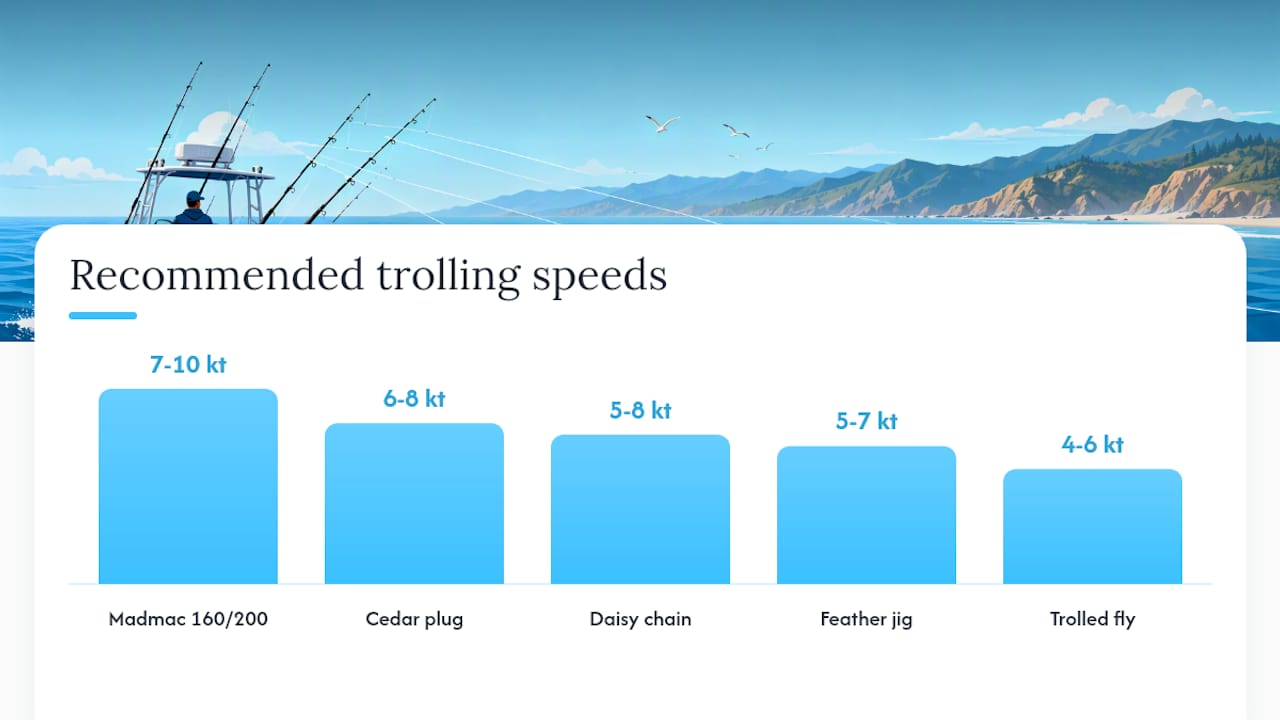
| Lure Type | Speed Range (knots) | Typical Depth | Notes |
|---|---|---|---|
| Cedar plug | 6–8 | Surface | Classic West Coast albacore producer |
| Feather jig | 5–7 | 0–10 ft | Effective in calmer conditions |
| Nomad Madmac 160/200 | 7–10 | Surface to 5 ft | Runs at higher speeds without blowing out |
| Daisy chain | 5–8 | Surface | Creates commotion, draws fish up |
| Spreader bar | 5–7 | Surface | Wide bait-school profile |
| Trolled fly | 4–6 | Surface | Deploy on backlines or planer boards |
After the first hookup, keep the throttle steady. Experienced captains continue trolling to hook multiple fish before slowing to chum and hold the school. Stopping immediately after one bite often breaks contact with the school entirely.
Terminal tackle: exact specs and clean rigging steps
Clean rigging is non-negotiable for albacore. These fish have excellent vision and will refuse a rig that looks wrong. The goal is maximum strength with minimum hardware.
Leader material:
Fluorocarbon is the standard for albacore bite leaders because it disappears in blue water. Use 80–150 lb fluorocarbon for bite leaders on large plugs and Madmacs. Drop to 40–60 lb for cedar plugs and feather jigs where a lighter, more natural presentation matters. Hard mono works as an alternative when fluorocarbon is unavailable, but fluoro is the first choice for clear offshore water. Pacific captains consistently recommend fluorocarbon leaders and avoiding bulky terminal hardware near the lure.
Step-by-step rigging process:
- Cut your bite leader to length: 6–18 inches for large plugs, 12–24 inches for cedar plugs and feather jigs.
- Thread the leader through the lure’s rear hook hanger or attach directly to the split ring.
- Attach the Owner Ultrawire size 10 split ring to the lure’s rear hanger using split-ring pliers.
- Connect the Owner ST-66 treble (correct size for lure) to the split ring.
- At the leader’s upper end, thread through a double-sleeve crimp and form a loop.
- Seat the Rosco barrel swivel in the loop, close the crimp with a quality crimping tool, and test with firm hand pressure.
- Connect the swivel to your topshot with a loop-to-loop or clinch knot rated for your line class.
- Before launch: pull every crimp hard by hand, check every split ring for gaps, and run a thumbnail across every hook point.
Leader length guide:
- Madmac 240 / large plug: 6–10 inch bite leader, 100–150 lb fluoro
- Madmac 160/200: 8–12 inch bite leader, 80–100 lb fluoro
- Cedar plug (6"): 12–18 inch bite leader, 50–60 lb fluoro
- Feather jig: 18–24 inch bite leader, 40–50 lb fluoro
For crimping and rigging technique details, proper sleeve selection and tool pressure are what separate a crimp that holds at 100 lb and one that fails at 60 lb. Use sleeves matched to your leader diameter, never a size up or down.
Fly-fishing for albacore: rods, reels, lines, and deployment
Fly-trolling for albacore is one of the most electric experiences in West Coast saltwater fishing. When a school is blitzing the surface and you drop a big Deceiver into the melee on a 12 wt, the hookup is instant and violent. The gear needs to be up to the task.
Rod and reel specs:
Fly-fishing albacore demands 10–12 wt fast-action rods with serious backbone. A 10 wt handles fish up to 25 lb in moderate conditions. A 12 wt is the better call when fish are averaging 30 lb or when you’re trolling large flies at speed. The Echo BadAss Glass 12 wt or any comparable fast-action 12 wt blank with a fighting butt gives you the leverage you need.
Reels must be large-arbor with a sealed drag system and 300+ yards of 30 lb backing. Hatch fly reels are the benchmark for this fishery: sealed, smooth, and built to handle the heat of a 30 lb albacore burning 200 yards of backing in under 30 seconds. Whatever reel you choose, test the drag before you leave the dock.
Line and leader setup:
- Intermediate sinking line: best for surface to 5-foot presentations, most versatile
- Fast-sinking line: use when fish are holding 10–20 feet down and won’t come up
- Leader: 4–6 feet of 40–60 lb fluorocarbon straight to the fly
- No complex tapered leaders needed for trolled flies
Fly patterns and retrieves:
- Large Clouser Minnows (4"–6", white/chartreuse or white/blue): heavy eyes get the fly down fast
- Deceivers (4"–6", white/chartreuse, sardine silver, or all-white): surface and subsurface
- Large Stripper flies in sardine/silver profiles: match the local bait when anchovies are present
- Strip retrieve: fast and aggressive, 12–18 inch strips with minimal pause
Deployment methods:
- Straight backline: simplest, run the fly 30–50 feet behind the boat at 4–6 knots
- Planer board: gets the fly off to the side and away from engine noise
- Downrigger clip: puts the fly at a controlled depth for fish holding below the surface
Fly-trolling outperforms conventional trolling during surface blitzes and when fish are tight and aggressive. On a small boat with two anglers, you can manage two fly lines and two conventional rods simultaneously, covering both surface and subsurface zones.
Hookset, fighting technique, drag settings, and landing
The hookup happens fast at trolling speed. At 7 knots, the fish sets the hook itself. Your job is to get to the rod, clear it from the holder, and start managing the run.
Drag settings:
On 50 lb braid, that’s 12–15 lb of drag pressure. Test it with a hand scale. Never set drag by feel alone. Albacore run hard and fast, and a drag set too tight on the strike will pop the line before you touch the rod.
Fighting technique:
- Keep the rod tip up and maintain constant pressure throughout the run.
- Use the boat to help manage the fight: turn the bow toward the fish to reduce line angle and pressure.
- Never give slack. A popped hook almost always comes from a moment of slack during the fight.
- When the fish circles back toward the boat, reel fast to keep up.
Landing and handling:
Gaff albacore cleanly through the head or shoulder for fish you’re keeping. A 6–8 foot gaff gives you the reach to land fish without leaning dangerously over the gunwale. For release, use a lip grip or wet gloves and keep the fish in the water as long as possible.
For fish you’re keeping, bleed immediately by cutting the gill arch and placing the fish headfirst in a bucket of seawater for 60–90 seconds. Then ice immediately. Albacore that are bled and iced within minutes of landing produce dramatically better table quality than fish that sit on deck.
Crew safety checklist during a hookup:
- Clear loose gear from the deck before the fight starts.
- Designate one person to manage the gaff.
- Keep non-fighting crew away from the stern and out of the line path.
- Wear gloves when handling leaders and wire.
- Call out “fish on” loudly so the captain can manage boat position.
Boat safety essentials and what to pack for a 3-day trip
Offshore albacore fishing puts you 30–80 miles from the coast. Safety gear is not optional, and a missing item 60 miles out is a real problem.
Required safety gear:
- USCG-approved lifejackets for every person on board
- EPIRB (registered and current battery)
- Handheld VHF radio (backup to fixed-mount)
- Flares (current, in-date, stored in a dry location)
- First-aid kit with seasickness medication
- Kill switch attached to the operator at all times
- Bilge pump (automatic and manual backup)
- Fire extinguisher (current and accessible)
3-day trip packing list:
- Double supply of terminal tackle: leaders, split rings, hooks, swivels, crimps
- Spare rod tip and guide repair kit
- Extra spool of main line or pre-rigged spare reels
- Pliers, split-ring tool, crimping tool, hook file
- Bleed knife and dedicated bleed bucket
- Ice chest with enough ice for your target catch (plan 1 lb of ice per 1 lb of fish minimum)
- Dry bags for electronics and personal gear
- Sun protection: SPF 50+ sunscreen, UV-rated fishing shirts, neck gaiter, sun gloves
- Layering system for cold nights and pre-dawn runs offshore
- Food and water for the full trip plus one day extra
- Seasickness patches or medication (take before departure, not after)
Live-bait tank requirements (if running live anchovies):
- Aerated live-bait tank with a recirculating pump
- Dedicated battery or generator circuit for the aerator
- Backup aerator in case of pump failure
- Dip net for transferring bait without injury
Copy-and-paste sample setups by method and fish size
These are ready-to-build rigs. Copy the spec, build the rig, and load the boat.
Setup 1: Standard cedar plug (15–25 lb albacore)
- Rod: 7’ medium-heavy conventional, roller tip
- Reel: Shimano TLD-30 or equivalent mid-size conventional
- Main line: 30 lb monofilament
- Topshot: 50 lb fluorocarbon, 50 yards
- Lure: 6-inch cedar plug
- Hook: Owner ST-66 3/0 treble on rear
- Split ring: Owner Ultrawire size 10
- Swivel: Rosco barrel swivel, 300 lb
- Speed: 6–8 knots
Setup 2: Nomad Madmac 200 spread (20–35 lb albacore)
- Rod: 7’6" heavy conventional, bent butt
- Reel: Avet 6.3 custom-style or Penn International 50 class
- Main line: heavier braided line
- Topshot: 60–80 lb monofilament, 30 yards
- Lure: Nomad Madmac 200
- Hook: Owner ST-66 4/0 treble on rear
- Split ring: Owner Ultrawire size 10
- Swivel: Rosco barrel swivel, 300 lb
- Bite leader: 80 lb fluorocarbon, 10 inches
- Speed: 7–10 knots
Setup 3: Heavy Madmac 240 / large plug (30–40+ lb albacore)
- Rod: 8’ heavy conventional, bent butt
- Reel: Penn International 50 class or equivalent big-game conventional
- Main line: very heavy braided line
- Topshot: 80–100 lb monofilament, 20 yards
- Lure: Nomad Madmac 240 or Rapala Magnum Xtreme
- Hook: Owner ST-66 5/0 treble on rear
- Split ring: Owner Ultrawire size 10
- Swivel: Rosco barrel swivel, 300 lb
- Bite leader: 100–150 lb fluorocarbon, 8 inches
- Speed: 8–12 knots
Setup 4: Fly-trolled rig (15–30 lb albacore)
- Rod: 12 wt fast-action fly rod (Echo BadAss Glass 12 wt or equivalent)
- Reel: Hatch large-arbor fly reel, 300+ yards of 30 lb backing
- Line: Intermediate sinking fly line
- Leader: 5 feet of 50 lb fluorocarbon
- Fly: 5-inch white/chartreuse Clouser Minnow or Deceiver
- Deployment: Straight backline, 40 feet behind the boat
- Speed: 4–6 knots
Setup 5: Live anchovy / jigging backup (all sizes)
- Rod: 7’ medium-heavy spinning or conventional
- Reel: High-capacity spinning or conventional with smooth drag
- Main line: 40–50 lb braid
- Leader: 30–40 lb fluorocarbon, 6 feet
- Bait: Live anchovies (first choice) or vertical metal jig
- Notes: Deploy when school is located and boat slows to chum; switch from trolling rigs immediately
Quick-change notes:
- Swap rear hooks by opening the split ring with split-ring pliers, never by hand.
- Change leaders at the swivel connection: pre-rig bite leaders at home and clip them in with a snap swivel for fast changes on the water.
- Adjust spread position by shortening or lengthening the flat lines first; rigger lines are harder to adjust quickly.
Highclasstackleco recommended components and how to swap them in
The terminal components in every setup above are only as good as the parts you use. Highclasstackleco builds its terminal gear lineup for exactly this kind of real-water punishment: offshore speeds, hard-running fish, and the kind of conditions where cheap hardware fails at the worst moment.
For the hook swaps described throughout this guide, Highclasstackleco’s treble hooks drop directly into the Madmac and cedar plug rigs. Pair them with split rings and swivels from the terminal tackle and components collection for a complete, ready-to-rig kit. The components are rated for the line classes and drag pressures this fishery demands.
For anglers building out a full spread, the offshore saltwater tackle guide on the Highclasstackleco blog covers rod and reel pairings in detail, with practical guidance on matching outfit weight to lure size and expected fish class.
Highclasstackleco components that slot into the rigs above:
- Treble hooks: direct swap for Owner ST-66 positions on cedar plugs and Madmacs
- Split rings: rated replacements for factory rings on high-speed plugs
- Barrel swivels: 300 lb-class rated swivels for topshot-to-leader connections
- Terminal tackle box: the component tackle box keeps all your pre-rigged leaders, hooks, and hardware organized for fast changes on the water
The brand’s Pacific Northwest roots mean these components are designed and tested in the same offshore conditions you’re fishing. That’s not marketing copy. It’s why West Coast anglers keep coming back.
What the best albacore anglers actually prioritize
The two setups that consistently produce Pacific albacore are a high-speed trolling spread built around cedar plugs and Nomad Madmacs with clean short fluorocarbon leaders, and a fly-trolled rig on 10–12 wt gear with large Clouser or Deceiver patterns. Three things determine whether either setup works: correct line class for the lure size, a clean short leader with no unnecessary hardware, and trolling speed dialed to the specific lure in the water.
| Point | Details |
|---|---|
| Line class to lure size | Match main line and topshot to lure size: 30-pound class monofilament for cedar plugs, 50–65 lb braid for Madmacs. |
| Clean short leaders | Use 6–24 inch fluorocarbon bite leaders with a single swivel; remove all unnecessary hardware near the lure. |
| Trolling speed discipline | Cedar plugs run at 6–8 knots; Madmacs at 7–10 knots; trolled flies at 4–6 knots. Wrong speed kills the action. |
| Hook and split ring upgrades | Replace stock rear hooks with Owner ST-66 trebles and factory rings with Owner Ultrawire size 10 split rings. |
| Highclasstackleco terminal gear | Terminal hooks, split rings, and swivels from Highclasstackleco slot directly into every rig in this guide. |
What most albacore gear guides get wrong
Most albacore gear lists read like a tackle shop inventory. They tell you what to buy without telling you why the specific combination matters or what breaks first when you get it wrong. Here’s what the research and Pacific captain experience actually point to.
The biggest mistake anglers make is overcomplicating terminal rigging. A 30-inch bite leader with three swivels, a snap, and a barrel connector looks thorough on the bench. On the water, it kills the lure’s action, adds flash that spooks fish, and creates four more failure points under load. The captains who consistently put fish in the box run the shortest, cleanest leaders they can get away with. Six to twelve inches of heavy fluorocarbon, one quality swivel, done.
The second mistake is ignoring trolling speed. Anglers set a lure, pick a speed they’re comfortable with, and leave it there. But a cedar plug at 10 knots blows out and spins. A Madmac 240 at 5 knots barely swims. Every lure has a speed window where it works, and fishing outside that window produces nothing regardless of how good the lure is. Check the action at boatside before you let it back.
The third mistake is treating the first hookup as the goal. It’s the signal. The school is there. Keep trolling, hook more fish, then slow and chum. Anglers who stop everything to fight one fish while the school moves off leave 20 fish on the table. School management is a skill, and it’s worth more than any single piece of gear on this list.
Highclasstackleco has the terminal gear to build every rig on this list
You’ve got the setups. Now you need the components that won’t fail when a 30 lb albacore burns 200 yards of line in 20 seconds. Highclasstackleco is a Pacific Northwest tackle brand built by anglers who fish these same West Coast waters, and the terminal gear lineup covers every swap and upgrade in this guide: treble hooks, split rings, swivels, and pre-organized component kits ready to drop into your spread.
The terminal tackle and components collection is where to start. Grab the hooks for your Madmac swaps, the split rings, and the swivels in one order. If you want everything organized and ready for a multi-day trip, the component tackle box keeps your pre-rigged leaders, hooks, and hardware sorted so you’re making fast changes on the water instead of digging through a bag. Head to Highclasstackleco to browse the full lineup and build your kit before the season peaks.
Sources
- Pacific Albacore Tuna — California and Oregon Offshore Cedar Plug Tactics for True Longfin
- High-speed trolling for bluefin tuna (BDoutdoors)
- Albacore Tuna Fishing Out of Newport: Offshore Tactics That Work | Newport Fishing Blog
- Getting ready for albacore tuna fishing in BC waters (Island Fisherman Magazine)
- Fly Fishing Gear for Albacore Tuna | The Caddis Fly
Recommended
- Buoy 10 Fishing Guide: Salmon Season 2026 – High Class Tackle Co.®
- Great Lakes Salmon Gear Differences: 2026 Angler’s Guide – High Class Tackle Co.®
- Spinnerbait guide: boost your Pacific Northwest fishing – High Class Tackle Co.®
- Offshore Saltwater Tackle Types: 2026 Angler’s Guide – High Class Tackle Co.®
0 comments