

Store bait scents cool, dark, and sealed in airtight, labeled containers, and never toss a loose bottle on a hot boat deck. Keep every scent profile in its own container so nothing bleeds together and turns your bait into a mixed-up mess fish avoid. For trips, build a small sealed field kit with just what you need for the day, and you’ll dodge the two biggest killers of potency: heat and cross-contamination.
TL;DR:
- Storing bait scents in airtight, insulated containers away from sunlight and heat is crucial to maintaining their potency over time.
- Screw-top bottles with O-ring seals are the best for preventing leaks and preserving scent strength, especially during field trips.
- Most commercial scents remain effective for 12 to 18 months if kept in proper conditions; exposure to heat and UV shortens this lifespan significantly.
- Cross-contamination from sharing lids, applicators, or dirty hands can weaken scent profiles and even repel fish, so use dedicated containers and tools for each profile.
- Preloading soft plastics and using small, sealed vials minimize exposure and help retain the scent strength needed for effective fishing.
Table of Contents
- Bait Scent Storage Rules: Temperature, Light, and Location
- How to Choose the Right Bait Scent Containers
- How Long Do Bait Scents Stay Potent?
- Preventing Cross-Contamination When Storing Bait Scents
- Packing and Protecting Bait Scents on the Water
- How Storage Affects Reapplication and Dosing
- What We’ve Learned Field-Testing Bait Scent Storage
- Where to Find Bait and Storage Gear That Works as Hard as You Do
- Sources
- FAQ
Bait Scent Storage Rules: Temperature, Light, and Location
Scent molecules break down fast when they get hot or catch sunlight. The compounds that make bass go crazy for a garlic dip or a shrimp oil don’t hold up to UV rays or a glove box that hits 110 degrees on a July afternoon. Heat and direct sunlight accelerate that chemical breakdown, and that’s true whether you’re running a commercial spray or a homemade brine you mixed in your garage.
The fix is simple: keep scents cool, dark, and indoors when they’re not in your hand. A closet shelf, a tackle room drawer, or a basement cabinet all beat a truck bed every time.
- Store bottles away from windows, heaters, and anything that gets direct sun.
- Skip the car trunk and the boat deck for anything longer than a quick stop.
- Use an insulated tackle bag pocket or a small soft-side cooler for day trips.
- Keep scents upright so O-ring seals don’t get stressed by sideways pressure.
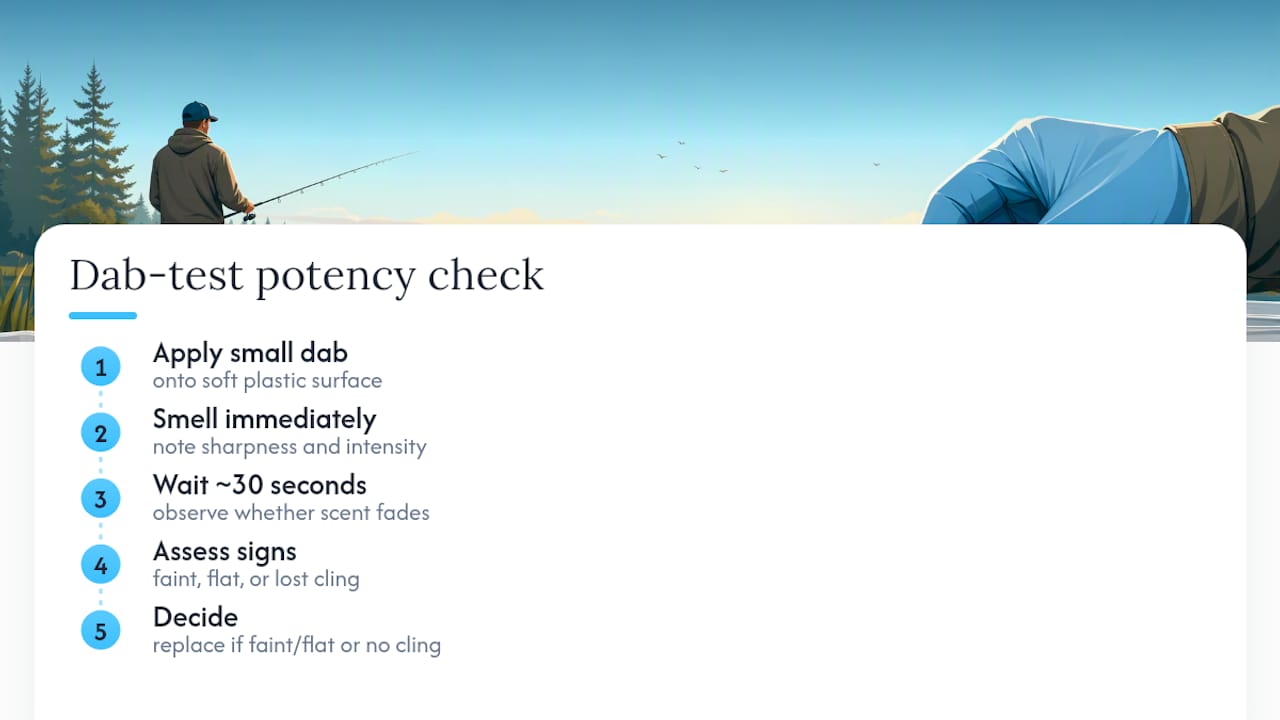
Before you head out, run a quick potency check. Dab a small amount on a piece of soft plastic and smell it. If the aroma fades fast or feels weak, that bottle probably won’t earn its keep on the water.
Pro Tip: Keep a cheap foam cooler in the garage just for scent storage. It holds a steady temperature without costing you fridge space, and it keeps every bottle out of direct light year round.
How to Choose the Right Bait Scent Containers
Not all bait scent containers protect potency equally. A cheap flip-top bottle that leaks in your tackle bag defeats the whole point of careful storage, so the container matters almost as much as where you put it.
Screw-top bottles with O-ring seals are the gold standard for liquid scents. That O-ring design and screw-top lid combination reduces leaks and keeps scent locked in far better than a snap-cap bottle. Vented jars work fine for pastes and gels that need occasional air exchange, and tray organizers make sense if you’re rotating a dozen different scent types through a single tackle box.
For field trips, smaller is smarter:
- Use single-dose vials or droppers instead of hauling your full-size bottle.
- Preload soft plastics with scent at home so you’re not opening a main bottle on the water.
- Label every container with the scent name, the date you opened it, and its strength.
- Keep a simple written or phone-based inventory so you know what’s fresh and what’s due for replacement.
A five-minute labeling habit now saves you from grabbing a dead bottle right before a bite window opens.
How Long Do Bait Scents Stay Potent?
Most commercial attractants hold their punch for roughly a year to a year and a half under decent storage conditions. That 12 to 18 month window assumes you’re keeping the bottle sealed, cool, and out of direct light. Leave that same bottle baking on a dashboard for a summer, and you’ll cut that lifespan hard.
By the numbers: Commercial attractants typically last 12 to 18 months in proper storage, but heat and UV exposure shorten that window significantly, and a permeable or poorly sealed container speeds up the loss even faster.
DIY brines and homemade mixes tend to fade faster, especially anything oil-based without a preservative. Watch for these warning signs that a bottle has lost its edge:
Run the same dab test mentioned earlier: put a small amount on soft plastic and smell it. If the scent goes faint within about 30 seconds, that bottle has likely dropped below the potency you want. When a scent starts smelling flat instead of sharp, or when it stops clinging to plastic the way it used to, it’s time to replace it rather than keep fishing a diluted version.
Preventing Cross-Contamination When Storing Bait Scents
Mixing scent profiles is one of the fastest ways to sabotage your own bait. A garlic scent that soaks into a bottle cap that later touches your shrimp oil creates a muddled smell that reads as unnatural to fish, and that unnatural blend can actually repel the fish you’re trying to attract.
- Store each strong scent in its own labeled, sealed container, never sharing caps or lids across profiles.
- Use a dedicated applicator, brush, or single-use sachet for each scent so nothing transfers between bottles.
- Wash your hands between different scents, especially when switching from something oily to something water-based.
- Rinse applicators and bottle openings periodically so dried residue doesn’t build up and cross into your next application.
Organizing bait scents this way takes an extra minute at most, and it’s the difference between bait that smells intentional and bait that smells like a chemistry accident.
Packing and Protecting Bait Scents on the Water
Your storage plan doesn’t stop at the dock. What happens in the boat matters just as much as what happens in the garage.
Pack small sealed vials, droppers, or preloaded soft-plastic pouches instead of your full stock. Anglers who limit exposure of the main container to just what they need for the day keep the rest of their supply fresher for longer. Tuck those small containers into an insulated tackle bag pocket or a compact cooler rather than a rod locker that traps heat, and never leave a bottle sitting on an open deck where it bakes in direct sun. The same logic that keeps your boat’s gelcoat from breaking down under UV exposure applies here. Heat and sun are the enemy of anything you want to last, whether it’s a scent bottle or your boat’s finish.
- Keep a backup sealed vial in your cooler as insurance against a leaking primary bottle.
- If a bottle’s seal fails mid-trip, transfer the contents to a clean spare rather than trying to patch the original.
- Never top off a compromised bottle with a different scent. That’s how cross-contamination sneaks in.
Pro Tip: Freeze a small ice pack specifically for your scent kit. It rides in the cooler pocket and keeps bottles noticeably cooler than ambient boat temperature on a hot day.
How Storage Affects Reapplication and Dosing
How you store your scent changes how often you need to reapply it. Sprays typically wash off in 15 to 20 minutes in moving water, while gels and pastes cling longer and can hold up for roughly 20 to 45 casts before you need to touch them up again.
- Preload soft plastics with scent before the trip so they retain potency without repeated handling.
- Reapply sprays every 15 to 20 minutes in current, sooner in fast-moving water.
- Stretch gel reapplication toward the 45-cast mark in calmer water or slower presentations.
- Apply a thin, even coating rather than soaking the bait. Over-scenting looks unnatural and can turn fish away instead of drawing them in.
Oil-based attractants tend to form a slow-release film that clings in current, which is part of why they hold up longer than a straight spray. Adjust your cadence based on water temperature and flow, and reapply anytime you land a strike or notice the cling has faded.
What We’ve Learned Field-Testing Bait Scent Storage
Nick has spent years running scent programs for salmon, steelhead, and kokanee trips across the Pacific Northwest, and the pattern is always the same: anglers who lose confidence in their bait almost always trace it back to a bottle that sat too long in the sun. The scent and bait lineup is developed with anglers in mind who fish hard and prefer reliable gear that lasts through the trip.
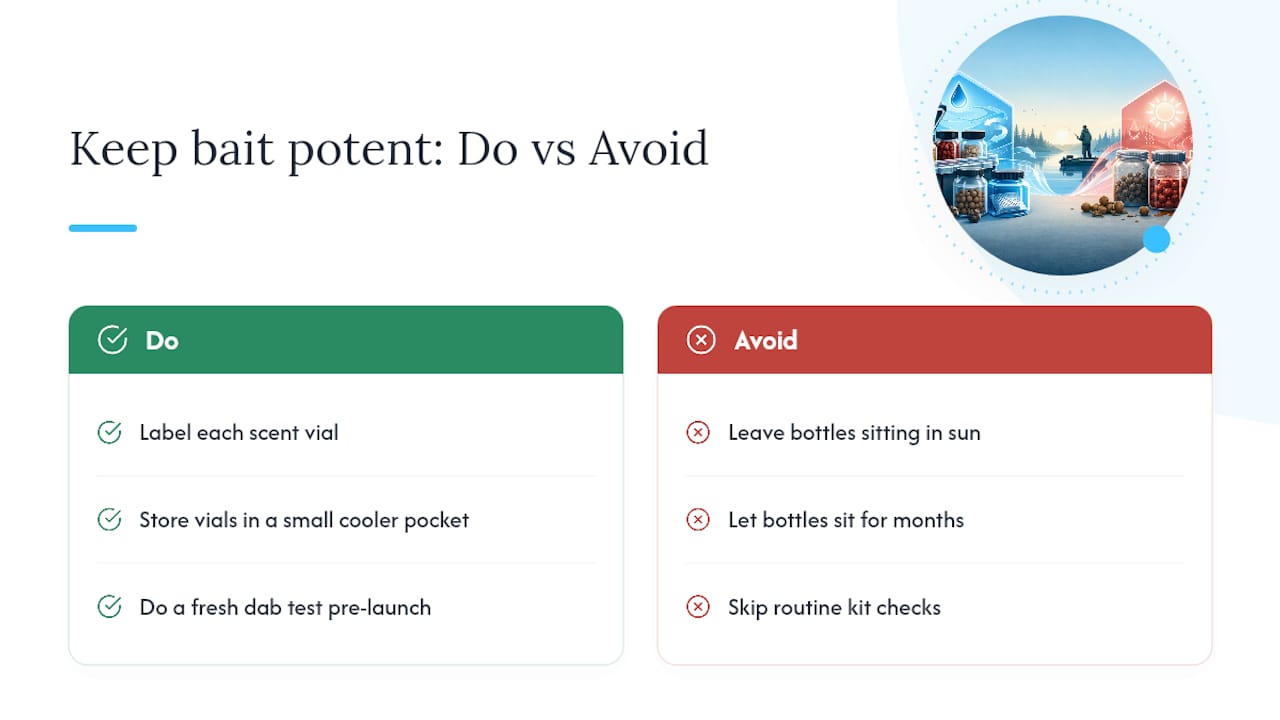
The field kit that gets tested trip after trip stays simple: labeled vials for each profile, a small cooler pocket, and a fresh dab test before the boat leaves the dock. That routine, more than any single product, is what keeps bait smelling right when it matters.
— Nick
Where to Find Bait and Storage Gear That Works as Hard as You Do
High Class Tackle Co. built its lineup so you’re not stitching together storage solutions from five different brands. Our bait and scent collection covers the attractants anglers actually rely on for salmon, steelhead, and kokanee, and our scent and oil products are built to hold up to real Pacific Northwest conditions, not just a shelf in a warehouse.
When you’re picking containers, match the seal type to how you fish. If you’re running a boat all day, an O-ring bottle beats a snap-cap every time. If you’re organizing a full tackle box, check out our terminal tackle and components for trays and holders that keep bottles upright and separated instead of rolling around loose.
Ready to stop babysitting bait that’s already lost its edge? Head to the bait and scent collection and stock up before your next trip on the water.
Sources
- Making sense of scents — Northwest Fishing
- Bass attractant sprays: how to choose, apply, and maximize your strike rate
- Plano Liqua Bait Bottle & Bait Grabber 4651 - Tackle Warehouse
- How To Apply Fishing Scents Without Overdoing It | NightGalaxy
FAQ
How Should I Store Stink Bait?
Keep stink bait in a sealed, airtight container away from heat and sunlight, ideally in an insulated pocket or cooler during transport. Cool, dark storage prevents the chemical breakdown that turns strong-smelling bait weak or off-putting to fish.
How Far Away Can a Fish Smell Bait?
The exact distance depends heavily on water current, temperature, and species, so there’s no single reliable figure. What matters more for your setup is cling time. Gel and paste scents last roughly 20 to 45 casts compared to sprays, which wash off in about 15 to 20 minutes in moving water.
What Is the Best Way to Store Crankbaits?
Store crankbaits with scent already applied in a dry, sealed tray away from direct light so the coating doesn’t dry out or transfer to other lures. If you preload soft plastics or crankbaits with scent at home, keeping the main container’s exposure limited helps both the bait and your bulk scent supply stay fresh longer.
Does WD-40 Attract Catfish?
There’s no reliable evidence supporting WD-40 as a fish attractant, and it’s not a product designed or tested for that purpose. Stick with purpose-built attractants like those in our bait and scent collection, which are formulated specifically to draw strikes rather than repel them with unfamiliar chemical smells.
0 comments