

Buoy 10 is a designated fishing zone at the mouth of the Columbia River, spanning roughly 40 square miles from Cape Disappointment to Tongue Point, and it ranks as one of the most productive salmon and steelhead fisheries on the entire West Coast. The term “Buoy 10” refers to a literal navigational buoy that marks the boundary line separating ocean fishing regulations from Columbia River Zone rules. Every August, thousands of anglers from Oregon, Washington, and beyond converge on this stretch of water chasing fall Chinook and coho salmon in numbers that few other fisheries can match. If you plan to fish here in 2026, knowing the boundaries, regulations, and proven tactics is not optional. It is the difference between a screaming reel and a citation.
What are the official boundaries and regulations for Buoy 10?
The Columbia River Zone includes all waters upstream from the Buoy 10 line at the river mouth, with specific tributary exclusions covering the Willamette, Sandy, Hood, and Skipanon rivers. That boundary line runs straight through the buoy itself, which is why the fishery carries its name. Knowing exactly where you are on the water matters, because regulations shift the moment you cross that line.
Here is what you need to have sorted before you launch:
- Columbia River Basin Endorsement: Required for all anglers fishing the mainstem Columbia from Buoy 10 upstream. No endorsement means no legal fishing, full stop.
- Barbless hooks: Mandatory throughout the Columbia River Zone. Crimp your barbs or use factory barbless hooks before you leave the dock.
- Wild steelhead: Harvest is prohibited. All wild steelhead must be released immediately, regardless of condition.
- Hatchery vs. wild distinction: You must identify hatchery marks (clipped adipose fin) before retaining any fish. A hooked fish is not automatically a legal fish.
The 2026 spring Chinook season downstream of Bonneville Dam adds another layer of specificity. Daily bag limits cap at 6 salmonids total, with no more than 2 adults and only 1 adult Chinook during the March 1 to April 8 window. Wild steelhead and non-hatchery Chinook are subject to mandatory release during this period.
| Regulation | 2026 Rule |
|---|---|
| Daily bag limit (spring Chinook) | 6 salmonids, max 2 adults, max 1 adult Chinook |
| Wild steelhead retention | Prohibited, mandatory release |
| Hook requirement | Barbless hooks only |
| Required endorsement | Columbia River Basin Endorsement |
| Hatchery mark check | Clipped adipose fin required for retention |
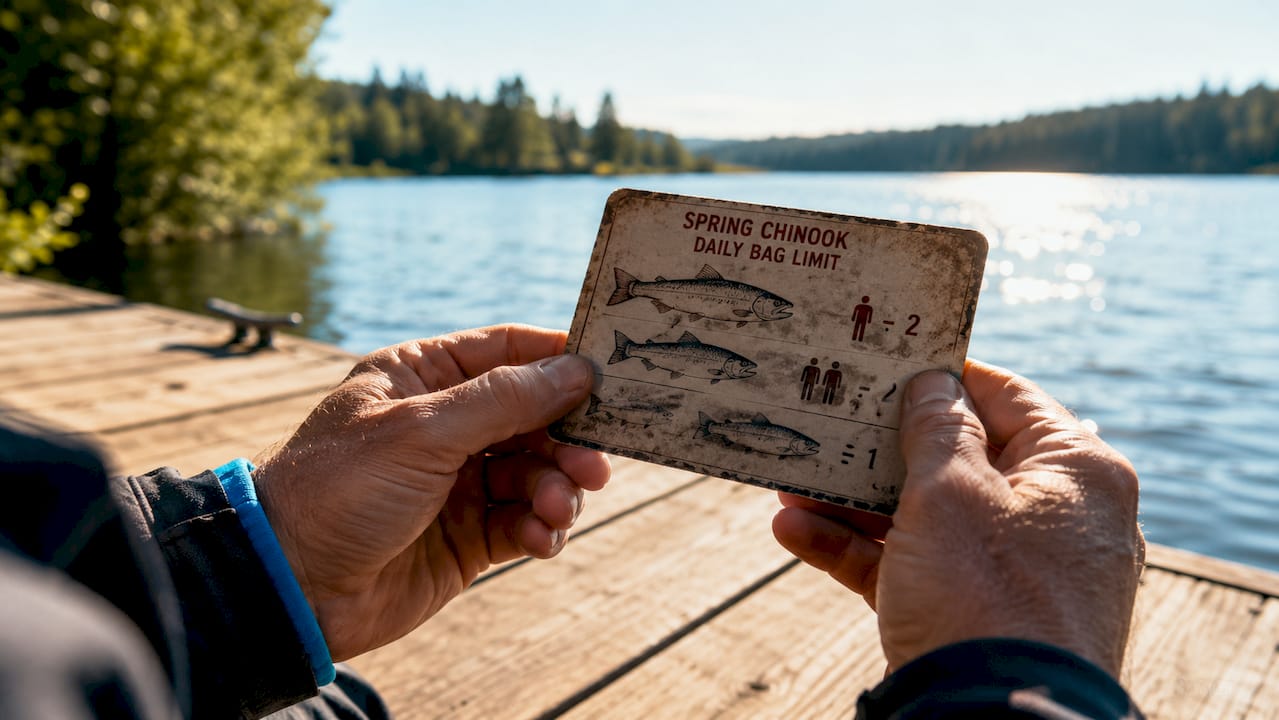
Regulations at Buoy 10 change frequently, sometimes mid-season, based on run counts and adaptive management decisions. Check the Washington Department of Fish and Wildlife and Oregon Department of Fish and Wildlife websites before every single trip. Local knowledge alone will not keep you legal.
Which salmon and steelhead species can you target, and when?
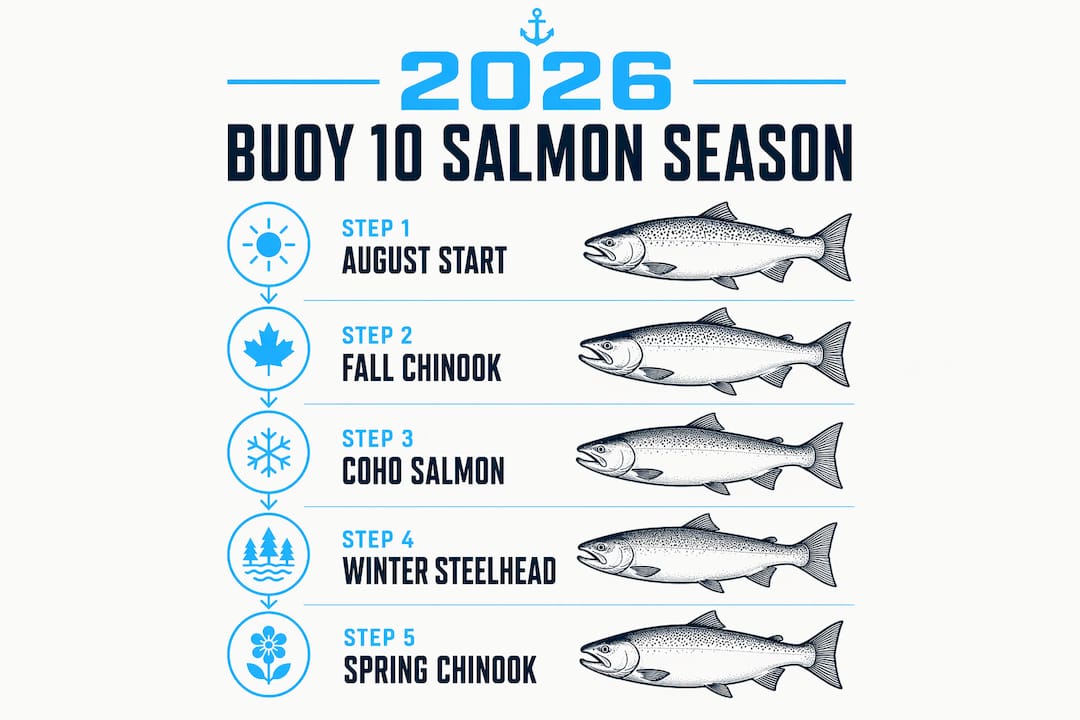
The Buoy 10 season traditionally opens August 1, though ocean salmon fishing in adjacent waters can open earlier depending on federal management decisions. That August 1 date is when the Columbia River mouth fishery kicks into full gear, and the action can be immediate and intense.
Here is a breakdown of what you will encounter by species and timing:
- Fall Chinook (king salmon): The primary target from August through September. These fish are staging at the river mouth before their upriver migration, making them aggressive and concentrated. Peak action typically runs mid-August through early September.
- Coho salmon: Show up in force from late August into October. Coho tend to run shallower than Chinook and respond well to faster trolling speeds and brighter lure colors.
- Spring Chinook: Available earlier in the season, primarily March through May, under the tighter retention rules described above. These fish are prized for their fat content and table quality.
- Steelhead: Present throughout much of the year, but wild fish must be released. Hatchery steelhead with clipped fins are the only legal retention option, and their presence varies significantly by run year.
- Auxiliary species: Sturgeon, walleye, and shad move through the Columbia River mouth zone and are occasionally encountered while targeting salmon. Know the regulations for each before you keep anything.
Ocean conditions and upstream snowpack both influence run timing and abundance. A strong ocean entry year can push fish into the zone earlier and in higher numbers. Pay attention to pre-season run forecasts from the Pacific Fishery Management Council, which publishes projections that directly shape season openings and bag limits.
What are the most effective trolling methods and tackle setups?
Trolling is the dominant technique at Buoy 10, and the standard rig is built around a specific set of components that work together to present lures at multiple depths simultaneously. Buoy 10 trolling rigs use line-lock sliders connected to cannonball weights, with bumpers and flashers rigged above the terminal lure. This setup lets you fish multiple rods at different depths, intercepting salmon moving through water layered by salinity and temperature gradients.
Here is how to build a productive spread:
- Set your cannonball weight based on depth and current. Heavier weights (12 to 20 ounces) are standard in the strong currents near the river mouth.
- Attach a line-lock slider to your main line above the weight. This allows the weight to drop while your lure stays at the target depth.
- Add a bumper between the slider and the flasher to absorb shock and protect your knots from the constant pull of the flasher’s rotation.
- Rig your flasher at the appropriate leader length. Flashers create vibration and light reflection that draw salmon from distance. Our 360 flasher guide covers the specifics of flasher selection for PNW conditions.
- Choose your terminal lure based on species and conditions. Hoochies, spoons, and cut-plug herring all produce at Buoy 10. Coho often prefer brighter colors; Chinook respond well to natural baitfish patterns.
- Troll at 2.0 to 2.8 mph for Chinook and bump speed to 3.0 to 3.5 mph for coho. Speed is one of the fastest adjustments you can make when bites slow down.
Pro Tip: Do not lock onto a GPS track and grind it all day. Tidal changes shift fish distribution rapidly at Buoy 10, so adjust your depth and speed throughout the day based on what the fish are telling you, not what your chart plotter says.
Scent is a serious edge at Buoy 10. Salmon in estuarine conditions are using all their senses, and adding a quality scent to your lure or bait can be the difference between a follow and a strike. Check out the northwest bait and scent guide for specific product recommendations that work in these conditions.
How do environmental factors influence Buoy 10 fishing success?
The Columbia River mouth is a dynamic, high-energy environment where tidal forces, river current, wind, and water temperature all interact to move fish and dictate tactics. Understanding these forces is not optional. It is the foundation of consistent success at this fishery.
Key environmental factors to monitor:
- Tidal cycles: Salmon move most actively during tidal transitions, particularly the incoming tide pushing saltwater upriver. Fish the tide changes hard and be ready to adjust depth as the water column shifts.
- Current strength: Near the river mouth, currents are heavy and crosscurrents are common. Moving upriver even a mile or two puts you in calmer water with more manageable boat control.
- Water temperature: Salmon seek thermal comfort zones, typically between 52 and 58 degrees Fahrenheit. Use a temperature probe or downrigger with a temp sensor to find the right depth layer.
- River flow: High snowmelt years push more cold, turbid water into the estuary, which can compress fish into tighter depth bands and push them closer to the surface.
- Wind and wave exposure: The area near the actual buoy is exposed to ocean swells and wind-driven chop. Check NOAA marine forecasts before launching and have a plan for deteriorating conditions.
Pro Tip: Time your launch to fish the first two hours of incoming tide. That window consistently produces the most aggressive bites at Buoy 10, and you will be back at the dock before afternoon winds build.
Safety at Buoy 10 is a real consideration. Strong currents, boat traffic, and open-water exposure near the mouth create conditions that demand a seaworthy vessel, a working VHF radio, and a float plan left with someone onshore.
What are the best practices for fishing Buoy 10 in 2026?
Success at Buoy 10 comes down to preparation, compliance, and reading the water. Here is a pre-trip checklist and a set of practices that separate productive anglers from frustrated ones:
- Verify your licenses and endorsements before you leave home. Carry your Columbia River Basin Endorsement, your state fishing license, and any required salmon tags.
- Check current regulations on the day of your trip. Seasons can open, close, or change bag limits with short notice based on run counts.
- Inspect all hooks for barbs before launching. A single barbed hook on any rod is a violation, even if you are not actively fishing that rod.
- Identify every fish before retaining it. Check for a clipped adipose fin on Chinook and coho. Release wild fish quickly and with care, keeping them in the water as much as possible.
- Respect the crowd. Buoy 10 draws hundreds of boats on peak days. Maintain safe distances, avoid cutting through other anglers’ lines, and communicate on the water with courtesy.
- Bring a net and a priest. A quality landing net protects fish you intend to release and makes retaining legal fish cleaner and faster.
Pro Tip: Mark-selective fishing at Buoy 10 means you will hook and release more fish than you keep. Pre-fishing verification of allowable harvest species on any given day is critical. Regulations change frequently, and a quick check before launching takes two minutes and saves you a serious headache.
Common beginner mistakes include fishing too close to the mouth in heavy current without enough weight, running lures too fast for Chinook, and failing to check hatchery marks before bonking a fish. Experienced anglers make mistakes here too, usually by ignoring tidal timing and grinding the same depth all day when the fish have moved.
Key takeaways
Buoy 10 rewards anglers who combine current regulation knowledge, tidal awareness, and adaptable trolling tactics over those who rely on static GPS tracks or outdated local advice.
| Point | Details |
|---|---|
| Know the zone boundary | The Buoy 10 line defines where Columbia River Zone rules begin; fish the wrong side and you face a different regulatory set. |
| Carry the right endorsement | The Columbia River Basin Endorsement is mandatory for mainstem fishing from Buoy 10 upstream. |
| Identify before you retain | Check for a clipped adipose fin on every fish; wild steelhead and non-hatchery Chinook must be released. |
| Fish the tide, not the GPS | Tidal shifts move fish fast; adjust depth and speed throughout the day rather than grinding one track. |
| Respect the environment | Strong currents near the mouth demand a seaworthy boat, a VHF radio, and a solid safety plan. |
What I have learned from years on the water at Buoy 10
The first time I fished Buoy 10, I made every mistake in the book. I anchored too close to the mouth in a ripping current, ran my flashers too fast, and spent twenty minutes trying to figure out if a fish had a clipped fin while it flopped in the net. I caught one legal Chinook and nearly lost a rod overboard.
What changed everything was slowing down, both literally and mentally. Buoy 10 is not a place where brute force wins. The anglers who consistently load the box are the ones watching their sonar, adjusting depth every hour, and moving upriver when the current near the mouth gets too heavy to fish effectively. They are not chasing the crowd. They are reading the water.
The regulation changes over the past several years reflect something real. Wild stock protection through mark-selective retention is not just bureaucratic overhead. It is the reason Buoy 10 still produces the way it does. I have watched runs fluctuate dramatically year to year, and the seasons where anglers and managers work together on hatchery-focused harvest are the ones that sustain the fishery long term. Respect those rules. They are protecting the fishing you love.
One more thing: do not underestimate the social side of this fishery. Buoy 10 on a peak August morning is organized chaos. Hundreds of boats, crossing wakes, tangled lines, and short tempers are all part of the deal. The anglers who handle it best are the ones who communicate, give space, and treat the water like a shared resource. That attitude catches more fish and makes the whole experience worth repeating.
— Nick
Gear up for Buoy 10 with Highclasstackleco
Buoy 10 demands tackle that performs in real conditions, not gear that looks good on a shelf. At Highclasstackleco, we build flashers, blades, terminal components, and rigs specifically for Pacific Northwest salmon and steelhead fishing. Every product in our lineup has been tested on the water by anglers who fish the same rivers and estuaries you do.
Whether you are building your first Buoy 10 trolling spread or dialing in a setup that has been close but not quite right, our salmon and steelhead tackle covers everything from flashers and Colorado blades to terminal components and scent products. We also carry the ‘Capt. Gatchet’ High Class 3.0 Blades, a proven producer in the Columbia River estuary. Gear up right and get on the fish.
FAQ
What is the Buoy 10 fishing area?
Buoy 10 is a designated fishing zone at the mouth of the Columbia River, covering roughly 40 square miles from Cape Disappointment to Tongue Point. The zone is named after a navigational buoy that marks the boundary between ocean and Columbia River Zone regulations.
When does the Buoy 10 season open in 2026?
The Buoy 10 season traditionally opens August 1, with fall Chinook and coho salmon as the primary targets. Ocean salmon fishing in adjacent waters may open earlier depending on federal management decisions.
Do I need a special permit to fish Buoy 10?
Yes. The Columbia River Basin Endorsement is required for all anglers fishing the mainstem Columbia from Buoy 10 upstream, in addition to a valid state fishing license and any required salmon tags.
Can I keep wild steelhead at Buoy 10?
No. Wild steelhead harvest is prohibited throughout the Columbia River Zone. Only hatchery steelhead with a clipped adipose fin may be retained, and availability varies by season and run year.
What is the best trolling setup for Buoy 10 salmon?
The standard setup uses cannonball weights on line-lock sliders, bumpers, and flashers rigged above the terminal lure, trolled at 2.0 to 2.8 mph for Chinook and 3.0 to 3.5 mph for coho. Adjust depth throughout the day based on tidal changes rather than fixed GPS waypoints.
Recommended
- Salmon plug fishing rivers: Proven PNW tactics and gear – High Class Tackle Co.®
- BC Sockeye Fishing Tackle Guide for PNW Anglers – High Class Tackle Co.®
- Super Bait Secrets: Top Picks for Salmon and Steelhead – High Class Tackle Co.®
- Simons Spinners: Salmon and Steelhead Fishing Guide – High Class Tackle Co.®
0 comments