

Start with a flasher and hoochie combo: an 8" to 11" flasher, a 26" to 36" leader, trolled at 2.5 to 3.5 mph. That’s the setup that puts the most coho in the box on the widest range of Pacific Northwest days, and it’s where you should tie on first if you’re not sure what the fish want.
Two backups earn a spot in the rotation when that first rig goes quiet. Run a flasher + spoon when coho are chasing something with more flutter and less bulk. Drop a cut-plug or mooching setup when you’re fishing shallow propwash bites or don’t have a downrigger on board.
- Default rig: 8"–11" flasher, 26"–36" fluorocarbon leader, 2.5–3.5 mph
- Backup 1: Flasher + spoon for erratic, flash-heavy days
- Backup 2: Cut-plug/mooching for shallow water or no-downrigger boats
Deploy the flasher and hoochie first. Everything else in this guide tells you how to build it right, tune it on the water, and know when to switch.
Key Takeaways
The best coho trolling setup pairs an 8" to 11" flasher with a 26" to 36" leader trolled at moderate trolling speeds, with spoon and mooching rigs as situational backups.
| Point | Details |
|---|---|
| Default rig | Flasher + hoochie, 8"–11" flasher, 26"–36" leader, trolled at 2.5–3.5 mph. |
| Speed matters more than depth | Coho often prefer 2–4 mph, faster than the typical Chinook troll speed. |
| Skip fillet on spoons | Adding bait fillet to spoons kills the flutter that makes them work. |
| No downrigger needed | Mooching sinkers and diver rigs reach 10 to 40 feet without a downrigger. |
| Prep wins trips | Pre-tying 6 to 8 leaders with Highclasstackleco terminal tackle saves time on the water. |
Table of Contents
- Building The Flasher And Hoochie Coho Trolling Setup
- When Should You Run A Flasher And Spoon Instead?
- Cut-Plug Mooching And Diver Options Without A Downrigger
- What Rod, Reel, And Line Specs Actually Matter?
- How Deep And How Fast Should You Troll For Coho?
- Presentation Tricks That Turn Follows Into Strikes
- Pre-Trip Prep: What To Tie And Pack Before You Launch
- Staying Legal And Safe While Trolling For Coho
- Where To Learn More About Coho Rigging
- What Most Coho Guides Get Wrong
- Get Rigged And Ready With Highclasstackleco
- Sources
Building The Flasher And Hoochie Coho Trolling Setup
This rig is the backbone of PNW coho fishing, and getting the measurements right matters more than most anglers think. Here’s the build, piece by piece:
- Flasher size. An 8" flasher works well in shallower water and gets full rotation at lower speeds, which suits coho holding near the surface. An 11" flasher throws more flash and vibration for days when you need to pull fish from farther off, or when the water has some color to it.
- Main line. Run 20 to 30 lb braid for line class recommended by PNW rigging guides that balances sensitivity with the strength to handle a chrome coho on a hot run.
- Leader length. A standard salmon trolling rig runs 6 to 10 feet of leader ahead of the flasher, then 26 to 36 inches of fluorocarbon behind it to the hoochie. That back leader is where the tuning happens.
- Hooks and beads. Size 1 to 2/0 hooks depending on hoochie size, with a small bead pinched above the knot to protect it from the hoochie’s skirt.
Leader length isn’t a “set it and forget it” number. Shorten it toward 26 inches in choppy water or when you’re getting short strikes. Fish nipping at the tail of the hoochie without committing usually means the leader’s too long and they’re catching up to it instead of eating it clean. Lengthen toward 36 inches when you’re running a bigger flasher or fishing shy, pressured fish that need more separation from the flash.
Flasher rotation depends on speed, not just design. If your flasher is spinning lazily instead of throwing that full slashing rotation, bump the throttle slightly. Watch the rod tip; a properly tuned flasher pulses the rod in a steady rhythm you can feel and see.
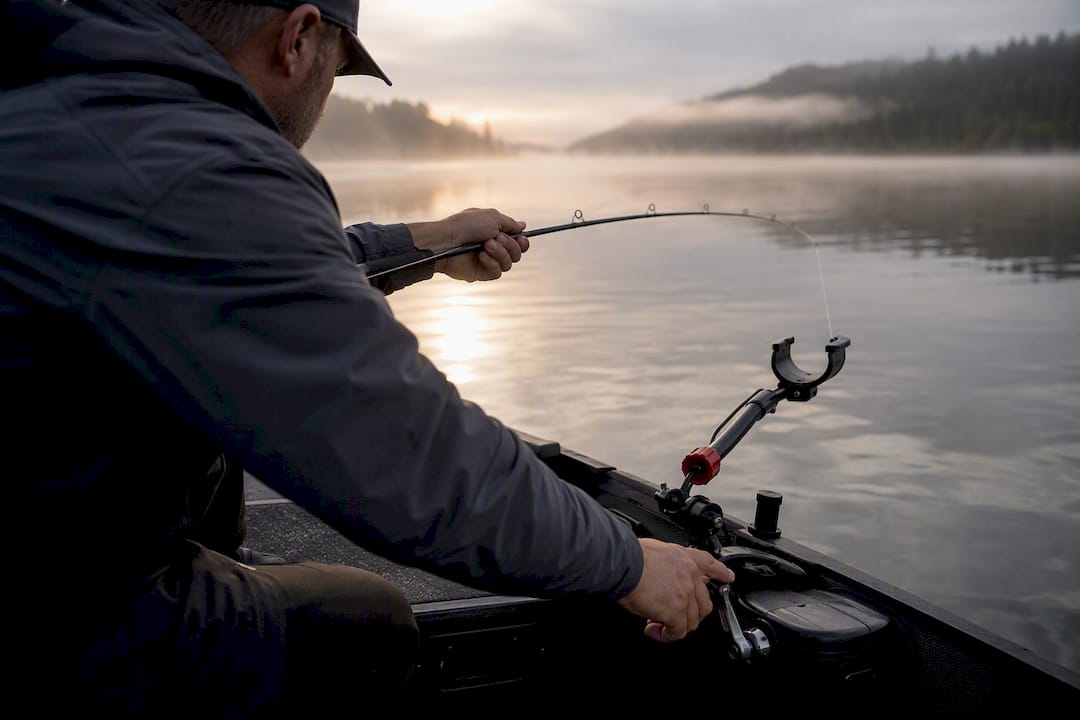
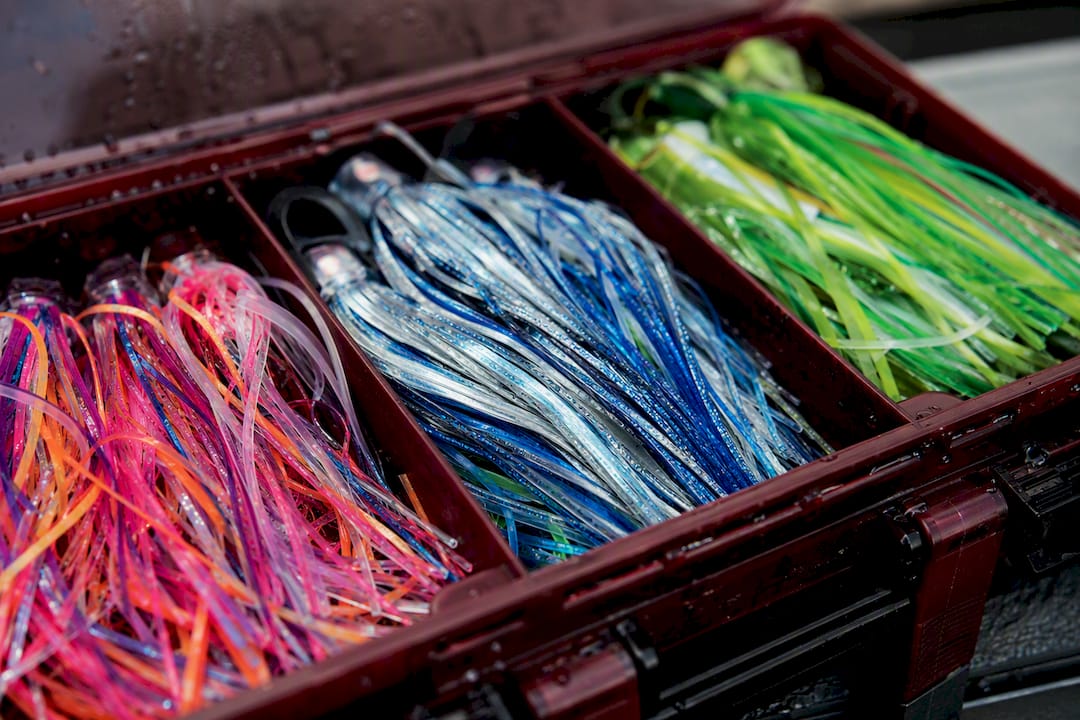
Pro Tip: Carry hoochies in at least three color families: UV/glow for low light and deep water, silver/blue for bright days, and green/chartreuse for stained water. Coho are notoriously moody about color, and swapping skirts is faster than re-rigging the whole leader.
When Should You Run A Flasher And Spoon Instead?
Switch to a spoon when coho want flutter and flash more than bulk and profile. This combo shines on bright days or when fish are chasing bait balls near the surface.
- Spoon profile: thin-blade, fluttering spoons in the 3.5" to 4.5" range outfish thicker, slower-wobbling designs for coho specifically.
- Leader spacing: run 24 to 36 inches between the flasher and the spoon depending on spoon size. Bigger spoons need more room to establish their own action without fouling on the flasher.
- Snaps and swivels: use a quality snap swivel at the spoon connection so you can change spoons in seconds without re-tying.
- Skip the fillet. Adding a herring fillet to a spoon almost always kills its action; the extra bulk deadens the flutter that makes spoons work in the first place. Save the bait strips for hoochies and cut-plugs instead.
Speed is the difference between a spoon that dances and one that spins uselessly. Keep it in the 2.5 to 3.5 mph window, same as the hoochie rig, and check that the spoon is fluttering rather than corkscrewing when you first drop it. If hoochies have gone cold for an hour, a spoon swap is often the fastest way to trigger a new bite window without touching the flasher setup at all. Anglers running Northland and SteelShad-style tungsten spoon designs have found the added weight helps hold action even at the faster end of that speed range.
Cut-Plug Mooching And Diver Options Without A Downrigger
Not every boat runs downriggers, and coho don’t care. Cut-plug mooching and diver rigs get you into the same strike zones with gear most trailer boats already carry.
- Cut-plug mooching. Use a 3 to 5 oz mooching sinker (up to 8 oz in heavy current) ahead of a 4-foot mooching leader to a brined cut-plug herring. Send it back 25 to 100 feet depending on how much depth you’re chasing; more line out means more depth.
- Flat-line flasher + mooching sinker. This combo typically runs the lure 10 to 25 feet down. Use a 26 to 30 inch leader between the flasher and lure so the action stays tight without the sinker interfering.
- Diver + flasher (Deep Six style). Run 2 feet of 40 lb leader between the diver and the flasher, then 24 to 36 inches to the lure. Diver size and line out control the depth you’ll reach, typically 10 to 40 feet. Stick with a small flasher here; a big one can thrash hard enough to trip the diver early.
- Deployment. Let gear out slowly and evenly, check it every 20 to 30 minutes, and retrieve at the same steady pace you deployed it to avoid the leader wrapping the main line.
A cut-plug rigged the night before, brined properly, holds its roll and its scent trail far better than one cut cold on the water that morning.
What Rod, Reel, And Line Specs Actually Matter?
Gear choice for coho trolling isn’t complicated, but the wrong specs cost you hookups. Here’s what to run:
- Rods: light to medium power trolling rods, 6’6" to 7’6", with enough tip flex to load up on a strike without ripping the hook free.
- Reels: a dedicated mooching or trolling reel with solid line capacity and a smooth drag; a clicker function helps you hear a strike before you see the rod bend.
- Main line: 20 to 30 lb braid for sensitivity and less stretch, or 20 to 30 lb mono if you prefer the forgiveness of a little give on the strike.
- Leaders: 20 to 40 lb fluorocarbon depending on water clarity, since heavier fluorocarbon holds up better against gill plates without spooking fish in clear water.
- Terminal tackle: sampo-style ball-bearing swivels prevent line twist from a spinning flasher, and a quality snap swivel at the lure end saves time swapping gear mid-troll.
None of this needs to be fancy. It needs to be matched, sized right, and rigged so it doesn’t twist your main line into a mess by lunch.
How Deep And How Fast Should You Troll For Coho?
Coho tend to run faster and shallower than most trollers expect. That’s the single biggest mismatch between technique built for Chinook and technique that actually works for coho.
- Speed: 2 to 4 mph is the sweet spot for most coho attractors, noticeably faster than the slow Chinook troll a lot of anglers default to.
- Depth: start in the top 10 to 30 feet early in the morning, then work deeper as the sun climbs and bait pushes down.
- Downrigger angle: watch your cable angle, not just your depth counter. A cable trailing too far back means your gear is running shallower than the readout suggests; adjust throttle, not just depth, to correct it.
- Spread hygiene: stagger rod depths and keep lines spaced to avoid crossovers, especially when working close to other boats in a fleet.
Fishfinder marks matter here. Bait balls and suspended fish showing on sonar at 18 feet mean you set your gear a few feet above that mark, since coho typically feed upward, not down.
Presentation Tricks That Turn Follows Into Strikes
Coho get curious. That curiosity is your opening, and the way you present gear in the last few feet behind the boat decides whether a fish commits or peels off.
Bucktailing or running small surface flies 25 to 50 feet back in the propwash is one of the most productive tactics for aggressive, top-of-water coho, especially in the first few hours of daylight. The turbulence mimics a bait ball getting worked over, and coho can’t resist investigating.
Short throttle pulses, sometimes called hunt mode, work the same way. A brief 3 to 5 second slowdown or speed spike makes your gear stall and dart, mimicking a wounded baitfish. Fish that have been shadowing your spread without committing often strike the moment that pulse hits.
- Add a thin herring sliver to hoochies for scent; skip it on spoons, where it kills the action.
- Check leaders every 20 to 30 minutes for nicks, fouled hooks, or a spoon that’s lost its flutter.
Pro Tip: When you check a line, let it drift up slowly instead of ripping it in. That rising motion alone has triggered strikes from fish that were following but not yet committed.
Pre-Trip Prep: What To Tie And Pack Before You Launch
Productive trips get won the night before. Pre-tie 6 to 8 short flasher leaders and 6 to 8 lure leaders using FG knots for line-to-leader connections, Palomar knots for hooks, and improved clinch knots for swivels.
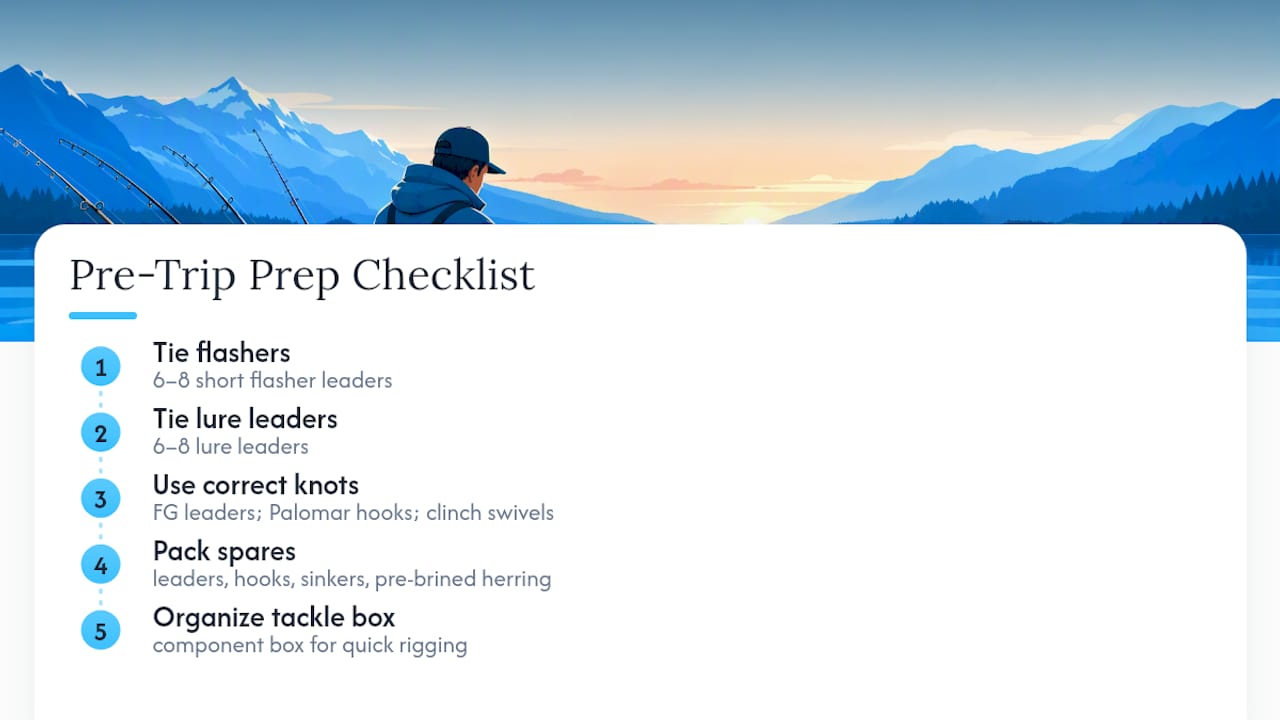
Pack extras: spare leaders, hooks, mooching sinkers, pre-brined herring, and terminal components like swivels and beads. A component tackle box keeps all of it sorted so you’re rigging in seconds, not minutes, when the bite turns on.
Staying Legal And Safe While Trolling For Coho
Coho seasons and bag limits change year to year and by marine area, so check current regulations from your state or provincial fish and wildlife agency before you launch. Rules on barbless hooks, retention size, and closed areas near river mouths get enforced actively during peak coho runs, and a citation ends your day faster than a slow bite ever could.
Safety on the water deserves the same attention as your rig. Running multiple rods with lines spread wide means more gear in the water and more chances for a tangle at the worst moment, so keep your spread manageable for your crew size. Always have life jackets accessible, know your VHF channel for the area you’re fishing, and watch for other boats trolling nearby since coho fleets bunch up fast once word gets out about a bite.
Weather on open saltwater changes quickly, especially in fall when coho runs peak and afternoon winds pick up. Check marine forecasts before you leave the dock, not just when you get there, and have a plan for running back in if conditions turn. Downriggers and diver rigs both put extra tension on your gear, so inspect your rod holders and downrigger mounts periodically. A failure under load, with a fish on or without one, can send gear flying across the cockpit.
Finally, respect other anglers’ spreads. Cutting through another boat’s lines to chase a school isn’t just bad etiquette, it costs everyone gear and time. Give trolling boats room to work their pattern, and you’ll find the fleet shares information on bite depth and speed more freely in return.
Where To Learn More About Coho Rigging
- How to Set Up a Trolling Rig for Salmon covers full rig sequencing and knot choices.
- Ten Rules of Coho Trolling breaks down speed and throttle pulse tactics.
- My Favorite Saltwater Coho Salmon Lures & Rigs details proven rig combinations by leader length.
- What Is a Salmon Teaser? covers attractor tuning for your spread.
What Most Coho Guides Get Wrong
Most coho trolling advice treats speed like an afterthought, buried after paragraphs on flasher color and lure choice. That’s backward. The gap between a slow, methodical Chinook troll and the faster, more aggressive pace coho actually want is probably the single biggest reason anglers struggle to convert marks on the fishfinder into fish in the net.
The other overrated piece of advice is treating leader length as a fixed number instead of a variable you adjust on the water. A 30-inch leader isn’t a rule; it’s a starting point you shorten or lengthen based on how fish are actually behaving that day.
If you take one thing from this guide, prioritize preparation over improvisation. Anglers who show up with pre-tied leaders in multiple lengths and colors spend their morning fishing instead of fumbling with knots on a rocking boat. That single habit, more than any specific lure or flasher size, separates the boats that limit out from the ones that go home wondering what they missed.
— Nick
Get Rigged And Ready With Highclasstackleco
Skip the tackle shop scramble the morning of your trip. Highclasstackleco builds the flashers, hooks, beads, and swivels that go straight into the rigs covered in this guide, so you’re tying proven setups instead of guessing at specs from memory.
Whether you’re stocking up on components for pre-tied leaders or grabbing a fresh flasher lineup before coho season peaks, the terminal tackle and components collection has the pieces this article calls for in one place. Anglers who want everything organized for fast on-water changes should look at the component tackle box, built to keep spare leaders and terminal gear sorted instead of tangled in a drawer. Browse the full Highclasstackleco lineup and get your next trip pre-tied and ready before you leave the dock.
0 comments