

Start your day down-trolling cut-plug herring behind flashers. That’s the workhorse tactic for covering water and finding fish fast. When the river runs high or visibility drops below two feet, switch to anchoring or plunking with sardine-wrapped plugs. Before you launch, check the season windows, the tide direction at your spot, and the water clarity. Log those three things every trip and your results start making sense fast.
TL;DR:
- Trolling is preferred in water clarity above two feet and moderate flows, but anchoring becomes more effective in dirty or high flows when fish move to shallow, slower edges.
- Begin your depth search at 15 to 20 feet along key structures, shifting to 30 feet or more if no fish are detected, and adjust based on sonar readings of humps or ledges.
- Use 30 to 48 inches of fluorocarbon leader with 30 to 50 pound strength, and vary weights from 6 to 16 ounces depending on water conditions and rig spread.
- Proper bait cutting, scent application, and presentation speed are crucial, with slow speeds of 2 to 2.5 mph for trolling and as slow as 0.8 mph for some stuffer plug tactics.
- Check season rules and obtain the Columbia River salmon and steelhead endorsement, as well as real-time flow data, to ensure compliance and optimize your fishing chances.
Table of Contents
- When to troll, when to anchor: quick decision rules for Columbia springers
- A repeatable search sequence: depth progression, seams, and electronics workflow
- Field-ready rigs for Columbia springers: exact leader lengths, weights, flashers and hook choices
- Cut-plug method, stuffer plugs, brines and scent recipes that work on the Columbia
- 2026 season windows, daily limits, endorsements and pre-launch checklist
- A simple log and testing protocol: change one variable at a time
- Techniques for setting the hook and playing springers effectively
- Recommended fishing locations and hotspots along the Columbia River for springer salmon
- Adjusting tactics for water clarity and weather conditions
- Nick’s field notes: practical shortcuts, scent mixes, and a persistence mindset
- High Class Tackle Co. gear to match the rigs: flashers, bait, and weights
- Authoritative regulation pages and key technique writeups to check before you fish
- Sources
- FAQ
When to troll, when to anchor: quick decision rules for Columbia springers
Springers reward anglers who commit to a plan and adjust it on the fly. Down-trolling is your default because it covers water, lets you probe multiple depths, and puts bait in front of fish that are actively moving. Anchoring earns its spot when the river turns pushy or dirty and fish stack up in predictable, lower-velocity zones instead of roaming.
Here’s the decision framework that keeps you from wasting a tide:
- Default to trolling when visibility is 2 feet or better and flows are moderate, since springers are covering ground and you need to intercept them.
- Switch to anchor or plunk when visibility drops under 2 feet or flows spike, because fish tuck into shallow, lower-velocity edges where anchored presentations like sardine-wrapped plugs, Kwikfish, or Mag Lips work better than moving gear.
- Back-troll or back-bounce narrow channels and defined seams where you need to slow your presentation without fully anchoring.
- Drift bait or jigs short, well-defined holes where boat traffic makes trolling passes impractical.
Picture an outgoing tide on a clear morning: fish are holding tight to bottom structure, so down-trolling with good bottom contact at 20 to 30 feet is the move. Now picture that same stretch after two days of rain, with the gauge climbing and visibility dropping to a foot and a half. The fish push into slower water along the margins, and an anchored sardine-wrapped plug in 8 to 12 feet starts outperforming anything you troll through the main current.
The switch itself is the skill. Anglers who rigidly troll through high, muddy water, or who anchor through gin-clear conditions when fish are scattered and moving, leave fish behind. Read the water first, then pick the tool.

A repeatable search sequence: depth progression, seams, and electronics workflow
Finding springers is a process, not a guess. A field account from experienced lower-Columbia anglers lays out a search sequence that consistently produces:
- Start shallow. Run 15 to 20 feet along island edges or drop-offs for one or two full passes.
- Move deeper if marks don’t show. No fish after those passes means it’s time to push out to roughly 30 feet.
- Keep widening. If 30 feet doesn’t produce, keep working depth and location rather than parking on one contour hoping the bite turns on.
- Read your sonar carefully. Look for humps, buckets, ledges, and pinch points where current forces fish to hold; suspended marks drifting with the current read differently than tight marks hugging bottom structure.
- Match the depth call to the tide. Outgoing tide tends to put springers tight to bottom, what many anglers call “decking.” Incoming tide lets fish suspend and spread across multiple depths, so your search needs to cover more of the water column.
Verify your actual depth against your line-out and current speed, since current strength changes how deep your gear runs at a given amount of line. Checking real-time USGS gauge data for flow and temperature before you launch helps you anticipate whether you’ll be searching a decked-out bottom bite or a suspended, multi-depth one.
Treat these starting depths as a launch point, not a rulebook. Every stretch of the Columbia has its own ledges and seams, and the only way to learn them is to run the progression enough times to memorize where the fish actually sit.
Field-ready rigs for Columbia springers: exact leader lengths, weights, flashers and hook choices
Your rig needs to match the water you’re fishing, not just look good in the tackle box. A 360 flasher pulls a wider, more aggressive swing that shows up well in stained water, while a triangle flasher runs tighter and suits clearer conditions where fish get gear-shy.
Build your spread around these specifics:
- Leader length: Run 30 to 48 inches of 30 to 50 pound fluorocarbon between the flasher and your bait, adjusting shorter in stained water and longer when it’s clear.
- Hook size: A 3/0 hook handles most cut-plug herring presentations without overpowering the bait’s action.
- Weight placement on a multi-rod spread: Run 8 to 10 ounces on your forward rods, 6 to 8 ounces on the rear rods, and step up to 12 to 16 ounces on the outside rods when you’re fishing a full five-rod spread.
- Mainline and leader class: A 30 to 50 pound combo on both mainline and leader gives you the backbone to control a hooked springer without spooking the rest of the spread.
- Bottom contact: Lower your weight until it touches, then crank up once or twice so you’re skipping bottom instead of dragging constantly, which fouls bait and kills your action.
For rods and reels, long trolling rods with soft tips and line-counter reels let you track exact line-out and repeat a successful depth on the next pass. Downriggers give you precision in deep, fast water, while cannonballs on a slider work fine for most Columbia depths and let you feel bottom contact directly through the rod.
Pro Tip: Run one “naked” rear rod without a flasher when you’re working shallow, clear water. That subtler profile often draws bites from fish that shy away from a full flasher spread.
For a deeper breakdown of rig swaps and load-testing notes, see our guide to Chinook trolling rigs.

Cut-plug method, stuffer plugs, brines and scent recipes that work on the Columbia
A properly cut plug is the difference between a rod that loads and one that sits quiet all day. Cut your herring at an angle just behind the gill plate, then test the roll boat-side before it ever hits real current. A tight, fast roll suits a king slot, while a wider, looser roll mimics the flash preferred in a coho slot.
Build your presentation around these rules:
- Cut-plug vs stuffer: Cut-plug herring works best when fish are actively feeding and chasing, while stuffer plugs and tuna-belly stuffed baits shine on moody, cold-water fish that want a slower, more persistent target.
- Speed matters as much as the cut. Typical downstream speeds run 2 to 2.5 mph to keep a flasher turning properly, but some stuffer plug presentations fish best as slow as roughly 0.8 mph.
- Scent goes on the bait, not the cooler. Apply brine or scent directly to individual baits rather than dumping a whole batch, so you control strength bait by bait.
- Match scent profile to conditions. Sweeter profiles tend to suit early, cold-water fish, while stronger, fishier mixes fit warmer water later in the season.
Springers get moody, and that’s expected. Cold water and heavy smelt presence can shut down a bite that looked promising an hour earlier, and top Lower Columbia anglers respond by changing location, depth, or presentation rather than running the same losing pass twice.
For a full walkthrough of cutting and tuning your bait, check our cut-plug herring rigging guide.
2026 season windows, daily limits, endorsements and pre-launch checklist
Rules change year to year, and 2026 brought real shifts worth knowing before you launch. WDFW announced the 2026 Columbia River spring Chinook seasons with the downstream section from Buoy 10 to Beacon Rock open March 1 through April 8, and the upstream section from the Tower Island power lines to the Oregon and Washington border open April 1 through 26 and again on May 2. Daily limits allow two adult hatchery salmonids per day, with a maximum of one Chinook, and only hatchery-marked fish may be retained.
Washington anglers also need to account for a new requirement: a Columbia River salmon and steelhead endorsement became mandatory starting January 1, 2026, available alongside your standard fishing license.
Run through this checklist before you leave the dock:
- Check for emergency in-season rule changes, since WDFW and ODFW can adjust windows and limits during the run.
- Confirm you’re carrying the correct license and the 2026 endorsement before you launch in Washington waters.
- Practice anchoring safety in fast current and keep your anchor line clear of the prop and other boats.
- Follow hog-line etiquette in crowded stretches, giving trolling boats room and holding your position in line.
Bank anglers should expect hand-cast restrictions in certain zones and heavier crowds near popular boat ramps and access points during peak weekends.
A simple log and testing protocol: change one variable at a time
Guessing gets you nowhere twice. A basic log turns a random good day into a repeatable pattern. Track these fields every trip:
- Date, launch site, and tide stage and direction.
- Flow and temperature pulled from your nearest USGS gauge.
- Visibility, depth fished, and line-out.
- Weight, bait cut, leader length, and flasher used.
- Outcome: hits, marks, hookups, and the bottom feature you were working.
The testing rule is simple: change one variable per pass. Swap leader length, but keep depth and speed the same. Adjust weight, but leave your bait cut alone. Rerun the same contour so you’re comparing apples to apples, and record every variable when a rod loads so the pattern becomes obvious over multiple trips.
Once a setup produces on two or three separate passes across different days, it’s worth committing to as your production rig for that stretch of river. For a checklist built around swapping rig components mid-trip, see our guide to Chinook trolling rigs.
Techniques for setting the hook and playing springers effectively
Springers don’t hit like summer kings. The take is often slow and subtle, especially on herring, so the biggest mistake anglers make is setting the hook on the first bump. Let the rod load and dance in the holder before you grab it. A premature hookset pulls the bait away from a fish that hasn’t fully committed, and that’s how most springers get missed.
Once the rod is buried and the fish is on, keep steady pressure and let your drag do the work rather than horsing the fish toward the boat. Springers often make one hard initial run, then settle into a dogged fight closer to the bottom. Keep your rod tip up, avoid pumping too aggressively, and let the fish tire itself against consistent pressure.
Net the fish only once it’s rolled on its side, a clear sign it’s spent. Trying to net a springer still swimming upright usually ends in a lost fish at the boat, which is the worst way to lose one after a full morning of searching and dialing in your presentation.
Recommended fishing locations and hotspots along the Columbia River for springer salmon
The lower Columbia holds the bulk of the spring Chinook action, with the stretch from Buoy 10 up through Beacon Rock drawing heavy effort during the open downstream window. Island edges, current seams, and ledges throughout this stretch are where the search sequence outlined earlier consistently pays off.
Upstream, the section from the Tower Island power lines to the Oregon and Washington border opens during its own dedicated windows and tends to draw a different crowd, often with less boat pressure than the lower river’s popular ramps. Both stretches reward anglers who treat the WDFW-published season boundaries as the starting map, then narrow in on specific holes, ledges, and current breaks through repeated trips.
Bank anglers should expect the busiest access points near popular ramps to get crowded fast on weekends, particularly early in a season window when word spreads that fish are showing. Scouting a stretch during the week, or working a less obvious seam a half mile from the main crowd, often produces better results than fighting for space in a packed hog line.
Adjusting tactics for water clarity and weather conditions
Water clarity dictates almost every decision you make on the Columbia. In clear conditions, downsize your leader length slightly, run a triangle flasher for a tighter profile, and consider that naked rear rod to present something subtler to gear-shy fish.
Once visibility drops under roughly two feet, the whole game shifts. Springers move off the main current into shallow, lower-velocity edges, and anchored presentations like sardine-wrapped plugs and Kwikfish start outperforming trolled gear. A 360 flasher’s wider swing also becomes more visible and effective in that stained water.
Weather plays its own role. A warming trend after a cold stretch often triggers a short window of aggressive feeding, worth fishing hard. Sudden rain that spikes flows and drops visibility calls for an immediate shift toward anchored tactics and shallower water, since fish react to changing conditions faster than most anglers adjust their gear.
Nick’s field notes: practical shortcuts, scent mixes, and a persistence mindset
I’ve watched a slow morning turn around simply by sticking to the depth progression: 15 feet produced nothing, 20 feet nothing, and it wasn’t until we pushed to 30 feet along a ledge that the first rod buried. The lesson wasn’t the depth itself, it was refusing to sit still on a dead pass.
A sweeter scent profile on cold, early-season fish and a stronger mix once the water warms has never let me down. Small shifts like that separate a quiet boat from a loaded one.
Always check the current season rules before you go, and consider releasing wild fish when regulations call for it. The run needs anglers who protect it as much as those who fish it hard.
— Nick
High Class Tackle Co. gear to match the rigs: flashers, bait, and weights
Running the right rig only works if your gear can actually execute it. The categories this playbook depends on are commonly carried by fishing tackle suppliers, built for anglers who want their spread dialed without scrambling between shops.
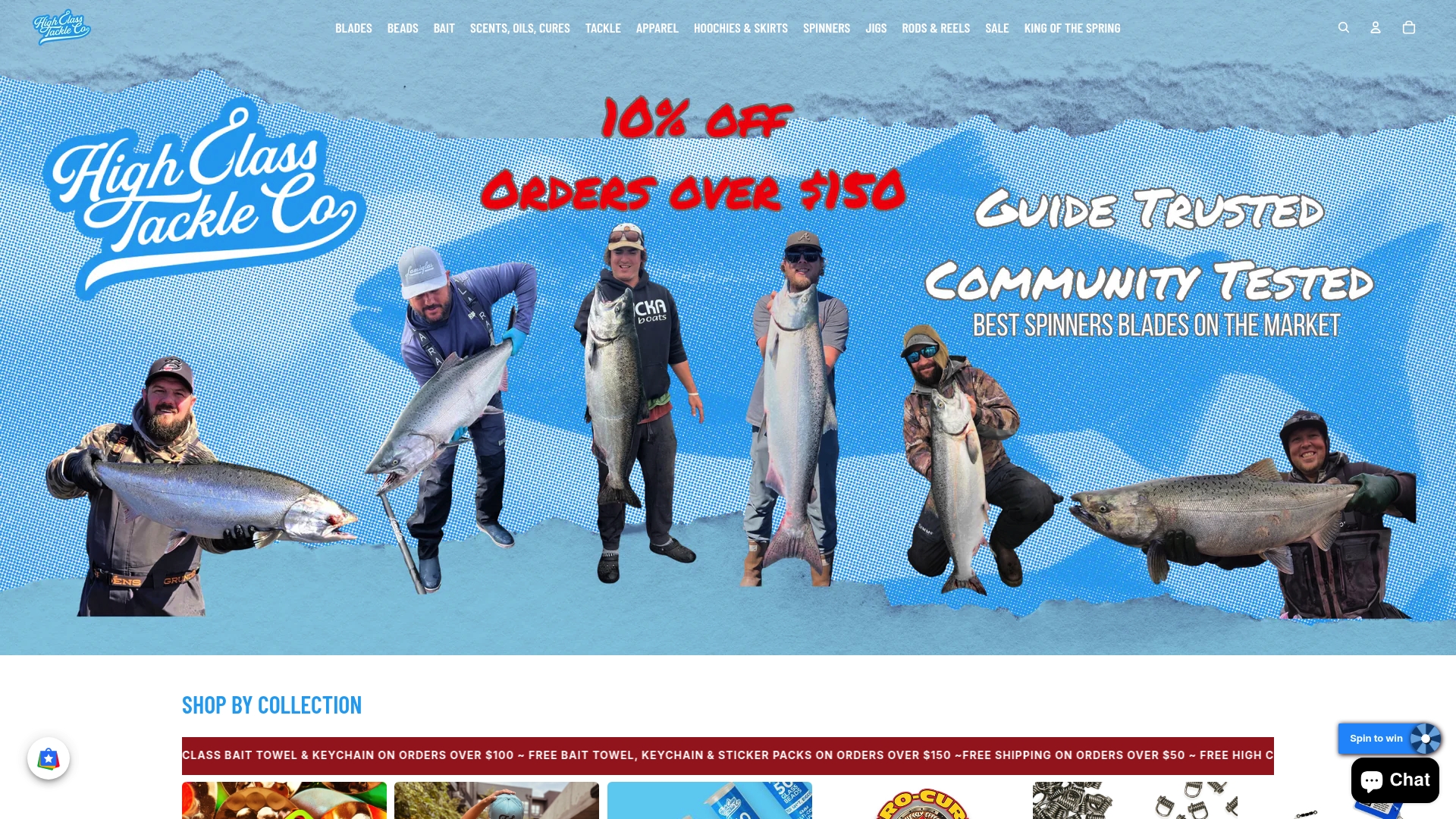
- Flashers & Bumpers give you the 360 and triangle options this guide covers for matching attractor profile to clarity.
- Bait covers the cut-plug herring and scent products that make or break a slow bite.
- Weights let you tune bottom contact across a multi-rod spread without guessing at ounces.
| Category | Why it matters here |
|---|---|
| Flashers & Bumpers | Matches attractor swing to water clarity |
| Bait | Supplies cut-plug herring and scent for presentation |
| Weights | Tunes bottom contact across the spread |
Gear gets you in the game, but reading the water and running the search sequence is still what puts fish in the boat. Browse the full lineup at High Class Tackle Co. and gear up before your next trip.
Authoritative regulation pages and key technique writeups to check before you fish
Check WDFW’s 2026 season announcement for dates and limits, and USGS gauge data for flow before launching.
Sources
- 2026 Columbia River spring Chinook seasons announced | Washington Department of Fish & Wildlife
- Trolling for Chinook on the Columbia River - Randall Bonner
- Spring Chinook alchemy on the Lower Columbia | Game & Fish
- USGS NWIS real-time gauge (example)
FAQ
What’s the best starting depth for Columbia springers?
Start around 15 to 20 feet along island edges or drop-offs for one or two passes. If nothing shows on your sonar, move out to roughly 30 feet and keep widening your search rather than parking on one contour.
How fast should I troll for spring Chinook?
Most anglers run 2 to 2.5 mph to keep a flasher turning properly behind cut-plug herring. Some stuffer plug presentations work better fished much slower, closer to 0.8 mph, especially for moody, cold-water fish.
When should I anchor instead of troll?
Switch to anchoring or plunking when visibility drops under about two feet or flows spike, since springers move into shallow, lower-velocity edges in those conditions. Sardine-wrapped plugs and Kwikfish fished on anchor tend to outperform trolled gear once the water turns high or dirty.
Do I need a special endorsement to fish the Columbia in 2026?
Yes, Washington anglers need a Columbia River salmon and steelhead endorsement starting January 1, 2026, in addition to a standard fishing license. Check current requirements before your trip since in-season rules can change.
What leader length and weight should I run for down-trolling?
A common setup runs 30 to 48 inches of 30 to 50 pound fluorocarbon leader with weights ranging from 6 to 16 ounces depending on rod position and spread size. Shorten your leader in stained water and lengthen it in clear conditions for a more natural presentation.
0 comments