

The most effective way to stop corrosion on saltwater tackle is a disciplined post-trip protocol: rinse, neutralize, air-dry, isolate. Pair that with corrosion-resistant materials and vapor corrosion inhibitor (VCI) storage, and most rust problems disappear before they start. WD-40 buys you a few days, not a season. High Class Tackle Co. builds gear around this exact system because we’ve seen what saltwater does to tackle that skips a step.
TL;DR:
- Rinsing with warm freshwater, neutralizing chloride bonds, and fully air-drying gear are essential steps to prevent rust, especially before storing saltwater tackle.
- Using materials like 316 stainless steel, titanium, and sealed components significantly extends the lifespan of saltwater gear and reduces maintenance.
- Proper storage with vapor corrosion inhibitors and silica gel, along with avoiding airtight seals when gear is damp, minimizes moisture and corrosion risks.
- Regularly inspecting, cleaning, and replacing consumables like silica gel and VCI inserts prevents unnoticed rust development on terminal tackle.
- Most gear failures result from neglecting timely post-trip care rather than manufacturing flaws or bad luck.
Table of Contents
- Corrosion Prevention Saltwater Tackle Checklist
- Why Does Saltwater Cause Corrosion So Fast?
- The Post-Trip Protocol That Actually Works
- Which Materials Actually Resist Saltwater Best?
- What’s the Best Way to Store Saltwater Tackle?
- How Do You Remove Rust From Hooks and Tackle?
- How Often Should You Maintain Saltwater Tackle?
- What Has High Class Tackle Co. Learned From Saltwater Testing?
- What the Industry Gets Wrong About Corrosion Prevention
- Gear Built to Survive the Routine, Not Fight It
- Sources
Corrosion Prevention Saltwater Tackle Checklist
Bookmark this list. It’s the difference between gear that lasts three seasons and gear you’re replacing every spring.
- On the boat: Mist-rinse everything with fresh water before it hits the cooler. Pull hooks and soft plastics off rigs immediately.
- Heavily soiled gear: Give it a warm-water soak to break up caked salt before it dries into the metal.
- After the trip: Air-dry fully, inspect every piece, and separate items by alloy or coating before they go back in the box.
- Short-term storage: Apply a light corrosion inhibitor or drop in a VCI strip.
- Weekly or monthly: Refresh silica gel, swap VCI inserts on schedule, and toss any hook showing pit marks.
Pro Tip: Keep a $5 kitchen scale near your tackle station and weigh your silica gel packs once a month. Once they’ve absorbed close to their rated capacity, they stop pulling moisture and start doing nothing.
Why Does Saltwater Cause Corrosion So Fast?
Corrosion needs three things: reactive metal, water, and oxygen. Saltwater adds a fourth accelerant: chloride ions, which strip away the thin oxide layer that would otherwise slow rust down. That’s why a hook left in a tackle box after a saltwater trip can quickly develop orange rust whereas properly rinsed and dried hooks resist rust much longer.
Mixing metals compounds the problem. When stainless components sit against aluminum or plain carbon steel in a damp compartment, you get galvanic corrosion: the two metals form a tiny battery, and the less noble metal sacrifices itself first. That’s often why one specific hook or split ring rusts out while everything around it looks fine.
Rinsing alone frequently isn’t enough either. Salt crystals hide in crevices, scratches, and worn textured surfaces where a hose spray never reaches, which is exactly why treble hooks keep rusting even after anglers swear they rinsed everything down.
The Post-Trip Protocol That Actually Works
This is the four-step system, broken down into field actions you can do in minutes.
- Rinse. Use a gentle mist setting, not a full-blast nozzle. High pressure can force saltwater deeper into reel seals and drag bearings instead of flushing it out. Warm freshwater dissolves salt faster than cold, so if you have access to a warm hose at the dock, use it.
- Neutralize. A straight rinse knocks off surface salt, but chloride can stay bonded to metal underneath. A surfactant like Salt-Away lifts residue, while an ionic neutralizer like Salt-X actively breaks chloride bonds on hooks that have already seen heavy use. Follow the product’s dilution ratio. Stronger isn’t better here.
- Dry. Air-dry in open, moving air. Skip the heat gun or dashboard-under-the-sun trick until neutralization is done. Applying heat to gear still carrying chloride residue can speed up corrosion instead of preventing it. Give small terminal tackle at least a few hours; reels and heavier hardware need overnight.
- Isolate. Once everything is bone dry, store it. Use VCI-treated boxes or ventilated trays with silica gel, and separate stainless from anodized aluminum or painted components.
Pro Tip: Run your whole four-step routine the same night you fish, even when you’re exhausted. Salt left overnight on a warm boat deck does more damage in eight hours than a week of ordinary storage.
Which Materials Actually Resist Saltwater Best?
Buying the right materials up front cuts your maintenance load dramatically. Not every “stainless” hook or swivel is built the same.
- 316 stainless steel resists saltwater far better than 304 or generic “stainless” hardware because of its higher molybdenum content. Look for it on hooks, split rings, and hardware you can’t easily replace mid-trip.
- Titanium forms a stable, self-healing oxide layer through passivation, which makes it close to corrosion-proof, though the higher cost and different flex profile matter for rod builders.
- Coated hooks (black nickel, red, or painted finishes) work fine for a season but wear through at the point and bend, exposing bare metal. Stainless costs more upfront but lasts multiple seasons where coated hooks need annual replacement.
- Sealed bearings, anodized aluminum reel frames, and ceramic guide inserts are the upgrades that quietly save you the most money over time, since they’re the parts anglers replace most often after saltwater exposure.
What’s the Best Way to Store Saltwater Tackle?
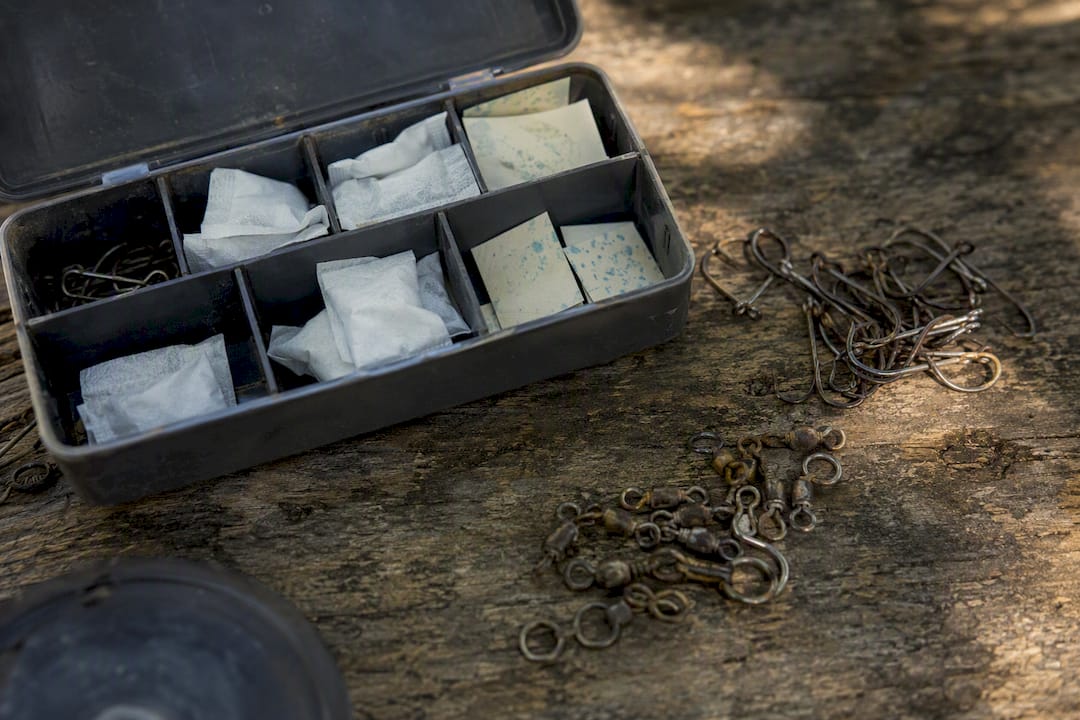
Good storage does the work your maintenance routine can’t. VCI inserts release a protective vapor inside a closed box, creating an atmosphere that resists corrosion, while silica gel absorbs ambient humidity. Used together, they cover both the vapor and moisture side of the equation.
Here’s the mistake that undoes all of it: sealing a box tight while gear is even slightly damp. A sealed airtight box traps that moisture against the metal and can actually accelerate rust compared to leaving the box open. Ventilated trays with drainage channels beat sealed compartments for anything that sees regular saltwater use.
- Refresh or replace silica gel once it stops feeling dry to the touch.
- Swap VCI inserts roughly every two to three years, since they lose effectiveness over time.
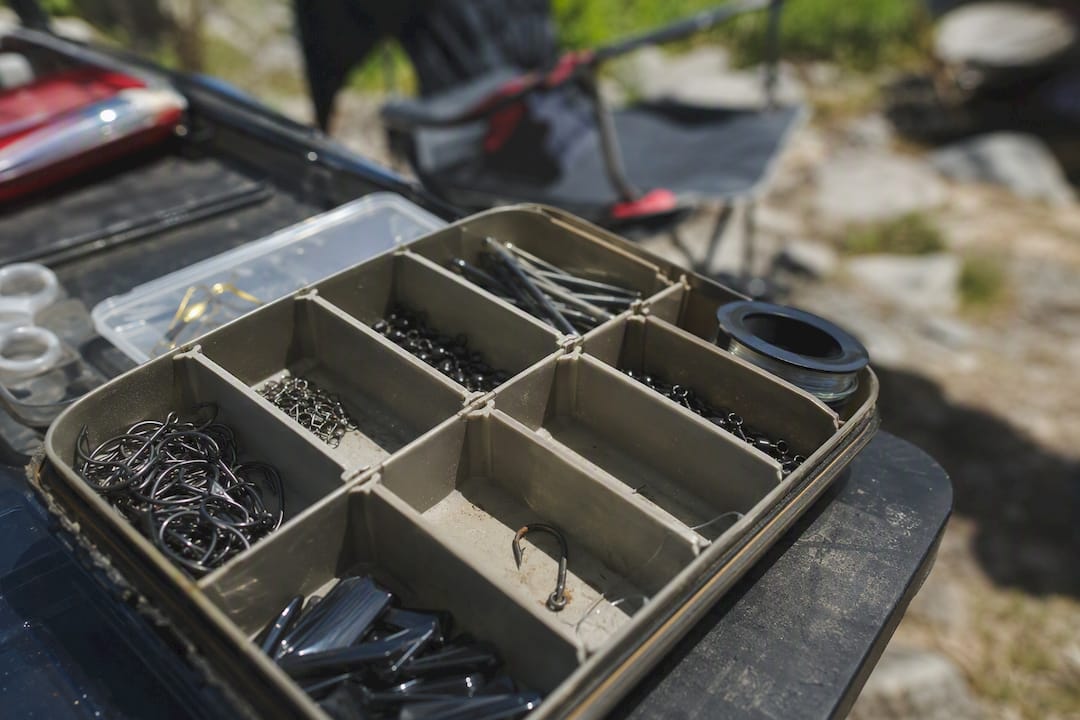
- Label compartments by alloy or coating type so you’re not mixing stainless and painted hardware in the same tray.
Pro Tip: A component tackle box with separate ventilated compartments does more for corrosion prevention than any spray you can buy, simply because it keeps problem combinations apart.
How Do You Remove Rust From Hooks and Tackle?
Light surface rust is fixable. Deep pitting usually isn’t.
- A vinegar soak for 15 to 30 minutes loosens light rust bloom on hooks and hardware without damaging the base metal.
- Barkeeper’s Friend paste with a soft toothbrush handles stubborn spots on reel frames and larger components.
- Once clean, dry completely and recoat with a flexible corrosion inhibitor like Boeshield T-9 to seal the surface again.
- If you see pitting, flaking, or a hook point that’s lost its edge, replace it. Restored metal with compromised strength will fail exactly when you need it most, usually on the hookset.
How Often Should You Maintain Saltwater Tackle?
Rinse and dry after every single trip, no exceptions. Check hooks, guides, and hardware for early rust weekly if you fish often. Do a full inventory once a month: refresh silica gel, check VCI inserts, and rotate out anything showing wear.
Consumables are cheap insurance. Silica gel packs are an inexpensive and effective moisture absorber, requiring occasional recharging to maintain their performance. VCI inserts lose effectiveness over time and require periodic replacement, typically every few years. Watch for orange bloom on threads, stiff reel handles, and pitted hook points. Those are your signals to act now, not next trip.
What Has High Class Tackle Co. Learned From Saltwater Testing?
We’ve spent years writing about estuary tides and rig setups and terminal gear choices for the Pacific Northwest, and the pattern is always the same: gear fails from neglect, not from bad luck. Anglers who separate tackle by mission (bottom rigs in one box, swivels and clips in another) catch corrosion early because they’re not digging through a jumbled mess to find gear.
Our best field habit: check silica gel the same day you check your leader material. If one’s stale, the other probably needs attention too. Keep terminal components in their own compartments, and you’ll spot the first sign of rust on a single hook instead of an entire tray.
What the Industry Gets Wrong About Corrosion Prevention
Most tackle advice treats corrosion prevention like a shopping list: buy the spray, buy the box, done. That misses the actual lesson from the chemistry. Rust isn’t a product problem, it’s a timing problem. The gap between when saltwater hits your gear and when you rinse it matters more than which brand of neutralizer sits on your shelf.
The conventional wisdom oversells WD-40 and undersells the drying step. Anglers reach for a spray can because it feels like doing something, but a can of water displacer sprayed onto gear that’s still wet with chloride residue is just delaying the inevitable. The reader should prioritize sequence over products: rinse fast, neutralize when the gear has seen heavy use, dry it completely before anything goes back in a box, and only then worry about which inhibitor or storage system to use.
If there’s one thing anglers underestimate, it’s how much a five minute delay after a trip costs them in hook replacements over a season. The habit matters more than the hardware.
— Nick
Gear Built to Survive the Routine, Not Fight It
A disciplined rinse-neutralize-dry-isolate routine only works if your gear cooperates with it, and that’s where most tackle boxes let you down. Highclasstackleco’s component tackle box is built with separated, ventilated compartments designed for exactly this workflow: VCI inserts and silica gel fit right in, and stainless terminal gear stays isolated from anything that could trigger galvanic corrosion.

If you’re replacing corroded hooks, swivels, or split rings instead of restoring them, our terminal tackle and components collection is stocked with corrosion-resistant hardware built for saltwater, not just labeled for it. Grab a component box, stock it with 316 stainless terminal gear, and your next saltwater trip starts with a system instead of a guess.
Sources
For deeper detail on the science and products behind these recommendations, see Mercury Marine’s four-step rust prevention guide and Zerust’s VCI storage research.
- Saltwater Fishing Reel and Tackle Box Rust Prevention Tips — Zerust
- Why treble hooks rust and the chemistry fix — MasterFishingMag
- Tackling Rust: How to Keep Your Fishing Gear Rust-Free — Boat Outfitters
- Why Your Saltwater Hooks Keep Rusting So Fast — SaltwaterSpots
Recommended
- Saltwater Bottom Fishing Rigs: Build, Tie, and Fish Them – High Class Tackle Co.®
- Offshore Saltwater Tackle Types: 2026 Angler’s Guide – High Class Tackle Co.®
- Tides and Saltwater Fishing: What Every Angler Must Know – High Class Tackle Co.®
- Super Bait Secrets: Top Picks for Salmon and Steelhead – High Class Tackle Co.®
0 comments