

Not all spinner blades are created equal. If you’ve been grabbing whatever’s on the shelf and wondering why your buddy keeps out-fishing you, custom spinner blades are almost certainly part of the answer. The shape, size, finish, color, and even how you apply scent all work together to determine whether a salmon or steelhead crushes your lure or ignores it completely. This guide breaks down every customization factor that matters, so you stop guessing and start catching.
Table of Contents
- Key takeaways
- Custom spinner blades: shape is everything
- Matching size and weight for proper action
- Choosing finishes and colors for your conditions
- Advanced customization: scent, patterns, and tandem rigs
- Keeping your custom blades in peak condition
- My take on custom blades after years on the water
- Get your custom spinner builds dialed in
- FAQ
Key takeaways
| Point | Details |
|---|---|
| Blade shape drives lure action | Colorado blades excel in murky water; Willow blades shine in clear, fast current; Indiana blades cover the middle ground. |
| Size and weight must match | Pairing the wrong blade size to your head weight kills tracking and ruins your lure’s action. |
| Finish choice depends on conditions | Silver excels in direct sunlight; gold and copper outperform in low light and overcast skies. |
| Tandem setups cover more situations | A small Colorado or Indiana front blade paired with a larger Willow rear blade handles 70% of typical fishing scenarios. |
| Scent placement protects your blades | Apply scent gel to tubing or the painted side only. Never put it directly on the chrome finish. |
Custom spinner blades: shape is everything
Most anglers know that blade shape affects lure action, but few understand how deep that rabbit hole goes. Blade shape drives lure action in a very specific way. Colorado blades produce big, slow, thumping vibration and generate substantial lift. Willow blades spin tight and fast, generating maximum flash with minimal drag. Indiana blades split the difference, giving you moderate vibration and decent flash in a single package.
Here’s how each blade type plays out on the water:
- Colorado blades are your best friend in stained or murky water. Fish can’t see far, so they home in on vibration. The wide, rounded profile of a Colorado creates that heavy thump salmon and steelhead feel before they even spot the lure.
- Willow blades belong in clear water and deeper, faster runs. They spin tight to the body, generate intense flash, and cut through current without pulling your setup off course. When fish can see well, flash triggers the strike.
- Indiana blades are the workhorse option. They work in medium-clarity water, give you a combination of flash and vibration, and are forgiving when conditions change mid-session.
The real magic happens with tandem setups. Tandem blade combinations pairing a small Colorado or Indiana front blade with a larger Willow rear blade cover roughly 70% of typical fishing situations. The front blade adds vibration and disrupts water flow, which makes the rear blade spin harder and flash more aggressively. You’re essentially giving fish two sensory triggers in a single cast.
Pro Tip: When you run tandem blades, avoid combining shapes with conflicting hydrodynamics. Pairing two Willow blades or two Colorados is fine. But randomly mixing shapes without understanding how they interact can cause erratic blade action, line twist, and premature bearing wear.
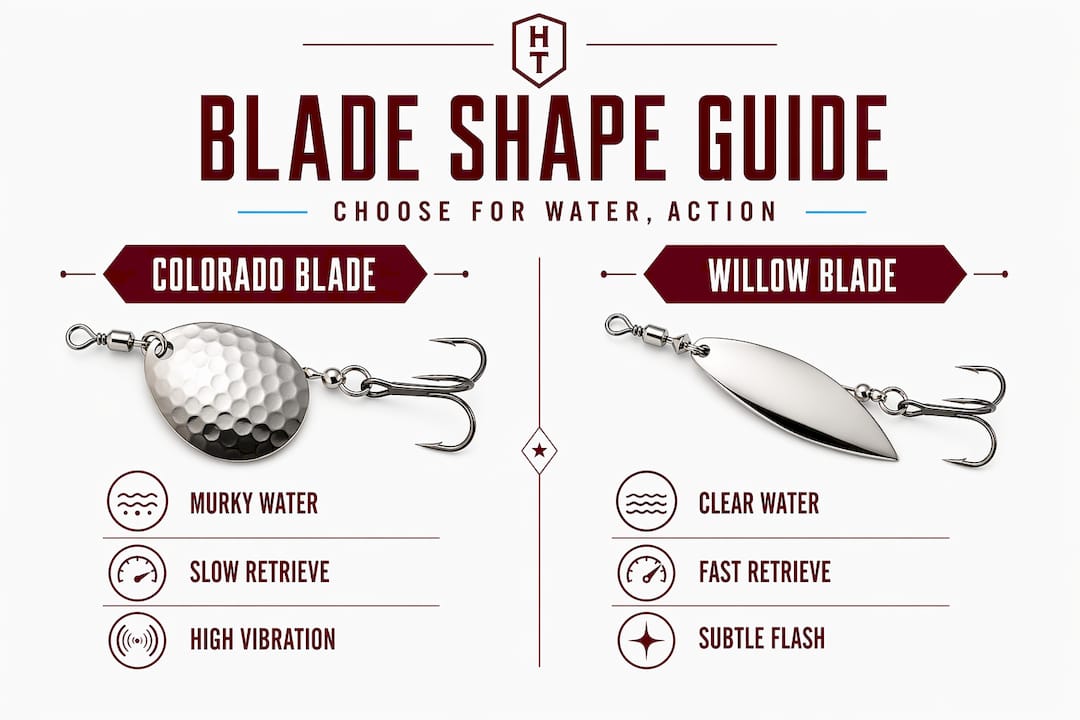
| Blade type | Best water | Primary trigger | Best current speed |
|---|---|---|---|
| Colorado | Murky, stained | Vibration | Slow to medium |
| Willow | Clear, deep | Flash | Medium to fast |
| Indiana | Medium clarity | Vibration and flash | Medium |
Matching size and weight for proper action
Getting the blade shape right and then mismatching your head weight is one of the most common mistakes out there. The relationship between blade size and head weight is not flexible. Match blade to head weight precisely: a 3/8 oz head pairs with #4 to #5 blades, and a 1/2 oz head handles #6 to #7 blades. Go outside that range and you will watch your lure roll, track sideways, or helicopter on the retrieve.
Leader length is the other variable most anglers underestimate. For a 3.5-inch spinner, a 24 to 28-inch leader gives you the skip-beat action that drives salmon and steelhead crazy. Too short and the lure can’t develop its rhythm. Too long and you lose sensitivity and control.
Large Colorado blades also generate massive lift on the retrieve. That’s a feature when it’s working for you and a serious problem when it’s not. If you’re reeling too fast or using an oversized blade without a heavy enough head, the lure rises out of the strike zone and you’re just wasting casts. Weight down or slow your retrieve before you swap rigs.
Pro Tip: If your spinner keeps rising on the retrieve, increase your head weight by 1/8 oz before anything else. That single change often fixes tracking issues faster than swapping blade sizes.
For a deeper breakdown of how spinner setups translate to real PNW river action, the spinnerbait guide for Pacific Northwest fishing at Highclasstackleco covers specific scenarios in detail.
Choosing finishes and colors for your conditions
This is where personalized spinner blades start to look less like a luxury and more like a necessity. The finish you choose can be the difference between getting bit and going home empty.
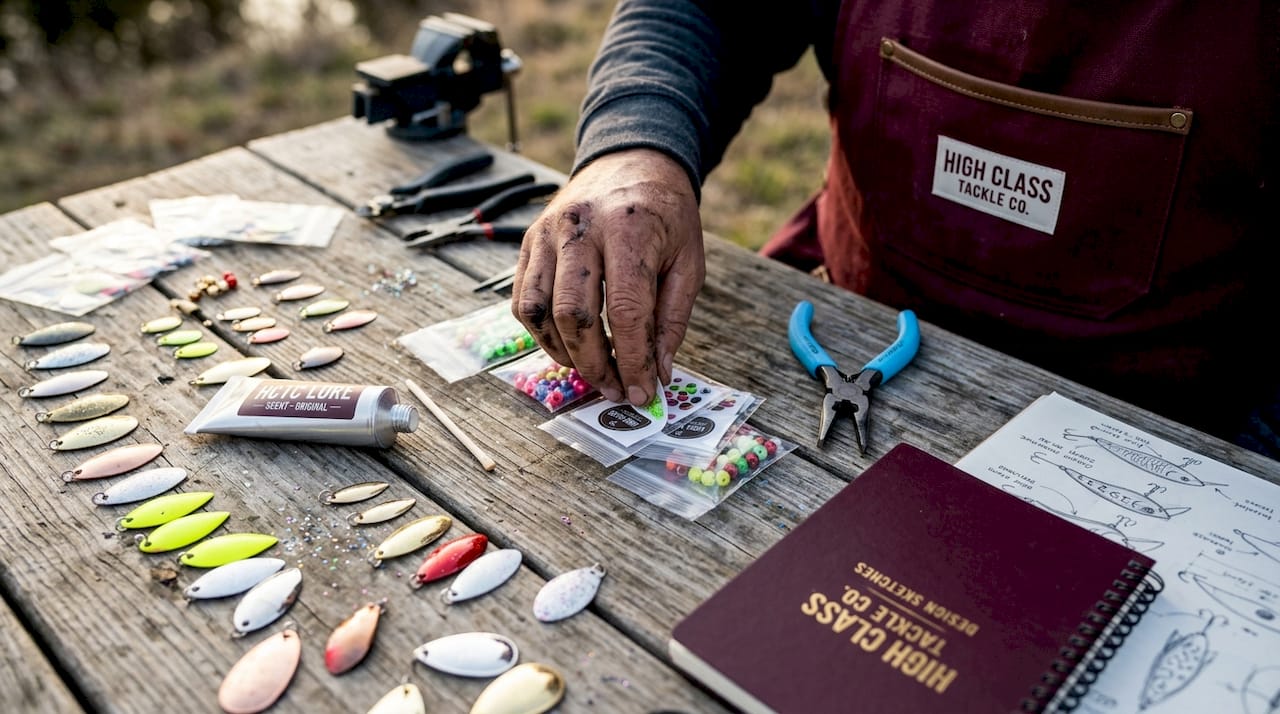
In clear water, fish are spooky. Natural finishes like silver avoid triggering that bolt response and still produce serious flash when the sun hits them right. But go silver in dirty water and you’re fishing a ghost. High-contrast patterns like black and yellow or chartreuse give fish something to track and react to when visibility is limited.
Light conditions add another layer. Silver blades fire in direct sunlight but fall flat under cloud cover because they need direct light to generate flash. Gold and copper finishes, on the other hand, reflect ambient light. Those are your overcast and early morning finishes. On a gray Pacific Northwest morning on the Clearwater or the Deschutes, gold outproduces silver by a wide margin.
Here’s a quick-reference breakdown by condition:
- Bright sun, clear water: Silver or chrome. Let the flash do the work.
- Overcast, clear water: Gold or copper. Softer glow that doesn’t spook fish.
- Murky or stained water: Chartreuse, orange, or bright red with black accents. High contrast is your friend.
- Low light, low visibility: UV reactive finishes or glow-in-the-dark paint on painted blades.
Pro Tip: Keep at least three finish options in your kit. Start with silver, adjust to gold if you’re getting follows but no bites, and go high-contrast if you’re getting zero reaction after a dozen drifts.
Advanced customization: scent, patterns, and tandem rigs
Beyond shape and color, truly unique spinner blades come from how you personalize the details. This is where bespoke fishing tackle starts separating casual anglers from the ones who consistently put fish on the bank.
Here’s a step-by-step approach to getting the most out of your custom spinner builds:
- Apply scent strategically. Scent gel on the tubing or the painted side of the blade protects your chrome finish and keeps scent active longer. The slower water behind the blade holds scent better than the high-pressure side, so you’re not just protecting the finish. You’re actually maximizing scent dispersion where fish encounter it.
- Paint or stencil custom patterns. Whether you’re mimicking alevin, small baitfish, or just going full chaos with a color scheme no commercial lure would ever try, custom painting gives your blade a profile fish haven’t been conditioned to ignore. Repetitive commercial patterns get recognized by pressured fish. Unique spinner blades break that conditioning.
- Set up tandem rigs with purpose. Don’t just throw two blades together. Decide what you want the rig to do. If you’re in fast current, pair a front Indiana with a rear Willow to stay stable while generating serious flash. For slow, murky pools, try a front and rear Colorado for maximum vibration.
- Match your blade pattern to local forage. On rivers where fish are keyed in on juvenile chinook or pink salmon, a silver blade with pink accents will outperform a generic setup nearly every time.
Pro Tip: Never apply scent directly to the chrome side of your blade. Beyond damaging the finish, you’re also wasting product. The fast-moving water on that side disperses scent too quickly for fish to track it effectively.
Selecting the right line to complement your spinner setup matters just as much as the blade itself. The steelhead fishing line guide from Highclasstackleco gives you the pairing details to get the most out of your custom builds.
Keeping your custom blades in peak condition
Custom spinner blades are an investment. Treat them like one.
- Inspect blades after every session. Look for bent pins, nicked edges, or tarnished finishes. A dented blade rotates unevenly and ruins the action you’ve spent time dialing in.
- Clean chrome and painted finishes with fresh water. Salt, river minerals, and scent gel residue all accelerate corrosion. A quick rinse after each trip adds significant life to your blades.
- Check your swivels and clevis pins. Blade rotation smoothness depends heavily on quality wire gauge and clean hardware. A gummed-up clevis kills blade spin before the lure even reaches the strike zone.
- Replace blades that show deep scratches or pitting. Surface damage disrupts flash patterns and can introduce drag that throws off your tracking.
- Store blades separated, not piled together. Metal on metal contact is how finishes get scratched between trips, not just during them.
A fresh, well-maintained blade produces the action you expect. A beat-up one just looks like trash drifting past a fish that’s seen a thousand lures before.
My take on custom blades after years on the water
I spent a lot of seasons fishing generic off-the-rack spinners and wondering why certain days just wouldn’t produce. The trial-and-error period with blade shapes and colors was humbling. I remember one run on a coastal river where I had textbook conditions: cool, clear water, decent flow, fish in the system. I lost count of drifts before I finally swapped from a silver Colorado to a gold Indiana. Three casts later, a steelhead buried it.
What I’ve learned is that matching your gear to conditions isn’t just a suggestion. It’s the actual job. Most anglers show up with one or two blade options and hope for the best. The anglers who consistently out-fish everyone else show up with six or eight customized setups and make decisions based on what the water and the light are telling them.
The scent application tip changed my game more than I expected. I had always slapped gel on whatever surface was handy. Switching to the tubing and painted side only seemed like a small detail. The difference in how long scent persisted in the water behind my blade was real and noticeable within the first few drifts.
My honest advice: start with blade shape and get that right before you obsess over color. Shape drives action. Action is what triggers the strike. Color closes the deal once the fish is already looking. Get those two in the right order and your catch rate will jump.
— Nick
Get your custom spinner builds dialed in
Ready to put this into practice? Highclasstackleco has built a lineup specifically for salmon and steelhead anglers who want to stop guessing and start fishing with purpose. From proven Colorado blade packs to head-and-hook combos built for real river conditions, every product is designed by anglers who fish the same water you do.
The Nina #5 Blade 3/8oz combo is a proven starting point if you want a head-and-blade setup that’s already dialed for the weight-to-blade ratio this article covers. For Colorado blade fans, the Spring Fling 3.5 Colorado Blades three-pack gives you high-quality murky-water options ready to customize. Keep your builds organized with the component tackle box from Highclasstackleco, or grab a digital gift card if you want to explore the full tackle selection before committing to a specific build.
FAQ
What makes custom spinner blades better for salmon and steelhead?
Custom spinner blades let you match blade shape, size, finish, and color to specific water conditions and fish behavior, which off-the-shelf options rarely do. That specificity directly improves your lure’s effectiveness and your catch rate.
Which blade shape works best in murky water?
Colorado blades are the top choice for murky or stained water because they generate heavy vibration that fish can detect at distance, even with limited visibility.
How do I match blade size to head weight?
A 3/8 oz head pairs correctly with #4 to #5 blades, while a 1/2 oz head handles #6 to #7 blades. Mismatching these causes poor tracking and kills lure action.
Can I apply scent directly to my spinner blade?
Avoid applying scent to the chrome side of the blade. Apply scent gel to the tubing or painted side instead to protect the finish and keep scent active longer in the slower water behind the blade.
What finish should I use in low light or overcast conditions?
Gold and copper finishes outperform silver in overcast or low-light conditions because they reflect ambient light rather than requiring direct sunlight to generate flash.
Recommended
- Spinnerbait guide: boost your Pacific Northwest fishing – High Class Tackle Co.®
- Salmon plug fishing rivers: Proven PNW tactics and gear – High Class Tackle Co.®
- Types of fishing line for steelhead: a PNW guide – High Class Tackle Co.®
- The Nina #5 Blade 3/8oz Body 2/0 Gamakatsu Siwash Hook – High Class Tackle Co.®
0 comments