

Start with 18 to 24 inches behind an 8-inch flasher when you’re chasing coho, and stretch to 36 to 48 inches behind an 11-inch flasher for chinook. Rig a hoochie on fluorocarbon at a moderate length behind an 11-inch flasher as your baseline setup. From there, adjust in small increments until rods start bending. Small tweaks like that are normal, not a sign you rigged it wrong.
TL;DR:
- Shorter leaders of 16 to 28 inches behind an 8-inch flasher are best for coho, especially in active bites or stained water conditions.
- Longer leaders of 36 to 60 inches on an 11-inch flasher improve bait naturalness and are recommended for pressured chinook or clear water.
- Fluorocarbon is the default leader material due to its invisibility and sinking properties, with the test strength matching the target species’ size.
- On-the-water testing by adjusting leader lengths in 6 to 12-inch increments is essential to optimize bites, as fixed charts are only starting points.
- Pre-tied leaders and organized terminal tackle significantly save time during bites and improve the ability to quickly adapt to changing fish behavior.
Table of Contents
- Flasher Leader Length Chart for Salmon: Quick Reference
- How Does Leader Length Change Lure Action?
- What Leader Length Works Best for Coho vs. Chinook?
- Which Leader Material and Knots Work Best Behind a Flasher?
- On-Water Tuning Drills That Find the Right Leader Length Fast
- High Class Tackle Co. Field-Tested Leader Rigs
- Flasher Leaders vs. Other Attractor Setups
- Manufacturer Charts and Fisheries Guidance Worth Bookmarking
- The Real Lesson on Flasher Leader Length
- Rig Smarter With Pre-Tied Leaders From High Class Tackle Co.
- Sources
Flasher Leader Length Chart for Salmon: Quick Reference
Before you dig into the “why,” here’s the cheat sheet you can screenshot and use on the boat. These ranges come straight from manufacturer charts and years of guide-tested rigging, tuned for the two most common flasher sizes you’ll run behind a downrigger or diver.
| Flasher Size | Lure Type | Recommended Leader Length | Species Cue |
|---|---|---|---|
| 8" | Hoochie / fly | 16"–28" | Coho, aggressive bites |
| 8" | Small spoon | 24"–36" | Coho, mixed bag |
| 11" | Hoochie / fly | 24"–36" | Chinook, general use |
| 11" | Spoon / plug-cut bait | 36"–60" | Chinook, picky or clear water |
Manufacturer guidance from Rapala’s Coyote flasher chart backs these ranges almost exactly, and other rigging guides recommend calculating leader length as a multiplier of flasher size, roughly 1.5 times the flasher’s length for hoochies and 2 to 2.5 times for spoons. Very long leaders can cause trouble at the net. They tend to tangle easier, take longer to retrieve, and make netting a fish more difficult.
How Does Leader Length Change Lure Action?
A flasher spins, kicks, and vibrates to create the rotational energy that makes your lure dance. Leader length controls how much of that energy actually reaches the hook. Short, stiff leaders transfer almost all of it, which is why hoochies and flies (lures with no built-in action of their own) need to sit close behind the flasher, usually under 30 inches, to swim right.
Spoons and plug-cut baits are different animals. They already wobble and roll on their own, so a longer leader lets them settle into their natural rhythm instead of getting yanked around by the flasher’s spin. Couple a spoon too close to an aggressive flasher and it spins out or skips instead of rolling smoothly.
Water conditions shift these rules further. Murky, stained water calls for shorter leaders so fish can find the lure fast, since the flasher’s flash and vibration become the primary attractor. Clear water, faster trolling speeds, or spooky, well-pressured chinook usually reward longer leaders that let the bait present naturally, further from the commotion. Slow speed and murky flow, on the other hand, forgive almost any leader length, which is exactly why testing on the water still beats any fixed chart.
What Leader Length Works Best for Coho vs. Chinook?
Coho are aggressive, fast-moving, and drawn to erratic action. That’s why shorter leaders dominate coho fishing. Start at 18 to 24 inches behind an 8 inch flasher, and don’t be afraid to go as short as 16 inches when fish are actively chasing bait near the surface. A hoochie in glow-green or cerise on a 16 to 28 inch leader, fished at 2.5 to 3 mph, is a proven coho combination.
Chinook play a longer game. These fish tend to inspect a bait before committing, especially in clear water or heavily fished stretches. Longer leaders that provide room for a spoon or plug-cut herring to move naturally, rather than getting muscled around by the flasher’s spin, often result in better presentations, especially with finicky fish. A 60 inch leader on a 11 inch flasher, running a whole plug-cut herring at 1.8 to 2.2 mph, is a classic setup for pressured chinook in clear tidal water.
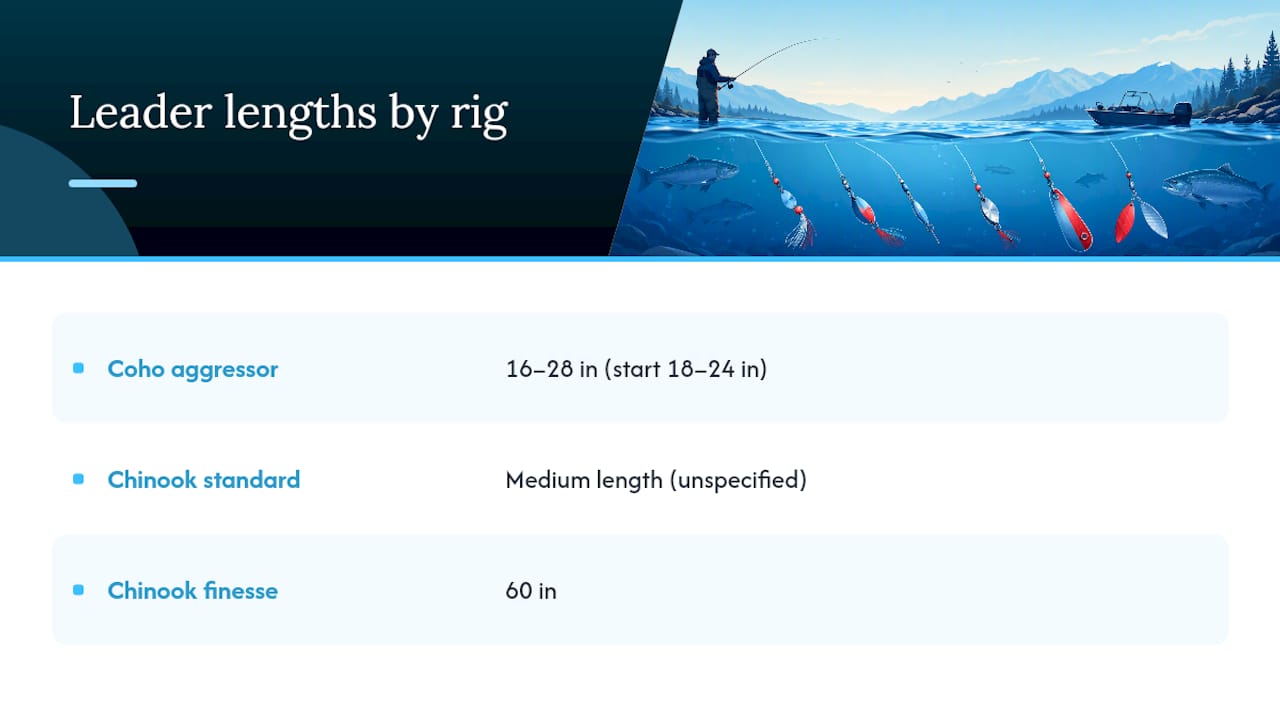
Here are three rigs worth tying tonight:
Coho aggressor: 8" flasher, relatively short leader, fluorocarbon leader suited for target species, glow hoochie, trolled at a moderate speed.
Chinook standard: 11" flasher, medium length leader, fluorocarbon leader suited for species, spoon lure, trolled at a moderate speed.
Chinook finesse: 11" flasher, longer leader, stronger fluorocarbon leader, plug-cut herring, trolled at a slower speed.
Every one of these is a starting point, not gospel. Fish move, light changes, and current shifts. Treat these numbers as your first cast of the day, not your last.
Which Leader Material and Knots Work Best Behind a Flasher?
Fluorocarbon is the default choice for most salmon leaders, and for good reason. It’s nearly invisible underwater, sinks slightly, and holds enough stiffness to keep hoochies and flies swimming true. Monofilament still earns its place on spoon leaders in stained water, where its extra flexibility lets the bait roll more freely and its slight buoyancy can help a plug-cut bait ride a touch higher.
Pound test depends entirely on target species. Run 10 to 20 lb test for coho and other smaller salmon, where finesse and action matter more than raw strength. Step up to 20 to 30 lb for chinook, where a big fish and heavier gear (like whole herring) demand more backbone.
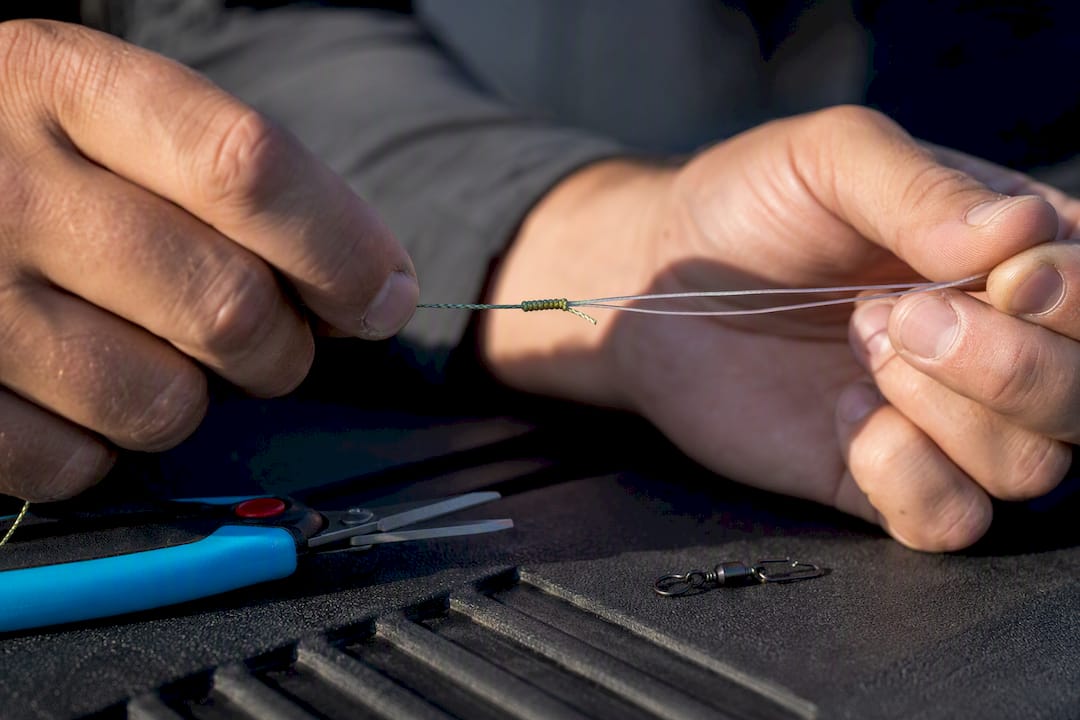
Knots matter as much as material. Use an FG knot or a strong uni-to-uni connection where braided mainline meets your leader, since it needs to slide through rod guides cleanly. For attaching hooks or lures, a Palomar knot or improved clinch knot holds reliably under the surges of a running salmon, as detailed in this step-by-step rigging tutorial. Add a small snap swivel between flasher and leader for lure changes in seconds, not minutes.
On-Water Tuning Drills That Find the Right Leader Length Fast
Fish don’t read charts, so treat every trip as a live experiment. Here’s the drill:
- Rig your starting leader length based on species and flasher size.
- Hold trolling speed and depth constant. The Washington Department of Fish and Wildlife recommends 1.5 to 3.5 mph as the working range for most salmon trolling setups. Pick a speed inside that window and stick to it.
- Fish that exact setup for 10 to 20 minutes and log what happens: strikes, marks on the sounder, or nothing at all.
- If nothing changes, adjust leader length by 6 to 12 inches, one direction at a time, and repeat.
- If length changes alone aren’t producing, swap lure type or flasher size before you second guess the leader again.
Pro Tip: Pre-tie six to eight leaders in your go-to lengths before you leave the dock. When fish are marking and you need to test fast, swapping a pre-tied leader with a snap takes ten seconds. Re-tying a knot at the rail costs you five minutes of fishing time you’ll never get back.
High Class Tackle Co. Field-Tested Leader Rigs
Here’s what earns dock time in our shop. For coho, run a 20 inch leader of 15 lb fluorocarbon behind an 8 inch flasher, tipped with a glow or UV hoochie. For chinook, go 42 inches of 25 lb fluorocarbon behind an 11 inch flasher, paired with a spoon or cut-plug herring.
Store pre-tied leaders on a foam leader board or in a component tackle box so they stay untangled and ready to clip on. Long chinook leaders past 48 inches take extra care at the net. Have your netter ready before the fish gets close, since a long leader gives a big chinook more room to make one last run right at the boat.
Flasher Leaders vs. Other Attractor Setups
Flashers aren’t the only way to put flash and vibration in front of a salmon, but they solve a specific problem better than the alternatives. Dodgers create a tighter side-to-side kick with less overall flash, which works well in calmer water but transfers less rotational energy down the leader. That means dodger leaders typically run shorter than flasher leaders paired with the same lure, since there’s simply less action to buffer.
Diving planers and divers get your bait deep without any attractor action at all. They solve depth, not visibility, which means they pair well with self-acting lures like spoons and plugs but do nothing to draw fish in from a distance the way a flasher’s flash and spin can.
In-line attractors like small dodgers or beads add subtle flash right at the lure without the bulk of a full-size flasher. They’re a fine choice in gin-clear water where a big flasher might spook fish, but they lack the raw pulling power that makes flashers the go-to for murky rivers and stained tidal water.
For most trolling situations, a properly tuned flasher and leader combination out-fishes these alternatives because it lets you control both attraction and lure action independently. Change the flasher size for more or less flash. Change the leader length for more or less action. That’s a level of control dodgers and bare divers simply can’t match.
Manufacturer Charts and Fisheries Guidance Worth Bookmarking
For exact numbers by flasher model, Rapala’s Coyote flasher guide is a solid starting reference. For rigging basics, speed, and species-specific trolling advice, the Washington Department of Fish and Wildlife’s salmon fishing guidance covers the fundamentals well. For leader length multipliers by flasher size, the dodger and flasher leader chart at LakeMichiganAngler breaks down the math behind the ranges used throughout this guide.
The Real Lesson on Flasher Leader Length
Most anglers treat leader length like a fixed spec, something you set once and forget. That’s backwards. The charts and ranges in this guide are launch points, not finish lines. The anglers who consistently put fish in the box are the ones willing to change a leader by 6 inches mid-morning because the bite went quiet.
Where conventional advice falls short is treating chinook and coho leader lengths as universal numbers instead of starting ranges tied to water clarity, speed, and mood. A 40 inch chinook leader that crushed it in stained river water might sit dead in glassy, clear conditions the next tide change. The fish don’t care what the chart says.
Prioritize this: rig two or three leader lengths before you leave the dock, hold your speed steady, and change one variable at a time. That discipline matters more than memorizing exact inches. Leader length is a tool you adjust on the fly, not a rule you set and forget.
— Nick
Rig Smarter With Pre-Tied Leaders From High Class Tackle Co.
Tying six leaders at the boat ramp while fish are marking on the sounder is time you don’t get back. There are options that solve that problem before you leave the driveway, with terminal tackle, blades, and components built for exactly the kind of fast leader swaps this guide walks through.
Whether you’re building out a coho hoochie spread or rigging up 40 inch chinook leaders for clear water, Terminal tackle and components provide hooks, snaps, and swivels to pre-tie a full rotation of leaders in one sitting. Stock a proper component tackle box so every length and lure combination is organized and ready to clip on the second the bite changes. Browse the full lineup at High Class Tackle Co. and get your leader box built before your next trip out.
Sources
- How to set up a trolling rig for salmon (WDFW guidance excerpt)
- Recommended Leader Lengths for Trolling Dodgers
- Knots
0 comments