

Great Lakes salmon gear differences are defined by the specific demands of trolling open water versus fishing from a pier, with rod length, reel type, line setup, and depth control tools each playing a distinct role. The Great Lakes fishery targets Chinook, Coho, and steelhead in water that runs deep and cold, which means generic freshwater gear falls short fast. Matching your tackle to the method and species is not optional. It is the difference between a screaming reel and an empty cooler. This guide breaks down every major gear category so you can build a setup that actually performs.
1. What are the key great lakes salmon gear differences by rod and reel?
The industry standard trolling rod is 8’6" with moderate action and medium to medium-heavy power. That specific combination is not arbitrary. It loads evenly under downrigger weight and cushions violent salmon runs without hinging at the tip.
Rod action is where most anglers get burned. A fast-action rod transmits too much shock during a strike, and fast-action rods tear hooks from salmon mouths at a rate that experienced trollers refuse to accept. Moderate action lets the blank act as a shock absorber alongside your drag. That dual-dampening system is what keeps big Chinook pinned.
Pier fishing demands a completely different rod profile:
- Length: 9–10 feet for casting distance over structure and water
- Power: Medium-heavy to handle heavy lures and strong currents
- Action: Moderate to fast for casting accuracy and sensitivity
- Material: Fiberglass composites or graphite blends for durability
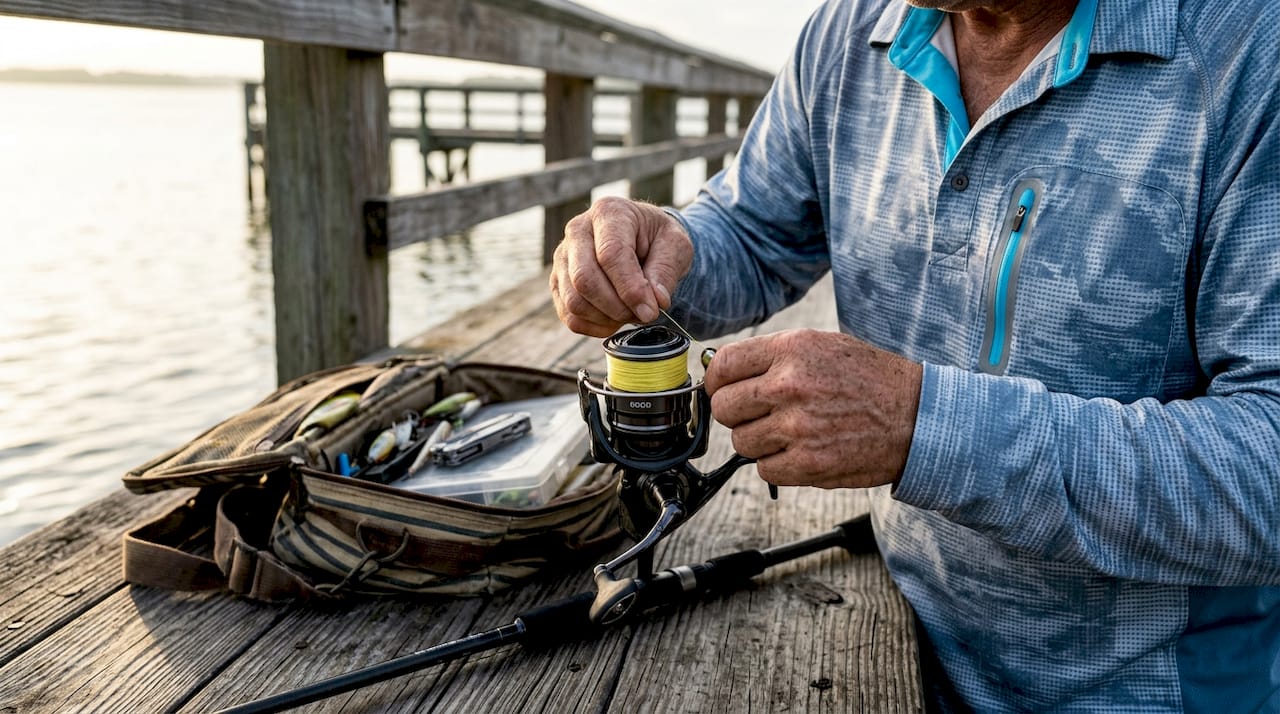
Reel selection follows the same logic. Spinning reels sized 5000–8000 are the standard for pier and bank fishing because they handle long casts and are easy to manage in tight spaces. Boat trollers run conventional line-counter reels. Those reels let you drop a lure to an exact depth and repeat it every single pass.
Pro Tip: Mark your line-counter reel depth on a waterproof notepad after every productive pass. When you find the depth that produces, you can return to it in seconds instead of guessing.
2. How do downriggers and depth control tools differ?
The standard six-rod trolling spread uses two downriggers, two Dipsy divers, one lead core or copper line, and one back rod. Serious anglers expand that to eight rods by adding planer boards. Each tool in that spread serves a specific depth and horizontal zone.
Here is how each depth control tool functions:
- Downriggers: Pin lures at exact depths using a weighted ball and release clip. They are the most precise tool in the spread.
- Dipsy divers: Dive and track horizontally to spread lures away from the boat’s wake. They cover mid-column zones that downriggers miss.
- Lead core or copper line: Dives based on the amount of line let out. Useful for mid-depth coverage without additional hardware.
- Planer boards: Run lures far to the side of the boat, covering water that boat traffic has not disturbed.
- Back rod: Trails a lure near the surface directly behind the boat, targeting fish that rise into the prop wash.
Manual downriggers cost between $150 and $200 and work well for anglers who fish occasionally. High-end electric models run between $1,000 and $1,300 and add features like bottom tracking and network synchronization. That price gap is real, but so is the time savings when you are managing six rods and need to reset depths quickly.
Pro Tip: If you run electric downriggers, use the bottom-tracking feature when salmon are hugging the thermocline. It keeps your lures in the strike zone automatically as depth changes.
Electric downriggers become essential for multi-rod spreads because manual retrieval slows you down during active bites. When fish are hot and you need to reset fast, electric retrieval is not a luxury. It is a tactical advantage.
3. What fishing line and leader combos work best for Great Lakes salmon?
Line selection is a strategic decision, not a preference. The most effective setup pairs 30lb braided mainline with a 25–30 foot monofilament top shot. The braid gives you depth precision and sensitivity. The mono top shot stretches under load, absorbing the shock that would otherwise tear a hook free during the final fight.
Key line choices by technique:
- Trolling mainline: 30lb braid for low stretch and thin diameter
- Monofilament top shot: 25–30 feet of 20–25lb mono for shock absorption
- Pier casting: 15–20lb monofilament or 20lb braid with a fluorocarbon leader
- Leader material: Fluorocarbon in 15–20lb for its near-invisibility in clear water
- Leader length: 3–6 feet for most lure setups; longer for spooky fish in clear conditions
Retie frequency matters more than most anglers admit. Fluorocarbon leaders develop micro-abrasions after every fish and every snag. Retying after each catch is not overcautious. It is how you avoid losing the fish of the trip to a frayed knot. For more on line types for salmon, the principles of stretch, diameter, and abrasion resistance transfer directly to Great Lakes applications.
Line choice also affects lure presentation. Braid’s thin diameter cuts through current and lets lures run true at depth. Thick mono creates drag that pulls lures off their intended track. That matters most when you are running spoons at specific depths in a tight trolling spread.
4. What lure and attractor gear differences drive Great Lakes salmon success?
Lure selection in the Great Lakes is tied directly to what salmon are eating. Silver and chrome 4-inch spoons match the alewife profile that Chinook key on throughout the season. When baitfish are silver-sided and 4 inches long, your lure should be too.
Top lure categories for Great Lakes salmon:
- Spoons: Silver and chrome in 4-inch sizes for Chinook; smaller sizes for Coho
- Flasher and fly combos: The flasher creates thump and visual flare; the fly trails behind as the strike bait
- Cut plugs: Rotate on the troll and produce a wounded-baitfish action that triggers big Chinook
- Meat rigs: Whole or strip bait rigs that are deadly on large fish, especially in cold water
- UV and glow finishes: UV paint performs in bright, clear conditions; glow finishes produce in low light and stained water
Flasher and fly combos deserve special attention. The flasher does not catch fish directly. It attracts them. The fly or hoochie trailing behind it is the actual strike target. Choosing the right flasher size and rotation speed for current conditions is a skill that separates consistent anglers from occasional ones. For spinner blade selection principles that apply to attractor setups, the same logic of flash, vibration, and color contrast holds across salmon fisheries.
Seasonal timing shapes lure choice hard. Early season fish in cold, dark water respond to glow finishes and larger profiles. Mid-summer fish in clear, warm water favor natural silver and smaller presentations. Matching your lure to the season is as important as matching it to the species.
5. How does pier fishing gear differ from boat salmon gear?
Pier fishing for Great Lakes salmon requires a completely different gear philosophy. The casting environment, the landing challenge, and the tackle portability demands all push you toward a specialized setup that boat anglers never need.
Rod and reel setup for pier fishing:
- Rod length: 9–10 feet to maximize casting distance from a fixed position
- Reel size: Spinning reels in the 5000–8000 range for line capacity and drag strength
- Drag system: A smooth, powerful drag is non-negotiable when a 20-pound Chinook runs along a pier wall
- Line: Heavier mono or braid to handle abrasion from pier pilings and concrete edges
Landing gear is where pier fishing gets genuinely dangerous without the right tools. Standard short-handled nets cannot reach the water from a high pier structure. Long-handled nets with 6–8 foot handles or specialized pier gaffs are the only reliable options. Dropping a fish at the net because your handle was 3 feet too short is a gut punch that happens once before you fix it.
Tackle portability shapes every pier angler’s kit. You carry what you can. A compact tackle box loaded with proven spoons, a few flasher rigs, and spare leaders covers most situations. The component tackle box format works well here because it keeps terminal gear organized without adding bulk.
Pro Tip: At pier locations with heavy foot traffic, rig two rods before you start. When a fish is on, your second rod is already ready to drop back in while you fight the first one.
Key takeaways
Great Lakes salmon gear differences come down to matching rod action, reel type, line setup, depth control tools, and lures to the specific method and environment you are fishing.
| Point | Details |
|---|---|
| Rod action drives hookups | Moderate-action 8’6" rods absorb shock and prevent hook tearing during trolling. |
| Downrigger type matches fishing frequency | Manual models suit occasional anglers; electric models pay off for multi-rod spreads. |
| Braid plus mono top shot is the standard | 30lb braid with a 25–30 foot mono top shot balances depth precision and shock absorption. |
| Pier gear requires specialized landing tools | Long-handled nets or pier gaffs are required to land salmon from high structures. |
| Lure profile should match local baitfish | Silver 4-inch spoons match the alewife profile that Great Lakes Chinook target most. |
What I have learned about Great Lakes salmon gear after years on the water
The single biggest mistake I see anglers make is treating Great Lakes salmon fishing like a scaled-up version of river fishing. It is not. The open-water trolling game requires gear that is purpose-built for sustained load, not quick casts and mends.
Rod action converted me. I ran fast-action rods for two seasons and lost fish I should not have lost. The moment I switched to moderate-action blanks, my hookup-to-landing ratio improved noticeably. The rod does real work during a fight. It is not just a handle.
Electric downriggers changed how I fish. I resisted the cost for a long time. Once I ran them, I could not go back. When fish are active and you need to reset six lines fast, manual retrieval costs you bites. The speed and precision of electric models pay for themselves in a single productive day.
The one thing most articles skip is meat care. Landing a big Chinook means nothing if the fish is soft by the time you reach the dock. Get it on ice the moment it hits the deck. An insulated cooler with ice on board is not optional gear. It is part of your fishing kit.
Gear budget matters, but not the way most anglers think. You do not need the most expensive setup to catch fish. You need the right setup. A mid-range moderate-action rod, a quality line-counter reel, and the correct line combination will outfish expensive fast-action gear every time on the Great Lakes.
— Nick
Gear up for Great Lakes salmon with Highclasstackleco
Highclasstackleco builds tackle for anglers who take their fishing seriously. Whether you are rigging a full trolling spread or loading up a pier kit, the right terminal gear makes every setup sharper.
The hooks and components collection covers the terminal gear that holds your whole rig together, from leaders and hooks to rigging hardware built for big fish. If you are starting fresh or filling gaps in your kit, the full Highclasstackleco shop carries tackle, flashers, apparel, and custom products designed to perform in real fishing conditions. Gear that works on the water, built by anglers who fish it.
FAQ
What rod length is standard for Great Lakes salmon trolling?
The industry standard is an 8’6" moderate-action rod with medium to medium-heavy power. That length and action combination absorbs salmon runs and prevents hook tearing during the fight.
What is a standard six-rod trolling spread?
A standard spread uses two downriggers, two Dipsy divers, one lead core or copper line, and one back rod. Serious anglers expand to eight rods by adding planer boards on each side.
What reel size works best for pier salmon fishing?
Spinning reels in the 5000–8000 size range are the standard for pier fishing. They provide the line capacity, drag strength, and casting ease needed to handle large salmon from a fixed position.
What is the best mainline setup for Great Lakes salmon trolling?
The most effective setup pairs 30lb braided mainline with a 25–30 foot monofilament top shot. The braid provides depth precision while the mono top shot absorbs shock during the final stages of the fight.
Why do pier anglers need long-handled nets?
Standard short-handled nets cannot reach the water from a high pier structure. Long-handled nets with 6–8 foot handles or pier gaffs are required to safely land large salmon from elevated fishing positions.
Recommended
- Buoy 10 Fishing Guide: Salmon Season 2026 – High Class Tackle Co.®
- Salmon plug fishing rivers: Proven PNW tactics and gear – High Class Tackle Co.®
- Super Bait Secrets: Top Picks for Salmon and Steelhead – High Class Tackle Co.®
- Custom Spinner Blades for Salmon and Steelhead Success – High Class Tackle Co.®
0 comments