

For most coho presentations, run a size 1 to 1/0 hook — that’s the sweet spot for hoochies, spinners, and bait rigs across the Pacific Northwest. Size down to a #2 or #4 for small plastics and light bobber setups, and size up only when you’re pulling bigger spoons or heavy trolling gear. The exceptions matter, and they’re the difference between a solid hookup ratio and a summer of pulled hooks.
TL;DR:
- Using a size 1 to 1/0 hook is generally best for most coho presentations, balancing hookup rate and bait action across different gear types.
- Smaller hooks (#2 to #4) are more effective for drifted bait and bobber rigs because coho tend to nip rather than crush, resulting in cleaner hookups.
- Hook sizing can be confusing, as plain numbers get smaller with larger hooks, while slash sizes increase with the number, so measuring gape is more reliable than relying solely on packaging labels.
- The choice of hook style, such as siwash, octopus, or circle, should match the presentation and desired release considerations, with specific styles favored for trolling, bait rigs, or catch-and-release scenarios.
- Match hook size and type to rod action and leader strength, ensuring the entire system is optimized for effective penetration and hooking efficiency.
Table of Contents
- What Hook Size Should You Use for Coho by Presentation?
- How Does Hook Numbering Actually Work?
- Which Hook Type Works Best for Coho?
- Does Your Rod and Line Setup Change the Right Hook Size?
- How Do You Rig Hooks Correctly for Coho?
- What Mistakes Cost Anglers the Most Coho?
- Who’s Behind This Coho Hook Guide?
- A Straight Take on Coho Hook Sizing
- Where to Find the Hooks and Rig Components in This Guide
- Sources
- FAQ
What Hook Size Should You Use for Coho by Presentation?
Coho aren’t picky the way some anglers assume, but the hook riding behind your bait absolutely changes your hookup rate. Match the hook to what the fish is actually striking, not just what’s already tied on from your last Chinook trip.
Here’s what’s worked across the most common coho presentations, backed by regional guides pointing to a typical range of size 1 to 3/0:
- Trolling hoochies: A single 1/0 hook riding on 2½ inch or 4¾ inch hoochies, as recommended by Oregon Department of Fish & Wildlife, gives you enough gap for a solid hookset without overpowering the plastic’s action.
- Bobber-and-pearl or bobber-and-skein: Drop down to a size 2 to size 6 hook. Coho hitting drifted bait under a float tend to nip rather than crush, so a smaller hook rides better in the bait and hooks up cleaner.
- Jigs and twitching presentations: Lighter hooks in the #2 to #4 range preserve the jig’s darting action. A bulky 1/0 kills the wobble that triggers strikes.
- Bank buzz bombs and metal jigs: Stick with the factory hook or swap to a 1 to 1/0 single, since these lures already carry weight and need a hook that won’t foul the retrieve.
If you’re running larger baits, herring plugs, or heavy diver-and-bait rigs for bigger, later-season coho, bump up to a 2/0. Anything larger and you’re fishing Chinook gear on a coho trip, which usually means missed strikes on smaller, quicker fish.
How Does Hook Numbering Actually Work?
Hook sizing confuses more anglers than it should, and it’s worth untangling before you buy a single package. Plain numbers and slash sizes work in opposite directions, and mixing them up leads to buying the wrong hook entirely.
Plain numbers get smaller as the number goes up. A #8 hook is smaller than a #4, which is smaller than a #1. ODFW’s own tips confirm this counterintuitive scale, and it trips up even experienced anglers switching from bass or trout gear.
Slash sizes get bigger as the number goes up. A 2/0 is larger than a 1/0, which is larger than a 1/0’s smaller cousin. So, the sizing scale runs small to large like this:
- #8, #6, #4, #2, #1 (increasingly larger, still “plain number” territory)
- 1/0, 2/0, 3/0 (crossing into slash sizes, now increasing with the number)
Pro Tip: Don’t trust the size printed on the package alone. Two different hook brands labeled “1/0” can have noticeably different gaps. Measure the gape against your bait or hoochie skirt before you tie it on.
When shopping, prioritize gap and point profile over the number stamped on the packaging. A hook with a wide gap but shorter shank can out fish a “bigger” hook with a narrow bite.
Which Hook Type Works Best for Coho?
The style of hook matters as much as the size, and coho fishing has a few clear favorites depending on what you’re throwing.
- Siwash and siwash-replacement singles: The standard for trolling hoochies and spinners. The long shank and open eye make them easy to swap onto existing hardware, and the wide gap holds well on softer coho mouths.
- Octopus hooks: Common for bait rigs, bobber-and-skein setups, and mooching. Their short shank and round bend let bait sit naturally without over-stiffening the presentation.
- Circle hooks: Increasingly common where regulations require them, especially in fisheries managing wild fish encounters. They reduce gut-hooking on soaked bait, which matters if you’re releasing anything.
- Trebles: Factory-standard on many spoons and plugs, but a single swap often improves hookup consistency and makes releases far easier.
Some fisheries mandate single barbless hooks or restrict trebles depending on gear type. Check regulations before you rig so you’re not scrambling to re-tie at the ramp. If you’re swapping trebles for singles on spoons or plugs, our treble-to-single swap guide walks through the sizing adjustment.
Does Your Rod and Line Setup Change the Right Hook Size?
A hook that’s perfect on one rod can feel completely wrong on another, because penetration depends on more than the hook itself. Rod action and line stretch decide how much force actually reaches the point.
Softer, moderate-action rods common in mooching and bobber setups don’t load up as fast on a strike. Pair them with a smaller, sharper hook that penetrates on light pressure rather than a heavy hook that needs a hard hookset to bury the point. Stiffer trolling rods paired with mono or leadcore can handle a slightly larger hook, since the rod itself does more of the work driving the point home.
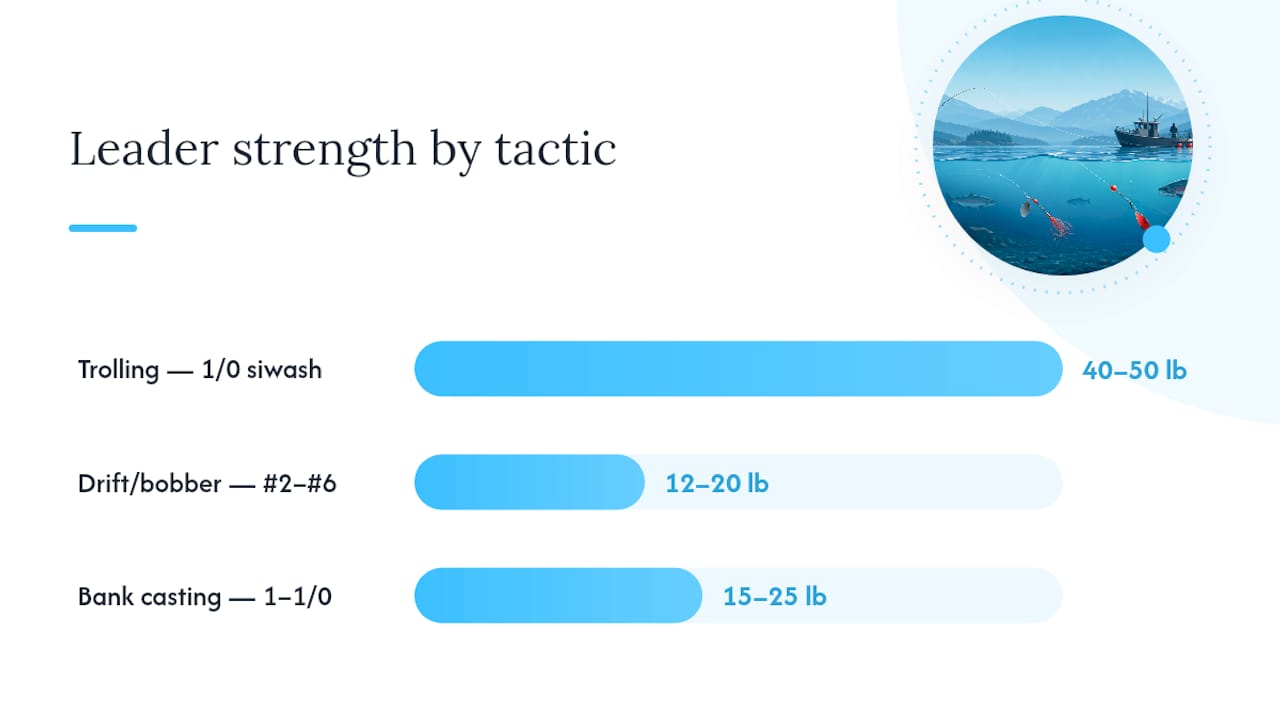
Leader strength should scale with the tactic, not just fish size:
- Trolling hoochies and spinners: 40 to 50 pound leader pairs well with a 1/0 siwash.
- Drift and bobber rigs: 12 to 20 pound leader suits a #2 to #6 octopus hook.
- Bank casting with buzz bombs: 15 to 25 pound leader handles a 1 to 1/0 single without overpowering the lure’s action.
How Do You Rig Hooks Correctly for Coho?
Getting the hook tied on right matters as much as picking the correct size. A few quick rigs cover most West Coast coho scenarios:
- Trolling hoochie: Thread a single 1/0 siwash through the hoochie skirt, letting the hook hang just slightly past the tentacles. Tip lightly with a strip of herring or anchovy for scent.
- Spinner rig: Snell a 1/0 to 2/0 hook directly behind the blade, keeping the point riding up for a cleaner hookset on the take.
- Bobber-and-skein: Tie a #2 to #4 octopus hook and thread the skein loosely so the hook point stays exposed.
- Bank buzz bomb: Keep the factory single or swap to a 1/0, positioned so it doesn’t foul the lure’s fluttering drop.
Pro Tip: On soft plastics like hoochies, let the hook hang back slightly rather than burying it deep in the skirt. Coho often strike short, and a hook set too far forward misses more fish than it hooks.
Hookset timing depends on the hook. Circle hooks want steady pressure, not a hard yank. Siwash and octopus styles reward a firm, quick set the moment you feel weight.
What Mistakes Cost Anglers the Most Coho?
Most missed hookups trace back to a handful of repeat offenders, and every one has a fast fix.
- Hook too large for the bait: Swap down a size before blaming the fish.
- Dull points: Touch up with a hook file every few fish, especially after bouncing bottom.
- Hook buried too deep in the hoochie skirt: Pull it back so the point rides clear.
- Weak or nicked leader: Retie after every solid fight, not just when it breaks.
- Wrong hookset for the hook style: Circle hooks need patience, not a hard strike.
Coho are aggressive once they’re staged in-river, and presentation and coverage often matter more than obsessing over a single size or color. Change gear methodically, one variable at a time, so you actually learn what fixed the problem.
Who’s Behind This Coho Hook Guide?
This guide comes from Nick at High Class Tackle Co., built on Pacific Northwest coho seasons and gear that holds up in real trolling and bank conditions. For deeper reading, check our steelhead hook guide and hoochie rig walkthrough for rig diagrams and product pairings.
A Straight Take on Coho Hook Sizing
Most coho advice online overcomplicates this. Anglers get fixated on matching an exact number instead of asking whether the hook fits the presentation in front of them. A 1/0 siwash on a hoochie isn’t magic. It works because the gap and shank length suit that specific bait profile, not because it’s some universal coho size.
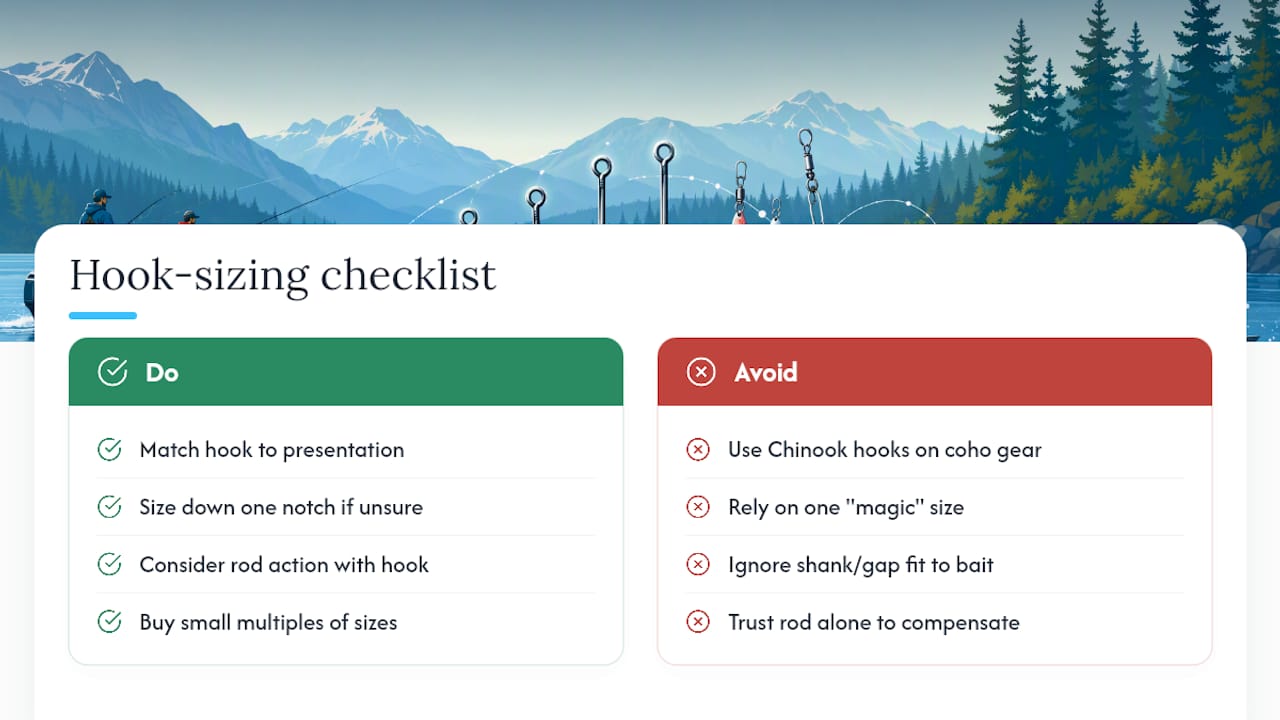
The bigger miss I see constantly: anglers running Chinook-weight hooks on coho gear because it’s what’s already tied on. Coho hit faster and often shorter than kings, and an oversized hook simply doesn’t get buried on those strikes. Sizing down, even one notch, fixes more missed fish than any lure color change ever will.
Rod action deserves more attention too. A hook that hooks up beautifully on a stiff trolling rod can feel dead on a soft mooching setup, because the rod isn’t loading the same way. Buy hooks in small multiples across a couple sizes, and treat the rig as a system. Gear, leader, and hook size should all agree with each other before you ever hit the water.
— Nick
Where to Find the Hooks and Rig Components in This Guide
There are convenient options available that provide all the components mentioned in this guide in one place, stocking the tackle that West Coast coho anglers actually use rather than generic trout aisle leftovers.
Browse our full lineup of hooks, hoochies, and components, plus flashers and bumpers for trolling setups, bait for tipping skein and herring rigs, and weights to dial in your depth. Whether you’re building a hoochie rig from scratch or restocking bank gear before a weekend run, you can find the pieces this guide recommends sized and ready to tie on from a single source online.
Sources
- 10 tips for targeting ocean coho | Oregon Department of Fish & Wildlife
- What Size Hook for Salmon Fishing: A Complete Guide
FAQ
Is a #4 or #8 Hook Bigger?
A #4 is bigger. With plain-number hook sizing, the number gets smaller as the hook gets larger, so a #4 has more gap and shank than a #8.
What Is the Best Bait for Coho Fishing?
Herring and anchovy strips tipped onto hoochies or bait rigs work consistently for coho, especially when the hook rides slightly back from the bait to expose the point.
Why Don’t Sockeye Salmon Bite Hooks Well?
Sockeye feed primarily by filtering plankton rather than striking prey, which makes them far less likely to take a baited or lure hook compared to coho, which actively chase and strike.
How Do You Rig for Coho Salmon?
Common rigs include a single 1/0 siwash hook threaded through a trolling hoochie, a snelled hook behind a spinner blade, or a #2 to #4 octopus hook under a bobber with skein or bait.
What Hook Size Should I Start With for Coho?
Start with a 1 to 1/0 hook for most trolling and bobber setups, then adjust down for smaller baits or up for larger spoons and heavier trolling gear.
0 comments