

The fastest way to land a salmon by yourself is to prep a reachable landing zone before you ever hook up, play the fish with steady pressure to shorten the fight, then bring in a knotless net only once the fish shows real fatigue, unhooking it while it stays submerged. This approach borrows from catch-and-release best practices and from the way seasoned solo anglers actually fish, including the setup philosophy behind High Class Tackle Co.'s terminal tackle lineup. Get these three moves locked in and the rest of the fight takes care of itself.
TL;DR:
- Using a knotless, shallow, wide-net protects fish scales and fins better during catch and release, making it crucial for solo salmon landings.
- Keeping the net, pliers, and line cutters within arm’s reach prevents delays that could lead to losing a tired fish.
- Applying steady pressure and letting the drag absorb the fish’s runs minimizes the risk of leader breakage or hook loss.
- Waiting until the fish shows clear fatigue, such as rolling or shortened runs, is essential before netting or unhooking to avoid unnecessary stress.
- Practicing pre-rigging and planning your landing approach in advance helps avoid mistakes and improves safety during solo salmon fights.
Table of Contents
- Gear and preparation before you hook a salmon
- How to play a salmon solo without losing it
- Final landing techniques by scenario: boat, bank, and wading
- Landing tools and equipment in action
- Fish handling and catch-and-release best practices for solo anglers
- Common mistakes, safety, and risk management when landing salmon alone
- Author tips and tricks from Nick
- Why solo landings demand more practice than people expect
- Tools that help you land salmon solo
- Sources
- FAQ
Gear and preparation before you hook a salmon
Solo landings are won or lost before the rod ever bends. The fish doesn’t care how strong your arms are. It cares whether your net is three feet away or buried under a tackle bag.
Start with your landing zone. Whether you’re in a boat or standing on a gravel bar, you need a spot where the net, pliers, and line cutters live within arm’s reach the second a fish gets close. Spare rods get stowed flat and out of the way long before that, not scrambled into a rod holder mid-fight.
Rod and reel choice matters more when you’re solo than when you’ve got a buddy netting for you. A rod with real backbone in the mid and butt section lets you apply constant pressure without babysitting a soft tip. Braided mainline gives you the strength to lean on a fish without excess stretch, paired with a fluorocarbon or mono leader that has enough give to absorb a sudden lunge near the boat or bank.
Leader strength and hook choice do double duty here. A single barbless hook, matched to a leader strong enough to handle the fight but not so heavy it kills your presentation, means unhooking takes seconds instead of minutes. That single detail, recommended in catch-and-release best-practice guidance from Fisheries and Oceans Canada, reduces injury to the fish and gets you back in the water faster if you’re releasing. Our barbless hook guide for Oregon fisheries breaks down where barbless is required and how to pick hooks built for quick release.
Net selection is not the place to cut corners. Knotless, soft rubber or rubber-coated nets with a shallow, wide bottom protect scales and fins far better than old-school knotted mesh, and they’re strongly recommended by catch-and-release authorities for exactly that reason. Look for a hoop deep enough to bag a big Chinook and a handle long enough that you’re not leaning dangerously over the rail or the bank to reach the fish.
Boat setup deserves its own five minutes before lines even go in the water. Decide which side of the boat you’ll land fish on. Clear that side of loose gear, coolers, and anything that can trip you up. Have a plan for the kicker or main engine, whether that’s idling in neutral or cutting it entirely once the fish is close, so you’re not making that decision under pressure.
If you’re fishing from shore or wading, scout your landing spots before you cast. Look for shallow, slow-moving water with a stable bottom, and pick your exit point in case a fish runs downstream and drags you with it.
- Keep net, pliers, and cutters within one arm’s reach at all times.
- Stow spare rods flat and secured before the first cast.
- Match leader strength to a single barbless hook for fast release.
- Pick a knotless, soft-mesh net with a deep, wide hoop.
- Decide your boat-side landing plan and engine strategy in advance.
- Scout shallow, stable landing spots if fishing from shore.
Pro Tip: Rig your leader and hook combo the night before a solo trip so you’re not tying knots one-handed while a fish is peeling drag.
How to play a salmon solo without losing it
Playing a salmon alone comes down to one idea: shorten the fight without shocking the fish into a panic run you can’t control. Sudden, hard cranking or slamming the drag closed almost always costs you the fish or the leader.
Instead, use steady, modulated pressure. Keep the rod tip up and loaded, and let the drag do the work rather than trying to muscle a fish that’s still got fight left in it. When a salmon wants to run, let it. Fighting a strong run head-on usually ends with a popped leader or a thrown hook. Give it line, then recover ground the moment the run stops.
Body position matters more solo than with a partner. Keep your feet set, your rod low enough to fight sideways pressure rather than straight up, and your line clear of rod holders, downriggers, or brush that can cause a wrap. A rod tip wrap is one of the most common ways solo anglers lose fish in the final thirty seconds, right when the fish is close enough to see.
If you’re in a boat, use gentle forward or reverse throttle to keep the fish working against the current or your own movement rather than digging under the hull. On a river, current does a lot of the tiring work for you if you position the boat or your body to keep steady tension rather than fighting the fish straight upstream.
Watch for the signs that a fish is actually ready. A salmon that’s still fresh will make hard, fast runs and shake its head aggressively. A tired fish starts to roll on its side, its runs get shorter and slower, and it stops fighting the rod angle. That’s your window, not before.
- Use steady rod pressure and let drag absorb runs instead of cranking against them.
- Keep your rod tip up and loaded, low enough to fight lateral movement.
- Clear your line path of holders, brush, and downriggers before the fight starts.
- Use boat or current position to tire the fish rather than forcing a straight pull.
- Watch for rolling, shortened runs, and reduced head-shakes as landing signals.
Pro Tip: When a fish makes its last hard run near the boat or bank, resist the urge to horse it in. Let that run finish, then start your approach.
Final landing techniques by scenario: boat, bank, and wading
The last thirty seconds of a solo fight look different depending on where you’re standing, and knowing the sequence ahead of time is what keeps you from freezing up when the fish finally rolls on its side.
Boat sequence:
- Bring the engine to neutral or idle well before the fish is close enough to net.
- Confirm your predetermined landing side is clear of gear, coolers, and other rods.
- If you’re running two rods, secure the second rod in a holder rather than trying to manage both.
- Reach for the net only once the fish shows fatigue signs, not before.
- Slide the net under the fish head-first rather than chasing its tail.
- If the fish is close but not net-ready, grab the leader directly above the swivel and guide it toward the net rather than lifting.
Forum discussions among experienced solo anglers back this up, with recommendations to treat the boat as a third teammate, predefining your landing side and clearing gear so nothing complicates the final approach. Others who’ve landed big Chinook alone favor fishing a single rod specifically to avoid the tangles that come with running two lines during a solo fight.
Bank and shore sequence:
- Guide the fish toward the shallowest, most stable stretch of water you scouted earlier.
- Once it’s in shin-deep water and showing fatigue, use a tailing grip or a loop-and-grab on the leader.
- Avoid dragging the fish up onto dry gravel, since beaching causes unnecessary scrapes and stress.
- If you want a photo, keep the fish’s belly in the water and lift only for a second or two.
Reading current seams and edges from the bank is a skill worth building on its own. Guides who fish salmon from shore regularly point out that positioning yourself along the right seam can put a fish within easy reach without a long cast or complicated gear setup.
Wading sequence:
- Set your stance on firm bottom before the fish gets close, not while it’s thrashing at your feet.
- Approach at an angle rather than straight on, so the fish doesn’t spook into another run.
- Use a net if you’re carrying one, or a tail grip if the fish is calm enough.
- Keep the fish upright and submerged through the entire unhooking process.
Contingency moves:
- If the fish makes a final surprise run, let the rod load and give line rather than clamping down.
- If your leader breaks during the final approach, resist chasing the fish. Log the loss and check your knot before the next cast.
- If the hook is set deep and won’t come free easily, cut the leader as close to the hook as you safely can rather than digging around inside the fish.
Landing tools and equipment in action
Timing matters as much as the tools themselves. Bring the net in too early and you’ll spook a fish that still has energy left, which often triggers a last-second run right past the hoop. Wait for the rolling, sluggish behavior that signals real fatigue, then move.
Once the fish is in the net, keep the bag submerged and let the fish settle for a second before you start unhooking. Working on a fish that’s still thrashing in open air increases the odds of a dropped hook set or a hand injury.

For leader handling without a net, the loop-drop-and-grab works well on calmer fish: let a loop of leader form just above the swivel, drop your hand through it, and draw the leader up to bring the fish alongside. A pinch-and-draw grip on the leader itself, thumb and forefinger just above the hook, gives you more direct control but requires the fish to be nearly done fighting. Either way, keep slack out of your rod tip to avoid a wrap that can snap your rod on the final pull.
A gaff has a place in solo fishing, but only when you intend to keep the fish and local regulations allow it. Gaffing a fish you plan to release causes serious injury and defeats the purpose of careful handling. Regional rules vary on gaff use, so check Alaska Department of Fish & Game’s current sport fishing regulations or your local equivalent before assuming a gaff is legal where you’re fishing.
- Bring the net in only once the fish shows fatigue, not before.
- Keep the net bag submerged during unhooking to reduce stress.
- Use loop-drop-and-grab or pinch-and-draw for net-free leader control.
- Reserve gaffs strictly for fish you intend to keep, where legal.
- Carry forceps, needle-nose pliers, and an unhooking mat within reach.
Pro Tip: Keep your pliers clipped to your vest or belt loop, not in a tackle box. Digging for tools while holding a leader one-handed is how fish get lost.
Fish handling and catch-and-release best practices for solo anglers
Handling technique decides whether a released salmon actually survives. Best-practice guidance from fisheries agencies consistently points to the same core habit: keep the fish in the water and minimize the time it spends being handled at all.
Best-practice guidance recommends minimizing handling, keeping salmon submerged during unhooking, and using single barbless hooks where possible, according to Fisheries and Oceans Canada. That combination reduces injury and cuts the time a fish spends out of water to nearly zero when done right.
If you’re unhooking with tools, use forceps or long-nose pliers to back a barbless hook out in one smooth motion. Never lift a salmon by its gills or by the tail alone. Both grips can cause internal damage or drop the fish onto rocks. Support its body weight from underneath instead, cradling it just behind the head and ahead of the tail.
Once the hook is out, hold the fish gently facing into the current or upstream, letting water pass over its gills until it kicks away under its own power. A fish that swims off strongly has a real shot at recovery. One that drifts sideways or belly-up needs more time supported in the water before you let go.
- Keep the fish submerged for the entire unhooking process whenever possible.
- Use forceps or pliers to remove barbless hooks quickly and cleanly.
- Never lift a salmon by the gills or by the tail alone.
- Hold the fish facing upstream until it swims off under its own strength.
Regional rules add another layer here. Permit conditions, recording requirements, and handling rules differ by fishery, and Alaska’s 2026 sport fishing regulations are a good example of how specific those requirements can get. Check your local regulations before assuming any handling method is allowed where you fish.
Common mistakes, safety, and risk management when landing salmon alone
The same handful of mistakes cost solo anglers fish over and over. Lifting by the tail, dragging a fish up onto dry gravel, and introducing slack right as the fish makes its last lunge are the big three. Each one gives the fish a split second to throw the hook or snap the leader.
Personal safety matters just as much as fish care. Keep your footing solid before you reach for a leader or net, stay aware of a running prop if you’re in a boat, and handle hooks, gaffs, and pliers with the same caution you’d use on a kitchen knife.
Sometimes the right call is to let a fish go rather than force a landing. If you’re losing your footing, the boat is drifting toward a hazard, or the fish is clearly exhausted beyond recovery, dropping the fight protects both you and the fish.
- Never lift a salmon by the tail or drag it onto dry gravel.
- Keep solid footing and prop awareness before reaching for the leader.
- Handle hooks and gaffs with deliberate care, not rushed movements.
- Be willing to release a fish early if safety or welfare is at risk.
Author tips and tricks from Nick
Five things I tell every solo angler who asks: rig your leader the night before, fish one rod when you’re alone, let the fish’s last run finish before you reach for the net, keep your net bag submerged until the hook’s out, and never chase a fish onto gravel to save five seconds. Some brands build terminal tackle around that same idea: gear that performs when you’re the only hands on deck.
Why solo landings demand more practice than people expect
Fishing alone means every decision is yours, which is half the appeal. But landing a salmon solo rewards repetition, not bravado. If your footing feels wrong or the fight’s dragging on too long, it’s fine to let the fish go.
— Nick
Tools that help you land salmon solo
The right gear turns a chaotic solo landing into a repeatable routine. A knotless net with a deep hoop, sharp forceps, and barbless single hooks matched to a solid leader are the backbone of every technique in this guide. Our terminal tackle and components cover hooks and leader setups built for fast, clean releases, and our flashers and leader systems help keep hookups solid so the fight stays manageable from start to finish.
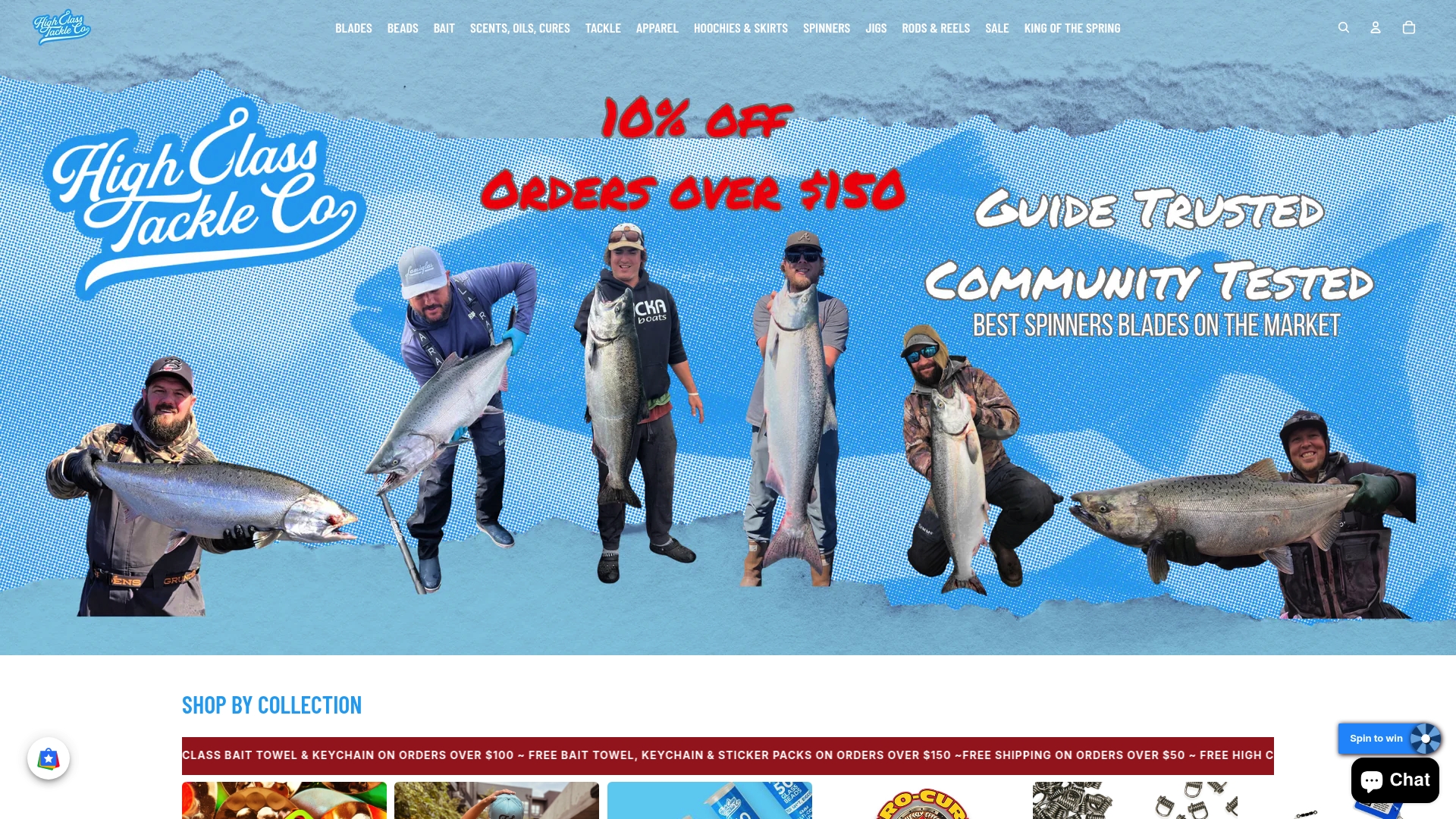
Before you head out, it’s worth a quick look at your boat too. A hull that’s fouled or dragging slows your throttle response right when you need it most during a landing, and routine hull cleaning keeps that response sharp. Check out the High Class Tackle Co. storefront to gear up before your next solo trip on the water.
Sources
- How to practise salmon catch and release — Natural Resources Wales
- Best practices for catch and release of Atlantic salmon — Fisheries and Oceans Canada (DFO)
- 2026 Sport Fishing Regulations Summary Southcentral Alaska — Alaska Department of Fish & Game
FAQ
What’s the biggest mistake solo anglers make when landing salmon?
The most common error is reaching for the net too early, before the fish shows real fatigue, which often triggers a panicked run that breaks the leader or throws the hook. Waiting for the fish to roll and slow its runs before moving in gives you a much cleaner shot at landing it.
Do I need a partner to safely land a big salmon?
No, a partner isn’t required if you prepare your landing zone, use the right net and hook setup, and practice the sequence ahead of time. Many experienced anglers land large Chinook alone by simplifying to one rod and pre-planning their boat-side approach.
Why should I use a knotless net instead of a regular landing net?
Knotless, soft rubber nets with a shallow, wide bottom cause far less damage to a salmon’s scales and fins than older knotted mesh designs. This detail is strongly recommended by catch-and-release authorities because it directly reduces injury during handling.
How do I keep a salmon alive if I plan to release it after landing?
Keep the fish submerged as much as possible, unhook it quickly with forceps or pliers, and never lift it by the gills or tail. Best-practice guidance recommends minimizing handling time and holding the fish facing into current until it swims off under its own power.
What gear does High Class Tackle Co. recommend for solo salmon landings?
High Class Tackle Co. focuses on terminal tackle built for fast, clean hookups and releases, including single barbless hook setups and leader components sized for solid control during the fight. Their terminal tackle and components line is built around that same solo-friendly approach.
0 comments