

When the flow drops and the water turns green and see-through, three moves outperform every other adjustment: get stealthy, downsize your rig, and target individual fish instead of blind-casting a run. Skip the guesswork and go straight to the gear checklist and step-by-step tactics below.
TL;DR:
- Use stealthy approaches and avoid excessive weight to prevent spooking fish in low, clear water conditions.
- Focus on deep pockets, undercuts, and shaded edges where fish feel safe and feed actively.
- Keep leaders between 6 to 10 pounds and at least 6 to 8 feet long to minimize visibility and improve drift performance.
- Fish during low-light periods, such as dawn, dusk, or after rain, to take advantage of reduced fish wariness.
- Prioritize targeting individual, actively feeding fish rather than casting repeatedly over pods to avoid education and scare-off.
Table of Contents
- Where Steelhead Hold in Low, Clear Water
- Stealth and Approach: How to Avoid Spooking Steelhead
- Rigging for Clear, Low Water: Line, Leader, and Hook Choices
- How Do You Present a Fly or Bait to Spooky Steelhead?
- When Is the Best Time to Fish Low, Clear Steelhead Water?
- Common Mistakes When Steelhead Won’t Cooperate
- Nick’s Field Checklist for Low, Clear Water
- Adjusting Tactics for Tailwater vs. Freestone Rivers
- How Weather Affects Low, Clear Steelhead Fishing
- What Most Anglers Get Wrong About Low, Clear Water
- Gear Built for Low, Clear Water Days
- Sources
- FAQ
Where Steelhead Hold in Low, Clear Water
Steelhead don’t scatter when the flow drops. They condense. In low, clear conditions, fish abandon the open tailouts and mid-run flats they’ll sit in during higher, off-color flows and push toward the edges: deep pockets, current seams, and undercut banks where broken surface or shade breaks up their outline. MeatEater’s clear-water guide points anglers toward exactly this kind of cover, deep pockets, undercuts, and edges tucked behind structure, because that’s where fish feel safe enough to hold and feed.
The best water in low, clear conditions is often the water nobody bothers to fish. A shallow pocket that looks too small to hold a steelhead is frequently the one spot with enough depth and shade to make a fish comfortable. Watch for:
- A subtle tail flick or fin wag breaking the surface tension without a splash
- A slow, deliberate boil where a fish rolls near the bottom
- A shadow that holds its position against the current instead of drifting
- Fish stacked tight to an undercut bank or a root wad, barely visible from the bank
When you spot a pod of several fish holding together, don’t fire a cast at the whole group. Pick the one showing the most activity, a tail that’s moving, a fish that shifts position when your fly or bait drifts near, and work that fish specifically. The others will either follow its lead or spook, but scattering casts across the whole pod almost guarantees you put every fish down before you get a real shot. Hiking farther from pressured access points to find pods that haven’t seen a dozen anglers that morning pays off more in low water than in any other condition, since unpressured fish tolerate far more error before they shut down.
Stealth and Approach: How to Avoid Spooking Steelhead
Clear water turns every wading step, every shadow, and every splash into a signal. Steelhead in low, clear flows are essentially on alert the moment they see movement on the bank, so your approach matters as much as your cast.
- Plan your path before you step in the water. Approach from downstream when possible, and never walk directly over holding water you intend to fish.
- Keep the sun at your back. Kevin VanDam’s clear-water approach centers on cutting your silhouette by controlling where your shadow falls, and the same rule applies wading a river as it does working a bass flat.
- Wear muted colors. Tan, olive, and gray blend into a riverbank. Bright jackets and white hats stick out against brush and sky.
- Wade slow and deliberate. Every rushed step sends a pressure wave through shallow water that fish feel long before they see you. Use a wading staff on uneven bottoms so you’re not lunging for balance.
- Manage your line on entry. Lay your fly or bait down softly rather than slapping it onto the surface, and make longer casts so your line and body stay farther from the fish.
Pro Tip: Cast at an angle that keeps your colored mainline away from the fish’s likely sightline, even if it means a slightly awkward cross-body cast. A fish that never sees your line is a fish that never associates your presentation with danger.
Rigging for Clear, Low Water: Line, Leader, and Hook Choices
Every piece of terminal tackle either helps you disappear or gives you away. In low, clear water, that tradeoff decides whether a fish eats or bolts.
Start with mainline in the 8 to 12-pound range and drop your leader to 6 to 10-pound test, light enough to stay nearly invisible in gin-clear flow but still strong enough to handle a hot steelhead in open water. Leader length matters as much as strength. Run at least 6 to 8 feet between your float or shot and the actual bait or fly. That distance keeps colored mainline well out of the fish’s cone of vision. When conditions get especially spooky, placing the float itself on the shot line rather than up on the mainline is a small trick that pulls even more color away from the presentation.
Hooks should shrink right along with everything else. Size 8 to 12 covers most low-water presentations, whether you’re fishing a small jig, a bead, or a nymph. Skip anything with a shiny nickel or chrome finish. Bronze and black nickel hooks throw far less flash, which matters when a fish is studying every inch of what drifts past it.
Weight is where most anglers overdo it. A single small split shot, or none at all, is often the difference between a drift that looks natural and one that doesn’t. Even minor splash or flash from shot and line is enough to put a fish down in low, clear conditions, so:
- Start with the lightest shot combination that still gets your presentation to depth.
- Go fully unweighted when the water is shallow enough and the current slow enough to allow it.
- Use small, clear, or low-profile floats only when the drift genuinely requires one.
- Check your terminal setup after every snag. A nicked leader or a shiny hook that’s lost its finish will cost you strikes you’ll never see happen.
Reference guides on steelhead terminal tackle consistently point back to the same principle: match hook size, shot placement, and presentation style to the water you’re actually fishing, not the water you fished last week.
How Do You Present a Fly or Bait to Spooky Steelhead?
Low, clear water rewards precision over volume. A dozen sloppy casts through a pod will put every fish down before one good drift has a chance.
Three presentation styles cover almost every situation you’ll face:
- Drift roe, nymphs, or beads under a float when fish are holding in moderate depth and you need a natural, dead-drift look. FishRadar’s breakdown of core steelhead methods treats drift fishing as the default for low, clear flows precisely because it keeps offerings small and unweighted.
- Float fish a bead or bait under a bobber when you want more control over depth and a cleaner strike detection in slow pockets.
- Swing a fly or small spoon when fish are holding in a longer run and you want to cover water methodically rather than target one specific fish.
For an individual fish, the routine that works is simple but demands patience. Cast upstream of the fish, close to the bank if it’s tucked tight to cover or farther out if it’s holding in open water. Mend immediately to kill drag, then let the presentation drift naturally into the fish’s zone. Watching the fish’s head or tail as your offering approaches tells you almost everything. A head turn or a tail kick means the fish is interested. Stop the swing right as it passes the fish’s nose, hold the drift for a beat, and set the hook the instant you feel resistance or see the take.
If nothing happens on the first pass, don’t yank the presentation out violently. Lift it out downstream and away from the fish, then reset for another drift. A fish that’s merely wary will often tolerate several careful passes. A fish that’s already spooked won’t give you a second look no matter how good the next cast is.
When Is the Best Time to Fish Low, Clear Steelhead Water?
Low, clear water doesn’t fish the same all day. The windows that actually produce are narrower than most anglers assume.
- Early morning and late evening cut glare and reduce a fish’s ability to pick out your silhouette against the sky, which is the single biggest advantage low light gives you.
- The falling and clearing window right after a rain event often brings fresh, aggressive fish into a system just as the water starts dropping out of high-flow conditions. Coverage of Great Lakes steelhead runs points to this exact stretch, the days right after a spike starts to recede, as a reliable window for fresh arrivals.
- Overcast days extend that low-light advantage across more of the day, so a gray sky in otherwise low water is worth chasing.
- Gauge-watching beats guessing. Check flow data and turbidity readings the night before, and plan your session around a drop rather than driving out on a whim.
Common Mistakes When Steelhead Won’t Cooperate
Most blown low-water sessions trace back to the same handful of errors, and most of them are fixable in the moment.
- Too much noise. Heavy wading, dropped gear, or a slammed car door near the bank puts fish on edge before you’ve made a cast.
- Too much weight. Extra split shot creates a splash and an unnatural drift. Strip it down before you blame the spot.
- Leaders too short. If your float or shot sits too close to the hook, lengthen it before you change anything else.
- Bait or gear that’s too bright. Swap a shiny hook for bronze or black nickel, or tone down an overly flashy fly.
- Overworking one run. Give a promising pocket 15 to 20 quality drifts. If nothing shows, move rather than pound water that’s already seen your presentation a dozen times.
- Staying on pressured water. If a run near easy access has gone quiet, the fish may simply be educated. Hiking to less-fished water often solves the problem outright.
Nick’s Field Checklist for Low, Clear Water
Here’s the compact kit I run when the gauge drops and the water clears up. Nothing fancy, just gear that disappears.
- 8 to 12-pound mainline, 6 to 10-pound leader, 6 to 8 feet of separation from shot or float
- Size 8 to 12 hooks in bronze or black nickel
- Small unweighted flies or mini baits, plus a light shot selection for when depth demands it
- Muted clothing and a wading staff for quiet, controlled footing
The full breakdown lives in the steelhead terminal gear checklist, and if you want the deep dive on leader math specifically, the leader length guide covers it in detail.
| Scenario | Rig Adjustment | Presentation |
|---|---|---|
| Pocket pool | Unweighted fly or bead, short 15 to 20 drift limit | Cast upstream, mend once, watch for head turn |
| Long run | Add one small shot, swing methodically | Cover water in steps, don’t fixate on one fish |
Example A, pocket pool: A single fish holding in a shaded pocket behind a boulder. Unweighted mini bait, 8 feet of leader separation, one cast tight to the shade line, mend immediately, drift dead through the pocket. No hit on the first pass means a two-minute rest before trying again from a slightly different angle.
Example B, long run: Multiple fish spread through a deeper tailout. Add a single small shot to get depth, swing steadily through the run rather than targeting one fish, and let the pace of the swing do the work instead of constant re-casting.
Adjusting Tactics for Tailwater vs. Freestone Rivers
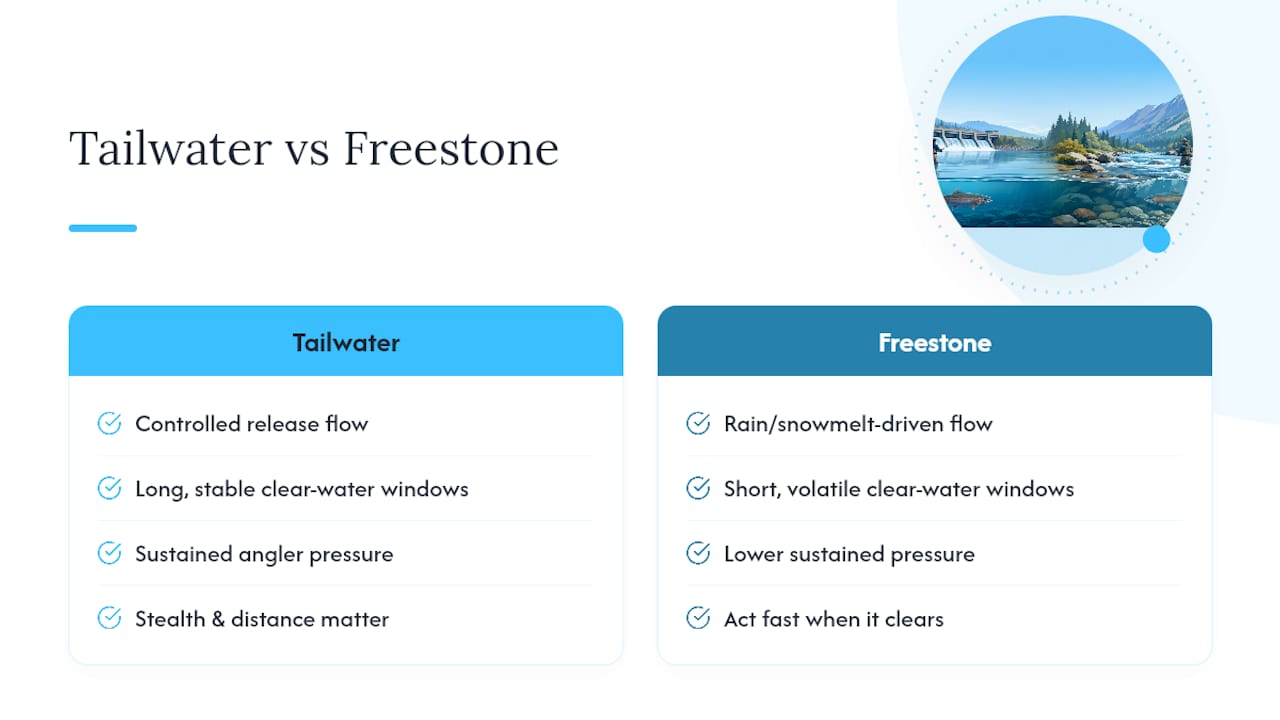
Tailwater rivers, the ones running below a dam, stay clear and stable for long stretches since the flow comes from a controlled release rather than surface runoff. That stability means the fish in a tailwater see a steady, predictable presentation environment for weeks at a time, so they get educated fast. Downsizing tackle and hiking to less-fished stretches matters more here than almost anywhere else, since every angler working the popular tailwater access points is showing fish the same handful of tricks.
Freestone rivers behave completely differently. They rise and fall with rain and snowmelt, so a freestone river running low and clear today might be off-color and pushing hard again in 48 hours. That volatility actually works in your favor: freestone fish don’t get nearly as much sustained pressure in low, clear conditions because the window doesn’t last. When a freestone system drops into a clear, fishable stage, treat it with urgency. Fish hard while the window holds, because the next rain event will reset the whole system and you’ll be waiting for the next drop.
The practical takeaway: tailwaters reward stealth and distance from crowds as a long-term strategy, while freestone rivers reward being ready to move fast the moment flows clear up.
How Weather Affects Low, Clear Steelhead Fishing
Cloud cover is the single biggest weather variable in low, clear conditions. A gray, overcast sky knocks down glare and extends that low-light advantage across the entire day, giving fish more confidence to hold in shallower water and move more freely. Bright, cloudless days do the opposite: harsh overhead sun lights up every inch of a shallow pool and pushes fish deeper into whatever pockets and undercuts they can find.
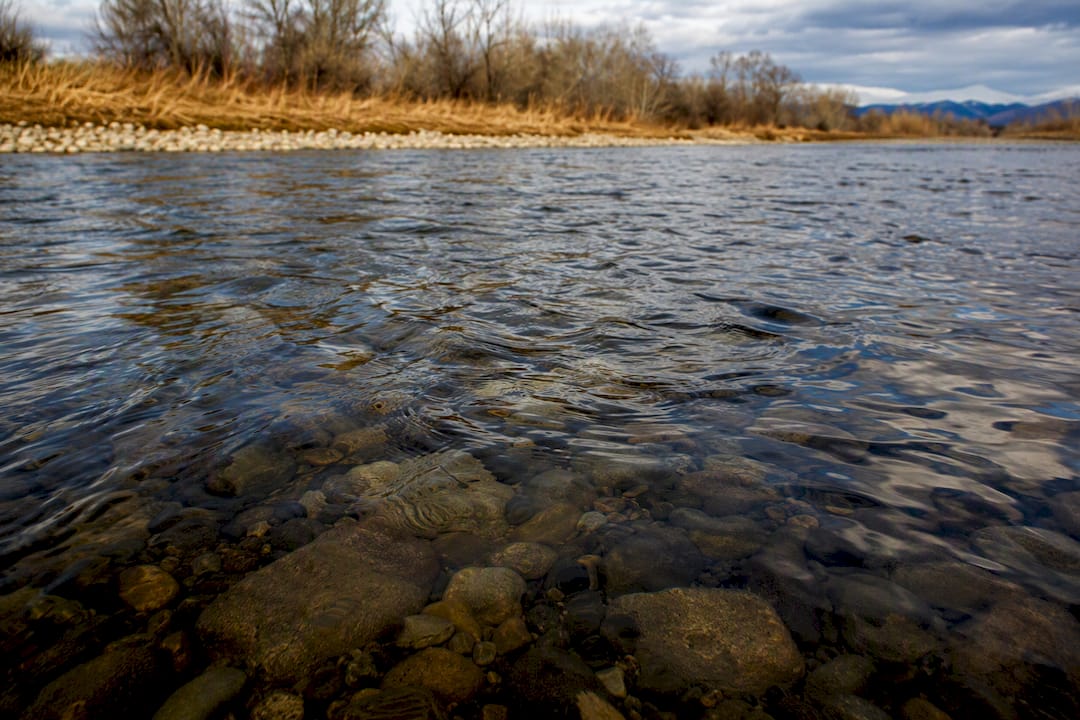
Wind matters too, but not the way most anglers assume. A light breeze that riffles the surface of a pool can actually help you by breaking up the water’s mirror-like clarity, making it harder for a fish to pick out your movement on the bank. Dead calm, glassy conditions on a low, clear river are often the toughest combination you’ll face, since every ripple and shadow reads clearly to a fish sitting a few feet below the surface.
Cold fronts following a period of stable weather tend to make fish sluggish and less willing to move far for a presentation, which is exactly when precise, close-quarters drifts to individual fish outperform blind swinging. Track the forecast alongside your gauge readings, not instead of them. A dropping, clearing river under an overcast sky is close to the ideal low-water setup you’ll get all season.
What Most Anglers Get Wrong About Low, Clear Water
The conventional advice on low, clear steelhead treats it as a finesse problem you solve with lighter tackle. That’s half right. The bigger issue is that most anglers still fish clear water the way they fish stained water: covering ground, making repeated casts through the same seam, trusting volume over precision.
Volume is exactly what educates fish. A pod that’s seen fifteen average drifts by 9 a.m. isn’t going to eat on drift sixteen no matter how light your leader is. The anglers who consistently connect in low, clear conditions aren’t necessarily running lighter gear than everyone else on the river. They’re making far fewer, far better casts, and they’re willing to walk away from good-looking water that’s already been pounded.
If you take one thing from this article, take this: stealth and downsized rigging get you in the game, but restraint is what actually closes the deal. Pick one fish, make your best drift, and respect a spooked pod enough to leave it alone rather than casting until it scatters entirely.
— Nick
Gear Built for Low, Clear Water Days
Certain tackle suppliers offer terminal pieces such as small hooks, low-flash finishes, minimal shot options, and clear-conditions-friendly beads all in one place rather than scattered across multiple sources. The terminal tackle and components collection is built around the same stealth-first logic covered above: less flash, less splash, more fish that never see you coming.

If scent matters to your presentation, the Pro-Cure additives lineup gives you cure and scent options that pair naturally with small, downsized baits without overpowering a fish that’s already on high alert. When you’re piecing together a low-water kit, look for hooks in bronze or black nickel finishes, light shot in small increments, and leader material that matches the breaking strains covered in this guide, not just whatever’s already in your box.
Start with the full tackle lineup and build your low-clear-water box one component at a time.
Sources
- Classic pro tips: The keys to low-water steelhead - Orvis News
- Best tactics to fish in clear water - Kevin VanDam
- How to catch fish in clear, low water | MeatEater Fishing
FAQ
What Leader Length Works Best for Low, Clear Water Steelhead?
Run 6 to 10-pound leader with at least 6 to 8 feet of separation between your float or shot and the bait or fly to keep colored mainline out of a fish’s sightline.
When Should You Fish Completely Unweighted for Steelhead?
Go unweighted whenever the water is shallow and slow enough for your fly or bait to reach the right depth without added split shot, since minimal weight reduces splash and spooks fewer fish.
What Are the Best Flies or Baits for Low, Clear Steelhead?
Small unweighted streamers in sizes 10 to 12, along with small beads and nymphs on bronze or black nickel hooks, consistently outperform bulkier, flashier presentations in clear conditions.
How Long Should You Fish One Pool Before Moving On?
Fifteen to twenty quality drifts through a promising pocket is a reasonable limit; if nothing shows, move to less pressured water rather than repeating the same presentation.
Does Weather Affect Low, Clear Water Steelhead Fishing?
Overcast skies extend low-light conditions and make fish more willing to move and feed, while bright, calm days push fish deeper into cover and make them harder to approach.
0 comments