

You’ve done everything right. Rod rigged, presentation dialed, spot locked. And still nothing. For a lot of Pacific Northwest anglers, that frustration comes down to one overlooked variable: northwest bait and scent selection. Not just what you’re using, but how you’re applying it, when you’re switching it up, and whether you’re actually putting it in the fish’s olfactory zone. This guide covers species-specific scent strategies for salmon, steelhead, kokanee, and saltwater fishing, with the kind of detail that actually changes your numbers on the water.
Table of Contents
- Key takeaways
- Northwest bait and scent basics every angler needs
- Preparing and applying scent for salmon and steelhead
- Kokanee scent strategy: building your scent menu
- Scent delivery tactics for saltwater and PNW species
- Troubleshooting bait and scent failures mid-session
- My take on scent strategy after years on the water
- Gear up with the right products from Highclasstackleco
- FAQ
Key takeaways
| Point | Details |
|---|---|
| Scent chemistry matters | Distinguish between attractors (garlic, anise) that draw fish in and triggers (krill, squid) that close the deal. |
| Placement beats volume | Suspending bait 1 to 3 feet off bottom keeps scent in the active zone and out of the dead boundary layer. |
| Reapply on schedule | Reapplying scent every 15 to 30 minutes maintains an effective scent trail through changing current conditions. |
| Human odor kills bites | L-serine from skin repels salmon and trout, so always wash hands with enzymatic soap before handling bait. |
| Kokanee need a scent menu | Rotating through shrimp, garlic, sweet, and anise scents based on fish behavior dramatically increases catch rates. |
Northwest bait and scent basics every angler needs
Before you reach for a bottle of Pro-Cure, you need to understand what you’re actually working with. Northwest fishing bait and scent products fall into two functional categories: attractors and triggers. Attractors like garlic and anise help fish detect your bait from a distance. Triggers like squid oil, bloody tuna, and krill push neutral or following fish to commit. Layering these strategically is what separates anglers who occasionally get bites from ones who consistently load the cooler.
Here are the core bait types you should know for each major Northwest species:
- Salmon: Cured roe, sand shrimp, anchovies, herring, and cured tuna belly
- Steelhead: Cured roe, sand shrimp, shrimp tails, and pink worms with scent added
- Kokanee: Scented corn, Berkley Gulp! maggots, and small hoochies with kokanee scent
- Saltwater: Herring, squid, anchovy strips, and sand lance with oil or gel dressings
Scent delivery formats matter just as much as the scent itself. Gels cling to lures and slow-release in current. Oils disperse fast and create an aggressive trail. Brines penetrate bait during curing for deep, lasting scent. Water-soluble amino acid gels are worth special attention because heavy oil-based scents congeal in cold water, limiting how well fish can actually detect them. In the cold rivers and inlets of the Northwest, water-soluble formulas work harder.
Pro Tip: When using spinner setups, apply gel scent behind the blade, not on it. This protects the reflective flash surface and keeps scent from washing off in fast current, extending your presentation window significantly.
The gear side of things: keep your brines in sealed containers with tight lids and store cured bait in vacuum bags whenever possible. Oxidation and temperature swings destroy scent quality fast. A Ziploc bag is not a brine container.
Preparing and applying scent for salmon and steelhead
Great scent starts before you ever hit the water. Bait preparation for salmon and steelhead is a process, and skipping steps costs you fish.
- Select your bait. Fresh or flash-frozen bait always outperforms refrigerated bait that’s been sitting. Look for firm texture and bright color. Vacuum-sealed sand shrimp and cured roe hold scent far better than anything loose in a container.
- Mix your brine. A reliable anise-oil brine recipe calls for half a gallon of distilled water with 3 to 5 drops of anise oil. Soak your bait overnight in the refrigerator to toughen it and drive scent deep into the tissue.
- Add UV dye if needed. In stained or off-color water, a UV bait dye amplifies visual attraction alongside scent. Products like the Pro-Cure UV bait dye give you that extra edge when visibility drops.
- Layer your scents. Start with an attractor applied to your bait or lure before casting. Add a trigger scent at the hook or trailer. This creates a distance attraction sequence where fish smell you from far, then commit when they close in.
- Protect your setup. For spinner fishing, tuck gel behind blades and inside cupped surfaces. This is how you keep scent alive in fast-moving steelhead runs where current would otherwise strip a bare application in minutes.
- Reapply consistently. Set a timer. Every 20 to 30 minutes, refresh your scent. Current, water temperature, and mechanical abrasion all degrade your scent profile over the course of a drift.
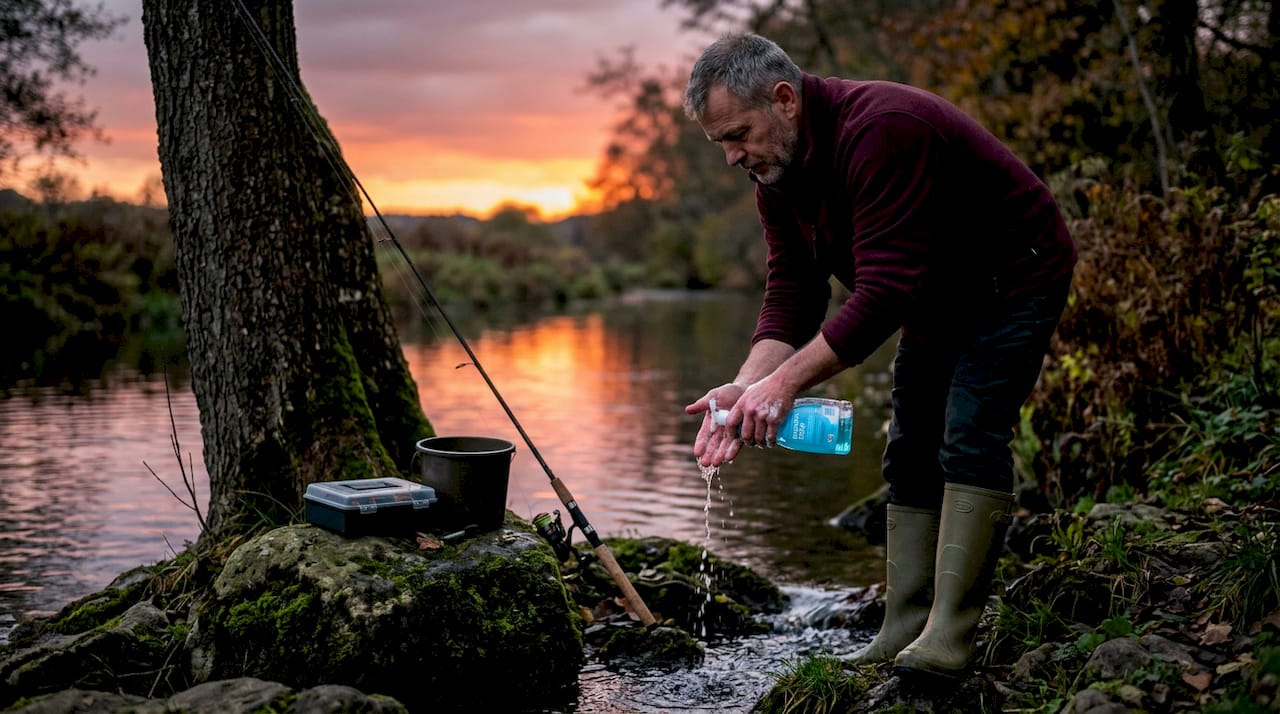
Pro Tip: Before handling bait, wash your hands with enzymatic soap. Human skin emits L-serine, a biological alarm chemical that actively repels salmon and steelhead. This one habit alone can turn a slow morning into a productive one.
For steelhead specifically, layering sand shrimp scent over a cured roe cluster is a time-tested combination. The shrimp acts as the attractor while the roe oils release slowly as a trigger. That one-two setup works whether you’re swinging flies or bouncing a float in a deep run.
Kokanee scent strategy: building your scent menu
Kokanee are one of the most scent-responsive fish in the Northwest, and also one of the most fickle. A single scent all day rarely works. What does work is having a menu and reading the fish’s behavioral state to know what to pull out.
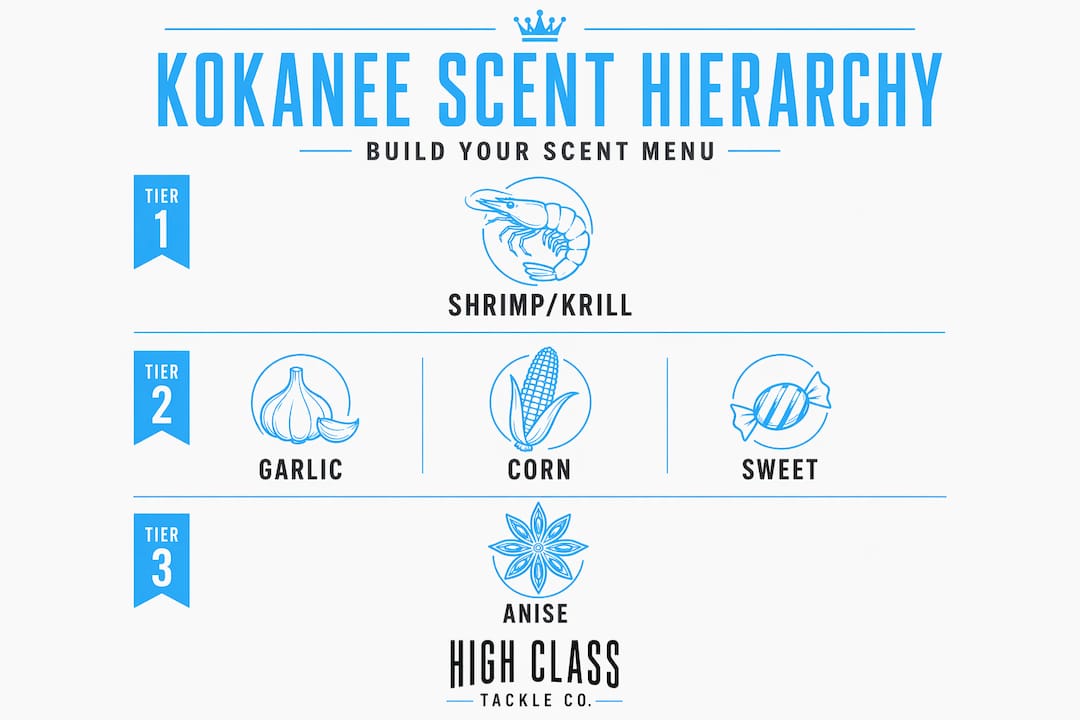
Shrimp and krill scents are the foundational starting point. They’re reliable across water temperatures and fish activity levels. Build from there based on conditions.
| Scent type | Best use case |
|---|---|
| Shrimp / krill | Baseline attractor, works in most conditions and temperatures |
| Garlic | Low visibility water, overcast days, or sluggish fish |
| Sweet / corn | Final trigger when fish are following but not committing |
| Anise | Change-up scent when fish go cold on your primary offering |
The scent carrier you choose also changes how effective each formula is. Scented corn excels as a visual and olfactory combo, absorbing your chosen scent and presenting a clean, familiar profile. Berkley Gulp! maggots release scent continuously and hold up through multiple strikes without re-rigging. Both belong in your kokanee tackle bag.
Keep these application habits in mind:
- Recharge scent on corn every 10 to 15 minutes. It absorbs fast but also releases fast.
- When Gulp! maggots start to dry out or lose their texture, replace them. They stop releasing scent long before they look visibly worn.
- Switch your lead scent every 45 minutes if bite rate drops. Kokanee respond much better with a flexible scent rotation than with the same smell all day.
- Keep separate bottles of each scent type in an organized, accessible tackle tray. Mid-session fumbling costs you the bite window.
Scent delivery tactics for saltwater and PNW species
Saltwater fishing in the Pacific Northwest brings its own set of scent challenges. Tidal flow, thermoclines, and heavier water all change how scent travels and how fish detect it.
The most overlooked mistake in saltwater and freshwater scent fishing is placement. Bait suspended 1 to 3 feet off bottom sits above the boundary layer, where friction from the substrate actually deadens scent movement. Fish swimming through that zone get almost none of the chemical signal you worked to create. Getting your presentation into laminar flow, where water moves cleanly and evenly, puts scent exactly where fish travel.
Common mistakes to avoid:
- Scent overload. Over-applying oil-based scents creates slicks on the surface that look and smell unnatural. A thin, consistent trail does far more than a blob of product.
- Wrong temperature format. In cold Northwest water, oil-based scents congeal and disperse poorly. Water-soluble gels like the Pro-Cure sand shrimp oil in a water-soluble formula stay active even when temps drop into the low 40s.
- Ignoring water flow direction. Always position your scent to release into the current headed toward the fish. Scent dispersing away from your target zone is wasted product.
- Human contamination. As noted above, L-serine off your hands can ruin a presentation. Wear nitrile gloves or wash thoroughly before touching bait. Garlic and anise applied over a contaminated bait surface only partially mask the problem.
Pro Tip: In tidal saltwater fishing, time your scent application to coincide with current movement. Slack tide scatters scent poorly. Fish your heaviest scent presentations during moderate tidal push when water flow carries that trail right through the strike zone.
Water temperature also slows fish metabolism, meaning cold-water fish in February need a longer time to commit than August fish. In those conditions, keep your presentation in the scent zone longer, and reduce retrieve speed to let the trail build up.
Troubleshooting bait and scent failures mid-session
Slow days on the water often have a fixable cause. Work through this process before you call it done.
- Check for scent overload. If you’re getting follows but no bites, you may have overdone it. Rinse your lure or bait in clean water to reset, then apply a lighter touch. Steady strong scent application can actually trigger alarm behavior in fish if it’s too intense.
- Assess fish activity level. Neutral fish will follow and inspect. Reluctant fish will hang back or ignore entirely. Neutral fish need a trigger scent like krill or squid oil. Reluctant fish often respond to a complete scent swap, garlic out, anise in, or vice versa.
- Reapply on schedule. If it’s been longer than 30 minutes since your last application, your scent trail is likely dead. Rebuild it before diagnosing other problems.
- Adjust your depth. If bait is dragging bottom, your scent plume is being absorbed by substrate. Raise your presentation 12 to 18 inches and see if contact increases immediately.
- Switch your attractor-trigger combo. Try running a garlic attractor with a krill trigger instead of your original pairing. Matching attractor and trigger types to fish behavior rather than just adding more scent is the move most anglers skip.
Pro Tip: Carry a small spray bottle of clean river water on your setup. Between drifts, a light rinse removes scent buildup residue from your swivels, hooks, and line without stripping the carefully applied scent from your bait.
Scent problems stack. An overloaded bait dragging bottom in still water with human odor on the hooks is essentially invisible to fish. Fix one variable at a time, and you’ll isolate the problem fast.
My take on scent strategy after years on the water
I’ve spent a lot of time watching anglers next to me outfish identical setups. The difference is almost never the rod, the reel, or even the brand of scent. It’s the detail work.
What I’ve learned is that scent isn’t about strength. It’s about sequencing. Attractors and triggers serve completely different neurological functions for fish. Throwing more garlic on a presentation that already has a krill trigger doesn’t help. It confuses the signal. What I’ve found actually works is treating scent like a two-step conversation with the fish. Draw them in with distance attractors, then close with a trigger that matches what they’re already cued to eat in that system.
The boundary layer thing also changed how I fish. Realizing that bait dragging the bottom was sitting in essentially dead water made me rethink every drift I’d done before. Raising my presentations by even 8 to 12 inches produced immediate results on runs I’d written off as unproductive. It wasn’t the spot. It was the placement.
The mistake that frustrated me the longest was scent slicks. I thought more was better. A charter captain observation convinced me otherwise: a slick on the surface signals something unnatural, and fish that have been around long enough recognize that. Thin, consistent trails are what predatory fish associate with real food in the water column.
The small stuff wins on tough days. Clean hands, right temperature formulation, correct depth, and a scent menu you actually cycle through. That’s the whole game.
— Nick
Gear up with the right products from Highclasstackleco
All the strategy in this guide only works if your products are dialed in. At Highclasstackleco, you’ll find scent products, cured bait essentials, and Northwest-specific tackle built to perform in real Pacific Northwest conditions. From water-soluble scent oils to UV bait dyes, custom lures, and scent-ready spinners, everything in the lineup was selected by anglers who fish these rivers and saltwater zones regularly. Check out the Hanford Reach Custom Spinfish for a scent-ready platform that holds gel perfectly in fast water. Whether you’re chasing chinook on the Columbia, kokanee in a mountain lake, or coho in the salt, Highclasstackleco has the local fishing scents, terminal gear, and tackle to back up your game plan.
FAQ
What are the best scents for salmon fishing in the Pacific Northwest?
Garlic and anise work as distance attractors to draw salmon toward your bait, while krill and squid oil act as strike triggers at close range. Layering both in your presentation covers the full detection sequence salmon use when feeding.
How often should I reapply fishing scent?
Reapply scent every 15 to 30 minutes during active fishing. Current, water temperature, and mechanical abrasion all strip scent from bait faster than most anglers expect, so regular reapplication keeps your trail alive.
Why are my scented lures not getting bites?
The most common cause is bait placement too close to bottom, where the boundary layer deadens scent movement. Try suspending your bait 1 to 3 feet off the substrate to put scent into the active current zone where fish actually travel.
What is the best way to choose fishing scent for kokanee?
Start with shrimp or krill as your base, add garlic in low visibility, and rotate through sweet or corn scents when fish follow but won’t bite. Kokanee respond dramatically better to a flexible scent rotation than a single scent all day.
Does human scent really repel salmon and steelhead?
Yes. Human skin naturally releases L-serine, a biological alarm chemical that actively repels salmon and migratory trout. Washing hands with enzymatic soap or wearing nitrile gloves before handling bait is one of the highest-impact habits you can build.
Recommended
- Spinnerbait guide: boost your Pacific Northwest fishing – High Class Tackle Co.®
- Salmon plug fishing rivers: Proven PNW tactics and gear – High Class Tackle Co.®
- Northwild Blades: the Angler’s Guide to Spinner Performance – High Class Tackle Co.®
- Types of fishing line for steelhead: a PNW guide – High Class Tackle Co.®
0 comments