

If you’ve been searching for northwild blades and ended up more confused than when you started, you’re not alone. The term gets tangled up with outdoor survival knives and fixed-blade gear, but for serious anglers, northwild blades are all about spinner performance on the water. This guide cuts through the noise. We’re talking flash, vibration, blade shape, finish quality, and how to match the right blade to the right conditions for salmon, trout, and steelhead. Whether you’re rigging up for the first time or dialing in a proven setup, this is the guide you actually need.
Table of Contents
- Key takeaways
- Northwild blades: what sets them apart
- Choosing the right blade for your setup
- Attaching and tuning your blades
- Troubleshooting and maximizing blade performance
- My honest take on northwild blades
- Get your blades from a source you can trust
- FAQ
Key takeaways
| Point | Details |
|---|---|
| Northwild blades are fishing spinner blades | Don’t confuse them with survival knives. These are lure components built for flash and vibration. |
| Finish quality drives performance | Finish and material quality directly affect how a blade moves and flashes in water. |
| Match blade size to conditions | Water clarity, current speed, and target species all determine the right blade size and shape. |
| Proper tuning is non-negotiable | Incorrect angle or placement kills lure action. Test and adjust every setup before committing. |
| Buy from verified sources | Purchasing from reputable sources protects you from counterfeit blades that underperform. |
Northwild blades: what sets them apart
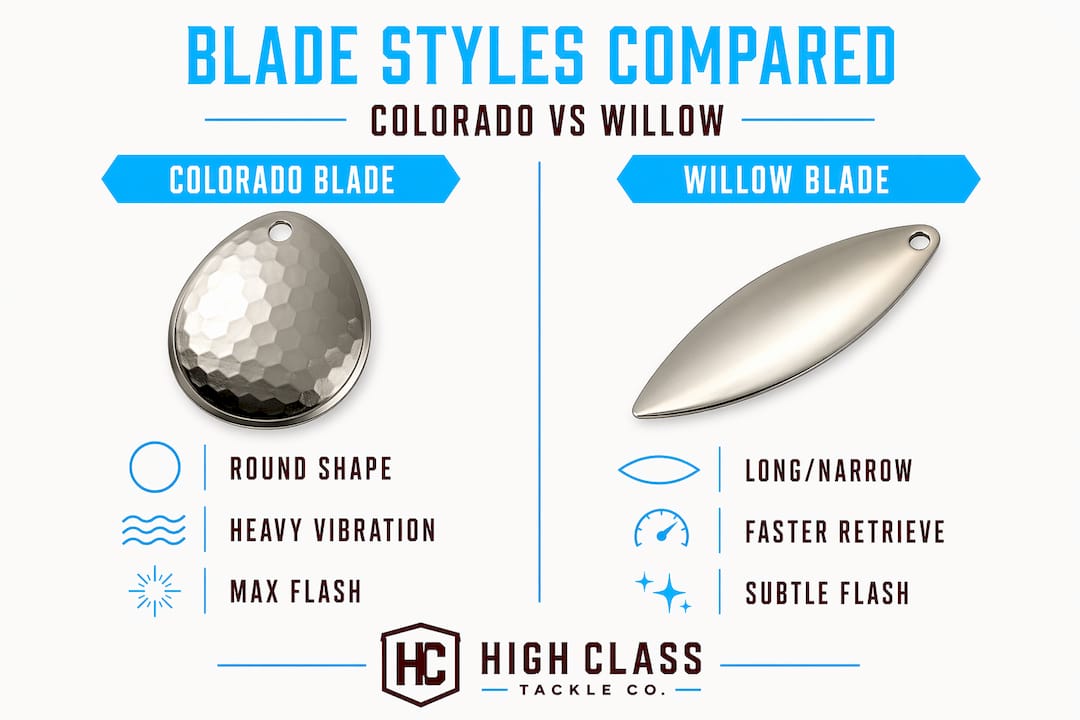
Let’s clear something up right away. No major manufacturer carries the brand name “Northwild Blades” as a fixed product line. The name circulates in angling communities as a descriptor for premium spinner blades with a wild, natural aesthetic and high-performance finish. Think Colorado and Willow blade styles with finishes designed to mimic the flash of baitfish in Pacific Northwest rivers and coastal waters.
Colorado blades are wide and round. They spin at a steep angle and push a ton of water, creating heavy vibration even at slow retrieve speeds. Willow blades are longer and narrower. They hug tighter to the body of the lure and produce a faster, more subtle flash. Both styles show up in what anglers refer to as northwild blades, and each has its place depending on conditions.
Here’s what separates a premium blade from a bargain bin disappointment:
- Finish type: Hammered, prism, and metallic finishes each scatter light differently. Hammered finishes create irregular flash that mimics a wounded baitfish. Prism finishes throw color and light across a wide arc.
- Material: Brass and stainless steel are the most common. Brass is heavier and adds depth to the lure’s sink rate. Stainless holds its finish longer in saltwater.
- Balance: A well-balanced blade spins true at all retrieve speeds. A poorly balanced blade wobbles, kills action, and spooks fish.
- Size range: Sizes typically run from 1.5 to 5.0, with larger blades producing more vibration and smaller blades working better in clear, pressured water.
| Blade style | Shape | Best use | Vibration level | Flash intensity |
|---|---|---|---|---|
| Colorado 3.0 | Wide, round | Slow retrieves, murky water | High | Moderate |
| Colorado 3.5 | Wide, round | Salmon, steelhead runs | High | High |
| Willow 3.5 | Long, narrow | Clear water, fast current | Low | Very high |
| Indiana | Mid-width oval | Versatile, trout, kokanee | Medium | Medium |
Pro Tip: Hammered finishes outperform plain metallic in stained or off-color water because the irregular surface scatters light at multiple angles, giving fish a target even when visibility is low.
Choosing the right blade for your setup
Picking the wrong blade size or finish is one of the most common reasons anglers go home empty-handed. Anglers often prioritize aesthetics over functional performance, and it costs them fish. Here’s how to think through your selection before you ever hit the water.
Water clarity
Clear water calls for smaller blades and natural finishes. Silver, gold, and natural prism patterns work well. In murky or stained water, go bigger and bolder. Chartreuse, orange, and hammered finishes cut through low visibility and get noticed.
Target species
Salmon and steelhead respond well to larger Colorado blades in the 3.0 to 3.5 range. The heavy vibration triggers reaction strikes in fast-moving river currents. Trout and kokanee are more finicky. Smaller Willow or Indiana blades in silver or natural patterns tend to outperform in pressured lakes and clear streams.
Current speed
Fast current requires a blade that spins easily without requiring high retrieve speed. Colorado blades are your go-to here. Slow or still water is where Willow blades shine, since they need speed to activate properly.
Use this checklist before every outing:
- Water color: clear, stained, or turbid?
- Target species and typical feeding depth
- Current speed: river, tidal, or still?
- Time of day: low-light conditions favor brighter finishes
- Lure weight and intended retrieve speed
Pro Tip: Run two different blade sizes on the same day. Start with the larger Colorado in the morning when fish are active and feeding aggressively, then drop to a smaller Willow blade once the sun is high and fish get selective.
Attaching and tuning your blades
Getting the blade on the lure correctly is where most anglers cut corners. A sloppy attachment kills spin, creates noise, and throws off the entire lure balance. Here’s what you need and how to do it right.
| Tool or material | Purpose |
|---|---|
| Clevis (folded or quick-change) | Connects blade to the wire shaft |
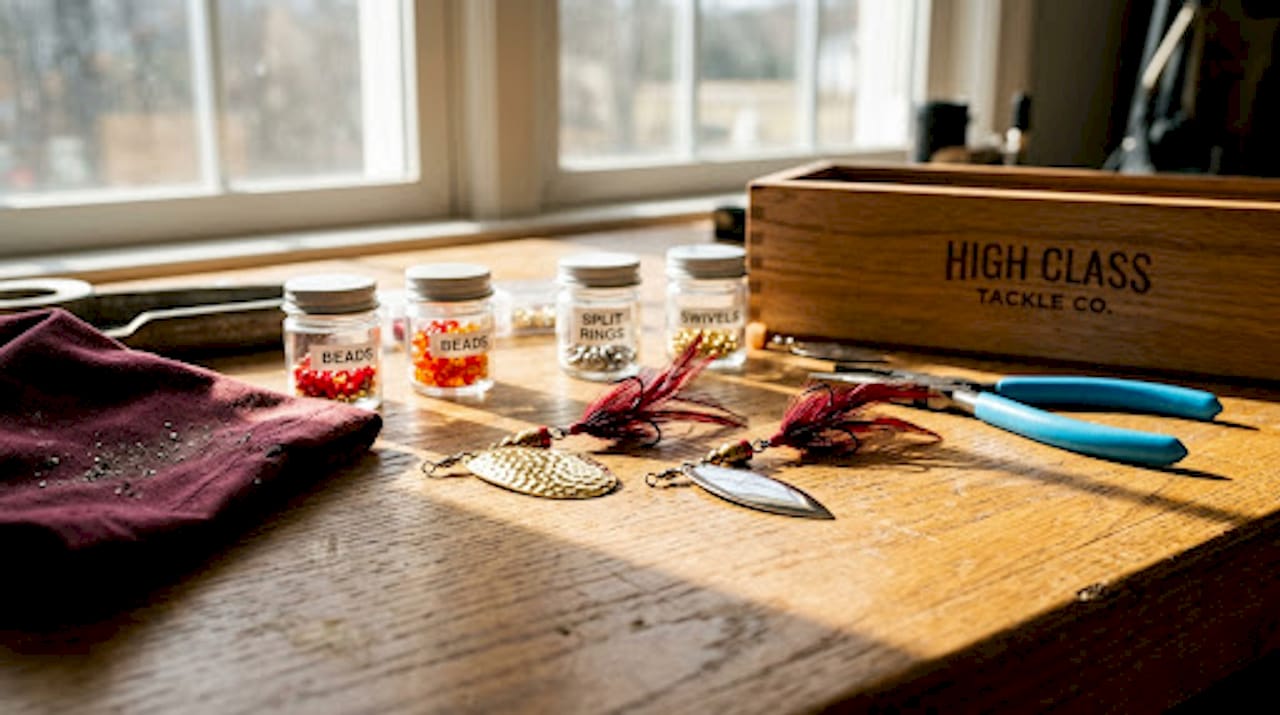
| Beads (glass or plastic) | Separates blade from body, reduces friction |
| Round-nose pliers | Bends wire loops cleanly |
| Split-ring pliers | Opens split rings without damaging them |
| Wire cutters | Trims shaft wire to correct length |
Follow these steps for a clean, high-performance setup:
- Thread your wire shaft through the clevis hole, then add a bead on each side of the clevis to reduce friction against the body.
- Slide the blade onto the clevis. Make sure the concave side of the blade faces forward toward the lure head.
- Form a tight loop at the front of the wire using round-nose pliers. The loop should be small and even, with no gaps.
- Add your body components (beads, body, hook assembly) behind the blade.
- Close the rear loop tightly. Test the blade spin by pulling the lure through water. It should spin freely with zero wobble.
- Adjust the clevis angle if the blade is slow to start spinning. A quick-change clevis makes this adjustment fast and repeatable.
A blade that doesn’t spin within the first half-turn of retrieve is a blade that’s losing you fish. Test every rig before you cast. Adjust the clevis, swap beads, or change blade size until the action is instant.
Pro Tip: Use quick-change clevises instead of folded clevises whenever possible. They let you swap blades in seconds without rebuilding the entire rig, which is huge when conditions change mid-session.
Maintenance matters too. Rinse blades in fresh water after every saltwater outing. Dry them completely before storage. A light coat of reel oil on the clevis prevents corrosion and keeps spin smooth through an entire season.
Troubleshooting and maximizing blade performance
Even a well-built rig can underperform if something is off. Focus on blade action rather than appearance when diagnosing problems. Here’s what to look for and how to fix it.
Signs of trouble
A blade that thumps unevenly is out of balance. A blade that won’t spin at slow speeds is either too large for the current or has a clevis that’s binding. A blade that spins but produces no vibration is usually the wrong shape for the retrieve speed you’re using.
Common mistakes to avoid
- Using a blade that’s too large for the lure weight, which causes the lure to roll instead of track straight
- Skipping beads between the blade and body, which creates friction and kills spin
- Ignoring finish wear. A scratched or dull finish loses its flash and becomes invisible to fish at depth
- Over-tightening wire loops, which restricts clevis movement and prevents the blade from spinning freely
- Storing blades loose in a tackle box where they scratch against each other and destroy their finish
Pro Tip: Store blades in a component tackle box with individual compartments. Separated storage keeps finishes pristine and makes it easy to find the right blade fast when conditions change.
For environmental tuning: in cold water, fish are slower and a blade with high vibration at low speed (Colorado) outperforms. In warm water with active fish, speed up your retrieve and let a Willow blade do the work with its tight, fast flash.
My honest take on northwild blades
I’ve spent enough time on Pacific Northwest rivers and coastal flats to know that blade selection is where most anglers leave fish in the water. The marketing around premium spinner blades can get loud, and it’s easy to get drawn in by flashy packaging or a cool name. What I’ve learned is that the fundamentals always win.
In my experience, the Colorado 3.5 is the workhorse. It performs in more conditions than any other blade style I’ve used. When water is off-color and fish are stacked in a run, that wide blade pushing heavy vibration is what gets the bite. I’ve watched anglers next to me throw Willow blades in murky water and go fishless while the Colorado was producing.
What I’ve also found is that finish quality is everything. A cheap blade with a thin finish loses its flash after a few sessions. A quality blade with a proper hammered or prism finish stays productive all season. Proven craftsmanship and finish durability separate gear that performs from gear that just looks good in the store.
My advice: buy fewer blades and buy better ones. Experiment with clevis angle and bead placement before you assume a blade isn’t working. And never skip the water test before you commit to a setup for the day. The fish will tell you what they want, but only if your rig is actually running right.
— Nick
Get your blades from a source you can trust
At Highclasstackleco, we build gear for anglers who take their fishing seriously. Our premium blade packs are designed to perform in real Pacific Northwest conditions, from tidal flats to fast-moving steelhead rivers. Every blade in our lineup is built with finish quality and balance at the center of the design.
Check out the “Tomahawk” Colorado 3.5 blades for heavy vibration in stained water, or the “Beast Mode” 3.0 blades when you need a compact, high-action setup. Not sure where to start? Grab a digital gift card and explore the full lineup at your own pace. Shop the full collection at highclasstackleco.com and get gear that’s built to fish, not just sit in the box.
FAQ
What are northwild blades used for in fishing?
Northwild blades are spinner blade components used to add flash and vibration to fishing lures. They are commonly used when targeting salmon, steelhead, trout, and kokanee.
What’s the difference between Colorado and Willow spinner blades?
Colorado blades are wide and round, producing heavy vibration at slow speeds. Willow blades are long and narrow, producing intense flash at faster retrieve speeds with less water resistance.
How do I know if my spinner blade is tuned correctly?
A correctly tuned blade spins freely from the first half-turn of retrieve with no wobble or drag. If it hesitates or rolls, adjust the clevis angle or swap bead sizes to reduce friction.
Are northwild blades the same as survival or outdoor knives?
No. The term northwild blades refers to fishing spinner blade components, not fixed-blade survival knives. Confusion between the two is common due to overlapping names in outdoor gear communities.
How do I keep my spinner blades performing all season?
Rinse blades in fresh water after saltwater use, dry them fully before storage, and keep them in individual compartments to prevent finish scratching. A light coat of reel oil on the clevis keeps spin smooth and prevents corrosion.
Recommended
- Spinnerbait guide: boost your Pacific Northwest fishing – High Class Tackle Co.®
- Salmon plug fishing rivers: Proven PNW tactics and gear – High Class Tackle Co.®
- Types of fishing line for steelhead: a PNW guide – High Class Tackle Co.®
- What Is a Fishing Media Brand: Anglers’ Guide – High Class Tackle Co.®
0 comments