

Five systems fix nearly every trolling-gear headache: a leader tree built from pipe insulation, a flasher bag or bucket for teasers, flat trays for spoons, a compartment tackle box for terminal tackle, and a rinse-and-dry routine after every trip. These setups scale from a 16-foot sled to a home garage with minor tweaks, and you can build most of them for less than the cost of a tank of gas or buy a version dialed in and ready to fish.
TL;DR:
- Organize leaders on foam pipe insulation trees, with each leader wound around its own section and a snap attached for quick swapping.
- Store flashers and teasers in perforated buckets or mesh bags, allowing moisture to drain and air to circulate before storage.
- Use divided trays or foam inserts to keep spoons flat and plugs rig-ready, preventing damage and tangling.
- Implement color-coded labels and tags with clear size and presentation info to speed gear identification and restocking.
- Rinse all metal gear with freshwater after every trip, separate dissimilar metals during storage, and replace rusted or dull hooks immediately to prevent corrosion.
Table of Contents
- Where Should Quick-Access Gear Live on Your Boat?
- How Do You Store Leaders Without the Tangle Mess?
- What’s the Best Way to Store Flashers and Teasers?
- How Do You Keep Spoons Flat and Plugs Rig-Ready?
- Which Tackle Box Setup Fits Salmon Trolling Best?
- How Do You Stop Corrosion Before It Starts?
- Where Should Tools and Sinkers Go on a Trolling Boat?
- How Should You Pack for a Trolling Trip?
- What Region-Specific Tricks Actually Work in the PNW?
- What Labeling System Actually Speeds Up Gear Identification?
- How Often Should You Replace Line, Leaders, and Terminal Tackle?
- How Do You Track Gear Before and After Every Trip?
- Is DIY Storage Really as Good as Buying a Box?
- Get Your Terminal Tackle Dialed in Before the Next Trip
- Sources
Where Should Quick-Access Gear Live on Your Boat?
The stuff you grab mid-fight belongs within arm’s reach of the rod holders, not buried in a hatch. Leaders, spare rigs, pliers, knives, nets, and a couple of backup spoons should live in the same three-foot radius as whoever’s working the rod.
Gunnel trays keep small items visible and drain water instead of holding it. Transom racks hold pliers and gaff handles vertically so they don’t roll around when you’re running a swell. Rod-holder leader bars mount right next to the rod, so re-rigging after a bite doesn’t mean walking to the console. Under-seat bins handle bulkier backup gear that doesn’t need instant access.
- Leaders and spare rigs: mount near the rod holder in use
- Pliers, knives, and hook cutters: transom rack or belt clip
- Nets: bow or side mount, never blocking the walkway
- Spare spoons: gunnel tray within reach of the person netting fish
Small boats need this discipline more than cabin boats, since a 16 to 18 footer has almost no dead space to spare. On a bigger cabin boat, spread stations by rod so two anglers aren’t reaching into the same tray during a double hookup.
Pro Tip: Load the heaviest tackle boxes low and centered before you leave the dock. A top-heavy sled handles differently in a beam sea, and nobody wants to learn that lesson offshore.
How Do You Store Leaders Without the Tangle Mess?
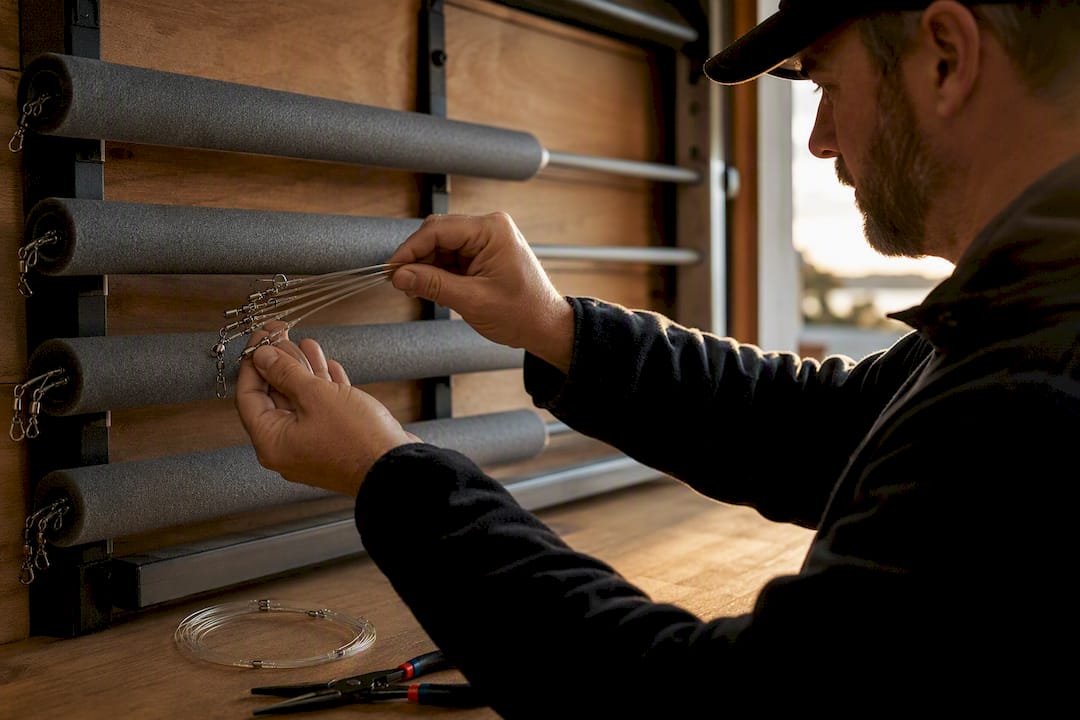
A leader tree built from foam pipe insulation solves tangle-free storage better than almost any bin or bag on the market, and it costs next to nothing. Anglers commonly cut foam pipe insulation lengthwise and mount it to a board, letting pre-tied leaders wrap around individual sections without touching each other. It’s one of the most reliable leader storage options available to trollers on a budget.
- Cut pipe insulation into 8 to 12 inch sections and mount them vertically or at an angle on a scrap board.
- Wind each leader around its own section with the hook seated into the foam, not dangling free.
- Attach a duolock snap to the tag end of each leader so it clips straight onto your mainline swivel with no rethreading.
- Space sections wide enough to grab and release a single leader without dragging three others loose.
Size the foam and mounting height so leaders pass on and off freely, since a cramped tree defeats the purpose. Building your own leader tree beats a commercial dispenser if you want custom sizing for oversized flasher leaders. If you’d rather buy one ready-made, a commercial dispenser saves setup time but usually holds fewer leaders per square inch than a well-built DIY tree.
Pro Tip: Store leader trees in a dry bag or the cabin between trips to help preserve leader longevity.
What’s the Best Way to Store Flashers and Teasers?
Flasher bags, perforated buckets, and tender boxes each solve a different piece of the drying-and-access puzzle. Mesh or perforated buckets let salt water drain and air circulate, which matters more than most anglers realize since sealed containers trap moisture against metal and blades even when the box claims to resist rust.
- Flasher bags: soft-sided, stack flat, good for transport but slower to dry
- Perforated buckets: excellent drainage, easy to grab one flasher without dumping the rest
- Tender boxes: rigid protection for painted finishes, best for storage over transport
- Pool noodle slit lengthwise: cheap divider that keeps flasher blades from scratching each other
- Map tubes: surprisingly effective for storing long umbrella-rig arms without kinking wire
Pack multiple flashers in one bucket by alternating orientation, blade up, blade down, so the widest points nest instead of stacking flat against each other. Community-tested tackle storage hacks like the notched-bucket approach hold up well because they prioritize drainage overlooks. Whatever container you choose, let it drain upside down for an hour before closing it up for the drive home. That single habit prevents more corrosion than any spray-on protectant.
How Do You Keep Spoons Flat and Plugs Rig-Ready?
Spoons need to lie flat, full stop. Stacked spoons rub, chip paint, and dull hooks against each other, so a divided tray or foam-insert box with individual slots beats tossing them loose into a drawer.
- Flat trays with 1 to 2 inch dividers keep spoon finishes from scratching
- Foam-insert boxes hold hooks upright so points don’t dull against neighboring lures
- Plug cases with molded slots protect diving lips and keep trebles from tangling
- Notched buckets work for bulky bucktails and umbrella rigs that won’t fit a flat tray
- Cut map tubes handle long plug bodies without bending bills
Plugs cause more storage headaches than spoons because of the treble hooks and diving lips. A dedicated plug case with individual slots protects both, and it beats a generic tackle box where hooks snag every neighboring lure the second you open the lid.
Which Tackle Box Setup Fits Salmon Trolling Best?
Removable-tray boxes, modular stackable units, and foam-insert boxes each serve a different style of trolling. Removable trays let you pull one tray to the rod station and leave the rest dockside. Modular boxes snap together so you can add capacity as your tackle collection grows. Foam-insert boxes protect delicate finishes but eat more space per item than a tray system.
- Decide on portability first: are you carrying this box to the rod, or is it staying in a fixed compartment?
- Check waterproofing. Salt spray on an open sled demands a sealed latch, not a snap-fit lid.
- Match compartment size to your terminal tackle, since beads and swivels need smaller cells than spoons and flashers.
- Choose modular over fixed if you’re still building out your rotation of presentations.
Running a dedicated trolling box separate from your general tackle box saves real time on the water, since you’re not digging past trout gear to find a duolock snap mid-bite. High Class Tackle Co.'s component tackle box was built around exactly this problem: dedicated cells sized for hooks, beads, and swivels so terminal tackle organization doesn’t turn into a dump-and-search every time a leader breaks.
How Do You Stop Corrosion Before It Starts?
Rinsing with a garden hose beats a pressure washer every time. High-pressure water forces salt deeper into skirts and hook eyes instead of flushing it out, according to tackle care guidance from experienced trollers, which recommends a gentle freshwater rinse and hanging skirts straight down to dry.
- Rinse gear with low-pressure freshwater after every trip, no exceptions
- Hang skirts vertically so fibers don’t mat while drying
- Separate dissimilar metals before storage to avoid galvanic corrosion between multi-metal lures
- Never seal damp gear in a closed box, even one marketed as rust-resistant
- Apply a light lubricant like CRC or WD-40 sparingly on metal hardware, never on soft plastics
A trolling maintenance reference backs the same separation rule for lures with mixed metal components, since aluminum blades and steel hooks corrode faster when stored touching each other wet. Short-term, a rinse and open-air dry on the boat handles most trips. Long-term storage at home calls for proper cleaning between seasons, full disassembly of reels, and moisture-resistant containers for anything going into the garage until next season.
Where Should Tools and Sinkers Go on a Trolling Boat?
Pliers, knives, and nets need a fixed home that’s fast to reach but out of the walking path. A UHMW plastic rack bolted to the transom holds tools upright without rattling loose in a chop, and it survives salt spray better than most plastic clips.
- Transom UHMW racks: pliers, knives, gaff handles
- Gunnel trays with drain holes: sinkers, small tools, spare snaps
- Color-coded compartment boxes: sort sinkers by weight at a glance
- Bucket with drilled drainage holes: bulk sinker storage that doesn’t trap water
- One rack per angler position: cuts down on reaching across the boat mid-fight
If you’re fishing with kids aboard, keep hooks and heavy sinkers in a lidded compartment rather than an open tray. A five-second latch beats an ER visit.
How Should You Pack for a Trolling Trip?
A five-minute pre-trip check at home saves an hour of scrambling at the ramp.
- Confirm leaders, lures, and terminal tackle are stocked in the box you’re actually bringing.
- Check pliers, knives, and net are in their racks, not still drying on the garage floor.
- Load life jackets and the first-aid kit before anything else goes in the boat.
- Set the cooler low and centered for balance, then load tackle boxes on top.
- Do a final walk of the deck. Clear paths matter more than extra gear once you’re underway.
After the trip, stage wet gear separately from dry storage. Lay skirts and rinsed lures out on a towel or rack before boxing anything up. Rushing this step is how gear ends up rusted by the next outing, and it’s the single easiest mistake to avoid.
What Region-Specific Tricks Actually Work in the PNW?
Nick’s go-to leader tree runs sections of pipe insulation sized to hold multiple pre-tied leaders per side without crowding. Duolock snaps stay pre-attached, so swapping a bitten-off leader takes one motion, not a re-tie at the rail.
PNW trollers deal with more rain and boat-cover humidity than saltwater corrosion alone accounts for, so skirts get hung in the garage overnight before boxing, not just rinsed and packed wet. DIY pipe insulation works fine for anglers running one or two rods. Once you’re managing four-plus rods and swapping presentations fast, a dedicated component tackle box earns its keep by keeping hooks, beads, and swivels sorted where a foam tube can’t.
What Labeling System Actually Speeds Up Gear Identification?
Color-coded tape beats handwritten labels for speed, since you can identify a compartment from three feet away without squinting at a sharpie scrawl that’s already faded from sun exposure. Assign one color per presentation type: green for hoochies, orange for spoons, blue for plugs, and stick a matching strip of electrical tape on the box lid and the compartment lid inside.
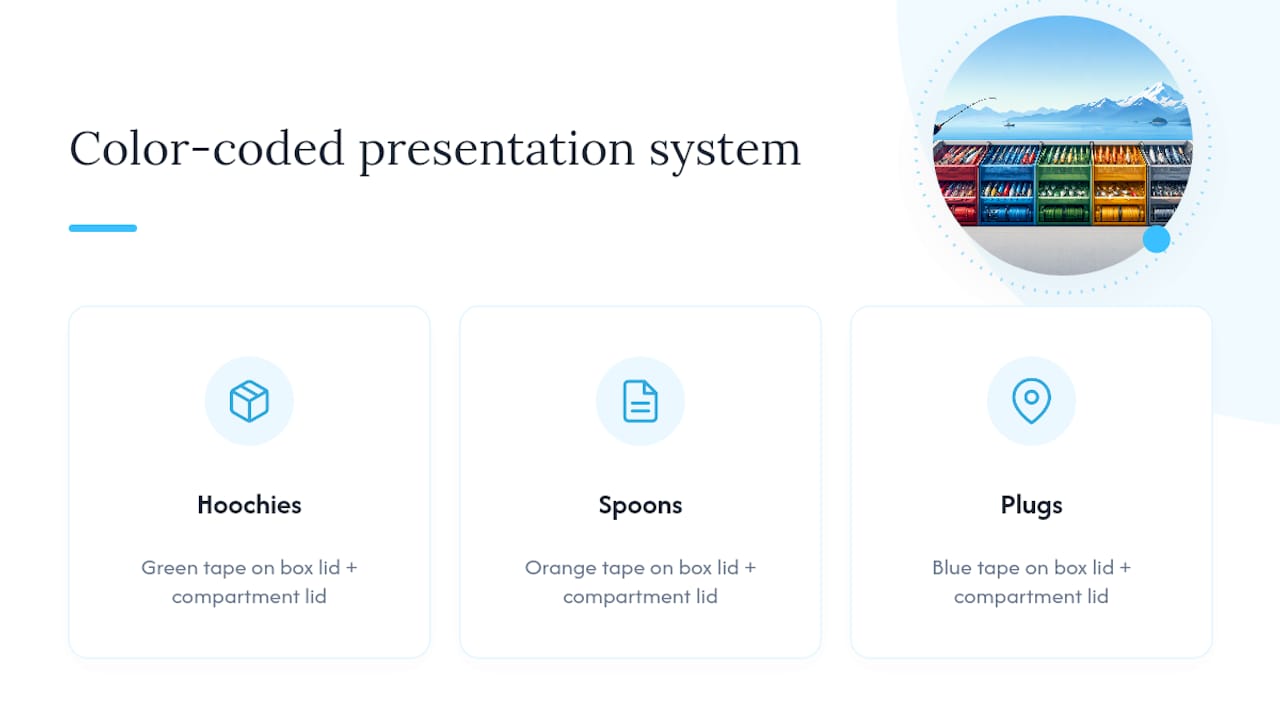
Size matters as much as color. Use small stick-on labels for individual compartments (hook size, swivel weight, snap type) and larger printed labels on the outside of boxes for presentation category. A label maker with laminated tape survives boat spray far longer than a marker, which fades and smears within a season of salt exposure.
For leader trees, tag each foam section with the leader length and hook size using a zip tie flag rather than writing directly on the foam, since foam absorbs ink unevenly and the writing blurs. Numbering leader-tree sections sequentially also helps you notice at a glance which leaders you’re burning through fastest, which tells you what to re-tie before the next trip instead of discovering the gap mid-bite.
Keep the labeling system consistent between your boat gear and home storage. If green tape means hoochies on the boat, it should mean hoochies in the garage bins too. Anglers who run separate systems for boat and home lose the entire benefit of labeling, because they have to relearn the code every time they restock.
How Often Should You Replace Line, Leaders, and Terminal Tackle?
Mono and fluorocarbon leaders degrade from UV exposure and abrasion even when they look fine, so replace pre-tied leaders showing any surface fuzz, kinks, or discoloration rather than waiting for a break-off to force the issue. A reasonable rule for regular PNW trollers: rebuild your leader tree’s oldest third every month during peak season, so you’re never fishing entirely on leaders older than a couple months.
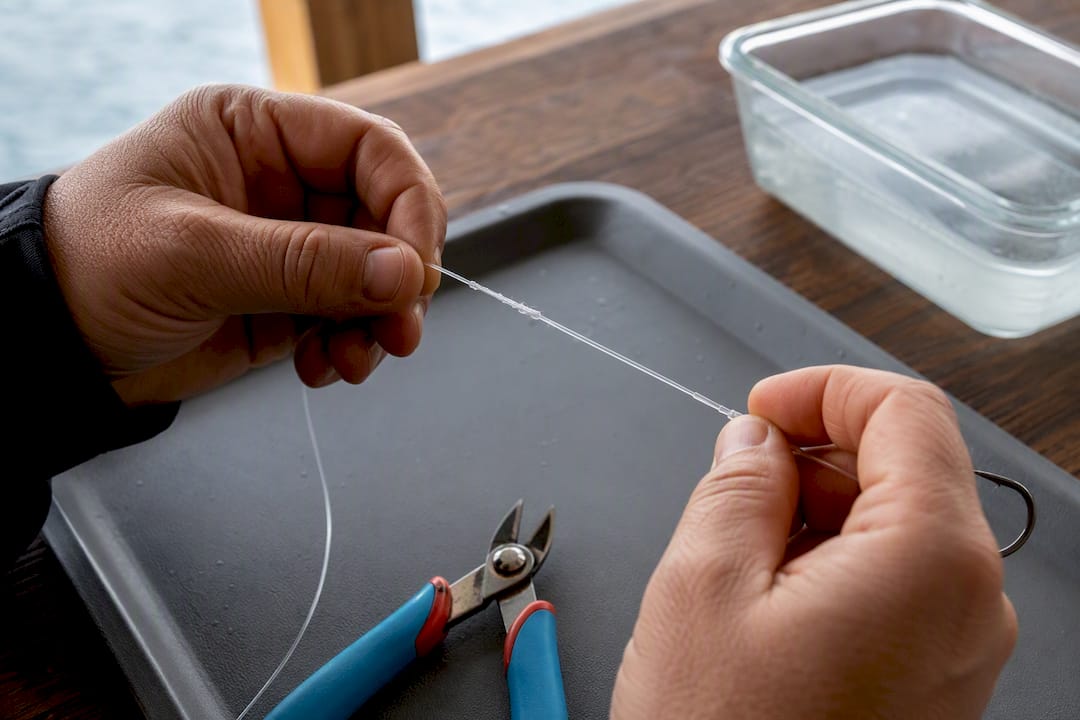
Mainline is a different maintenance schedule. Braided mainline holds up across multiple seasons if you rinse and dry it, but the last 20 to 30 feet closest to the terminal tackle takes the most abrasion and UV damage. Strip and re-tie that section every few trips rather than replacing the whole spool.
Reels need their own routine separate from tackle. Freshwater rinse after every trip, then a full disassembly and light lubrication a few times per season handles most of what causes reel failure, according to maintenance guidance for salmon gear covering rod, reel, and line care. Skipping this is how a reel that cost real money seizes up two seasons early.
Hooks deserve a hard rule with no exceptions: any hook showing rust, a rolled point, or a dull tip gets replaced before the next trip, not sharpened and reused. A dull or corroded hook costs you hookup ratio in a way that’s invisible until you’re netting fewer fish than the boat next to you.
How Do You Track Gear Before and After Every Trip?
A simple two-column checklist, taped inside your tackle box lid or kept on your phone, catches the gaps that memory misses. Before you leave: leaders stocked, lures rigged for the day’s plan, tools in their racks, life jackets aboard, first-aid kit checked. After you’re back: gear rinsed, skirts hung to dry, hooks inspected, anything damaged pulled and flagged for replacement.
Running actual inventory, not just a packing checklist, pays off over a season. Count leaders on the tree monthly. Track which spoon colors you’re burning through fastest so restocking happens before you’re standing at the ramp short a color that’s producing. A basic spreadsheet or even a notes app list works, the format matters less than the habit of checking it before you load the truck.
The post-trip half of the checklist matters more than most anglers admit. Skipping the “what needs replacing” step is how gear quietly degrades until a leader snaps mid-fight or a reel locks up on a good fish. Five minutes with a checklist after every trip is cheaper than losing a king to a corroded snap swivel.
Is DIY Storage Really as Good as Buying a Box?
The conventional advice on gear organization treats DIY and store-bought as a tier system, DIY for anglers on a budget, purchased boxes for anglers who are serious. That framing misses what actually matters on the water. A pipe-insulation leader tree isn’t a cheaper substitute for a commercial dispenser; it’s often the better tool, since you control the sizing for oversized flasher leaders that off-the-shelf dispensers don’t handle well.
Where store-bought gear earns its cost is terminal tackle. Hooks, beads, swivels, and snaps are small, numerous, and easy to lose in a foam tube built for leaders. That’s a compartment problem, not a leader problem, and it’s exactly where a dedicated box like High Class Tackle Co.'s component tackle box does something pipe insulation can’t.
The real priority isn’t picking a side between DIY and retail. It’s matching the storage method to what’s actually being stored, leaders on a tree, terminal tackle in compartments, and stopping there instead of overbuilding a system for gear that doesn’t need it.
— Nick
Get Your Terminal Tackle Dialed in Before the Next Trip
If you’re still keeping hooks, beads, and swivels loose in a tackle-box tray built for spoons, you’re losing time every single time a leader breaks mid-fight. A component tackle box with dedicated cells sized for terminal tackle helps organize hooks and beads more effectively than a repurposed spoon tray.
It fits right alongside a leader tree on the boat or on a garage shelf next to your spoon trays, so your terminal tackle prep stops eating into fishing time. Pair it with the terminal tackle and components built for salmon presentations, and your whole rig-swap workflow gets faster before the season really kicks off. Check out the component tackle box now and get your boat organized before the next tide window opens.
Sources
- Leader Storage Options by Scott Haugen – Salmon Trout Steelheader
- On The Water – tackle care and drying best practices
- How to properly maintain and store your salmon fishing gear – MacFishes
0 comments