

For fresh fish blood, flush the fabric or surface with cold water immediately, blot (never rub), work in a degreasing dish soap, then finish with a short application of 3% hydrogen peroxide or an enzyme cleaner. Dried stains need a cold soak first, then the same degreaser and enzyme combo with real dwell time. Skip the hot water and the dryer until the stain is fully gone, and always test any cleaner on a hidden patch first.
TL;DR:
- Fresh fish blood stains should be treated immediately by flushing with cold water and blotting, avoiding heat or hot water to prevent setting the stain.
- Dried blood stains require soaking in cold water first, followed by repeated cycles of degreasing, enzyme cleaning, and possibly oxygen bleach on white fabrics for best results.
- Different surfaces need specific approaches: clothing benefits from back-flushing and enzyme treatments; vinyl seats respond well to peroxide or marine cleaners; non-skid decks may require diluted bleach, and carpet needs deep rinsing or extraction.
- Handling blood stains within the first hour greatly reduces their severity, as most blood drains quickly after fish bleeding, and prompt rinsing minimizes surface and fabric bonding.
- Keeping a small kit with wipes, peroxide spray, enzyme packets, dish soap, and brushes on hand ensures quick response, preventing stains from becoming a long-term cleaning issue.
Table of Contents
- How Do You Remove Fresh Fish Blood Stains Fast?
- What’s the Best Way to Get Dried Fish Blood Out?
- Which Cleaning Method Fits Your Boat, Gear, or Clothes?
- What On-Deck Habits Reduce Fish Blood Stains?
- What If the Stain Won’t Fully Come Out?
- What Gear Do Experienced Anglers Keep for Blood Cleanup?
- Why Blood Control Matters More Than Just Clean Gear
- Get the Kit Built for On-Deck Cleanup
- Sources
- FAQ
How Do You Remove Fresh Fish Blood Stains Fast?
The first sixty seconds after a blood spill decide whether you’re dealing with a five-minute fix or a stain that outlives the boat. Fresh blood is protein, and protein sets hard once it dries or hits heat. Move fast, and move in this order.
- Flush it immediately. On clothing, run cold water through the back of the fabric so you’re pushing the stain out, not deeper in. On a hard surface like a deck or cooler lid, hit it with a steady stream of cold water straight away.
- Blot, don’t rub. Rubbing grinds blood into the weave or texture. Press a clean rag against the spot and lift, and scrape off any solid bits with a dull edge, like the back of a butter knife.
- Degrease before you disinfect. Work a dish soap like Dawn into the stain. Fish blood carries oils from skin and slime, and those oils block cleaners from reaching the protein underneath.
- Rinse, then hit it with peroxide. After the soap rinses clean, apply 3% hydrogen peroxide for a short burst. You’ll see it foam on contact with blood. That reaction is doing real work, but it’s not something you leave on indefinitely.
This same sequence works whether you’re standing over a sink or crouched on a swim step with a cooler of ice melting behind you. If you’re treating gear on the boat mid-trip, keep the item out of direct sun while you work. Heat from sunlight has the same stain-setting effect as a dryer, just slower.
Pro Tip: Keep a small spray bottle mixed with 3% peroxide and a couple drops of dish soap in your tackle bag. One shot on a fresh spot, a quick wipe, and a freshwater rinse handles most blood before it ever gets the chance to set.
What’s the Best Way to Get Dried Fish Blood Out?
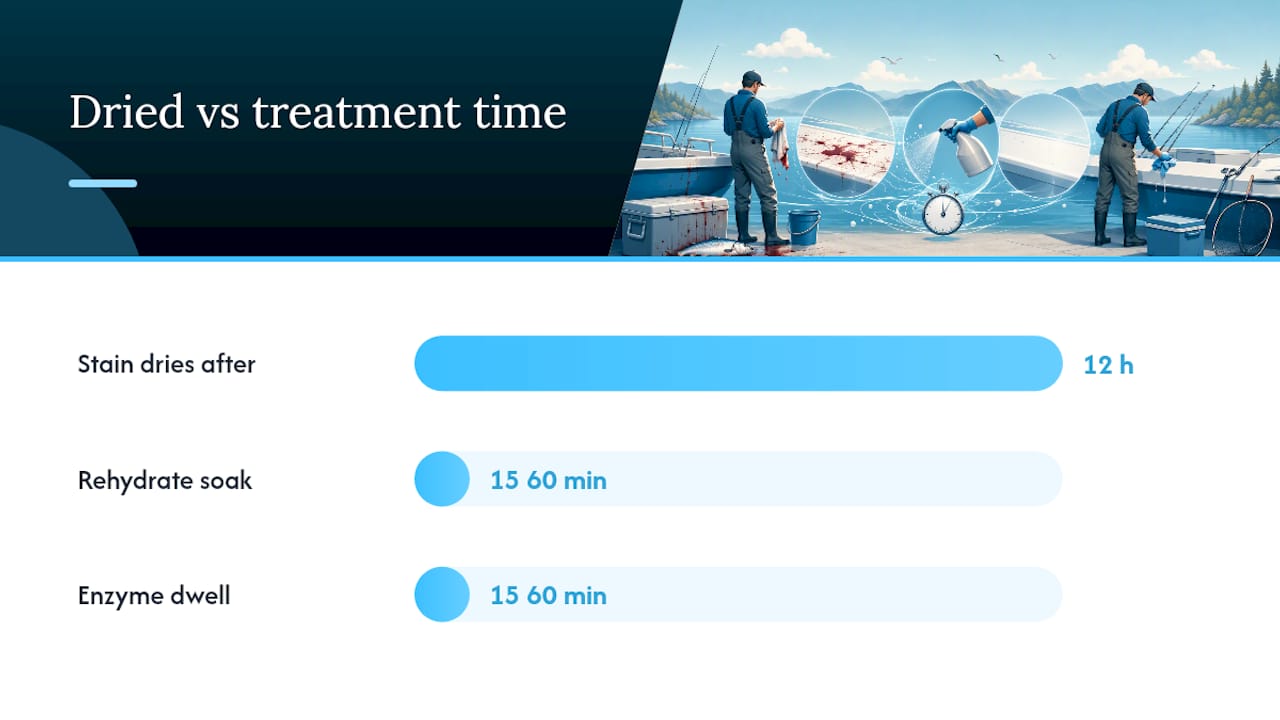
Once fish blood dries, usually somewhere past the 12-hour mark, it bonds to fibers and cracks into that stubborn rust-brown crust anglers know too well. You can still win this fight. It just takes patience instead of speed.
Start by rehydrating the stain. Submerge fabric in cold water for 15 to 30 minutes, or lay a cold, damp cloth over a stain on carpet or upholstery you can’t soak. This softens the dried protein enough for cleaners to actually penetrate. Skipping this step is the single biggest reason dried-stain treatments fail.
- Degrease first with dish soap, worked gently into the fabric.
- Apply an enzyme cleaner and let it sit for the dwell time listed on the bottle, usually 15 to 30 minutes. Enzymes break down proteins that soap alone can’t touch.
- For white clothing only, follow the enzyme treatment with oxygen bleach, never chlorine bleach, which can yellow certain fabrics and won’t touch the protein bond anyway.
- For boat decks, a diluted bleach solution or a marine-formulated cleaner can finish what enzymes started, but only with controlled contact time.
- Abrade gently, if at all. A soft-bristle brush on fabric or a non-abrasive pad on gelcoat is fine. Anything stiffer risks pulling fibers or scratching a finish before the stain is even fully lifted.
Realistic expectations matter here. Fresh-stain treatment usually clears the spot completely in one pass. Dried stains often take two or three cycles of soak, degrease, and enzyme dwell before you’re back to a clean surface, and a very old, heat-set stain on light fabric may leave a faint shadow no matter how many rounds you run.
Pro Tip: Never scrub a dried stain hard on the first try. Aggressive scrubbing on a stain that hasn’t been rehydrated tends to spread it wider instead of lifting it out.
Which Cleaning Method Fits Your Boat, Gear, or Clothes?
Fish blood doesn’t behave the same on cotton as it does on gelcoat, and treating every surface the same way is how anglers end up with a bigger problem than the stain itself. Match the method to the material.
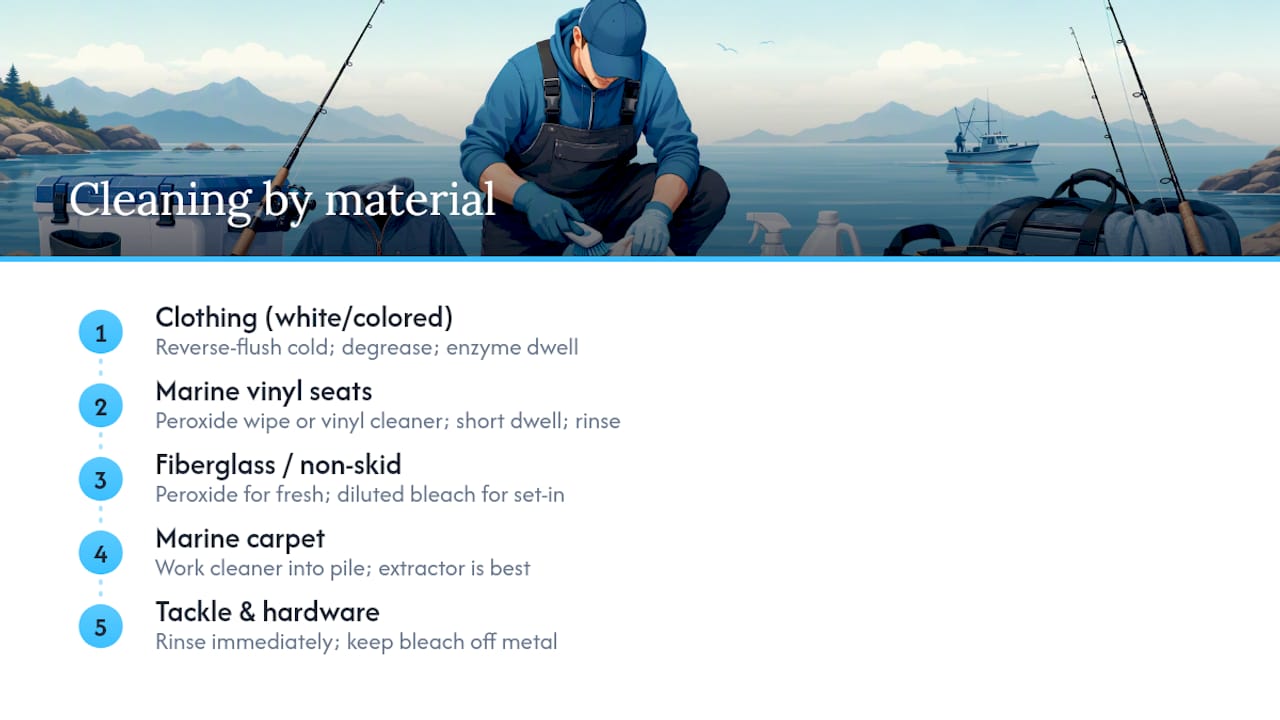
Clothing, white or colored. Reverse-flush with cold water from the back of the fabric, degrease with dish soap, then apply an enzyme cleaner and let it dwell. For colored garments, degrease before enzyme treatment in that exact order to protect the dye while the enzymes still break down the protein. Oxygen bleach is fair game for whites after the enzyme step. Chlorine bleach is not, on any color, and skip the dryer until the stain is completely gone. Heat you can’t see, like a hot wash cycle, sets a stain just as fast as a dryer does.
Marine vinyl seats. A brief hydrogen peroxide wipe or a marine vinyl cleaner, applied with a soft brush, handles most spots. Vinyl reacts poorly to prolonged bleach contact, so keep dwell time short and rinse thoroughly.
Fiberglass and non-skid decks. Peroxide works well on fresh spots when applied and rinsed promptly. Set-in stains on textured non-skid usually need a diluted bleach solution or a marine-formulated remover, since the texture traps blood deeper than a flat surface would. Size your deck brush to the texture: a stiff brush for aggressive non-skid, something softer for smooth gelcoat.
Marine carpet. Work the cleaner deep into the pile rather than just across the surface. A carpet extractor pulls the most blood out; without one, repeated light rinses beat one heavy soaking, which tends to leave rings behind as it dries.
Tackle and metal hardware. Rinse blood off immediately, and lean on wipes for anything you can’t run under a hose. Leaving bleach sitting on metal parts invites corrosion fast, so if you use it on a nearby deck surface, keep it away from hooks, reels, and hardware.
One number is worth remembering here: most blood drains from a fish within the first hour after bleeding. Handle that window well and you’re cleaning a fraction of what a poorly bled fish leaves behind on deck.
What On-Deck Habits Reduce Fish Blood Stains?
The best stain removal method is the one you never have to use. A few habits at the cleaning station save you real time later.
- Bleed and gut promptly. Bleeding a fish right after landing it cuts down blood spots in the fillet and keeps blood off the deck in the first place, not just for cleanup’s sake but for better color and flavor in the meat.
- Build a compact cleaning kit. Wipes, a small spray bottle of 3% peroxide, a couple of enzyme packets, travel dish soap, and a soft brush cover almost everything you’ll run into on a normal trip. It fits in a side pocket of most tackle bags.
- Rinse as you go. Don’t let blood sit in the sun between fish. A quick freshwater rinse every time you land a catch beats one big scrub-down at the dock.
- Check seams and edges. Blood pools in the low spots. Cooler lid hinges, deck seams, and the edges of non-skid texture hide stains that look fine from a standing glance.
Our guide to cleaning your catch properly walks through the bleeding and gutting sequence in more detail if you want the full routine down before your next trip.
What If the Stain Won’t Fully Come Out?
Sometimes a stain fights back past the first two or three attempts. Before you reach for something stronger, run the basics again. Repeat the degrease and enzyme cycle at least once more before jumping to a harsher oxidizer. Enzymes need time and often need a second pass on a stain that’s been drying for days, not hours.
- Save oxygen bleach escalation for white fabric only. It has no business on color, and chlorine bleach has no business anywhere near this problem.
- If you’re testing bleach on gelcoat, confirm contact time on a hidden spot first. Letting a diluted solution sit too long can dull the finish, which is a worse outcome than the stain you started with.
- Give abrasives the same caution. A test patch tells you in thirty seconds whether a pad is too aggressive for that surface.
- Know when to stop. A faint shadow after three honest attempts on an old, heat-set stain is often the practical ceiling for DIY work. At that point, a professional upholstery or boat detailer has tools and products beyond what’s safe to try at home.
What Gear Do Experienced Anglers Keep for Blood Cleanup?
Every angler who’s spent a season on the water ends up building some version of the same kit, usually after learning the hard way once. Here’s what earns a permanent spot in the tackle bag or boat locker.
- Heavy-duty cleaning wipes for a fast wipe-down between fish
- A small spray bottle mixed with 3% hydrogen peroxide for fresh spots
- A couple of enzyme cleaner packets for anything that sits longer than expected
- Travel-size dish soap for the degrease step
- A soft detailing brush that won’t scratch gelcoat or vinyl
Stage your cleanup around the trip, not just around the mess. Treat each fish at landing rather than waiting for a pile at the end of the day, and keep raw fish cool once they’re bled so you’re not fighting both stains and spoilage at the same time. Wahoo Wipes are built for exactly this kind of quick, repeated wipe-down through a long day on the water.
Pro Tip: A pack of wipes in every tackle bag, cooler, and glove box means you’re never more than an arm’s length from a fast fix, and fast is the whole game with fresh blood.
Why Blood Control Matters More Than Just Clean Gear
Cleanup isn’t really about appearances. It’s about respecting the fish and the trip. A fish bled and rinsed promptly puts better, cleaner meat on the plate, and a deck that gets wiped down between catches never turns into the hour-long scrub session waiting for you at the dock. Build the small kit, run the routine every trip, and stain removal stops being a chore and starts being muscle memory, the same way clearing your line or checking your knot is.
— Nick
Get the Kit Built for On-Deck Cleanup
Bleach, borrowed dish soap, and a rag from the truck get the job done once. High Class Tackle Co. is built for anglers who’d rather have the right tool ready every trip instead of improvising at the dock. Our Wahoo Wipes handle the fast wipe-down the moment blood hits the deck, and they’re designed for the kind of heavy, repeated use a real fishing trip demands, not a one-off spill.

Grab a pack of Wahoo Wipes for your boat bag or cooler, and while you’re browsing, check out the rest of the terminal tackle and components built for anglers who treat their gear like it matters. A clean deck and a full tackle box start with the same habit: having the right stuff on hand before you need it.
Sources
- How to Bleed a Fish (and When to Skip It) for Better-Tasting Filets | Outdoor Life
- Remove Stains From Blood | Textiles
- How to Remove Fish Stains Safely (Quick Guide) | Stain Removal Guides
- How to Remove Fish Blood Stains from Your Boat & Gear | Better Boat
FAQ
Can Dried Blood Stains Be Removed?
Yes, most dried fish blood stains come out with a cold water soak followed by dish soap and an enzyme cleaner. Expect to run the degrease and enzyme cycle two or three times on stains that have set for days, and accept that a very old, heat-set stain on light fabric may leave a faint shadow.
Does WD-40 Remove Blood Stains?
WD-40 is a lubricant and solvent, not a protein-breaking cleaner, so it isn’t a reliable method for fish blood. Stick to a degreasing dish soap followed by peroxide or an enzyme cleaner instead.
Will Dawn Dish Soap Remove Blood Stains?
Dawn and similar dish soaps handle the degreasing step well, cutting through the oils in fish blood so a follow-up enzyme cleaner or peroxide can reach the protein underneath. Soap alone often fades a stain but rarely finishes the job on its own.
Does Fish Blood Wash Out of Clothes?
Fresh fish blood usually washes out completely with a cold-water flush, dish soap, and a short hydrogen peroxide treatment before the item ever sees a washing machine. Once blood dries and sets with heat, removal gets harder and may take repeated enzyme treatments, so treat stains before they hit the dryer.
0 comments