

Rod sensitivity is defined as a fishing rod’s ability to transmit vibrations from the lure or fish contact directly to your hands, giving you real-time feedback on what’s happening underwater. The role of rod sensitivity in fishing is not a minor detail. It determines whether you feel a light bite or miss it entirely, whether you set the hook in time or watch your line go slack. Every technique you fish, from jigging to drop-shotting to finesse worming, depends on how well your rod communicates with you. Get this right, and your catch rate climbs. Get it wrong, and you’re guessing on every cast.
What is the role of rod sensitivity in fishing?
Rod sensitivity acts as a force multiplier between the fish and your hands. Vibrations travel from the bait through the water, into the line, up the blank, and into your grip. The faster and more clearly those signals arrive, the faster you react. That speed matters most in finesse techniques where fish mouth the bait softly and spit it just as fast.
The practical impact is direct. A rod that transmits vibrations clearly lets you feel a bass pick up a drop-shot rig, a steelhead nudge your drift bait, or a kokanee tap your hoochie before turning away. Miss that signal, and the fish is gone. Catch it, and you drive the hook home before the fish knows what happened.
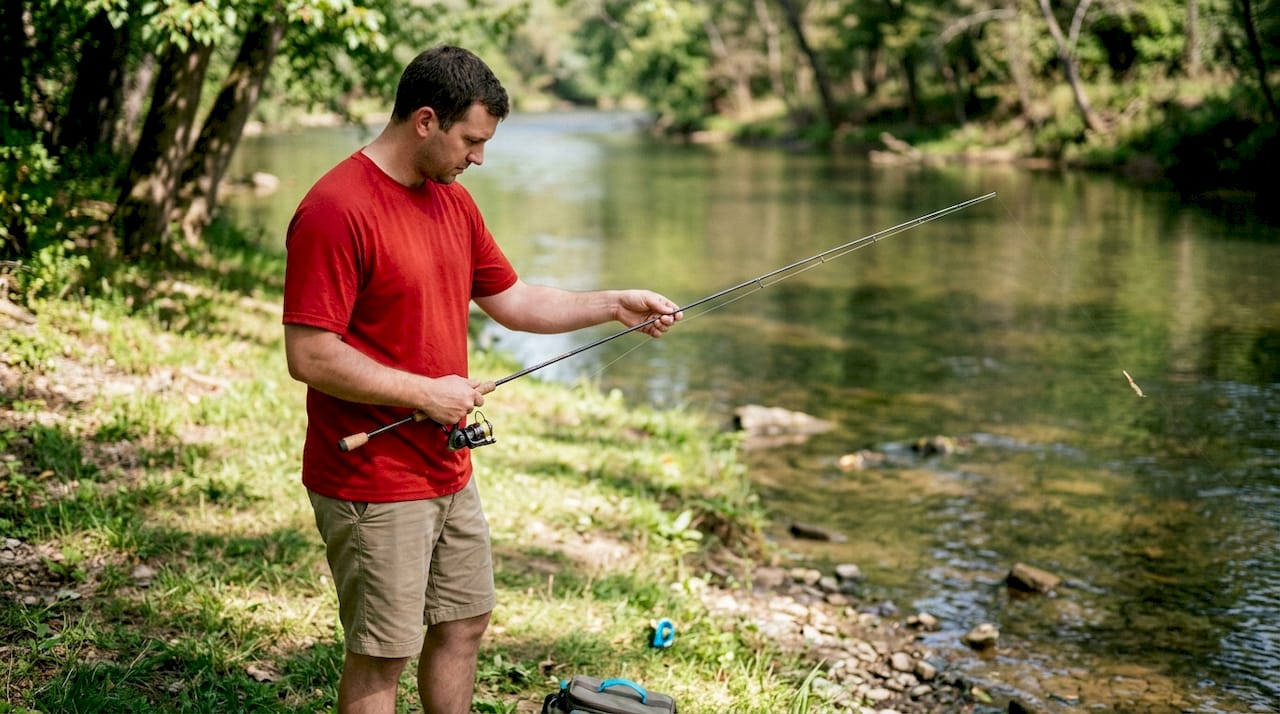
Rod sensitivity also tells you what’s happening below the surface beyond just bites. You feel gravel, rock, sand, and wood as your lure drags across the bottom. That information helps you position your presentation where fish hold, which is just as valuable as detecting the strike itself.
Pro Tip: Hold the rod with a relaxed grip when fishing bottom-contact techniques. A tight grip dampens vibrations before they reach your brain. Let the rod do the talking.
How do rod materials affect sensitivity?
The blank material is the single biggest factor in how well a rod transmits vibrations. High-modulus graphite is the industry standard for maximum sensitivity. Its superior stiffness-to-weight ratio allows vibrations to travel through the blank with minimal energy loss. That means a subtle tap at the lure tip reaches your hand almost instantly.
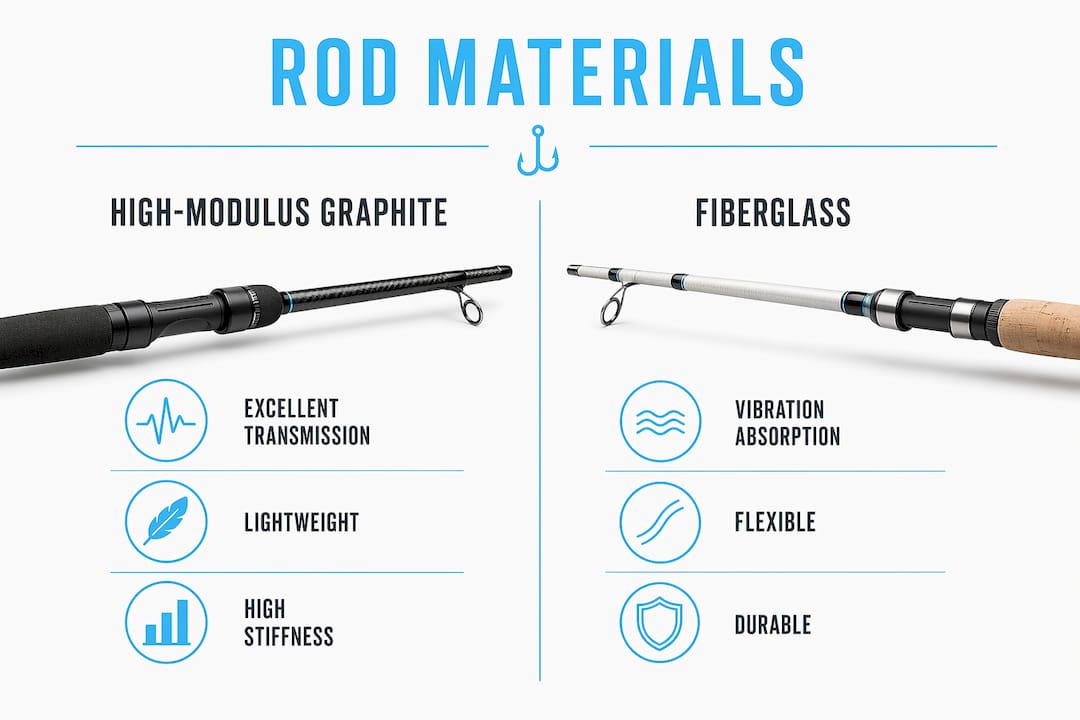
Fiberglass blanks absorb and filter vibrations rather than transmitting them cleanly. That filtering is actually useful in some situations, which is covered below, but it makes fiberglass a poor choice when bite detection is the priority. Composite blanks fall between the two. They blend graphite’s transmission speed with fiberglass’s forgiveness, making them a solid middle-ground option for anglers who fish a wide range of presentations.
Line choice also changes how much sensitivity reaches your hands. Braided line has near-zero stretch, which means vibrations travel from lure to rod tip with almost no energy loss. Monofilament stretches under load, and that stretch absorbs the very signals you need to feel. If you fish a graphite rod with mono, you give back a significant portion of the sensitivity advantage the blank provides. Pairing a high-modulus graphite rod with braid is the most direct path to maximum feedback.
The table below shows how material choices stack up across key sensitivity factors:
| Factor | High-modulus graphite | Fiberglass | Composite |
|---|---|---|---|
| Vibration transmission | Excellent | Poor | Moderate |
| Weight | Light | Heavy | Moderate |
| Forgiveness | Low | High | Moderate |
| Best use case | Finesse, jigging | Crankbaits, topwater | Versatile presentations |
Rod builders also design components beyond the blank to support sensitivity. Guide placement and reel seat design both influence how cleanly vibrations travel from line to hand. A poorly placed guide can create dead spots in the blank’s transmission path, reducing the feedback you feel even on an otherwise excellent rod.
How do rod action and power affect sensitivity?
Rod action and rod power are two separate properties, and anglers often confuse them. Rod action describes where the blank bends. Rod power describes how much force it takes to bend it. Both affect sensitivity, but in different ways.
Fast and extra-fast action rods bend mostly near the tip. That stiff backbone transmits vibrations quickly and directly. Slow action rods bend along a much longer section of the blank, which spreads out and dampens the vibration signal before it reaches your hand. For bite detection, fast action wins every time.
Power is where anglers often make a costly mistake. A heavy-power rod has thicker blank walls and more material throughout the blank. That added mass dampens fine vibrations, reducing the feedback you feel on subtle bites. A medium-light or medium-power rod in the same graphite material will feel more sensitive than a heavy-power version, even if both are fast action.
Here is how to match action and power to common techniques:
- Jigging and drop-shotting: Fast or extra-fast action, medium to medium-light power. You need to feel every tick and tap.
- Finesse worming: Extra-fast action, medium-light power. Light bites require maximum transmission speed.
- Crankbaiting: Moderate action, medium power. The softer tip loads the lure and prevents tearing the hook free on the strike.
- Topwater: Moderate to moderate-fast action. A forgiving tip keeps fish pinned through the head-shake.
- Salmon and steelhead trolling: Medium-heavy power with a sensitive tip rating. You need backbone for the fight but enough tip feel to detect strikes at depth.
A sensitive tip rod has softer tip power that improves detection of light bites. This is a different property from fast action, though both can exist in the same rod. Flexural rigidity gradients along the blank make it possible for a rod to be extra-fast action and still carry a sensitive tip, giving you the best of both properties in one tool.
How does rod sensitivity affect specific fishing techniques?
Highly sensitive rods improve detection of light bites, bottom contact, and lure movement. The techniques that benefit most are those where fish bite softly or where bottom structure is the key to finding fish.
For jigging, sensitivity is everything. When you work a twitching jig through a water column, you need to feel the jig’s action, the moment it pauses, and the instant a fish intercepts it. A rod that blurs those signals turns jigging into guesswork. The same applies to drop-shotting, where a finicky bass might barely move the bait. You feel that movement through a sensitive rod. You miss it through a dull one.
Finesse presentations like skinny mini techniques rely on light line, small lures, and subtle action. These setups demand a rod that amplifies rather than filters the signal. A high-modulus graphite rod in medium-light power paired with braid is the standard setup for this style.
Pro Tip: Test your rod’s sensitivity before you hit the water. Tie on your lure, close your eyes, and drag it across different surfaces like gravel, concrete, and carpet. You will quickly learn what each texture feels like through your specific rod and line combo.
Not every technique rewards maximum sensitivity. Crankbaits and topwater lures benefit from a more forgiving blank. Graphite rods excel at finesse, while fiberglass performs better for crankbaits and topwater to prevent hook pull-offs during the fight. The forgiving flex of fiberglass or a composite absorbs the head-shakes and runs that would otherwise tear a treble hook free.
Common misconceptions about rod sensitivity
The biggest myth in rod selection is that more sensitivity always means better performance. Anglers benefit most from matching rod properties to their target species, presentation style, and conditions rather than chasing maximum sensitivity alone. A rod that is too sensitive for the technique creates problems, not advantages.
Here is where that myth breaks down in practice:
- Crankbaits with a hyper-sensitive rod: The stiff blank transmits the strike so fast that the fish pulls against a rigid tip, often tearing the hook free before you can react.
- Topwater with graphite: The instant hookset reflex a sensitive rod triggers can pull the lure away from the fish before it fully commits to the bite.
- Heavy cover fishing: A sensitive but light-power rod may not have the backbone to pull fish out of thick structure, even if it detects the bite perfectly.
- Beginner anglers: Very sensitive rods amplify every bump and snag, making it harder for newer anglers to distinguish a bite from a rock. A moderate composite rod gives beginners cleaner, easier-to-read feedback.
Optimal rod sensitivity involves a compromise between vibration clarity for bite detection and forgiving blank flex to avoid losing fish on aggressive strikes. The best rod for you is the one that fits your technique, not the one with the highest sensitivity rating on the shelf.
Key Takeaways
Rod sensitivity is the most direct link between what happens underwater and how fast you respond. Matching sensitivity to your technique, not maximizing it blindly, is what separates consistent anglers from frustrated ones.
| Point | Details |
|---|---|
| Sensitivity definition | A rod’s ability to transmit vibrations from lure to hand, enabling faster bite detection. |
| Material matters most | High-modulus graphite with braided line delivers the clearest vibration transmission. |
| Action beats power | Fast action improves sensitivity; heavy power reduces it, even on graphite blanks. |
| Technique matching | Finesse and jigging need high sensitivity; crankbaits and topwater need forgiving flex. |
| No universal best rod | Match rod properties to your target species and presentation for best results. |
What I’ve learned from fishing sensitive rods in the field
Most anglers buy the most sensitive rod they can afford and assume the job is done. That approach works until you lose your third crankbait fish in a row because the stiff tip telegraphed the strike too fast. I learned that lesson the hard way on a steelhead river, fishing a graphite rod that was perfect for jigging but completely wrong for swinging flies and soft presentations.
The real skill is knowing when to dial sensitivity up and when to back it off. For jigging setups, I want to feel everything. For trolling salmon gear like Brad’s Superbaits, I want a rod with enough tip sensitivity to detect a strike but enough backbone and flex to keep the fish pinned through a long fight. Those are two different tools, and carrying both is not excessive. It’s smart fishing.
Test your rods before you commit to a technique. Drag your lure across the boat deck, tap the hook on the gunwale, and feel how the signal changes with different grip pressure. That five-minute test tells you more about a rod’s real-world sensitivity than any spec sheet. Buy rods that match how you actually fish, not how you wish you fished.
— Nick
Gear built for anglers who want to feel every bite
Highclasstackleco was built by anglers who know what it costs to miss a strike. The Pacific Northwest demands gear that performs in real conditions, from river jigging for steelhead to deep-water kokanee trolling, and sensitivity is non-negotiable at that level.

At Highclasstackleco, you will find a curated lineup of premium tackle, terminal gear, and components designed to work with sensitive rod setups. Pair the right rod with quality terminal tackle and components to get the most out of every presentation. Whether you are chasing salmon on the coast or finesse fishing a mountain lake, the right gear makes every signal count.
FAQ
What is rod sensitivity in fishing?
Rod sensitivity is the ability of a fishing rod blank to transmit vibrations from the lure or fish contact to the angler’s hands. It allows anglers to detect subtle bites, bottom structure, and lure movement in real time.
What rod material is most sensitive?
High-modulus graphite is the most sensitive rod material due to its superior stiffness-to-weight ratio. It transmits vibrations faster and more clearly than fiberglass or composite blanks.
Does braided line improve rod sensitivity?
Yes. Braided line has near-zero stretch, which allows vibrations to travel from the lure to the rod tip with minimal energy loss. Monofilament stretches under load and absorbs the signals you need to feel.
Is a more sensitive rod always better?
No. Matching rod sensitivity to your technique produces better results than maximizing sensitivity alone. Crankbaits and topwater lures perform better on forgiving fiberglass or composite rods that prevent hook pull-offs during the fight.
What rod action is best for sensitivity?
Fast and extra-fast action rods transmit vibrations most effectively because they bend near the tip and maintain a stiff backbone. Slow action rods bend along more of the blank, which dampens the vibration signal before it reaches your hand.
Recommended
- Super Bait Secrets: Top Picks for Salmon and Steelhead – High Class Tackle Co.®
- The Role of Scent in Fishing: 2026 Angler’s Guide – High Class Tackle Co.®
- Custom Spinner Blades for Salmon and Steelhead Success – High Class Tackle Co.®
- Spinner Blades: The Ultimate Hack for Reeling in More Salmon – High Class Tackle Co.®
0 comments