

Outdoor brands should use humor — conditionally. When the joke matches your audience, fits the format, and anchors back to a product truth, humor lifts attention, sharpens recall, and turns passive viewers into active sharers. Marketing research confirms humor acts as a strategic growth lever in outdoor advertising by disrupting expectations in low-attention environments. The risk is real but specific: humor backfires when it outshines the product, alienates a cultural segment, or demands more than three seconds to decode on a billboard.
Quick benefits:
- Attention lift. Humor breaks the visual noise of outdoor environments faster than a straight product claim.
- Memory and recall. Emotional tagging from a laugh makes the brand stickier in memory than a feature list.
- Social shareability. A genuinely funny outdoor ad earns organic amplification — people photograph billboards and post them.
The primary risk: Humor that doesn’t fit the brand’s voice or the audience’s values can damage trust and bury the product message. Cultural mismatch, timing errors, and overcomplicated setups are the three most common killers.
Table of Contents
- Why humor improves outdoor advertising performance
- What makes a joke land in 3–5 seconds on a billboard
- Which humor formats actually work in outdoor advertising
- How humor harms outdoor campaigns and what to watch for
- Best practices for planning, testing, and launching humorous outdoor campaigns
- How to measure whether humorous OOH is working
- How Highclasstackleco used brand-specific humor to build community and sales
- Key Takeaways
- Why I recommend humor for outdoor brands — with one condition
- Recommended reading and sources
Why humor improves outdoor advertising performance
Humor works in outdoor advertising for four overlapping reasons: it captures attention in seconds, creates an emotional tag that aids memory, signals social currency, and thrives under the tight creative constraints of out-of-home (OOH) formats.
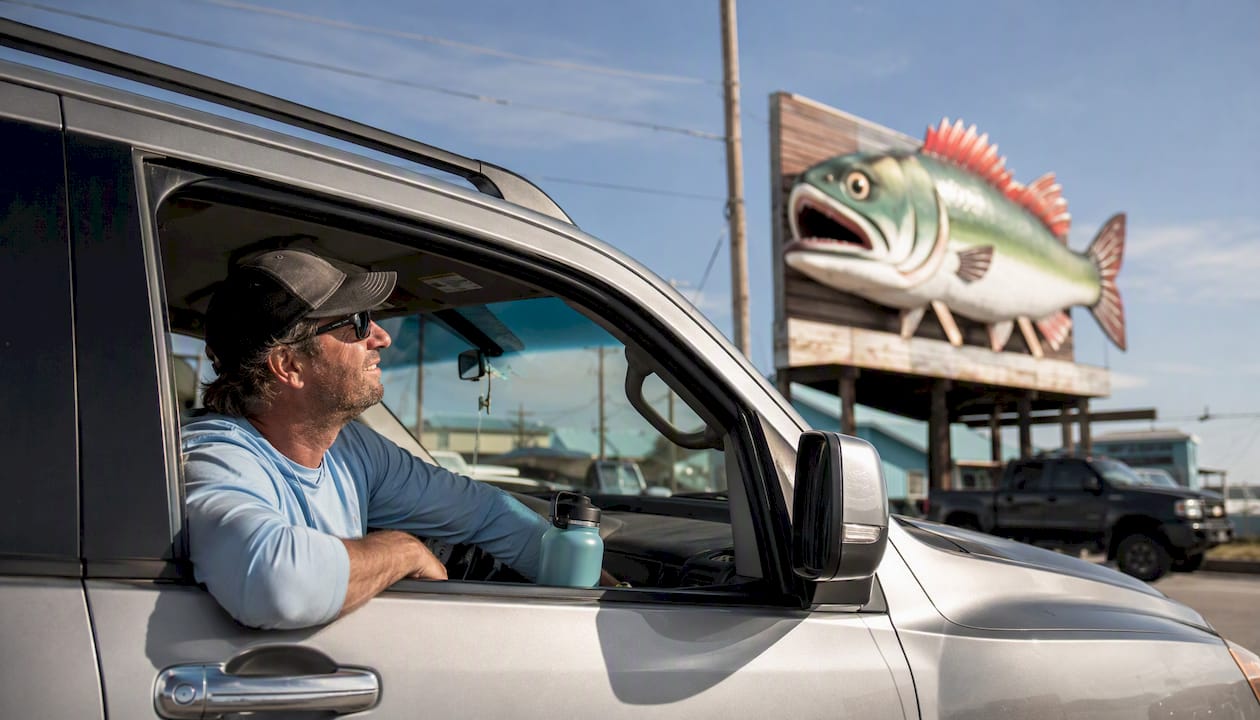
Outdoor environments are brutal for attention. A driver passes a billboard in roughly three seconds. A commuter glances at a transit poster between scrolling their phone. In that window, a straight product claim competes with dozens of other visual stimuli. Humor’s “benign violation” mechanism — breaking a small expectation while keeping the outcome safe and inclusive — triggers an involuntary cognitive pause. The brain registers surprise, then relief, then delight. That sequence takes less than a second and burns the brand into short-term memory.
The emotional tag is what converts short-term memory into recall. Academic research links humorous ads to stronger brand attitudes, word-of-mouth, and recall — though the same research cautions that execution quality determines whether humor helps or hurts, and that immediate sales lift is not guaranteed. The implication for planners: humor is a brand-building tool first, a conversion tool second.
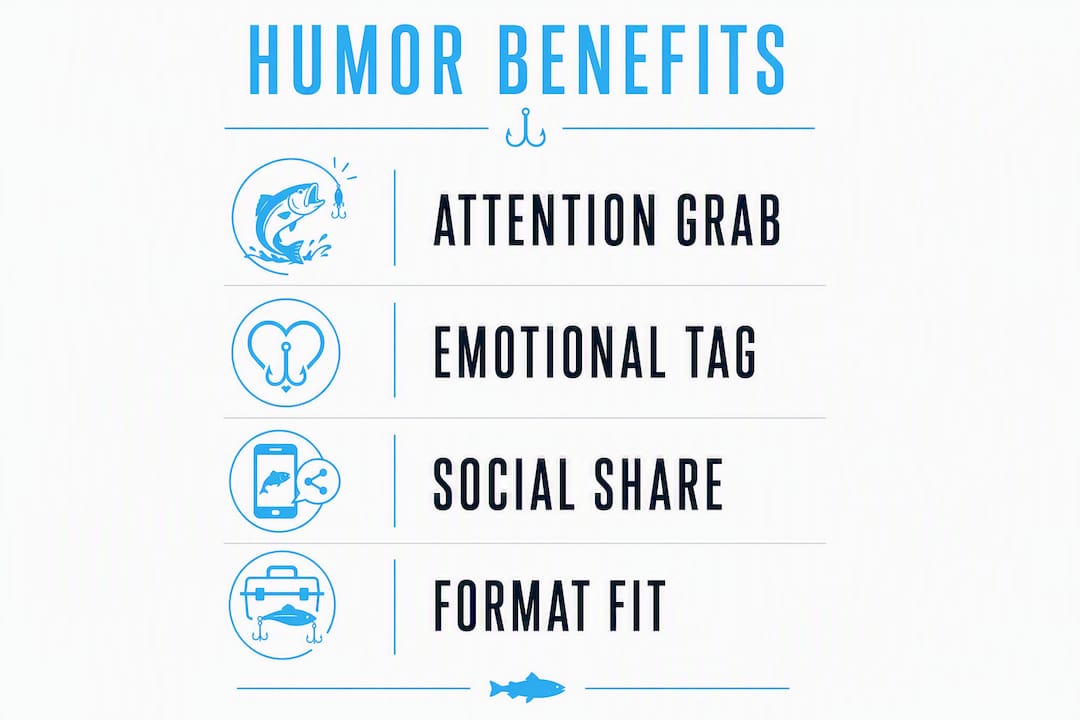
Social shareability is the multiplier most OOH planners underestimate. A funny billboard photograph shared on Instagram or Reddit extends the campaign’s reach far beyond its physical footprint. That earned amplification is measurable — and it’s essentially free media on top of your placement buy.
OOH constraints actually favor humor. Short copy, single visual, no audio, no motion (in most formats). These restrictions push creative teams toward the one humor format that thrives under them: the instant visual payoff. A well-constructed pun or visual gag needs no explanation. It lands, it sticks, and it travels.
What makes a joke land in 3–5 seconds on a billboard
The single most important rule in outdoor humor is this: one idea, one image, instant payoff. Every additional element you add to a billboard concept cuts comprehension time and kills the laugh.
Six creative rules that separate outdoor humor that works from concepts that die in production:
- Single-idea economy. One joke, one visual, one brand. Never try to be funny AND informative AND promotional in the same execution.
- Brand anchor. The humor must connect directly to the product or brand truth. Humor that eclipses the brand is the most common failure mode — people remember the joke, not the company.
- Visual reinforcement. The image and the headline should work together, not explain each other. If the visual needs the copy to be funny, the visual is wrong.
- Readable copy length. Five words or fewer on a billboard headline. Seven at an absolute stretch. Transit posters can push to ten.
- Location-aware relevance. The funniest outdoor ads use their placement as part of the joke — a fishing gear ad near a boat launch, a rain gear ad on a Seattle bus shelter.
- Setup-to-payoff pacing. Even in five words, there’s a setup and a punchline. The visual is usually the setup; the headline is the payoff (or vice versa).
Pro Tip: Keep your headline below the focal image, not above it. Eye-tracking studies consistently show viewers hit the visual first, then drop to read. Place your punchline where the eye lands last — that’s where the laugh happens.
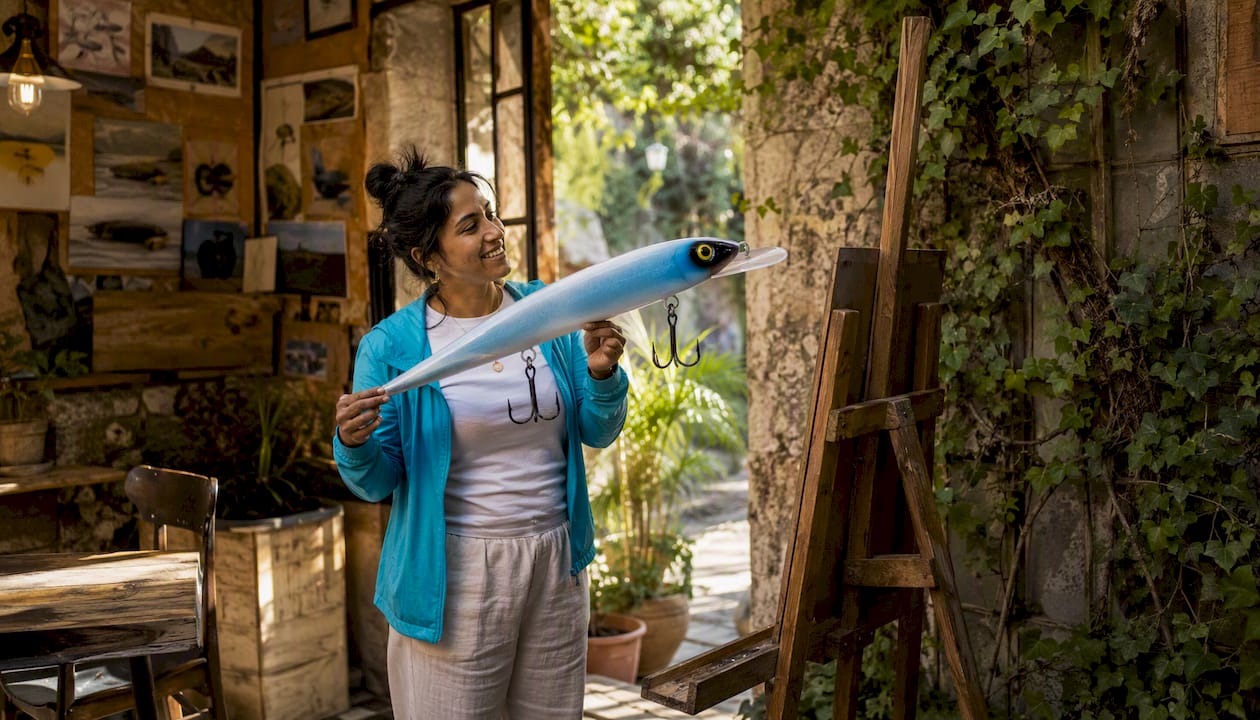
For art directors building creative briefs: visual gags using oversized product-as-prop (a giant lure hanging from a highway sign), literal pun visuals (a fish “schooling” next to a university billboard), and deadpan product photography with absurdist copy all translate cleanly to OOH formats. These approaches require zero explanation and reward a fast glance.
Which humor formats actually work in outdoor advertising
Different humor types suit different objectives. Awareness campaigns can afford more absurdism. Affinity-building campaigns need relatable or self-deprecating angles. Social amplification campaigns need the kind of shareable surprise that makes someone pull out their phone.
| Humor Type | Speed to Read | Brand-Fit Risk | Best OOH Formats | Amplification Potential |
|---|---|---|---|---|
| Pun / Wordplay | Fast | Low–Medium | Billboard, transit poster | Medium |
| Visual Gag | Instant | Low | Billboard, large format | High |
| Observational / Relatable | Medium | Low | Transit, posters | Medium–High |
| Self-Deprecating | Medium | Medium | Transit, social OOH | High |
| Absurdist / Irreverent | Fast | High | Billboard, digital OOH | Very High |
Pun / Wordplay uses a double meaning tied to a product truth. For a fishing brand, “Reel talk: our gear doesn’t lie” is low-risk, fast to read, and brand-relevant. Works for most audiences; risk is that weak puns feel lazy.
Visual Gag skips copy almost entirely. The image IS the joke. A salmon wearing sunglasses next to a UV-protection lure line. Instant, shareable, and format-agnostic. Highest amplification potential of any humor type in OOH.
Observational / Relatable humor mirrors the audience’s lived experience back at them. “You told yourself just one more cast. That was four hours ago.” Every angler on the West Coast has felt that. This format builds affinity fast because it signals the brand actually knows its people.
Self-Deprecating humor is bold and high-reward. Outdoor brands shifting toward grittier, irreverent storytelling — Columbia’s “Engineered for Whatever” platform launch in 2025 being a clear signal — are betting that admitting imperfection reads as more human and culturally attuned than polished perfection. Risk: it can undermine product credibility if the brand hasn’t already established technical authority.
Absurdist / Irreverent humor breaks expectations hard. Think Liquid Death’s comedy-first brand strategy that turned canned water into a billion-dollar brand by treating hydration like a heavy metal concert. Highest amplification potential, highest brand-fit risk. Only deploy absurdism if your brand voice already lives there — it cannot be borrowed for a single campaign.
When-to-use guidance in brief:
- Use puns and visual gags for broad awareness campaigns with mixed demographics.
- Use observational humor for community-building campaigns targeting a specific audience segment (anglers, hikers, paddlers).
- Reserve self-deprecating and absurdist formats for brands with an established, confident voice and a clear amplification plan.
How humor harms outdoor campaigns and what to watch for
Poorly matched humor doesn’t just underperform. It can actively damage trust, confuse the product message, or create a PR problem that outlasts the campaign. The core lesson: funny for its own sake is never the brief.
Common pitfalls:
- Overcomplex setups. A joke that requires three beats to land has already lost the billboard audience. If you need to explain it, cut it.
- Cultural insensitivity. Humor that relies on stereotypes, regional in-jokes that exclude, or timing that clashes with a news cycle can turn a campaign into a crisis.
- Humor that eclipses the brand. The audience remembers the joke but not the product. This is the most common failure mode in outdoor humor — and the most expensive.
- Timing and context mismatch. A playful ad placed near a disaster zone or during a community tragedy reads as tone-deaf regardless of how clever the concept is.
- Unclear CTA. Humor can distract from the action you want the viewer to take. If the laugh doesn’t lead somewhere, the campaign entertains without converting.
- Cringe without intent. Self-aware, awkward content can work when executed deliberately, but accidental cringe alienates the audience rather than endearing the brand.
Pre-launch red-flags checklist:
- Can a stranger read the billboard and name the brand within three seconds?
- Does the humor connect directly to a product truth or brand value?
- Has the concept been shown to at least five people outside the creative team?
- Has a cultural sensitivity review been completed — especially for regional or demographic references?
- Is there a clear next step (URL, QR, social handle) that survives the laugh?
- Has the copy been tested at actual billboard scale, not just on a laptop screen?
- Does the humor work if the visual is removed? (If yes, the visual isn’t doing its job.)
Qualitative testing before full rollout matters more for humor than for any other creative approach. Run focus groups with a representative sample of your actual audience — not just your internal team, who are too close to the concept. Social seed tests (posting the concept as organic content before committing to production) give you real engagement data at near-zero cost.
Best practices for planning, testing, and launching humorous outdoor campaigns
The single best organizing principle: test small, iterate fast, and anchor every joke to a brand benefit before you spend on production.
Step-by-step campaign checklist:
- Write the brief with a humor filter. State the product truth the humor must connect to. If you can’t complete the sentence “This is funny because our product actually [does X],” the concept isn’t ready.
- Develop three to five concepts. Variety across humor types (pun, visual gag, observational) gives you real options to test rather than a single bet.
- Run a readability check. Print the concept at actual billboard dimensions and read it from ten feet away. Time yourself. If it takes more than three seconds, cut copy.
- Accessibility and cultural vetting. Have someone outside your demographic review the concept. What reads as playful to one group can read as exclusionary to another.
- Pilot in a small market. Place the ad in one city or one transit line before a full rollout. Measure recall and social response before scaling.
- Seed on owned social first. Post the concept as organic content. Humor drives shareability and customer evangelism when it’s specific to the brand’s audience — social pre-seeding tells you whether the joke travels before you commit to physical placements.
- Launch with a social amplification plan. Assign someone to monitor and engage with organic shares of the OOH creative. Respond, repost, and extend the joke’s lifespan.
- Post-campaign analysis. Measure aided recall, social engagement, and referral traffic against your baseline. Document what worked and what didn’t for the next brief.
Testing protocol specifics:
- A/B test headline variants on digital OOH or paid social before locking the final copy.
- Use small-market OOH pilots (one city, two to four weeks) to gather GPS-based exposure proxies and social mention data.
- Run a visual recall survey with a panel of 50–100 respondents exposed to the creative for three seconds, then asked to name the brand and product.
Pro Tip: Photograph your OOH placements in context and post them to your brand’s social channels on day one. A well-framed photo of a funny billboard in a recognizable location earns shares from locals who recognize the spot — and that organic amplification extends your campaign’s reach for free.
How to measure whether humorous OOH is working
The measurement thesis is simple: combine brand lift, OOH exposure metrics, and digital amplification signals to build a credible picture of campaign performance. No single metric tells the full story.
Brand metrics:
- Aided recall lift (pre/post survey comparing exposed vs. unexposed audiences)
- Brand favorability shift (net promoter or sentiment survey)
- Share of voice in social mentions during the campaign window
OOH metrics:
- Gross impressions (from placement provider data)
- Estimated dwell time (transit vs. highway placements differ significantly)
- GPS-based exposure proxies (available through OOH measurement platforms)
Digital response metrics:
- Social shares and saves of OOH photography
- Referral traffic from QR codes or short URLs embedded in the creative
- Search volume lift for brand terms during the campaign period
- Engagement rate on owned social posts featuring the OOH creative
A minimal measurement recipe for a humorous OOH campaign:
| Step | Action | Tool / Method |
|---|---|---|
| Baseline | Run a brand recall survey before launch | Online panel (Pollfish, SurveyMonkey Audience) |
| Exposure | Track impressions and GPS exposure | OOH provider data + StreetMetrics |
| Social signal | Monitor shares and mentions of OOH creative | Sprout Social, Brandwatch |
| Lift check | Re-run recall survey post-campaign | Same panel, same questions |
| Digital tie-in | Track QR / short URL clicks and UTM-tagged landing page traffic | Google Analytics 4 |
CMO guidance recommends testing humorous messaging at small scale and using A/B testing to confirm the comedy supports the CTA and business outcome — not just the laugh. That discipline is what separates humor as a brand-building tool from humor as an expensive entertainment budget.
How Highclasstackleco used brand-specific humor to build community and sales
Highclasstackleco’s approach to humor isn’t borrowed from a playbook — it grows directly from the brand’s identity as a Pacific Northwest fishing brand built by anglers, for anglers. The insight driving the brand’s content humor is simple: West Coast anglers share a specific, self-aware culture. They know the fish won’t always bite. They’ve driven four hours for a skunk. They’ve told their partners “just one more cast” approximately ten thousand times. That shared experience is comedic gold — and it’s completely proprietary to a brand that actually lives in that world.
The campaign arc follows a deliberate pattern. Highclasstackleco seeds humor-forward content on owned social channels first, testing which observational or self-deprecating angles generate the most organic engagement before committing to broader creative. A piece of content that earns strong share rates on Instagram becomes the brief for a physical or digital OOH execution. The social-first test removes the guesswork from production spend.
Three lessons from this approach that any outdoor brand can apply:
- Anchor humor in product credibility. Highclasstackleco’s jokes land because the brand has already demonstrated technical authority in salmon and steelhead tackle. Humor adds warmth to a brand that anglers already trust. Without that credibility foundation, the same jokes would read as deflection.
- Test social-first, then scale. Organic social engagement is the cheapest focus group available. A post that earns strong saves and shares from your actual community is a validated concept — not just a creative team’s gut feeling.
- Set clear brand anchors in every execution. The fishing lifestyle content ecosystem Highclasstackleco has built means every humorous execution connects back to a recognizable brand world. The audience is never confused about who’s talking to them.
The metrics Highclasstackleco monitors for humorous content: social engagement rate, save-to-share ratio (a strong signal of content people want to return to), referral traffic from content to product pages, and community growth rate. These aren’t vanity metrics — they’re leading indicators of whether the humor is building the kind of trust that converts to tackle and gear purchases.
Key Takeaways
Humor works in outdoor advertising when it’s fast, brand-specific, and tested before full production spend — not when it’s clever for its own sake.
| Point | Details |
|---|---|
| Test social-first | Seed humorous concepts as organic content before committing to OOH production budgets. |
| Anchor every joke to a product truth | Humor that can’t complete “this is funny because our product actually does X” isn’t ready. |
| Keep outdoor copy under five words | Billboard humor lives or dies in three seconds — single idea, instant visual payoff. |
| Measure brand lift, not just laughs | Track aided recall, social shares, and referral traffic to confirm humor is building equity. |
| Match humor type to brand maturity | Absurdist and self-deprecating formats require an established brand voice — don’t borrow them for a single campaign. |
Why I recommend humor for outdoor brands — with one condition
Recommend humor for an outdoor brand when three things align: the audience shares a specific lived experience the brand can reference, the brand has already established product credibility, and there’s a social amplification plan ready to extend the creative’s lifespan beyond its physical placement.
The rationale is practical. Outdoor audiences — anglers, hikers, climbers, paddlers — are tight communities with strong shared vocabularies. Humor that speaks that language precisely builds affinity faster than any product spec sheet. Outdoor brands that perform well on social consistently show how community, relatable moments, and consistent voice create organic reach that paid placements can’t replicate alone.
The condition matters, though. Humor without product credibility reads as a brand trying too hard. Establish what you’re good at first. Then let the jokes show you’re human. Mammut’s humorous outdoor campaign worked precisely because the brand had decades of technical credibility behind it — the humor felt like confidence, not desperation.
One micro-example: a Pacific Northwest fishing brand running a transit poster that reads “The fish aren’t biting. Our gear isn’t the problem.” That’s self-aware, product-credible, and instantly relatable to every angler who’s ever blamed their tackle before their technique. It earns a laugh and a nod — and it sells.
Recommended reading and sources
These sources are drawn from the research pool and are relevant to U.S. market outdoor and OOH marketing teams building or evaluating humorous campaigns.
- The Impact of Humorous Advertising on Consumers’ Buying, Word of Mouth and Recall — Academic research linking humor to recall and WOM; useful for backing measurement and brand-lift arguments with peer-reviewed evidence.
- The CMO’s Guide To Using Humor In Marketing — Forbes-published CMO guidance on A/B testing and guardrails for humorous campaigns; directly supports the best practices and measurement sections.
- How To Get More Than a Laugh From Humorous Content — Content Marketing Institute guidance on turning humor into shareability and evangelism; supports the social amplification and brand-specific humor arguments.
- Using Humor in Advertising — Mailchimp’s practical guide on tying humor to product benefits and avoiding the brand-eclipse failure mode; supports the pitfalls and best practices sections.
Recommended
- What Is a Fishing Media Brand: Anglers’ Guide – High Class Tackle Co.®
- Types of Fishing Lifestyle Apparel: The Angler’s Style Guide – High Class Tackle Co.®
- What is a fishing content series? An angler’s guide – High Class Tackle Co.®
- The Role of Scent in Fishing: 2026 Angler’s Guide – High Class Tackle Co.®
0 comments