

Get your lines in early, troll the right depth from the first drop, and know your weigh-in rules cold. Those three moves separate derby winners from everyone else standing at the scale wondering what happened. Pair proven tactics like WDFW-recommended trolling depths with a locked-in pre-derby checklist and you’re already ahead of half the fleet.
TL;DR:
- Successful derby fishing depends on starting with the correct gear, including mainline of 20-30 pounds and proper leaders suited to the target species.
- Trolling at recommended speeds and depths up to 100 feet with downriggers and divers is essential, with flasher placement 8 to 20 feet behind the bait for optimal action.
- In river or shore conditions, steady bottom contact and subtle presentations during slack tide or calm water often outperform boat trolling in pressured areas.
- Using scent, adjusting lure size, and matching presentation to water clarity can significantly increase strike success during changing conditions.
- Pre-derby preparation like confirming registration, building an arrival buffer, checking knots, and carrying quick-change rigs offers a crucial advantage when speed and responsiveness matter.
Table of Contents
- Quick derby checklist: gear, safety, and pre-event prep
- Trolling tactics for derby success (speeds, depths, gear setups)
- Drift, plunking and river/shore tactics for derby anglers
- Bait, lures and presentation choices that win derbies
- Timing, tides and weather: how to pick the best windows
- Boat positioning, crowd strategy, and in-derby decision making
- Field-proven checks and author-sourced tips from High Class Tackle Co.
- Fish behavior specific to derby environments (feeding patterns under competitive pressure)
- Effective use of technology and gadgets in salmon derbies
- Post-catch handling and conservation practices to maximize fish quality for weigh-in
- What derby fishing taught me about staying sharp on the water
- Gear that helps you run these derby tactics
- Sources
- FAQ
Quick derby checklist: gear, safety, and pre-event prep
Derbies are won and lost before the horn ever sounds. Walk the dock with a plan, not a hope.
Start with gear. Pack mainline in the 20 to 30 pound range, leaders matched to species, at least one spare net, downrigger balls or divers, extra flashers, and a backup cannonball in case you lose one on structure.
Safety comes next. Top off fuel, check the bilge pump, count lifejackets for every person aboard, and confirm prop guards are tight if you’re running a kicker motor near a crowd of boats.
Paperwork trips up more anglers than bad weather. Confirm your registration, any required tags, and the derby’s weigh-in rules before you leave the dock. Most derbies require whole, uncleaned fish presented the same day, so know that going in, per the Golden North Salmon Derby rules.
Before lines go in, run a 60-second briefing with your crew:
- Confirm who runs the net, who logs bite times, and who handles the phone or camera.
- Assign a captain who makes final calls on moves, speed, and when to head to the scale.
- Set a “lines in” time and stick to it, no exceptions.
- Double check every knot and swivel while the boat is still idling at the dock.
- Review the weigh-in deadline and build in a real arrival buffer.
Pro Tip: Write your lines-up time on painter’s tape and stick it to the console. Adrenaline makes people forget the clock.
Trolling tactics for derby success (speeds, depths, gear setups)
Trolling wins more derby fish than any other method in open water, and dialing in your speed and depth matters more than any lure you tie on.
Run your kicker at trolling speeds generally recommended between slow and moderate speeds, according to WDFW’s marine area guidance, and adjust based on species and water movement. Coho often want a faster wobble, while Chinook tend to respond to a slower, more deliberate presentation.
Depth is where derbies get won. Ocean and tidewater Chinook frequently sit deeper, so target a depth that commonly ranges up to about 100 feet with a downrigger or diver rather than guessing at pull counts. Our trolling speed guide breaks down GPS-based speed checks if you want to dial this in before the derby even starts.
Flasher placement changes everything about how your bait moves. WDFW recommends running your flasher 8 to 20 feet behind the downrigger ball, with a second leader running another 8 to 20 feet behind the flasher itself.
Some quick setup notes worth locking in:
- Run 20 to 30 pound mainline in tidewater and step up leader strength for Chinook-heavy water.
- Separate multiple downriggers by at least 5 feet in depth to avoid tangles on turns, per WDFW’s downrigger guidance.
- Keep cannonballs off rocky bottom. Snagged gear costs you fishing time you can’t get back in a derby.
- Stagger flasher depths across rods so a hooked fish doesn’t cross your other lines.
Downrigger and diver setups can put gear as deep as 100 feet, according to WDFW, which matters most when Chinook are holding low in tidewater or ocean structure.
Drift, plunking and river/shore tactics for derby anglers
Not every derby happens from a boat, and river or shore tactics can outfish a crowded troll when conditions line up right.
Plunking works best from a fixed spot with steady current pushing bait into the strike zone. Inside curves, tail-outs, and riffles concentrate migrating fish, and a kwikfish tuned correctly will hold in the current without spinning out. If your kwikfish pulls left, turn the screw-eye clockwise; if it pulls right, turn it counter-clockwise, then settle the weight and check the wobble, a technique straight from WDFW’s tidewater fishing guide.

Drift fishing rewards constant bottom contact. Choose a weight heavy enough to tick bottom every few feet without hanging up, and mend your line as you drift to keep the bait presenting naturally instead of dragging sideways.
Float fishing shines during slack tide or slow water, when a drifting bait sits still and salmon get a longer look. Spectra line under a float gives you better bite detection with less stretch than mono.
When to choose river or shore tactics over trolling:
- Slack tide periods when boat presentations stall out.
- Tight, pressured water where boat traffic is pushing fish tight to the bank.
- Tail-outs and current seams that concentrate migrating fish predictably.
- Days when wind or chop make trolling uncomfortable or unsafe.
Our guide on salmon plug fishing rivers covers tailout positioning in more detail if shore tactics are your derby plan.
Bait, lures and presentation choices that win derbies
Cut plug herring and cured roe remain the top producers across most derby conditions, and for good reason: both put off scent and movement that triggers strikes even from pressured fish.
Sand shrimp and marabou jigs earn their spot when water turns murky or fish get finicky after a few hundred boats have trolled the same stretch. Thin profile spoons tend to draw coho strikes, while Chinook often respond better to larger spoons or hootchie setups fished slower and deeper.
Water clarity should drive every presentation decision. Clear water calls for lighter line, smaller leaders, and subtler scent, while murky water rewards bigger profiles, brighter colors, and more scent, according to local derby reporting.
Fast adjustments worth trying mid-derby:
- Swap to a brighter spoon or hootchie if the bite goes quiet in stained water.
- Add scent to cut plug herring when fishing pressure has fish keying in on subtlety.
- Retune a kwikfish screw-eye if it starts riding sideways instead of wobbling true.
- Downsize leader and lure profile the moment water clears up.
Our bait presentation guide walks through matching bait to clarity in more depth.
Pro Tip: Carry two rigged rods, one bright and one subtle. Switching takes seconds and saves a slow morning.
Timing, tides and weather: how to pick the best windows
Early morning and late evening produce the most consistent bites, with midday often demanding a deeper presentation as fish drop down in the water column to avoid light and pressure.
Tide phase matters just as much as clock time. Migrating salmon often orient upstream and move most efficiently during flood tidal periods, according to tidal migration research, which means fishing the push of an incoming tide can put you in front of fish that are actively moving rather than holding.
Weather forces real adjustments. Find lee water when wind kicks up a chop, and slow your presentation when big tides create confused, churning current that makes fish hold tight to structure instead of feeding actively.
Timing tools worth checking the night before:
- Pull up tide and current charts for your derby water and mark the flood window.
- Check wind forecasts and pick a lee-side backup spot in advance.
- Use your fishfinder or CHIRP electronics to confirm bait balls and thermoclines before committing to a depth.
- Note sunrise time and plan your lines-in schedule around it.
Boat positioning, crowd strategy, and in-derby decision making
Fishing the edges of a packed fleet often beats fighting for space in the thick of it. Mature kings tend to avoid heavy boat noise and crowding, according to derby strategy reporting, which pushes bigger fish toward quieter fringe water while the pack chases pressured, skittish fish in the middle.
- Scout the fringe of the main pack early and mark spots with less traffic on your GPS.
- Watch for bait presence and fish size mix before committing to a spot for the long haul.
- Grind structure-heavy water rather than chasing radio chatter about where fish were caught an hour ago.
- Set your lines-up time with real margin, 60 to 90 minutes before the scale closes, per derby rules guidance.
- Make your final presentation swap early enough to fish it, not as you’re pulling gear.
Pro Tip: A weak knot has ended more derby dreams than a slow bite ever will. Check every connection before your first troll pass.
Common mistakes worth fixing now: undersized nets that can’t handle a big Chinook, knots tied in a rush at the dock, and cutting your arrival to the scale too close. Fix all three before the horn sounds.
Field-proven checks and author-sourced tips from High Class Tackle Co.
Derby mornings move fast, and the anglers who adapt quickest usually win. A quick-change rig setup lets you swap flasher and leader combos in under a minute instead of losing ten minutes of prime fishing time retying from scratch. Our rig-swap guide covers the exact layout we run when conditions shift mid-derby.
For typical derby water, a mid-size flasher paired with a leader length matched to your target depth and a cannonball heavy enough to hold bottom without dragging covers most situations you’ll face.
Before every derby, run through this landing checklist:
- Re-tie main knots the morning of, even ones that look fine.
- Check net mesh and hoop strength, especially after a season of use.
- Confirm your net handler knows to lead the fish head-first, not chase the tail.
- Keep a small log of what depth, speed, and bait worked, and when.
That log becomes your edge at the next derby. Conditions repeat more than anglers expect, and a written record of winning depths and tide phases beats memory every time.
Fish behavior specific to derby environments (feeding patterns under competitive pressure)
Salmon behave differently once a hundred boats start trolling the same stretch of water. Constant boat noise, prop wash, and gear passing overhead push fish deeper and make them more cautious about striking anything moving fast or erratically.
Early in a derby, fish that haven’t seen pressure yet tend to hit more aggressively, which is part of why a fast start matters so much. As the day wears on, surviving fish grow selective, often keying in on slower, more natural presentations rather than anything flashy or fast-moving.
Feeding windows can also compress under pressure. Fish that would normally feed steadily through a tide change may bunch their activity into shorter bursts when they’re constantly disturbed, which rewards anglers who stay ready rather than anglers who troll on autopilot. Watching for brief windows where bite activity spikes, often right after a lull in boat traffic, can put fish in the box that the rest of the fleet misses entirely.
Effective use of technology and gadgets in salmon derbies
A fishfinder does more than mark fish. It shows bait balls, thermoclines, and bottom structure that tell you where salmon are likely holding before you ever make a pass.
GPS lets you mark productive spots the instant you hook up, then return to that exact depth and position on your next pass instead of guessing. In a crowded derby fleet, GPS also helps you track which zones you’ve already covered so you’re not re-fishing dead water while fish move elsewhere.
CHIRP sonar gives sharper separation between bait, structure, and fish compared to older sonar, which matters when you’re trying to tell a bait ball from an actual school of feeding salmon. Pairing your electronics with a written log of depth, speed, and location where you got bit turns a single good day into a repeatable pattern for future derbies.

Post-catch handling and conservation practices to maximize fish quality for weigh-in
How you handle a fish after the hookset can make or break its weigh-in condition. Bleeding and icing a fish quickly preserves flesh quality and keeps the fish presentable for both the scale and the table afterward.

Keep the fish wet and minimize handling time on deck. A fish flopped around on a hot deck or handled roughly loses slime coat and can bruise, which matters if your derby scores on more than raw weight.
Most derbies require fish presented whole and in the round, meaning uncleaned, so hold off on filleting until after the official weigh-in confirms your standing. Check your specific derby’s rules on this before you touch a knife, since requirements vary by event, per Golden North Salmon Derby’s rules.
Releasing undersized or non-target fish quickly and carefully keeps the fishery healthy for next season. A fish handled gently and released fast has a far better shot at surviving than one held out of water for a photo.
What derby fishing taught me about staying sharp on the water
I’ve watched more derbies get decided by a forgotten knot check than by anything fancy on the terminal end. The best lesson has been keeping a real log, because conditions repeat and memory doesn’t. Balance matters too: chase the win, but never at the cost of a safe call on rough water. If you’ve got a local pattern or a question about a rig, drop it in the comments. Derby knowledge gets better when anglers actually share it.
— Nick
Gear that helps you run these derby tactics
Every tactic in this piece comes down to having the right gear rigged and ready before the horn sounds. Flashers set your attraction radius and action, bait sets your scent trail, and weights get your presentation to the depth where fish are actually holding. A quick-change rig setup only works if you’re carrying the components to make the swap on the water.
Check these collections for derby-ready gear:
- Flashers & Bumpers for dialing in the attraction and spacing covered in the trolling section.
- Bait for cut plug herring, cured options, and scent products that match the water clarity you’re fishing.
- Weights for cannonballs and drift weights sized to hold bottom without dragging.
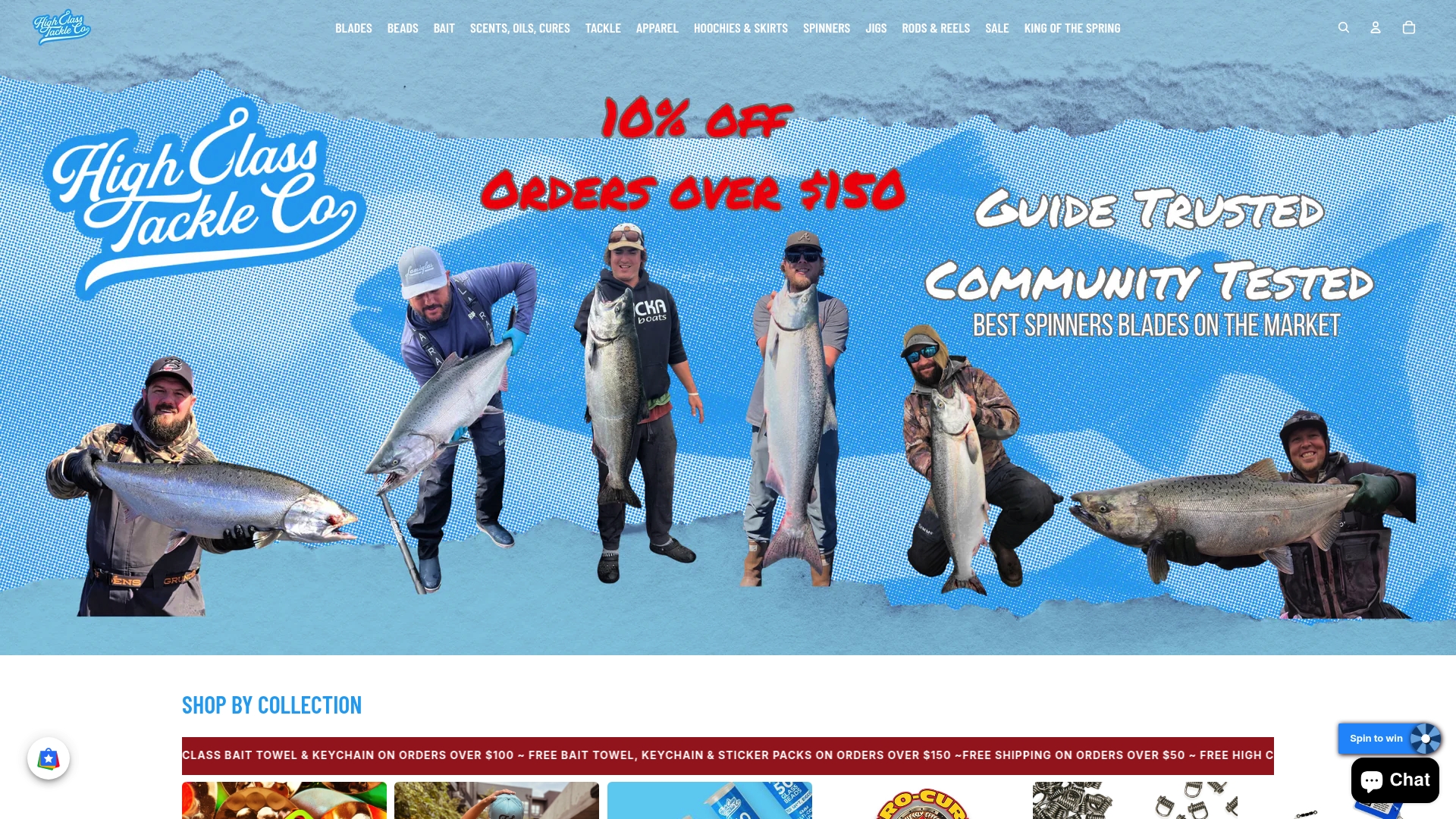
Match your gear category to the scenario you’re actually fishing rather than grabbing whatever’s in the tackle box. Browse the full lineup at High Class Tackle Co. and get your rig built before the next derby weekend.
Sources
- Salmon fishing in marine areas | Washington Department of Fish & Wildlife
- Winning Salmon Derby Strategies – Salmon & Steelhead Journal
- Quick start to Valdez Silver Salmon Derby — AK Sporting Journal
- Golden North Salmon Derby — official rules (example derby rules page)
FAQ
What are the best techniques for salmon fishing?
Trolling with downriggers or divers, drift fishing with roe or beads in river current, and plunking from shore in migratory paths are the core techniques recommended by WDFW. Which one works best depends on the water you’re fishing and how much boat pressure is on it that day.
What is a salmon derby?
A salmon derby is an organized fishing competition where anglers compete to land the heaviest or most notable fish within a set time window, often with prizes by division. Recent derbies have included boat, shore, and kayak divisions along with daily prizes and grand prizes by weight, as seen in coverage of the Valdez Silver Salmon Derby.
What bait does salmon like the most?
Cut plug herring and cured roe are the most consistent producers across most conditions, with sand shrimp and marabou jigs stepping in when water turns murky or fish get pressured. Matching bait size and scent to water clarity makes a bigger difference than picking one “best” bait.
When’s the best time of day to fish for salmon?
Early morning and late evening tend to produce the most consistent bites, while midday often requires a deeper presentation as fish move down in the water column. Tide phase matters as much as the clock, since salmon often move most efficiently during flood tidal periods, according to tidal migration research.
What should I check before entering a salmon derby?
Confirm your registration, any required tags, and the derby’s weigh-in rules, since most events require whole, uncleaned fish presented the same day. Building in a 60 to 90 minute arrival buffer before the scale closes, as outlined in Golden North Salmon Derby rules, protects you from missing the cutoff over a late tide or slow run back to the dock.
0 comments