

Salmon fishing low water is defined as targeting Pacific salmon in rivers running below normal seasonal levels, where clear, warm, and shallow conditions demand a completely different approach than standard river fishing. The Pacific Northwest faces this reality more often every summer, and the anglers who adapt are the ones still landing fish. Success depends on three things: the right gear, stealthy presentation, and a hard commitment to fish welfare. This guide covers all three, built specifically for PNW rivers in 2026 conditions.
What gear is essential for salmon fishing in low water?
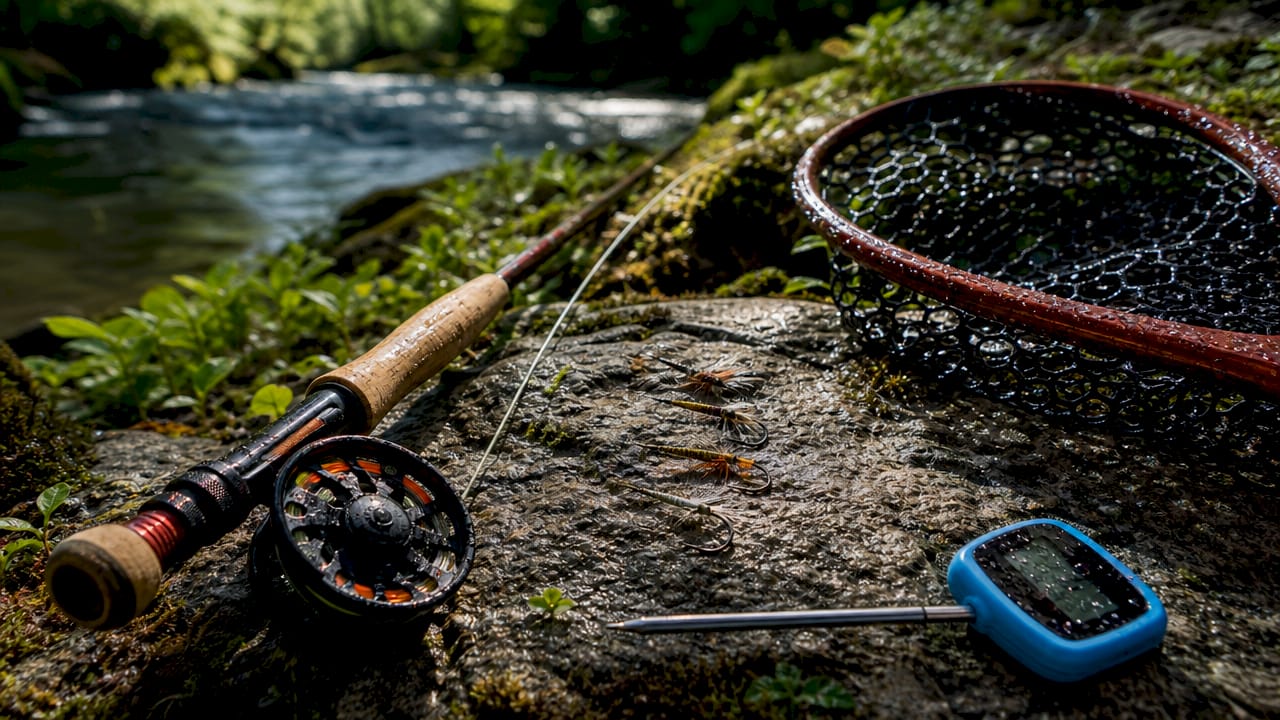
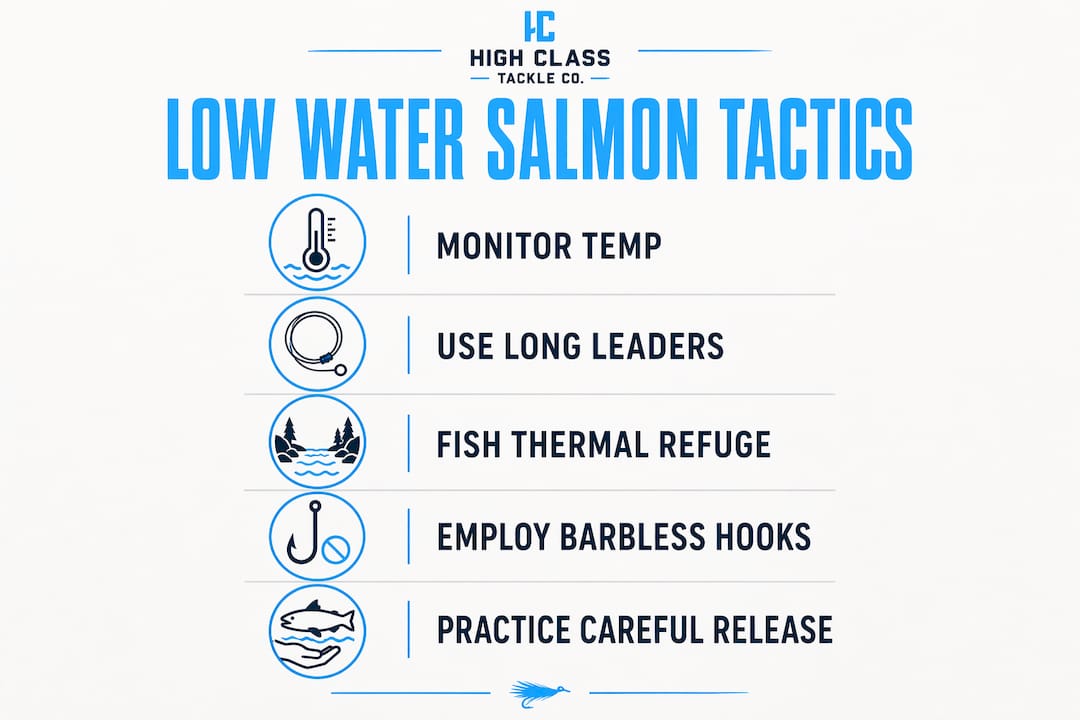
Low water salmon fishing starts with a portable water thermometer. Water above 70°F causes extreme physiological stress on salmon, and fishing through those temperatures puts every fish you release at serious risk. That single tool tells you whether you should be on the water at all.
If you don’t have a thermometer, ODFW recommends the bathwater test: dip your hand in the river. If it feels warm like a bath, walk away. It’s a blunt method, but it works as a field check when you’re already at the bank.
Beyond temperature monitoring, your tackle setup needs to change. Standard heavy leaders spook fish in gin-clear water. Experienced anglers lengthen leaders to 10–15 feet to present flies delicately and reduce splash and shadow. That extra length keeps your fly line far from the fish and lets the fly drift naturally.
| Gear Item | Standard Setup | Low Water Setup |
|---|---|---|
| Leader length | 6–9 feet | 10–15 feet |
| Hook type | Standard barbed | Barbless |
| Net material | Nylon mesh | Rubberized, knotless |
| Line weight | Sinking or intermediate | Floating line |
| Fly size | Medium to large | Small, sparse, dark |
Rubberized, knotless nets protect the fish’s slime coat and scales during landing. DFO Canada guidelines list rubberized nets and barbless hooks as the two most critical gear choices for low water catch and release. Barbless hooks also allow fast, in-water removal, which cuts handling time dramatically.
Pro Tip: Switch to a floating line setup before you reach the river. Rigging on the bank wastes time and increases the chance you’ll fish the wrong setup in the first pool.
How to adjust your technique for clear, warm river conditions
Timing is the single biggest lever you have. Fish early morning and late evening when water temperatures drop and salmon are less stressed. Midday fishing in peak heat raises heat-related mortality risk sharply. The 2015 drought showed what happens when that risk is ignored: 95% of sockeye salmon died between Columbia River dams from heat and disease stress. That number should change how you plan every summer trip.
Here are the core tactical steps for fishing low, clear water:
- Approach from downstream. Walk in quietly from below the pool. Salmon face upstream and will detect overhead movement and vibration before you ever cast.
- Cast at an angle. Angle casts across and slightly downstream reduce the chance your fly line lands directly over the fish. Presenting the fly naturally without splashing is the difference between a strike and a spooked pool.
- Go smaller and darker. Switch to lighter, floating-line setups and smaller, darker fly patterns in low, clear water. Big flashy flies that work in high, colored water become alarm signals in summer conditions.
- Use wake flies and sparse patterns. Small wake flies and sparsely dressed patterns trigger reaction strikes near the surface from lethargic salmon. Fly profile and movement matter as much as size.
- Work thermal sanctuaries carefully. Salmon stack in cold water pockets near springs, tributary mouths, and shaded runs. Fish these spots with extra care and short sessions. If an area is officially closed, leave it alone entirely.
- Avoid spinning gear where restricted. Many PNW rivers restrict gear types during low water periods. Check ODFW or Washington DFW regulations before you rig up.
Pro Tip: Read the current before every cast. In low water, even a slight drag on your fly will kill the presentation. Mend aggressively and let the fly swing freely through the strike zone.
For more proven river tactics, the PNW river salmon guide from Highclasstackleco breaks down plug fishing setups that translate well to low water river work.
What are the best fish care practices during low water?
Fish care in low water is not optional. Warm water reduces a salmon’s ability to recover from the stress of being caught. A fish that swims away looking strong can still die hours later from physiological stress if you handled it wrong.
Follow these practices every time:
- Keep the fish fully submerged. Do not lift the fish out of the water for photos or hook removal.
- Wet your hands before touching any fish. Dry hands strip the slime coat, which protects against infection.
- Never lift a fish by its tail or gills. Support the body horizontally with both hands under water.
- Use barbless hooks. Remove the hook in the water with minimal contact.
- Cut the line if deeply hooked. DFO Canada protocols are clear: cutting the line causes less damage than digging for a deep hook.
- Hold the fish gently facing upstream until it kicks free on its own. Do not force it to swim.
“Once water temperature nears 70°F, the post-release mortality risk is high enough that quitting salmon fishing temporarily is the right call, even when fish appear vital at release.” — ODFW
That quote from ODFW is not a suggestion. It’s the standard that responsible PNW anglers hold themselves to in 2026.
How do drought and temperature affect salmon behavior in the PNW?
Drought conditions concentrate salmon in thermal refuges, which are the coldest, deepest sections of a river system. Locations like Eagle Creek and the lower John Day River serve as critical thermal refuges during dry years. When salmon cannot move freely through a system, they pile into these pockets and become vulnerable to disease, predation, and angling pressure all at once.
The disease risk in warm water is real and growing. Columnaris, a bacterial infection, spreads rapidly when water temperatures climb. In the Upper Klamath River, parasites thriving in warming water have increased Chinook salmon mortality significantly. Fish that cannot reach cooler water suffer the highest mortality rates.
| Water Temperature | Salmon Stress Level | Recommended Action |
|---|---|---|
| Below 60°F | Low | Normal fishing practices |
| 60–65°F | Moderate | Minimize fight time, handle carefully |
| 65–70°F | High | Short sessions, strict care protocols |
| Above 70°F | Critical | Stop fishing for cold-water species |
Thermal sanctuaries and closures are increasing across the Pacific Northwest as climate pressures intensify. Respecting those closures is not just ethical. It directly determines whether salmon runs survive long enough to fish in future seasons.
Pro Tip: Check ODFW and Washington DFW emergency closure notices before every trip during july and august. Closures can go into effect within 24 hours of a temperature spike.
Key Takeaways
Salmon fishing in low water demands a full gear overhaul, strict timing, and non-negotiable fish care practices to produce catches without destroying the fishery.
| Point | Details |
|---|---|
| Temperature is the trigger | Stop fishing cold-water species when river temps exceed 70°F. |
| Gear must match conditions | Use 10–15 foot leaders, barbless hooks, and rubberized nets in low water. |
| Timing beats location | Fish early morning and late evening to avoid peak heat stress on salmon. |
| Stealth wins in clear water | Angle casts, long leaders, and small dark flies prevent spooking fish. |
| Closures protect future seasons | Respect thermal refuge closures to preserve salmon runs under drought pressure. |
My honest take on low water salmon fishing
I’ve fished PNW rivers in drought years long enough to know that the anglers who complain about low water are usually the ones who refuse to change anything. They show up at noon with the same heavy leader they used in march, throw a big bright fly into a pool that’s been hammered all morning, and wonder why nothing moves.
Low water fishing rewards patience and observation more than any other condition. I’ve watched anglers walk right past a pool because it looked too shallow, only to find a stack of Chinook sitting in 18 inches of water against a shaded bank. You have to slow down and read the river differently.
The conservation side of this is personal for me too. I’ve seen what a bad drought year does to a run. The 2015 Columbia River die-off was not an abstract statistic. It was a gut punch for everyone who fishes those rivers. When ODFW says stop fishing above 70°F, I stop. No fish is worth burning down the fishery.
The tools exist to do this right. A thermometer costs almost nothing. Barbless hooks are standard. A rubberized net is a one-time buy. There’s no excuse for not fishing responsibly in 2026. Check the Buoy 10 salmon season guide from Highclasstackleco for current timing intel before you head out this summer.
— Nick
Highclasstackleco has your low water setup covered
When conditions get tough, your tackle needs to be dialed in. Highclasstackleco builds gear for exactly this kind of fishing, from barbless hooks and terminal components to complete tackle setups built for PNW rivers.

The terminal tackle and components collection includes barbless hook options and low water components that match the techniques covered here. If you want a ready-to-fish setup without building from scratch, the component tackle box puts the right hooks, flies, and hardware in one place. Head to Highclasstackleco to gear up before the next low water window opens.
FAQ
What temperature is too warm for salmon fishing?
Water above 70°F causes extreme stress on salmon and significantly raises post-release mortality. ODFW recommends stopping all cold-water species fishing at that threshold.
What flies work best in low, clear water?
Small, sparsely dressed patterns and wake flies trigger reaction strikes from lethargic salmon near the surface. Darker colors and minimal flash outperform large, bright patterns in clear summer conditions.
How do I find salmon in low water rivers?
Salmon concentrate in thermal refuges: deep shaded pools, tributary mouths, and cold spring seeps. Target these areas during early morning and late evening when water temperatures are at their lowest.
Do I need barbless hooks for low water salmon fishing?
Barbless hooks are the standard recommendation from both ODFW and DFO Canada for low water catch and release. They allow fast, in-water hook removal that reduces handling time and fish stress.
Are there closures I need to know about in the PNW?
Yes. Thermal refuge areas like Eagle Creek and sections of the John Day River close during extreme heat events. Check ODFW and Washington DFW emergency notices before every summer trip.
Recommended
- Salmon plug fishing rivers: Proven PNW tactics and gear – High Class Tackle Co.®
- Steelhead Spoon Fishing Rivers: PNW Angler’s Guide – High Class Tackle Co.®
- Buoy 10 Fishing Guide: Salmon Season 2026 – High Class Tackle Co.®
- Spinnerbait guide: boost your Pacific Northwest fishing – High Class Tackle Co.®
0 comments