

The best all-purpose salmon hoochie rig pairs a flasher with a 3 to 5 inch hoochie, a stiff leader in a suitable test range, and a 3/0 to 4/0 hook on a leader of appropriate length for the fishing conditions. That combo puts the flasher’s whip into a stiff leader so the skirt breathes instead of going limp behind the boat. If you’re casting rivers instead of trolling, drop to a bullet weight rig with a 3 to 4 foot leader.
TL;DR:
- Leaders used for Chinook and coho should be 36 to 42 inches long with a stiff 40 to 50 lb line to transmit flasher action effectively.
- Bead spacing and hook placement are critical, with stinger hooks must be positioned so they do not bury in the skirt, especially for coho.
- Hoochie sizes should be 3 to 4 inches for coho and kokanee, and 4 to 5 inches for Chinook, with color patterns like glow, spatter, and chartreuse suitable for most water conditions.
- Trolling speeds of 2 to 3 mph are optimal for Chinook, while coho prefer a slightly faster, more aggressive presentation, and leader stiffness is key to action.
- Proper rig maintenance, including rinsing from saltwater, replacing worn hooks, and storing leaders flat, extends rig life and ensures optimal action.
Table of Contents
- What Goes Into Salmon Hoochie Rigs (Gear List and Why It Matters)
- How Do You Tie a Hoochie Rig Step by Step?
- What Leader Length and Hook Size Work Best?
- Flashers, Trolling Speed, and Reading the Bite
- Twitching Hoochies: The River Alternative to Trolling
- Why Nick and High Class Tackle Co. Know This Rig
- How Do You Keep Hoochie Rigs Fishing Longer?
- Where and When Do Hoochie Rigs Work Best?
- Which Salmon Species Respond Best to Hoochie Rigs?
- What the Data Actually Tells You About Hoochie Rigging
- Get Your Next Hoochie Rig Rigging Kit From Highclasstackleco
- Sources
What Goes Into Salmon Hoochie Rigs (Gear List and Why It Matters)
A hoochie rig is a plastic squid skirt threaded onto a leader behind a flasher or dodger, built to mimic baitfish and squid that salmon chase in open water. Every guide boat on the West Coast runs some version of it, but the parts you choose decide whether it swims right or just drags dead weight.
Hoochie size matters more than color, though color gets the attention. Run 3 to 4 inch hoochies for coho and kokanee, and 4 to 5 inch bodies for Chinook. Glow, spatter, and chartreuse cover most conditions from stained rivers to clear offshore water.
Your parts kit should include:
- Hoochie skirts, 3 to 5 inches, in glow/UV, spatter, and chartreuse patterns
- Leader material, 40 to 50 lb mono or stiff fluorocarbon (stiffness beats invisibility here, according to BC Fishing Journal)
- Hooks: siwash or open-eye for a single-hook leader, octopus style for tandem/stinger setups
- Beads, 3 to 7 per leader, used as spacers and to seat the skirt
- Barrel swivel and snap for quick flasher changes
- Optional Spin-N-Glo or small blade ahead of the hoochie for extra flash
Store finished leaders on foam leader boards or in labeled tackle wraps, coiled loosely so the mono doesn’t develop memory kinks before you even hit the water. Highclasstackleco’s terminal tackle and components line covers most of this list if you’re stocking a box from scratch.
How Do You Tie a Hoochie Rig Step by Step?
Tying a clean leader at the bench takes ten minutes once you’ve done it a few times. Rush it, and you’ll find out on the water when a hoochie spins instead of swims.
- Cut your leader to 36 to 42 inches, adding 3 to 4 extra inches for knot dressing and trimming.
- Tie the forward hook with an egg-loop snell, which secures the hook and leaves room to slide bait or scent inside the loop.
- Slide on your beads, then thread one bead into the hoochie’s head cavity to seat the skirt and keep it flared open, a trick detailed by Scent Striker.
- Tie the trailing stinger hook so its point clears the tentacles completely. A hook buried in the skirt causes short strikes.
- Close or crimp the siwash eye if you’re running an open-eye hook, so it doesn’t work loose under trolling pressure.
- Finish the top end with a surgeon’s loop or a barrel swivel and snap for quick attachment to your flasher or dodger.
Pro Tip: Before you leave the bench, spin the finished leader between two fingers like a mini flasher test. If the hoochie doesn’t rotate cleanly with the leader, your line is too limp or your bead seating is off. Fix it now, not twenty minutes into your first pass.
Run a last check before you clip in: hook point sharp and aligned with the leader, skirt fully seated, correct bead count, and the whole rig coiled flat in your leader wrap. That thirty-second habit saves you re-rigging boat-side.
What Leader Length and Hook Size Work Best?
Leader length and line test aren’t preference, they’re tuning variables tied to species and trolling speed. Get them wrong and the same hoochie that crushed it last weekend will sit there lifeless.
- Chinook and coho: 36 to 42 inch leader, which transmits the flasher’s whipping action at typical trolling speeds
- Kokanee or slow trolling: 12 to 24 inch leader, since less flasher throw is needed at reduced speed
- Blackmouth (resident Chinook): 30 to 36 inches, a middle ground for winter fishing depths and speeds
Line test in the 40 to 50 lb range isn’t about strength, it’s about stiffness. A limp leader absorbs the flasher’s motion instead of passing it down to the hoochie, and the skirt just trails flat.
The stiffness rule holds until you’re targeting spooky, gin-clear water, where some anglers step down to lighter fluorocarbon and accept a softer action trade-off.
Hook sizing runs 3/0 to 4/0 for standard Chinook and coho leaders. Tandem hook setups, with a lead hook and trailing stinger, help convert short strikers into solid hookups. Stick with egg-loop snells for hooks and a surgeon’s loop up top. One regulatory note that affects your hook choice everywhere you fish: barbless hook requirements are common in many salmon fisheries, so check your local regulations before you tie a single barbed hook onto a leader you plan to use.
Flashers, Trolling Speed, and Reading the Bite
A hoochie doesn’t swim on its own, it rides the motion of whatever you’re pulling ahead of it. Flashers throw a wide, aggressive spin that works well for Chinook and coho, while dodgers give a tighter side-to-side wobble that some anglers prefer for finicky fish. The classic flasher, leader, and hoochie combination remains the standard for a reason: it’s simple and it produces.
Trolling speed sets everything else. Chinook respond best around 2 to 3 mph, a window worth confirming with GPS rather than guessing off engine RPM. Coho tend to want a bit more speed and aggression, while kokanee demand a slower, subtler presentation with a shorter leader to match.
Depth control comes down to three tools: a downrigger for precision, lead-core or diver clips for a budget approach, or simply running more line behind the boat. Whichever you choose, check your setup against solid boat navigation and safety practices when running multiple rods and adjusting depth on a crowded stretch of water.
Salmon rarely announce a strike the way a bass does. Watch for:
- A subtle rod tip loading rather than a violent slam
- Line going slack for a split second before pulling tight
- The rod tip pulsing instead of springing back after each troll surge
| Problem | Likely Cause | Fix |
|---|---|---|
| Hoochie spins instead of swims | Leader too limp or skirt not seated | Switch to 40 to 50 lb leader, reseat bead in head |
| Short strikes, no hookup | Trailing hook buried in skirt | Rerun stinger hook so point clears tentacles |
| Skirt tangled around leader | Too few beads, skirt not centered | Add spacer beads, straighten during rigging |
| Dead action at trolling speed | Speed too slow for leader length | Shorten leader or bump trolling speed |
Detecting the bite is only half the job. Give the fish a beat to fully load the rod before you set the hook. A hoochie strike that gets yanked too early often pulls the hook straight out of soft mouth tissue.
Twitching Hoochies: The River Alternative to Trolling
Twitching swaps the boat and flasher for a cast, a bullet weight, and your own retrieve rhythm, which makes it a solid option in rivers, shallow runs, and any spot where trolling isn’t practical.
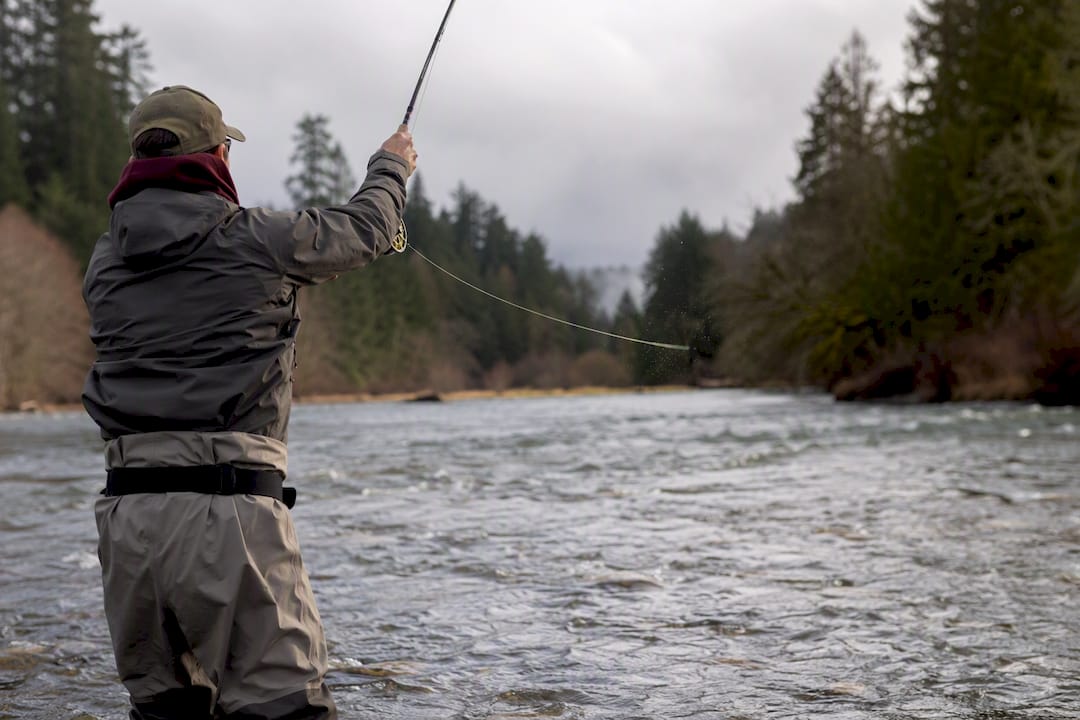
Rig it with a 1/4 to 1/2 oz bullet weight ahead of a 3 to 4 foot leader, shorter than a trolling setup since there’s no flasher throw to transmit. If you’re running two hooks, space them so the trailing point still clears the skirt, same rule as trolling. Cadence is the real difference: sharp upward twitches followed by a controlled drop, not the steady pull of a trolled leader. Leader stiffness matters less here since your own rod action drives the movement, so some anglers go slightly lighter for better feel.
Why Nick and High Class Tackle Co. Know This Rig
This guide comes from Nick, built around rigging methods tested against real West Coast trolling conditions rather than theory pulled off a shelf. The brand has a reputation related to salmon and steelhead tackle designed by anglers who actually fish these rigs, not just sell them.
If you want to go deeper, check the breakdown on Chinook trolling rigs or the GPS-based trolling speed guide for dialing in your exact mph window. Brand-tested advice matters here because a rig that looks right on the bench can still fail behind a boat running the wrong speed.
How Do You Keep Hoochie Rigs Fishing Longer?
Salt water, UV exposure, and fish slime break down hoochie skirts faster than most anglers expect. A rig that swims perfectly in June can be brittle and faded by August if you’re not caring for it between trips.
Rinse every leader in fresh water after saltwater trips, salt residue stiffens plastic skirts and corrodes swivels and snaps over time. Let hoochies air dry out of direct sunlight before storage. UV rays are the fastest way to bleach a chartreuse skirt into a dull gray and make the plastic crack at the tentacle base.
Store finished leaders flat on foam leader boards rather than balled up in a tackle tray. Coiled, kinked leader loses the stiffness that transmits flasher action, which means a rig that fished great last season might need re-tying even if the hoochie itself looks fine.
Check hooks for rust and dull points before every trip, not just at the start of the season. A hook that sat in a damp boat bag for two weeks can lose its edge fast, especially the barbless styles common in many salmon fisheries. Replace any hoochie with cracked tentacles or a head cavity that’s worn loose around the bead seat, since a skirt that won’t stay seated won’t hold its action no matter how good your leader is.
Keep scent products away from hoochie skirts in storage. Some brines and oils degrade certain plastics over months of contact, so store scent-soaked gear separately from your skirt inventory.
Where and When Do Hoochie Rigs Work Best?
Hoochie rigs shine wherever salmon are actively feeding on baitfish or squid in open water, which makes them a staple for ocean trolling, saltwater bays, and larger lake systems that hold kokanee and landlocked Chinook.
Spring and early summer bring Chinook and blackmouth into nearshore waters, often at moderate depths where a flasher and hoochie combo trolled at 2 to 3 mph gets consistent attention. Summer shifts the action toward coho, which tend to sit higher in the water column and respond to a faster, more aggressive troll. Fall runs push both species toward river mouths and estuaries, where trolling gives way to casting and twitching as the fish stage before moving upstream.
Kokanee fishing on lakes runs on its own calendar, often peaking through late spring into summer with a slower troll and shorter leader than saltwater Chinook work. Timing your hoochie choice to the season matters as much as picking the right leader length. A glow pattern that produces in low light and deeper water often gets ignored in the bright shallow conditions of peak summer coho fishing, when a spatter or chartreuse pattern tends to draw more strikes.
Local run timing varies by river system and region, so checking current fishing reports for your specific water beats rather than relying on a generic calendar.
Which Salmon Species Respond Best to Hoochie Rigs?
Chinook, coho, and kokanee all take hoochies, but each species reads the presentation differently, and that changes how you should rig for them.
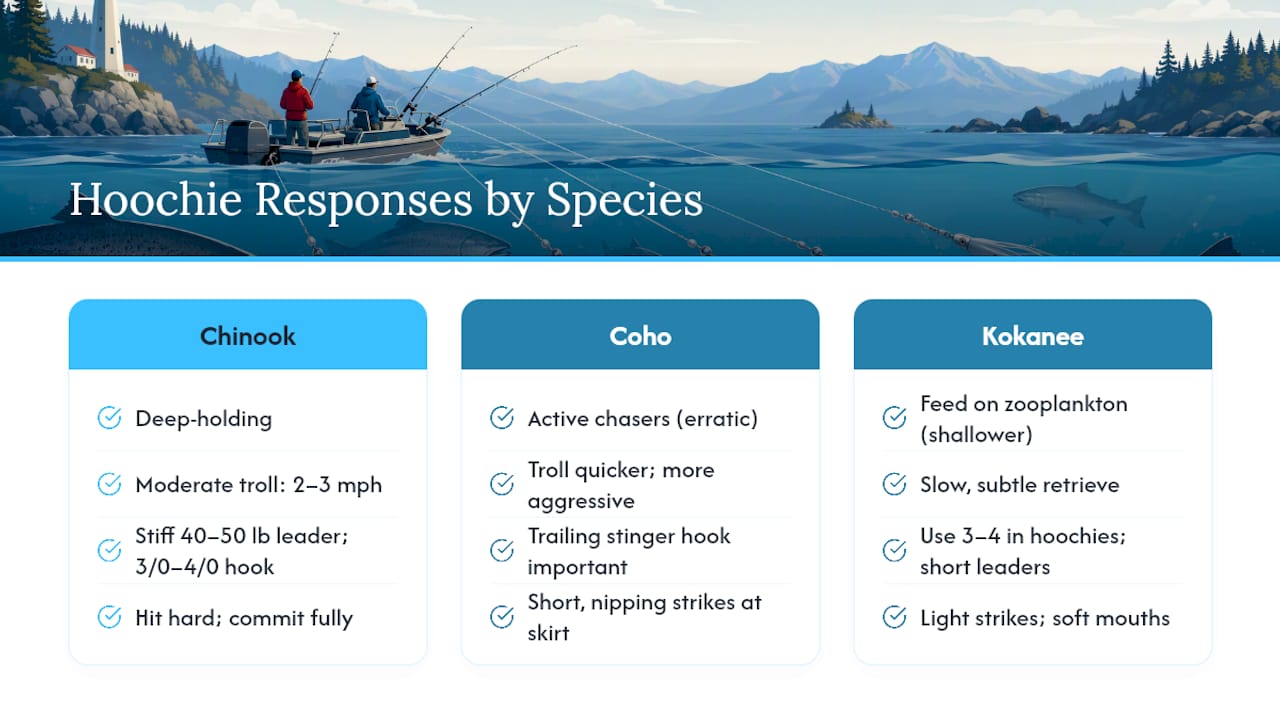
Chinook are aggressive, deep-holding fish that respond to a bold, wide-swimming hoochie pushed by a big flasher at a moderate 2 to 3 mph troll. They tend to hit hard and commit fully, which is part of why a 3/0 to 4/0 hook on a stiff 40 to 50 lb leader works so well, the fish generally give you a real bite to set into.
Coho are faster, more erratic feeders that often chase a hoochie trolled quicker and more aggressively than what draws Chinook. They’ll frequently strike short, nipping at the tail of the skirt, which is exactly why trailing stinger hook placement matters more for coho than for any other species on this list.
Kokanee feed on tiny zooplankton and baitfish, so they respond to smaller 3 to 4 inch hoochies fished slow and subtle with short leaders. Their strikes are lighter and their mouths are softer, so rod sensitivity and hookset timing matter more than raw tackle strength.
Blackmouth, the resident winter Chinook, tend to hold deeper and feed more cautiously than their ocean-run cousins, which is why a slightly shorter 30 to 36 inch leader and patient trolling pass often outproduces a faster, more aggressive approach.
What the Data Actually Tells You About Hoochie Rigging
Most hoochie advice online treats leader length and line test like personal preference. It isn’t. The research is consistent: stiffness drives action, and action is what triggers strikes. A limp 20 lb leader might feel like the smart, subtle choice, but it kills the exact motion salmon are keying on behind a flasher.
Where conventional advice falls short is treating every hoochie setup as one universal rig. Kokanee anglers running 40 inch Chinook leaders are fighting their own gear. Coho anglers ignoring stinger hook placement are leaving fish in the water after every short strike. The species-specific tuning in this guide isn’t a nice-to-have, it’s the difference between a rig that occasionally works and one that produces trip after trip.
If you take one thing from this, prioritize leader stiffness and correct hook placement before you worry about hoochie color. Color gets debated endlessly on the dock. Stiffness and hook position are what actually separate a rig that swims right from one that doesn’t.
— Nick
Get Your Next Hoochie Rig Rigging Kit From Highclasstackleco
You could piece together beads, swivels, and hooks from three different tackle aisles, or you could grab a kit built specifically for this rig style and skip the guesswork entirely. Highclasstackleco stocks terminal tackle and components sized for exactly the leaders covered here, plus hoochie skirts in the glow, spatter, and chartreuse patterns that match seasonal conditions on the water.
For anglers who want to add scent or a flash upgrade to their leaders, the custom superbaits and attractor collection covers the bead and blade combos mentioned throughout this guide. Whether you’re tying your first tandem-hook leader or restocking a boat box before the Chinook run, browse the full tackle lineup and build your next kit around the exact specs that put fish in the net.
Sources
- How to Rig Salmon Hoochie Setup - BC Fishing Journal
- Hoochie rig for salmon - Sportfishing Buddy
- Flasher & Hoochie Setup - Trolling for Chinook and Coho Salmon
- How to Rig a Salmon Hoochie Skirt | Scent Striker
- Rigging a Twitching Hoochie – Gone Fishing Northwest
0 comments