

For slow trolling and near-bottom presentations, run a small inline scent chamber positioned 12 to 24 inches ahead of the hook. Pack it with gel for long soaks, oil for a fast burst, or chopped bait for the strongest initial punch. Below, you’ll find the exact rig setups, materials, and on-water tests to make it work.
TL;DR:
- Using a scent chamber is most effective when placed inline 12 to 36 inches ahead of the lure at slow trolling speeds of 1.1 to 1.5 mph to maintain a steady scent trail.
- Gel fills provide long-lasting scent release suitable for extended trolling, while oils are better for short bursts and active jigging, and bait offers the strongest initial signal but depletes quickly.
- Refill the chamber every 45 to 90 minutes, especially in faster currents or warmer water, to compensate for rapid scent dispersal and loss of potency.
- Chamber placement should consider current flow; positioning in the direction fish swim into ensures they intercept the scent plume more effectively.
- DIY components are cost-effective if you already own terminal tackle, but pre-rigged chambers offer convenience and are ideal for beginners testing their setup.
Table of Contents
- What Is a Scent Chamber, and When Do You Need One?
- Three Rig Setups That Actually Put Scent in the Strike Zone
- Which Fill Material Should You Load Your Chamber With?
- How Current and Speed Change Where Fish Find Your Scent
- Build a Scent Chamber Rig: Materials and Assembly Steps
- Maintenance, Refill Timing, and Quick Fixes
- What Should You Budget for a Scent Chamber Rig?
- Commercial Scent Chambers vs. Building Your Own
- Matching Your Scent Chamber Rig to Species and Conditions
- Where to Buy Scent Chamber Rig Components
- Integrating Scent Chambers Into Your Existing Trolling and Jigging Rigs
- Field Notes: What Actually Moves the Needle
- Rig Smarter With Highclasstackleco Gear
- Sources
- FAQ
What Is a Scent Chamber, and When Do You Need One?
A scent chamber is a small vented or perforated housing rigged inline on your leader that holds an attractant and bleeds scent into the water column as you troll, jig, or soak bait near bottom. Think of it as a slow-release engine bolted onto your presentation, doing the work your bait alone can’t.
Scent chamber rigs earn their spot on your leader in a handful of situations:
- Slow trolling for salmon or kokanee, where a steady scent trail keeps fish tracking your gear across long passes.
- Running-sinker bottom rigs for rockfish, halibut, or bottom-oriented salmon, where scent needs to hug the bottom rather than drift high in the water column.
- Short-leader jigging, where a quick burst of scent complements an aggressive jigging cadence.
Here’s the part most anglers skip: many target species orient into the current to feed, which means chamber placement relative to current direction matters as much as depth. NOAA research on bait smell distribution confirms that fish swimming into current intercept scent plumes that trail downcurrent from the source, not upcurrent. Rig blind, and you’re fishing scent nobody swims through.
Three Rig Setups That Actually Put Scent in the Strike Zone
You don’t need a dozen configurations. You need the right one for the water you’re fishing. Here are three that cover almost every situation a recreational angler runs into.
- Inline trolling chamber. Place the chamber 12 to 36 inches ahead of your lure or hoochie, threaded inline between two barrel swivels on 20 to 40 lb leader depending on species. This setup shines at trolling speeds of 1.1 to 1.5 mph, the range regional guides recommend for kokanee presentations, where a steady plume trails behind the chamber and washes past your lure the whole pass.
- Running-sinker bottom rig. Rig the chamber above your hook but below the sliding sinker stop, so the scent hovers close to bottom instead of drifting up mid-column. This keeps the plume in the zone where bottom feeders are actually cruising, rather than wasting scent on water nobody’s swimming through.
- Short-leader jigging chamber. Use a compact chamber on a 6 to 10 inch dropper above your jig, filled with a fast-release oil. Active jigging strokes push water through the vents on every lift, releasing bursts of scent that match the erratic motion fish key in on.
Pros and cons at a glance: the inline trolling setup gives you the longest scent longevity but dilutes fastest in strong current. The running-sinker version holds scent tight to structure but carries more snag risk around rock and wood. The jigging chamber refills easiest and reacts fastest, but it burns through fill quicker than either of the other two.
Which Fill Material Should You Load Your Chamber With?
The fill you choose changes everything about how your chamber performs, and picking the wrong one for the job wastes half your trip.
- Gel releases slowly and stays put, making it the right call for long trolling passes where you want scent bleeding out over 30 minutes or more.
- Oils disperse fast and hit hard, which makes them ideal for short bursts and active jigging where you want an immediate plume rather than a slow drip.
- Chopped or fresh bait delivers the strongest initial scent signature of the three, but it depletes fastest and demands more handling and cleanup between uses.
Pack any fill loosely enough that vents stay clear. Cramming a chamber full defeats the purpose. Water needs to move through it, not around it.
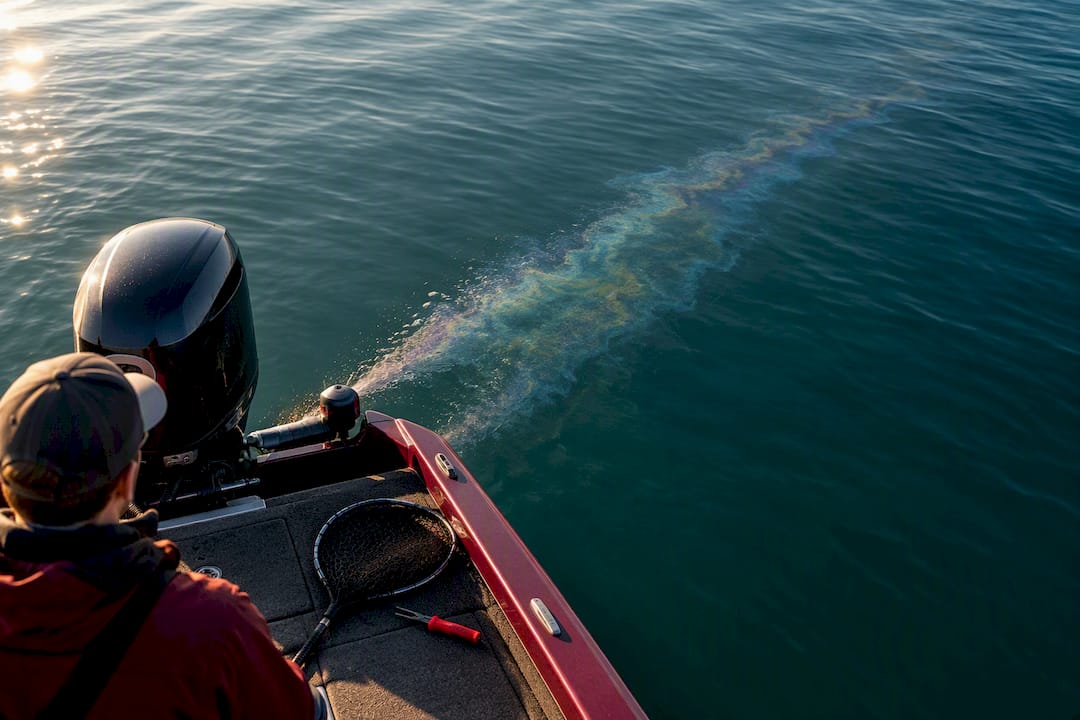
Pro Tip: Load your chamber, make one short test pass near the boat before your real drop, and watch for a visible sheen or slick trailing behind it. If you don’t see it, you’re not releasing enough scent, and no amount of “more scent” fixes a packing problem.
How Current and Speed Change Where Fish Find Your Scent
Here’s the number that should change how you fish: soluble bait stimulants can lose a large share of their strength within an hour, according to NOAA’s technical review of bait odor distribution. That single fact is why refill cadence matters more than dumping in extra fill and hoping it lasts your whole trip.
Current speed reshapes the plume itself. Peer-reviewed hydrodynamic modeling of odor dispersal shows that faster currents stretch plumes into long, thin ribbons, while slower water keeps scent concentrated closer to the source. Slow trolling in light current gives you a tighter, stronger scent cloud right around your gear. Push into faster water, and that same chamber throws a longer trail that thins out fast, meaning fish farther back in the current have a shot at intercepting it, but the concentration each one experiences drops.
Two field rules follow from this. First, run a marked test pass early in your outing. Some anglers clip a small floater near the chamber to visually confirm flow and drag before committing to a long drift. Second, stagger your rods at slightly different distances behind the boat. Overlapping plumes from staggered gear can build a stronger combined scent field than one heavily loaded chamber running solo.
Build a Scent Chamber Rig: Materials and Assembly Steps
You can build a working scent chamber rig on the boat with a short parts list and about ten minutes.
Materials:
- A small vented scent chamber (available in sizes to match target species)
- 20 to 30 lb leader for kokanee and trout, 40 to 80 lb for salmon or heavier saltwater species
- Two barrel swivels
- A snap or quick-clip connector
- Hook or lure of choice
- Split shot or sliding sinker, if fishing near bottom
Assembly:
- Tie a barrel swivel to your main line using a clinch knot or your preferred connection.
- Thread the scent chamber onto your leader material, then tie a second swivel below it to lock it inline.
- Measure and cut leader from the chamber to your hook or lure. For trolling, that’s 12 to 36 inches. For jigging, run a shorter 6 to 10 inch dropper.
- Attach your hook, lure, or hoochie skirt to the terminal end.
- If running a bottom rig, thread a sliding sinker above the top swivel before tying off, so the chamber sits between the weight and the hook.
- Load the chamber with your chosen fill and snap it shut.
Pro Tip: Before your first real drop, hold the rigged chamber over the side and give the leader a short pull through the water. If it spins or twists your leader, you’ve got a balance problem, not a scent problem, and it’ll tangle your whole rig within minutes of trolling.
Maintenance, Refill Timing, and Quick Fixes
Scent doesn’t last as long as anglers think. Refill every 45 to 90 minutes on active trips, tightening that window in faster current or warmer water where dispersal runs faster.
- Clogged vents: clear with a toothpick or small brush between trips, especially after running chopped bait fills.
- Lost seal or excess drag: check the hinge or clip mechanism; a worn seal lets water flush the chamber too fast, killing your soak time.
- Faded scent with no visible cause: it’s probably just time. Refill rather than troubleshoot.
Rinse chambers in fresh water after saltwater trips and let them air dry before storage. A chamber left sealed with old bait residue turns rancid fast, and that’s not the scent profile you’re after.
What Should You Budget for a Scent Chamber Rig?
Scent chamber rigs sit at the affordable end of terminal tackle, which is part of why they’ve become a staple rather than a luxury add-on. A basic chamber alone typically runs a few dollars each, and most anglers carry several since they’re easy to lose to snags or break-offs.
The real cost driver isn’t the chamber. It’s what you build around it. Leader material, swivels, snap connectors, and the fill itself (gel, oil, or bait) add up faster than the chamber does, especially if you’re refilling every hour on a long trolling day. An angler running three or four rods with chambers on each one should plan for ongoing fill costs as a recurring line item, not a one-time purchase.
Where you can save money is buying fill in bulk rather than single-use packets, and reusing chambers across a season rather than treating them as disposable. Where you shouldn’t cut corners is on leader test strength. A cheap leader that snaps under a salmon’s first run costs you the fish, the rig, and the chamber all at once.
Budget-conscious anglers often start with two or three chambers, one reliable gel scent, and one oil for variety, then expand their kit as they figure out which presentations they fish most. That’s a smarter build-out than buying a dozen chambers and three scent types before you’ve fished a single pass.
Commercial Scent Chambers vs. Building Your Own
Commercially available scent chambers, the kind sold pre-rigged with leader and swivels attached, save time and remove guesswork from the equation. Retail product descriptions show these units designed specifically to be stuffed with gel or bait and fished straight out of the package, with hardware already matched to typical trolling and jigging setups.
The trade-off is flexibility. A pre-rigged chamber comes with fixed leader length and a fixed swivel size, which may not match the species or conditions you’re actually fishing. Building your own rig lets you dial leader length to the inch, choose leader test that matches your target species exactly, and swap chamber size without buying a whole new pre-rigged unit.
Price-wise, pre-rigged commercial setups typically cost more per unit than building the same rig from raw components, since you’re paying for the assembly labor along with the parts. DIY builds cost less per rig once you’ve bought the base materials, but that math only works if you’re building enough rigs to justify keeping leader spools, swivels, and connectors on hand.
The practical answer for most recreational anglers: buy a few pre-rigged chambers to learn the presentation and confirm it works for your target species, then transition to building your own once you know the leader lengths and chamber sizes that produce results in your local water. Neither approach is wrong. It’s a question of how much you fish and how particular you are about tuning leader length to the inch.
Matching Your Scent Chamber Rig to Species and Conditions
The right chamber setup depends on two things: what you’re targeting and what the water is doing that day.
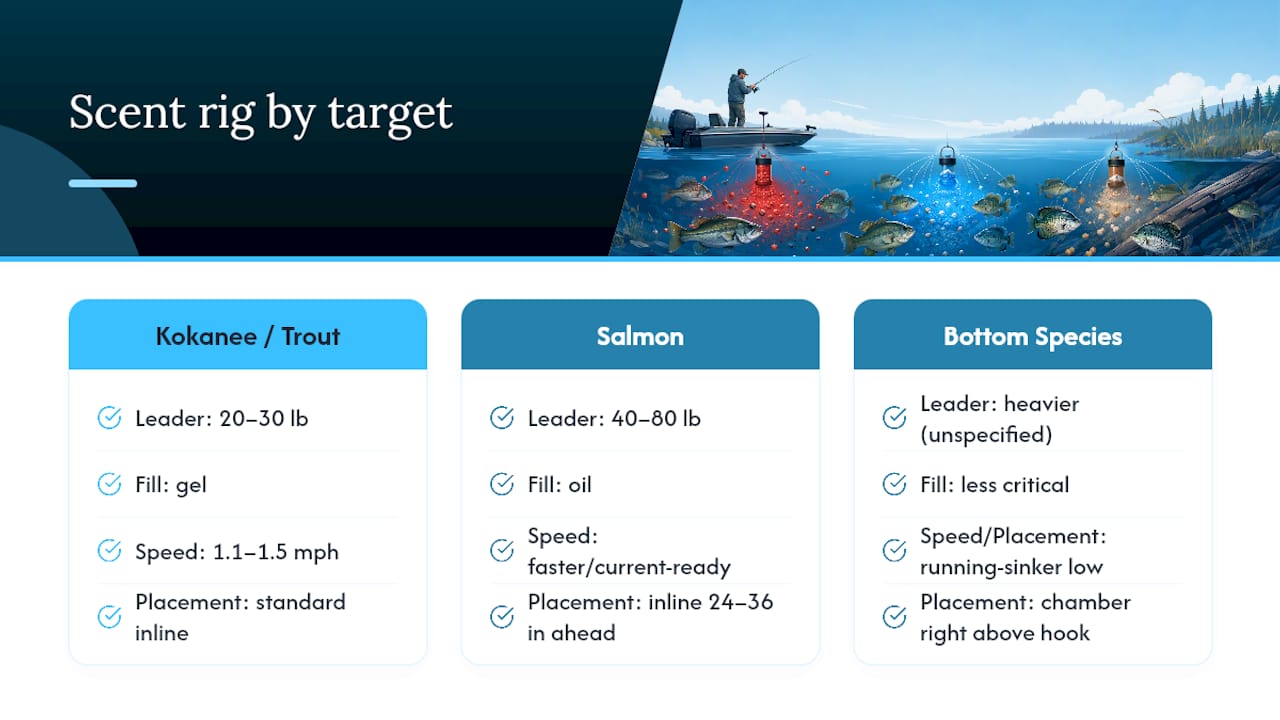
For kokanee and trout, run lighter chambers on 20 to 30 lb leader, since these fish spook easily and heavy hardware kills the natural presentation. Slow trolling speeds around 1.1 to 1.5 mph paired with a gel fill give you the steady, long-duration scent trail that kokanee-focused guides consistently recommend.
For salmon, especially in current-heavy river mouths or tide-influenced saltwater, step up to 40 to 80 lb leader and consider oil fills that punch through faster water without getting diluted before fish encounter it. Salmon also respond well to the inline trolling setup positioned closer to 24 to 36 inches ahead of the lure, giving the plume more time to develop before it reaches your hook.
For bottom species like rockfish or halibut, the running-sinker configuration matters more than fill type. Keep the chamber low in the rig, right above your hook, so scent stays in the bottom few feet of water where these fish actually feed.
Conditions matter as much as species. Faster current calls for chopped bait or oil for a stronger initial signal that survives dilution. Slack tide or slow-moving lakes favor gel, since there’s less water flow to wash it away prematurely. When current direction shifts, as it does on tidal water, re-test your setup. The productive lane you found on the way out may not be the same lane on the way back in.
Where to Buy Scent Chamber Rig Components
Most recreational anglers piece together their scent chamber setup from a handful of sources rather than one single retailer, and that’s fine. Chambers themselves are widely available through marine and tackle suppliers, while fills, leader, and swivels often come from wherever you already buy terminal tackle.
A few buying tips make the shopping process faster. Match chamber size to your target species before anything else. A chamber sized for salmon trolling is overkill on a kokanee rig and will look and swim wrong. Buy leader test appropriate to your species, not just whatever spool is on the shelf. And when you’re stocking scent fills, grab at least one gel and one oil so you’re covered for both long trolling passes and fast jigging bursts.
Highclasstackleco carries bait and scent products built for exactly this kind of rig, alongside flashers and bumpers that pair naturally with a chamber setup on a trolling line. Buying your terminal tackle and scent fills from the same source cuts down on guesswork about compatibility, since you’re not trying to match hardware from three different brands with three different leader diameters.
Integrating Scent Chambers Into Your Existing Trolling and Jigging Rigs
You don’t need to overhaul your entire setup to add a scent chamber. Most trolling and jigging rigs already have room for one with a small modification.
On a standard trolling rig, insert the chamber inline between your main line swivel and your leader to the lure, 12 to 36 inches ahead of the hook depending on species. If you’re already running a flasher or dodger ahead of your lure, the chamber slots in between the flasher’s trailing swivel and the leader running to your hoochie or spinner, keeping the whole rig’s action intact while adding the scent trail underneath it.
On a jigging rig, the chamber works best as a short dropper rather than inline, since jigging demands a tighter, more responsive connection between rod tip and lure. A 6 to 10 inch dropper above the jig lets the chamber ride along without dampening the jigging stroke, while still releasing scent on every lift and drop.
Running multiple rods, whether trolling or jigging, gives you a chance to stagger chamber placement across each line, an approach backed by research on overlapping scent plumes creating a stronger combined signal than any single heavily loaded chamber. Set one rig at 18 inches ahead of the lure, another at 30 inches, and you’ve built a layered scent field instead of a single point source. Test each configuration on its own before combining them, so you know which distance is actually producing strikes on the water you’re fishing.
Field Notes: What Actually Moves the Needle
Anglers obsess over scent strength when they should be tracking variables. Speed, refill interval, and chamber placement change your results far more than dumping in extra fill ever will.
Log your passes. Note speed, refill time, and what changed between a dead run and a hot one. Small, single-variable tests reveal what’s actually working, not guesswork.
— Nick
Rig Smarter With Highclasstackleco Gear
One tackle company has built its lineup around this problem: getting the right components into anglers’ hands without hunting across multiple tackle shops. Instead of piecing together leader, swivels, and fills from wherever you can find them, you get bait, scents, and hardware sourced with West Coast conditions in mind, matched to the setups covered above.
Start with the bait and scent collection to pick your gel or oil fill, then round out your rig with flashers and bumpers for trolling setups or weights for running-sinker bottom rigs. If you’re building from scratch, browse the full High Class Tackle Co. lineup to see the blades, hoochies, and components that pair with a scent chamber on any leader you’re running this season. Pick your fill, grab your hardware, and get your next rig in the water.
Sources
- Fish attraction to baits and effects of currents on the distribution of smell from baits (NOAA repository)
- Numerical simulation of environmental modulation of chemical signal structure and odor dispersal in the open ocean (Chemical Senses)
- Kokanee Fishing Guide | Inland Northwest | FishyNW
- Departments - SCENT SPREADER CHAMBERS (Englund Marine)
FAQ
What Fill Lasts Longest in a Scent Chamber?
Gel releases slowest and typically holds scent through a long trolling pass, while oils and chopped bait deplete faster. Because soluble stimulants can lose significant strength within an hour, plan to refill even a gel-filled chamber roughly every hour on active trips.
How Far Ahead of the Hook Should a Scent Chamber Sit?
For trolling, positioning the chamber a moderate distance ahead of the lure works for most species, with salmon rigs often aiming for a longer distance. For jigging, a shorter 6 to 10 inch dropper keeps the chamber from dampening your jigging stroke.
Are DIY Scent Chamber Rigs Cheaper Than Buying Pre-Rigged Ones?
DIY builds usually cost less per rig once you already own leader, swivels, and connectors, since pre-rigged commercial versions charge for assembly labor. Pre-rigged units save time and remove guesswork, which makes them worth the extra cost for anglers just starting with the presentation.
Does Highclasstackleco Sell Scent Chamber Components?
Highclasstackleco carries bait and scent products, flashers, weights, and terminal hardware suited to building scent chamber rigs. Current pricing is available directly on the site for each product category.
How Often Should I Refill My Scent Chamber?
Refill every 45 to 90 minutes on most active trips, leaning toward the shorter end in fast current or warm water. Faster currents thin and stretch scent plumes according to odor-dispersal modeling, which speeds up how quickly your chamber runs dry of usable scent.
0 comments