

The sliding sinker setup is the fastest way to let salmon and steelhead eat your bait without feeling a thing. Build it like this: mainline, sliding sinker, bead, barrel swivel, then a 1 to 5 foot leader tied to your hook. The sinker rides free on the line instead of locking to your bait, so a fish can grab the bait and swim off before ever feeling resistance. That’s the whole game.
Here’s when to throw it:
- Drifting river seams and tailouts for both salmon and steelhead
- Slow-trolling deep holes and travel lanes where fish stage
- Casting to bottom in slower pools, harbor mouths, and tidewater stretches
This rig works because it gets out of the fish’s way. Everything after this point is about dialing in the parts and presentation so it works even better for you.
Key Takeaways
The sliding sinker setup lets salmon and steelhead take bait without feeling resistance, and its performance depends entirely on matching sinker weight, leader length, and hook size to current, water clarity, and species.
| Point | Details |
|---|---|
| Core rig order | Thread mainline through sinker, bead, swivel, then tie a 1 to 5 foot leader and hook. |
| Match sinker to bottom | Use egg sinkers in calm clear water and pyramid or bullet styles in current or surf. |
| Leader length trade-off | Short leaders reduce snags with cut bait; longer leaders give live bait more natural movement. |
| Protect your knots | A bead and swivel or a sinker slide clip stop the sinker from wearing through your connections. |
| Build it with Highclasstackleco | Shop the Terminal Tackle & Components and Shortbus angle locks collections to rig faster on the bank. |
Table of Contents
- Sliding Sinker Rig Components: Sinkers, Beads, Swivels, Leaders, and Hooks
- How to Build the Sliding Sinker Rig Step by Step
- Tuning Your Sliding Sinker Rig for Salmon and Steelhead
- Fixing Missed Bites, Worn Knots, and Snags
- Sinker Weight Rules and Rig Restrictions in Washington and Oregon Waters
- Author’s PNW Notes: When I Reach for the Sliding Sinker Rig
- Gear That Builds and Tunes This Rig Faster
- Sources
Sliding Sinker Rig Components: Sinkers, Beads, Swivels, Leaders, and Hooks
Every piece on this rig has a job. Skip one and you’re either losing fish or losing gear.
The sinker anchors your bait near bottom or slows your drift without dragging the whole rig down. The bead sits between the sinker and swivel, cushioning the impact so your knot doesn’t take a beating every time that sinker slams down current. The swivel stops the sinker from crashing into your leader knot and keeps your leader from twisting into a mess. The leader is your connection to the hook, sized for stealth or strength depending on what’s biting. The hook is where the deal closes.
Sinker styles matter more than most anglers think:
- Egg sinkers for calm, clear water where you want the bait sitting natural
- Bullet sinkers for punching through current with minimal drag
- Bank sinkers for holding bottom in moderate flow
- No-roll sinkers for staying put on uneven river bottom
- Pyramid sinkers for surf and rough water where anything round just rolls away
Line and leader choice shifts with your target. Big Chinook can call for leaders up to 50 pound test when you’re fishing heavy current or big bait, while pressured steelhead often demand 10 pound test or lighter, with fluorocarbon earning its keep in clear PNW water where fish get line shy fast.
For hooks, size and style should match your bait and your quarry, something our steelhead hook guide breaks down in more detail than we’ve got room for here.
Pro Tip: Carry a mix of bead sizes in your box. A bead that’s too small can slip past the swivel eye and jam your rig mid drift, right when you can least afford it.
How to Build the Sliding Sinker Rig Step by Step
Building this rig on the bank takes five minutes once you’ve done it a few times. Here’s the sequence that works every time:
- Thread your mainline through the sliding sinker.
- Slide on a bead behind the sinker to protect your knot.
- Tie a barrel swivel to the end of your mainline using a Palomar or uni knot.
- Cut and tie your leader to the other end of the swivel.
- Tie your hook to the terminal end of the leader.
- Bait up and you’re ready to fish.
The Palomar knot is strong and fast for attaching swivels and hooks, while a uni knot gives you more versatility if you’re joining lines of different diameters. If you want to skip threading sinkers directly onto your mainline altogether, a sinker slide clip lets you snap sinkers on and off in seconds. That speeds up sinker swaps and cuts down on line wear compared to threading sinkers straight onto your mainline, and it adds a little extra bite sensitivity too.
Leader length changes the whole feel of the presentation. A short leader of 1 to 1.5 feet works well with dead or cut bait, keeping things tight and controlled. Stretch that out to 3 to 5 feet for live bait and you give it room to swim naturally, though you’re trading that freedom for a higher snag risk over rocky or wood-strewn bottom.
Before you cast, run through this quick checklist:
- Bead seated snug against the swivel, no gaps
- Swivel spinning freely, no kinks in the eye
- Leader knot tested with a firm tug
- Hook point sharp, not dulled from the drive over
Skip this and you’ll find out the hard way, usually right when a fish is on.
Tuning Your Sliding Sinker Rig for Salmon and Steelhead
Current and depth decide your sinker weight, not guesswork. In a fast, deep run, you need enough weight to hold bottom without constantly re-rigging after every drift. In a slow tailout, that same weight will drag your bait through the zone too fast for a fish to react. Start light and add weight until you feel bottom every few seconds, not constantly.
Salmon tend to reward heavier leaders and bigger profiles, especially when you’re targeting fresh Chinook pushing through deep, off-color water. Steelhead, especially in low, clear conditions, want the opposite: lighter leaders, smaller hooks, and a presentation that doesn’t scream “fake.”
A few presentation notes that make or break your day:
- Leave enough slack that a fish can take the bait before feeling any tension
- Let the weight settle, then slowly reel tight when you feel a take, letting the fish continue before you set the hook
- Watch for the difference between a tap-tap of bottom contact and the steady pull of a real bite
- Switch to a sinker slide clip in rocky or snag-heavy water so a hung sinker doesn’t cost you the whole rig
Pro Tip: In gin-clear steelhead water, downsize your swivel too. A bulky swivel can spook fish that are already on edge from low, clear flows.
Fixing Missed Bites, Worn Knots, and Snags
Most sliding sinker headaches trace back to three things: bad knots, wrong leader length, or the wrong sinker for the bottom you’re fishing.
A bead between your sinker and swivel absorbs the shock every time that weight slams down current, protecting your knot from the repeated abuse that eventually causes failure. Without a barrel swivel or slide clip, that sinker will grind directly against your leader connection and weaken it over time.
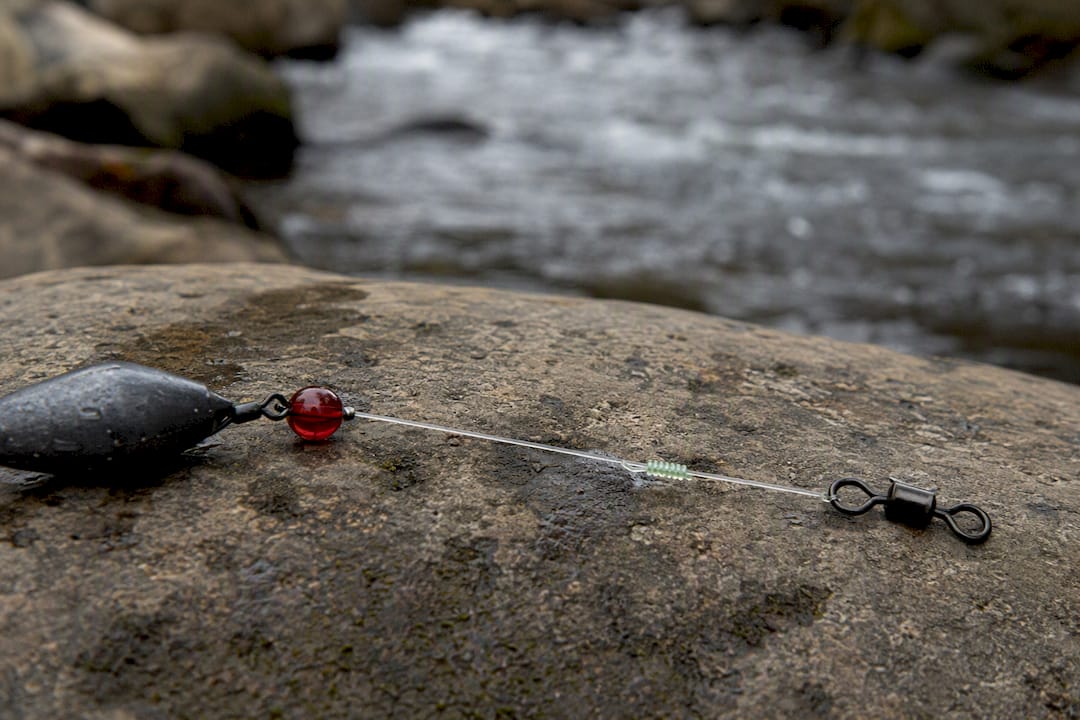
Missed hooksets usually come down to leader length or hook gap. If you’re getting bumps but no hookups, try shortening your leader slightly so you feel bites sooner, or size up your hook gap to improve your hookup ratio.
For snags, shorten your leader in rocky stretches and switch to a bullet or no-roll sinker that won’t wedge into crevices as easily as an egg sinker will.
- Inspect swivels every trip; a stiff or corroded swivel kills your presentation
- Replace beads that show cracking, since a cracked bead won’t cushion the sinker anymore
- Check leader line for abrasion after every hookup on structure
Sinker Weight Rules and Rig Restrictions in Washington and Oregon Waters
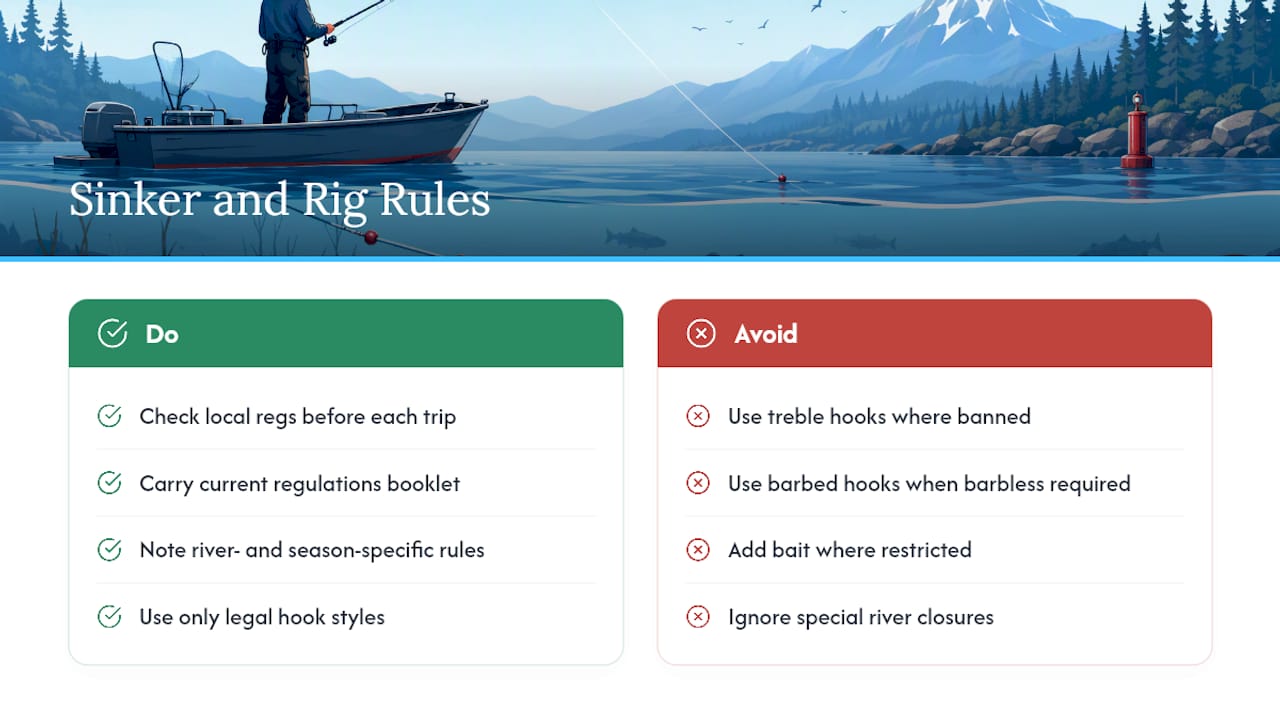
Rules on sinker weight and rig configuration vary by state, river, and even season, so checking your local regulations before you tie on is part of the job, not an afterthought. Washington and Oregon both publish annual sport fishing regulations that spell out gear restrictions for specific rivers, and some stretches limit total weight, hook type, or the number of hooks per leader during certain runs.
Selective gear rules are common on wild steelhead water throughout the Pacific Northwest, where barbless hooks are often mandatory and treble hooks get banned outright on many systems. Some salmon rivers restrict added scent or bait entirely during specific closures aimed at protecting wild fish. A sliding sinker rig itself is legal virtually everywhere, but the hook style, leader length near certain hatchery weirs, and total number of hooks can all fall under local restrictions.
The smartest habit is checking your state’s current regulations pamphlet or the specific river’s special rules before every trip, especially early in a season when rules can shift from the year before. What was legal on the Cowlitz last season might not fly this year if fish counts triggered a gear restriction. Five minutes with the regulations booklet beats a citation from a fish and wildlife officer every time.
Author’s PNW Notes: When I Reach for the Sliding Sinker Rig
I reach for this rig anytime I’m working bottom current for salmon or steelhead, whether that’s a January steelhead run in low, clear water or a summer Chinook push through deeper holes. It’s the setup I trust when conditions get finicky and fish start refusing anything that feels unnatural.
Local river cues matter more than any general rule. Watch how other boats and bank anglers around you are rigging that day. For more visuals on tying variations, check the rigging posts on the High Class Tackle Co. blog.
— Nick
Gear That Builds and Tunes This Rig Faster
Highclasstackleco is built around getting you rigged and back in the water faster than fumbling through a tackle box full of mismatched parts. Our Terminal Tackle & Components collection puts durable swivels, beads, and hooks in one place, so you’re not stringing together three different brands hoping they hold up under a Chinook’s first run.
If you’re tired of losing rigs to a sinker grinding through a weak knot, our Shortbus angle locks give you a quick, secure way to swap sinkers on the fly without retying your whole leader. That means more drifts fished and fewer minutes spent re-rigging on the bank. Shop the Shortbus angle locks collection now, or browse the rigging blog for build videos before your next river day.
Sources
- The Slip Sinker Rig: How to Tie It and Fish It - Wired2Fish
- Bottom lures - Sliding sinker rig - Vermont Fish & Wildlife
- How to Rig a Sliding Sinker Setup with Sinker Slide Clips — ReproBaits Tackle
- Slip sinker rig - Sportfishing Buddy
Recommended
- Spinnerbait guide: boost your Pacific Northwest fishing – High Class Tackle Co.®
- Best Salmon Spinning Lures for PNW River Success – High Class Tackle Co.®
- Salmon plug fishing rivers: Proven PNW tactics and gear – High Class Tackle Co.®
- Cut Plug Herring Rigging for Chinook: A PNW Angler’s Guide – High Class Tackle Co.®
0 comments