

Yes, run a snubber on your kokanee downrigger setup for most trolling conditions. It absorbs the shock from cannonball bounce and boat wake, cutting down false releases and protecting those famously soft kokanee mouths from ripped hooks. Skip it only if you’re fishing dead-calm water with a modern noodle rod that already flexes enough to do the job.
TL;DR:
- Using a snubber between the dodger and leader reduces false releases and protects soft kokanee mouths by absorbing shocks from boat wake and bounce.
- Place the snubber immediately after the dodger to preserve its flash and vibration, and inspect it regularly for wear or damage.
- Optimal snubber materials are shock cord or urethane, with 4 to 6 inches being a common length, and their stretch range is critical for effective shock absorption.
- Heavier downrigger weights increase shock on the system, making a reliable snubber even more necessary, especially at greater depths.
- Experienced anglers who do not use snubbers often rely on modern noodle rods with enough flex to absorb shocks without additional gear.
Table of Contents
- Why Snubbers Help With Kokanee: Mechanics And Benefits
- Where To Place A Snubber In Your Dodger And Downrigger Rig
- What Snubber Material And Length Work Best For Kokanee?
- Rod, Leader, And Tackle Adjustments For Snubbered Setups
- Common Mistakes And Safety Notes For Snubbered Rigs
- Practical Setups And Field Notes From High Class Tackle Co.
- When Pros Skip Snubbers: Alternative Setups And Why They Work
- Gear That Pairs With A Snubbered Kokanee Rig
- Sources
Why Snubbers Help With Kokanee: Mechanics And Benefits
A snubber is a short stretch of elastic material spliced into your line between the downrigger release and your terminal gear. It’s a shock absorber, plain and simple, and kokanee anglers lean on it hard for good reason.
Every time your cannonball rocks in a wave or your boat surges over a wake, that motion travels straight down the wire to your lure. Without a buffer, downrigger snubbers reduce false releases and protect gear by smoothing that jolt before it ever reaches your dodger and hook. Left unchecked, that same jolt pops your release early, sends your gear popping to the surface, and leaves your lure running at the wrong depth right when fish were tracking it.
Here’s where kokanee get particular. Their mouths are tissue paper compared to a chinook’s jaw. Early in the season especially, that soft tissue tears easily under sharp pressure, which means a violent hookset or a jarring shock at the strike can pull the hook clean out before you ever feel the take.
What a snubber actually does for your rig:
- Cushions the strike so hook penetration happens gradually instead of violently
- Reduces false downrigger releases caused by boat wake or choppy water
- Keeps your lure tracking at the depth you set, not bouncing erratically
- Extends the life of your release clips and downrigger cable by absorbing repeated shock
There’s a trade-off worth knowing upfront. A snubber adds stretch between you and the fish, so you lose some of that direct, telegraph-wire feel serious anglers love. And a neglected snubber, one that’s cracked or overstretched, can fail at the worst moment. Treat it as a wear item, not a set-it-and-forget-it part.
Where To Place A Snubber In Your Dodger And Downrigger Rig
Placement changes everything about how your rig performs, and most anglers get this wrong on their first few tries.
The standard setup runs the snubber between the dodger and the leader, not up at the downrigger release. This preserves the dodger’s flash and vibration, since the shock absorber sits downstream of the action rather than dampening it. If you put a stretchy snubber directly at the release instead, you risk deadening the whole presentation before it ever reaches your lure.
Here’s the rigging sequence most West Coast kokanee guides follow:
- Attach your main line to the downrigger release using a solid snap or clip rated for your cannonball weight
- Run your line down to the dodger through a ball-bearing swivel to prevent line twist
- Splice or tie in the snubber immediately after the dodger
- Attach your leader to the snubber’s terminal end
- Finish with your hoochie, spoon, or small spinner at the business end
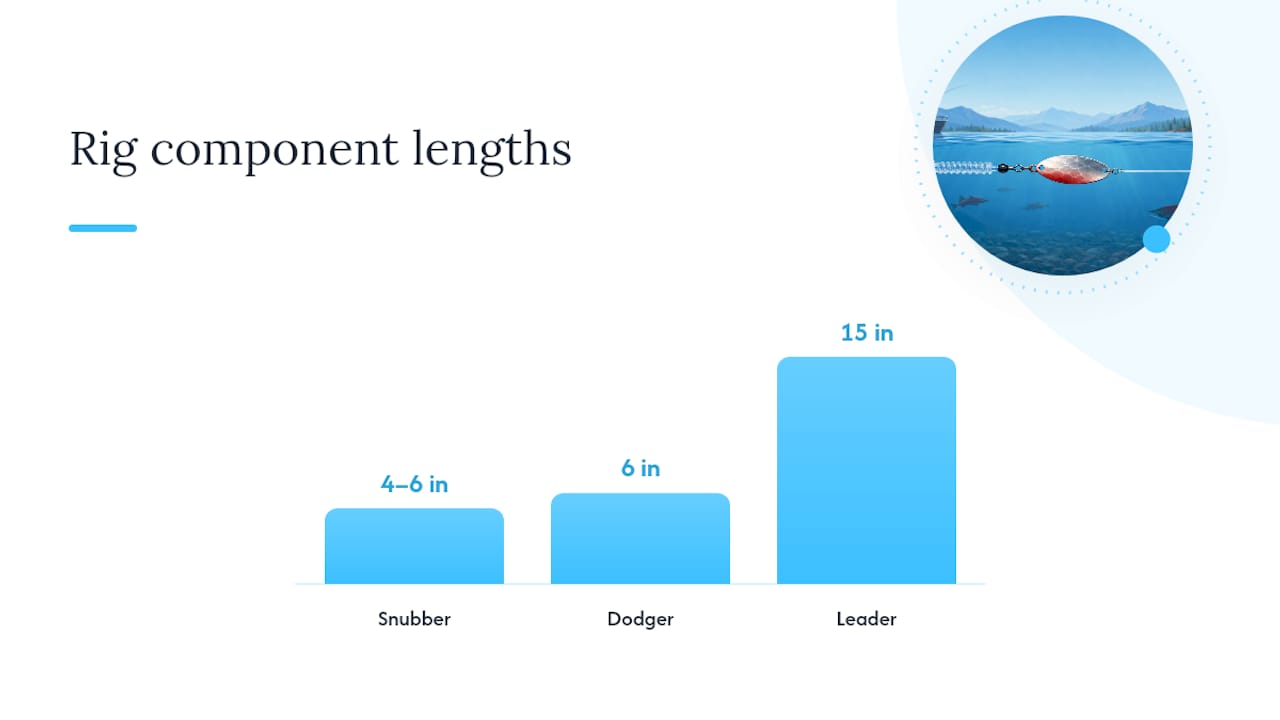
Leader length matters just as much as snubber placement. A widely used rule of thumb from Oregon’s kokanee fishing guidance puts leader length at roughly 2.5 times your dodger’s length. Run a 6-inch dodger, and you’re looking at a leader around 15 inches. Shorter leaders in that range suit hoochies, while longer leaders open up better action for spinners and spoons.
Pro Tip: Check your swivels and crimps every few sets, not just at the start of the day. A weak crimp under constant trolling tension is one of the most common (and most preventable) points of failure on a snubbered rig.
For anglers who want the release itself dialed in tighter, our downrigger release setup and tuning guide breaks down tension adjustments that pair well with a properly placed snubber.
What Snubber Material And Length Work Best For Kokanee?
Material choice comes down to how much stretch you want and how long it’ll survive on the water. There’s no single right answer here, just trade-offs.
Surgical tubing is the old standby. It’s affordable, widely available, and gives predictable stretch, but it degrades faster under UV exposure and cold-weather stiffness than newer materials. Shock cord, the same stuff used in bungee applications, tends to hold up better across seasons and offers a more consistent stretch curve. Urethane snubbers sit at the premium end, built specifically for fishing applications with tighter manufacturing tolerances.
What actually matters for performance is landing in the right stretch range. Testing on snubber stretch ranges shows that a snubber built too stiff won’t absorb enough shock, while one built too loose can trigger releases unreliably or fail to transmit enough signal for you to feel a strike at all. The sweet spot gives noticeably in your hand but doesn’t feel like a rubber band about to snap.
Quick material breakdown:
- Surgical tubing: Cheap, easy to source, shortest lifespan in sun and cold
- Shock cord: Better durability, moderate cost, solid all-around choice
- Urethane: Longest lifespan, most consistent stretch, higher upfront cost
DIY snubbers built from quality shock cord can perform right alongside commercial versions, provided you use durable swivels and crimp connections properly. The catch is inspection. Homemade rigs need frequent checks for UV cracking and fatigue, since you don’t have a manufacturer’s quality control backing the build.
Rod, Leader, And Tackle Adjustments For Snubbered Setups
A snubber doesn’t work in isolation. Your rod, leader, and hook choices either support it or fight against it.
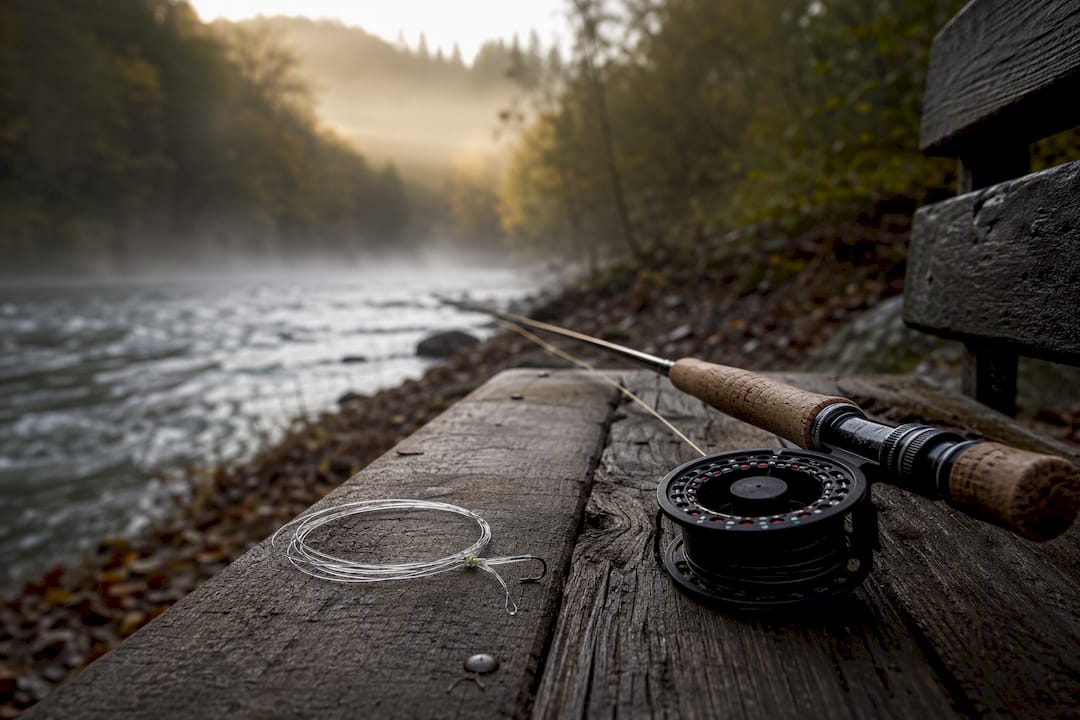
Stiffer rods pair naturally with snubbers because the elastic cord picks up the shock-absorbing job the rod isn’t doing. If you’re running a limber noodle rod instead, you may not need as aggressive a snubber, since the rod tip is already flexing to cushion the strike. Running both a soft rod and a heavy-stretch snubber can actually over-cushion things, dulling your hookset entirely.
Leader test matters too. Most kokanee anglers run 10 to 15 pound mono, light enough to stay invisible in clear mountain lake water but strong enough to handle a fighting fish once it’s hooked. Pair that with small, light-profile hooks, since gentle hook sets and undersized hooks reduce tearing in those famously soft kokanee mouths.
Downrigger weight plays into this equation more than most anglers realize. Heavier cannonballs transmit more shock through the system when they rock or bounce, which makes a snubber’s cushioning job more valuable, not less. If you’ve upgraded to heavier weights for deeper trolling, your snubber earns its keep even harder.
- Match rod stiffness to snubber stretch, not the other way around
- Run 10 to 15 pound mono leaders for the clear-water, soft-mouth combination kokanee demand
- Choose small, light-wire hooks over heavy-gauge options
- Heavier downrigger weights justify a more capable snubber, not a lighter one
Pro Tip: Test your finished rig on the water before committing to it for the day. Troll a short stretch, watch your rod tip for the right amount of give, and adjust leader length or snubber stretch until the action looks natural rather than jerky.
Common Mistakes And Safety Notes For Snubbered Rigs
Most problems with snubbered kokanee rigs trace back to placement, wear, or handling errors, all of which are easy to fix once you know what to look for.
- Deadened dodger action: If strikes drop off suddenly, check that your snubber sits between the dodger and leader, not ahead of the dodger where it can dampen the flash and vibration that draws fish in.
- Worn or cracked material: Inspect your snubber for UV bleaching, surface cracks, or permanent stretch after every few outings, and retire it the moment it looks compromised.
- Automatic retrieval risk: Never run automatic downrigger retrieval on a snubbered line with a fish on. The stretch in the system makes it unsafe to let the reel take over. Play the fish by hand.
- False releases: If your release keeps popping early, check tension settings first, since a poorly tuned release combined with a snubber that’s too soft compounds the problem.
- Slack leader or lost cannonball: Both usually point to a snap or crimp failure. Swap hardware immediately rather than trying to squeeze one more trip out of worn gear.
Practical Setups And Field Notes From High Class Tackle Co.
Here’s a rig that comes up often when we talk kokanee setups with anglers on the water: a 6 inch dodger, a 15 inch leader running off a shock cord snubber roughly 4 to 6 inches long at rest, finished with a small hoochie or spinner and a 2 to 4 pound downrigger weight depending on depth and current.
Swap the hoochie for a spoon or spinner and you’ll want to bump that leader slightly longer to let the lure swing freely.
A few things worth building into your routine:
- Measure dodger length before you buy leader material, not after
- Run through our dodger spacing guide if you’re dialing in a new rig from scratch
- Inspect snubbers and crimps between sets, especially after a fish fights hard against the stretch
- Keep a spare snubber and a couple of pre-tied leaders in the boat so a failure doesn’t end your day early
Nick’s take from years around West Coast kokanee water: the anglers who catch the most fish aren’t the ones with the fanciest gear. They’re the ones who check their rig every single set instead of trusting it blindly.
When Pros Skip Snubbers: Alternative Setups And Why They Work
Some experienced anglers skip snubbers entirely, running modern flexible noodle rods that flex enough on the strike to do the shock-absorbing work themselves. Paired with a slightly longer leader and a gentle hookset, this setup can feel more direct and tactile, which some trollers simply prefer.
A quick check before you decide: if you’re losing fish to ripped hooks early season or dealing with frequent false releases, add a snubber. If you’re fishing calm water with a rod that already loads smoothly and you value feeling every subtle tap, a noodle rod alone may serve you better. Neither approach is wrong. It comes down to your water conditions and how much you trust your own hands over your gear.
— Nick
Gear That Pairs With A Snubbered Kokanee Rig
Building a reliable snubbered setup starts with hardware that won’t fail mid-fight. Highclasstackleco’s terminal tackle and components collection covers the small hooks, crimps, and swivels that hold up under the repeated stretch and tension a snubber puts on your line, so you’re not rebuilding a rig every other trip.
If you’re running a downrigger release setup and want tighter, more reliable attachment points, our angle lock hardware gives you a dependable connection between your snubber and release without the guesswork of generic clips. Pair either with our step-by-step dodger spacing guide to dial in leader length before you ever hit the water. Browse the terminal tackle lineup, grab what your current rig is missing, and get your snubber setup built right the first time.
Sources
For deeper technical grounding beyond this guide, Reel Schematic’s breakdown of downrigger shock absorption explains the mechanics in detail. Idaho Fish & Game’s kokanee fishing tips and Oregon’s kokanee fishing guidance both offer state agency perspective on rigging and leader length.
- Shock Absorption on the Troll: The Critical Role of Downrigger Snubbers – Reel Schematic
- Kokanee fishing in Oregon | Oregon Department of Fish & Wildlife
- Techniques on How to Land More Kokanee - BC Fishn
0 comments