

If you’ve searched “spinfish” and landed somewhere confusing, you’re not alone. The term gets used to describe both a well-known Yakima Bait trolling plug and the broader technique of spin fishing itself. They’re related, but they’re not the same thing. This article clears that up fast. We’re covering the fundamentals of spin fishing as a technique, breaking down the Yakima Bait Spinfish lure in detail, and wrapping it all in the kind of practical gear advice that actually helps you catch fish.
Table of Contents
- Key takeaways
- Spin fishing: what it is and how it works
- The Yakima Bait Spinfish lure
- Technique vs. lure: a side-by-side look
- Spin fishing culture and community programs
- Choosing the right gear and bait
- My take on spinfish and where the technique is headed
- Level up your spin fishing with Highclasstackleco
- FAQ
Key takeaways
| Point | Details |
|---|---|
| Two meanings, one term | “Spinfish” refers to both the Yakima Bait lure product and the general spin fishing technique. |
| Technique is beginner-friendly | Spin fishing scales well for new anglers and is taught through national community programs. |
| Yakima Spinfish uses scent plus action | The Easy-Fill bait chamber adds scent delivery to the lure’s vibrating, spinning action. |
| Gear matching drives results | Matching lure weight, color, and retrieval speed to your conditions makes or breaks the outing. |
| Community programs expand the culture | IGFA and National Park Service partnerships use spin fishing to connect new anglers to conservation. |
Spin fishing: what it is and how it works
Spin fishing is one of the most widely practiced fishing techniques in the world, and for good reason. At its core, it uses spinnerbait lures with rotating blades that generate turbulence, flash, and noise to trigger reaction strikes from fish. It works in rivers, lakes, estuaries, and saltwater. The setup is accessible, the learning curve is forgiving, and the results speak for themselves.
The typical spin fishing rig starts with a medium to medium-heavy spinning rod, a quality spinning reel loaded with monofilament or braided line, and a spinner or spinnerbait lure sized for the target species. The reel does the heavy lifting on retrieve, but technique determines whether you get bit.
Core spin fishing techniques
Two methods that consistently produce fish are bottom bouncing and walking the dog. Bottom bouncing keeps your spinner dragging near the river floor, right in the strike zone for trout, salmon, and steelhead. It’s deadly in current. Walking the dog uses intentional rod tip motion combined with line slack to create a side-to-side zigzag action at the surface. That erratic, wounded-baitfish movement is hard for predators to ignore.
Both methods require you to pay attention. Retrieve speed, rod angle, and current speed all change what the lure does. When one presentation stops producing, you adjust.
Here’s a quick overview of what your basic spin fishing setup needs:
- Rod: Medium to medium-heavy spinning rod, 6 to 7.5 feet, matched to your target species
- Reel: Quality spinning reel with a smooth drag system and corrosion resistance for saltwater use
- Line: 8 to 17 lb monofilament or 10 to 30 lb braid depending on species and structure
- Lures: Inline spinners, spinnerbaits, or trolling plugs sized for conditions
- Terminal gear: Swivels to prevent line twist, snap clips for fast lure changes
Pro Tip: Use a small barrel swivel 18 inches above your spinner when fishing fast current. It prevents line twist that kills lure action and frustrates retrieves.
Spin fishing works across freshwater and marine environments, from mountain creeks to open bays. That versatility is exactly why community programs lean on it when teaching new anglers. More on that later.
The Yakima Bait Spinfish lure
Now let’s talk about the specific product. The Yakima Bait Spinfish is a patented trolling plug with a design feature you don’t find on most lures: a built-in “Easy-Fill” bait chamber. You pack the chamber with scent material, shrimp, or bait chunks, and the lure disperses that scent trail as it moves through the water. That multi-sensory approach, combining vibration, flash, and scent, covers all the bases for getting fish to bite.
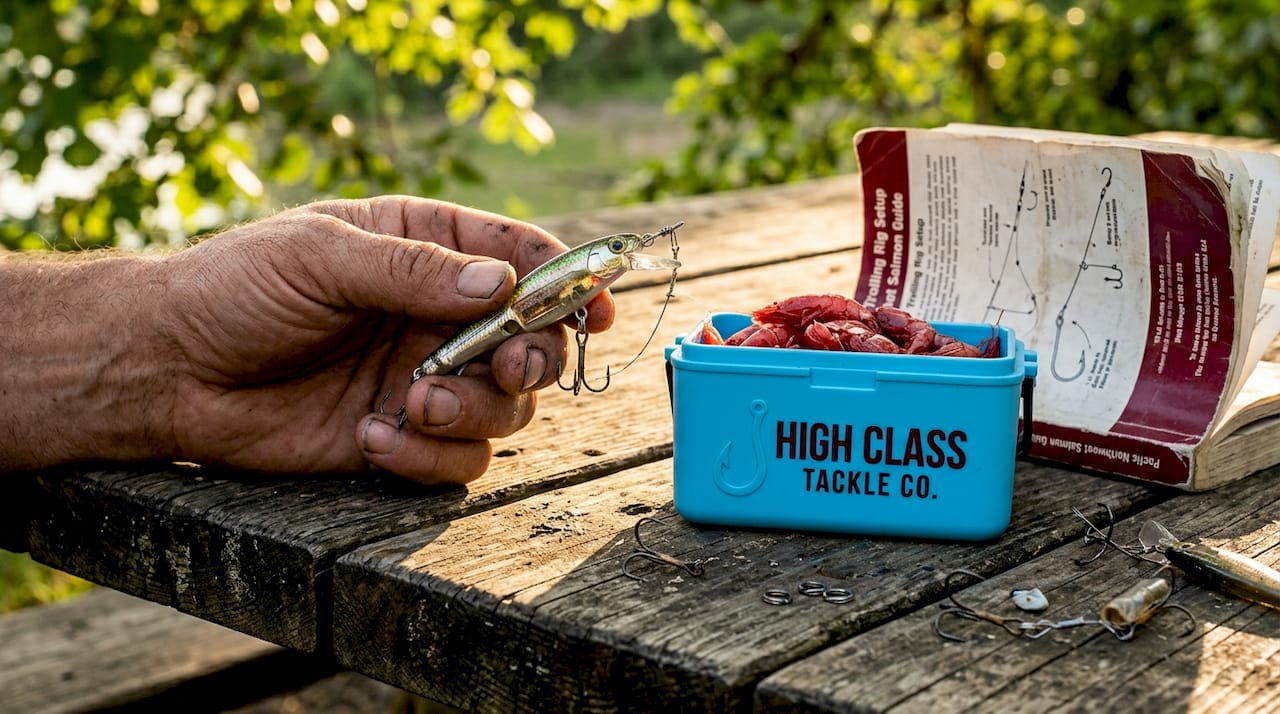
The spinning action is the other major calling card. You can rig the Spinfish to spin clockwise or counterclockwise, which lets you customize the presentation to match current direction or personal preference. When it’s moving right, it mimics a wounded baitfish with a tight, vibrating wobble that reads as easy prey to trout, kokanee, and salmon.
How to rig and fish the Spinfish
Rigging this lure correctly makes a real difference. Here’s a straightforward process:
- Load the bait chamber. Pack the Easy-Fill chamber with cured shrimp, tuna belly, or a scent-soaked sponge plug. Don’t overfill. You want scent to disperse gradually, not gush out immediately.
- Choose your spin direction. Flip the rig to spin clockwise when trolling with the current, counterclockwise against it. This helps the lure maintain action without fighting your line setup.
- Set your trolling speed. The Spinfish performs best between 1.5 and 2.5 mph. At that speed, the vibrating action stays tight and deliberate, not frantic.
- Adjust leader length. A longer leader of 24 to 36 inches gives the lure more freedom to move. In cleaner water, go longer. In stained or murky water, shorten up.
- Monitor your rod tip. A consistent pulse means the lure is spinning correctly. If the action dies, check for debris on the hook or chamber.
The Spinfish also benefits from UV coating on its body, which increases visibility in low-light conditions and stained water. That detail matters on early-morning kokanee runs or in glacier-fed rivers where light penetration is limited.
Pro Tip: Combine the Spinfish with a quality bait and scent setup for maximum effect. The lure does more work when the scent trail draws fish into the zone before they ever see the flash.
Here’s how the Spinfish compares to a standard inline spinner:
- Scent delivery: Spinfish has it built in. Traditional spinners rely entirely on visual and vibration triggers.
- Customizable spin direction: Spinfish is adjustable. Most inline spinners spin one direction only.
- Trolling suitability: Spinfish is purpose-built for trolling. Inline spinners are typically cast-and-retrieve lures.
- Bait pairing: Spinfish is designed to work with real bait. Traditional spinners can be tipped with bait but aren’t optimized for it.
Technique vs. lure: a side-by-side look
Anglers searching for spinfish information often need one or the other: either they want to learn the technique, or they’re shopping the product. Here’s a clear comparison to sort it out.
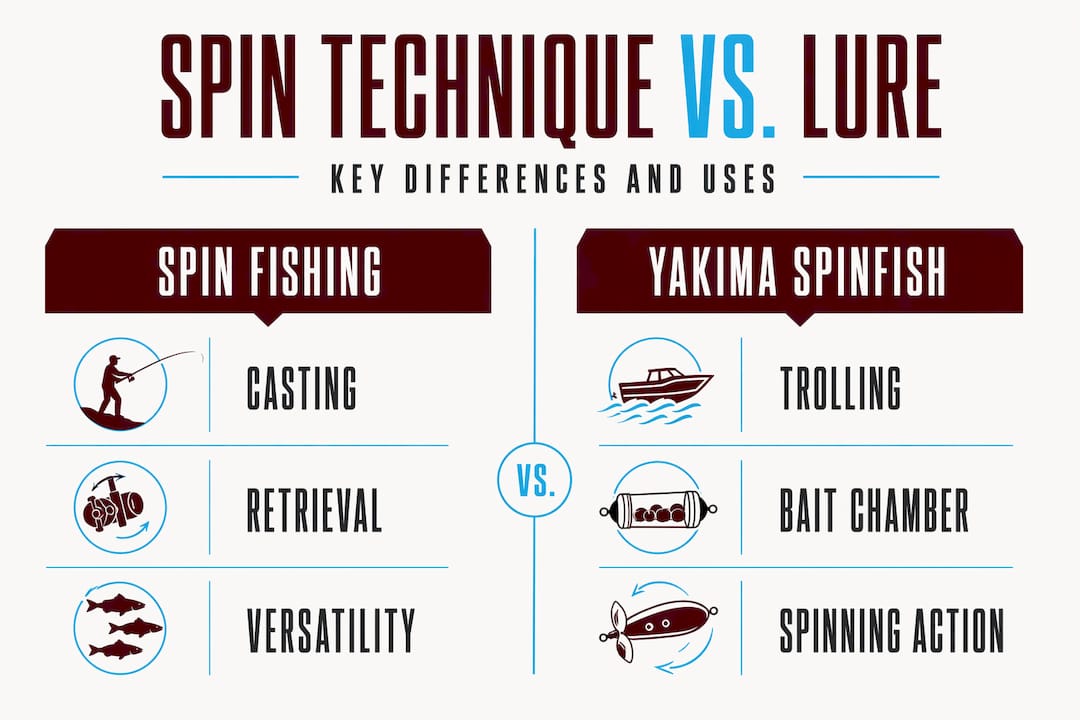
| Category | Spin fishing technique | Yakima Spinfish lure |
|---|---|---|
| What it is | A casting and retrieval method using spinner-style lures | A specific patented trolling plug with bait chamber |
| Primary use | Rivers, lakes, estuaries, open water | Trolling for trout, kokanee, salmon |
| Best for beginners | Yes. Simple to learn with basic gear | Moderate. Requires correct rigging for best results |
| Gear needed | Spinning rod, reel, assorted lures | Spinning or trolling rod, specific rigging hardware |
| Key advantage | Versatility across species and environments | Multi-sensory action combining flash, vibration, and scent |
| Community use | Widely taught in outreach programs | Best suited to experienced or guided anglers |
Both have a place in your tackle rotation. Learn the technique first, and the product becomes much easier to use effectively.
Spin fishing culture and community programs
Spin fishing is more than a method. It’s a gateway. In 2025, IGFA and the National Park Service launched a partnership specifically using spin fishing as the teaching tool for connecting new anglers to park fishing programs nationwide. Interns trained in spin fishing fundamentals spread that knowledge through structured outreach events, birding and fishing programs, and hands-on workshops.
Why spin fishing specifically? Because it scales for group learning better than most techniques. There’s no complicated fly casting to master. The gear is affordable. Safety considerations are minimal compared to methods that involve heavier rigs or longer casts. And the success rate for beginners is high enough to build real confidence fast.
“Spin fishing’s accessibility makes it the single most effective tool for introducing new anglers to conservation-minded fishing. When someone catches their first fish on a spinner, they become a steward.” — IGFA/NPS program context
For anglers who want to connect with that culture, spin fishing programs are available through national parks, state fish and wildlife agencies, and groups like the IGFA. If you’ve been fishing for years, these programs are also a chance to give back. Volunteering as a mentor or guide at local clinics keeps the community growing and puts rods in the hands of the next generation.
Here’s how to plug into the broader spin fishing community:
- Search your nearest national park for scheduled fishing clinics or youth programs
- Connect with local fly and spin fishing clubs that run beginner outreach events
- Follow IGFA’s event calendar for workshops and educational programming
- Check state fish and wildlife agencies for free fishing day events where spin fishing is typically featured
Choosing the right gear and bait
Gear selection separates consistent producers from anglers who chalk it up to bad luck. Matching lure color, weight, and retrieval speed to water conditions and species behavior is the single biggest variable you control on the water.
Start with your reel. For most freshwater spin fishing targeting trout and salmon, a mid-range spinning reel in the 2500 to 4000 size with a smooth drag and a 5.1:1 to 6.2:1 gear ratio gets the job done. For saltwater or heavy river salmon work, step up to a 4000 to 5000 size with sealed internals. Gear matched to water conditions consistently outperforms premium gear used incorrectly.
| Condition | Recommended lure color | Lure weight | Retrieval speed |
|---|---|---|---|
| Clear water, sunny | Natural silver or gold | Light, 1/8 to 1/4 oz | Slow to medium |
| Stained water | Chartreuse or orange | Medium, 1/4 to 1/2 oz | Medium to fast |
| Deep or cold water | White or UV pink | Heavy, 1/2 oz plus | Slow with pauses |
| Low light or overcast | Dark colors, black or purple | Match to depth | Variable, experiment |
Bait selection follows the same logic. Live bait like nightcrawlers, cured roe, or shrimp tipped on a spinner trailer adds a real scent trigger that plastic can’t replicate. Artificial trailers like grub tails and curly tails work in cleaner water where fish key in on visual cues. The spinnerbait guide for Pacific Northwest fishing covers regional options in depth if you want to dial in further.
Pro Tip: When fish follow your spinner but don’t commit, slow down your retrieve by 30% and add a brief pause near the end of the run. That sudden change in action triggers hesitant fish to strike.
Common mistakes to avoid:
- Using line that’s too heavy, which kills lure action on lighter spinners
- Fishing at one constant speed when conditions call for variation
- Ignoring water temperature, cold water means slower retrieves and smaller profiles
- Neglecting swivels, which leads to line twist that ruins your presentation after a handful of casts
My take on spinfish and where the technique is headed
I’ve watched a lot of anglers get tripped up by the term “spinfish.” Some are convinced it’s purely a product name. Others think it’s just slang for anyone using a spinning rod. The truth sits right in the middle, and that confusion actually tells us something useful about how fishing culture communicates in 2026.
What I’ve seen firsthand is that spin fishing is having a genuine cultural moment. Community programs are growing. Young anglers are getting into it because the barrier is low and the results are real. The Yakima Spinfish lure specifically has built a loyal following among kokanee and trout anglers on the West Coast because it delivers something most lures can’t: scent plus action in a single package. That combination matters more than most people give it credit for.
My honest take? If you’re not already integrating scent into your spinning presentations, you’re leaving fish in the water. And if you’ve been dismissing lures like the Spinfish as gimmicky, I’d push back on that. Innovations like the bait-chambered Spinfish design exist because anglers demanded more from their gear. The fish responded. The data backs it up.
The most important thing I’d tell any angler right now is this: learn the technique first, then find the product that amplifies it. Spin fishing’s fundamentals are timeless. The gear keeps getting better. That combination is exactly where the action is.
— Nick
Level up your spin fishing with Highclasstackleco
If you’re ready to put all of this into action, Highclasstackleco has the gear to back your spin fishing sessions on the water. Built by anglers from the Pacific Northwest for real fishing conditions, the lineup includes custom spinner blades for salmon and steelhead, premium terminal gear, and the crowd-favorite Hanford Reach Custom Spinfish lure in proven colorways. Whether you’re chasing kokanee on a mountain reservoir or running plugs down a salmon river, the full tackle lineup has something built for your setup. Not sure where to start? A Highclasstackleco digital gift card is the cleanest way to let yourself or another angler grab exactly what they need.
FAQ
What does “spinfish” actually mean?
“Spinfish” refers to two things: the broader technique of spin fishing using rotating blade lures, and the Yakima Bait Spinfish, a specific patented trolling plug with a built-in scent chamber. Context determines which meaning applies.
How do you rig the Yakima Bait Spinfish?
Pack the Easy-Fill bait chamber with cured shrimp or scent material, choose your spin direction (clockwise or counterclockwise), and troll between 1.5 and 2.5 mph with a 24 to 36 inch leader for best lure action.
What are the best spinning reels for spin fishing?
For freshwater trout and salmon, a 2500 to 4000 size spinning reel with a smooth drag and a 5.1:1 to 6.2:1 gear ratio covers most situations. For heavy river or saltwater applications, step up to a sealed 4000 to 5000 size reel.
Is spin fishing good for beginners?
Yes. Spin fishing is one of the most beginner-friendly fishing techniques available. Programs run by IGFA and the National Park Service specifically use spin fishing to teach new anglers because it’s safe, affordable, and produces results fast.
What bait works best with spinning lures?
Live bait like nightcrawlers, cured roe, and shrimp work well as spinner trailers, especially in stained water. In clearer conditions, artificial curly tail grubs and paddle tail plastics deliver visual action without the mess of natural bait.
Recommended
- Spinnerbait guide: boost your Pacific Northwest fishing – High Class Tackle Co.®
- Simons Spinners: Salmon and Steelhead Fishing Guide – High Class Tackle Co.®
- Custom Spinner Blades for Salmon and Steelhead Success – High Class Tackle Co.®
- Salmon plug fishing rivers: Proven PNW tactics and gear – High Class Tackle Co.®
0 comments