

What does the steelhead spawn timing calendar actually look like?
Steelhead spawn primarily from January through May across most of North America, with winter-run fish spawning shortly after entering freshwater and summer-run fish holding for months before spawning the following winter or spring. That’s the short version. The real picture is more layered, and knowing the details is what separates anglers who consistently find fish from those who show up at the wrong time on the wrong water.
The single most important trigger is water temperature, not the date on your calendar. When stream temps climb to around 40°F, spawning behavior kicks in regardless of month or region. Pair that with rising water flows and you’ve got the conditions that move fish.
Key seasonal patterns at a glance:
- Winter-run steelhead enter rivers mature and spawn from November to April shortly after arrival
- Summer-run fish enter immature, hold for months, and spawn the following winter or spring
- Peak spawning activity across most regions falls between February and April
- Water temperature reaching ~40°F is the primary biological trigger
- Steelhead prefer gravel or cobble riffles below pools for redd construction
| Region | Run Entry Window | Peak Spawn Period |
|---|---|---|
| Pacific Northwest (coastal) | November–March | January–March |
| Pacific Northwest (inland/east Cascades) | April–September | March–May |
| Idaho (Snake/Salmon/Clearwater) | July–October | Mid-April–June |
| Great Lakes tributaries | October–May | Mid-April |
| Alaska (Southeast) | April–June | Mid-April–June |
Table of Contents
- How spawn timing shifts across regions
- Why steelhead biology makes spawn timing so interesting
- How spawn timing connects to your fishing success
- How climate change is reshaping steelhead spawn timing
- How fisheries managers and anglers track spawn timing
- Why spawn timing matters for steelhead conservation
- Gear up with Highclasstackleco for steelhead season
- Key Takeaways
How spawn timing shifts across regions
Regional variation in steelhead run timing is dramatic. A Great Lakes angler and a coastal Washington angler are chasing the same species but operating on completely different seasonal clocks.
Pacific Northwest: The PNW hosts both winter-run and summer-run populations. Winter-run fish spawn closer to the coast and need less travel time, entering rivers from November through March and spawning soon after. Summer-run fish, mostly east of the Cascades, enter rivers from April through September but don’t spawn until the following spring. Understanding your steelhead migration patterns on a specific river is the difference between a productive trip and a blank day.
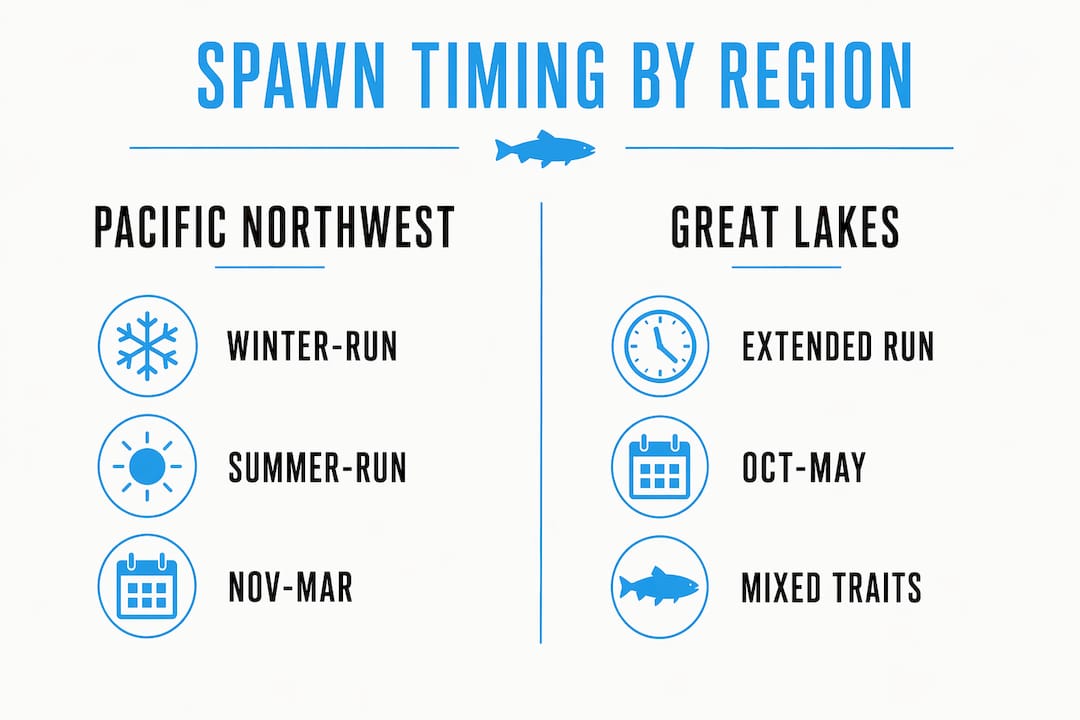
Great Lakes: Lake steelhead combine traits of both run types. They enter tributaries from late October through early May, with many fish overwintering in rivers before spawning. Fall-run fish typically spawn first, often in March, followed by spring-run fish in April. Peak spawning activity occurs in spring across most Great Lakes systems.
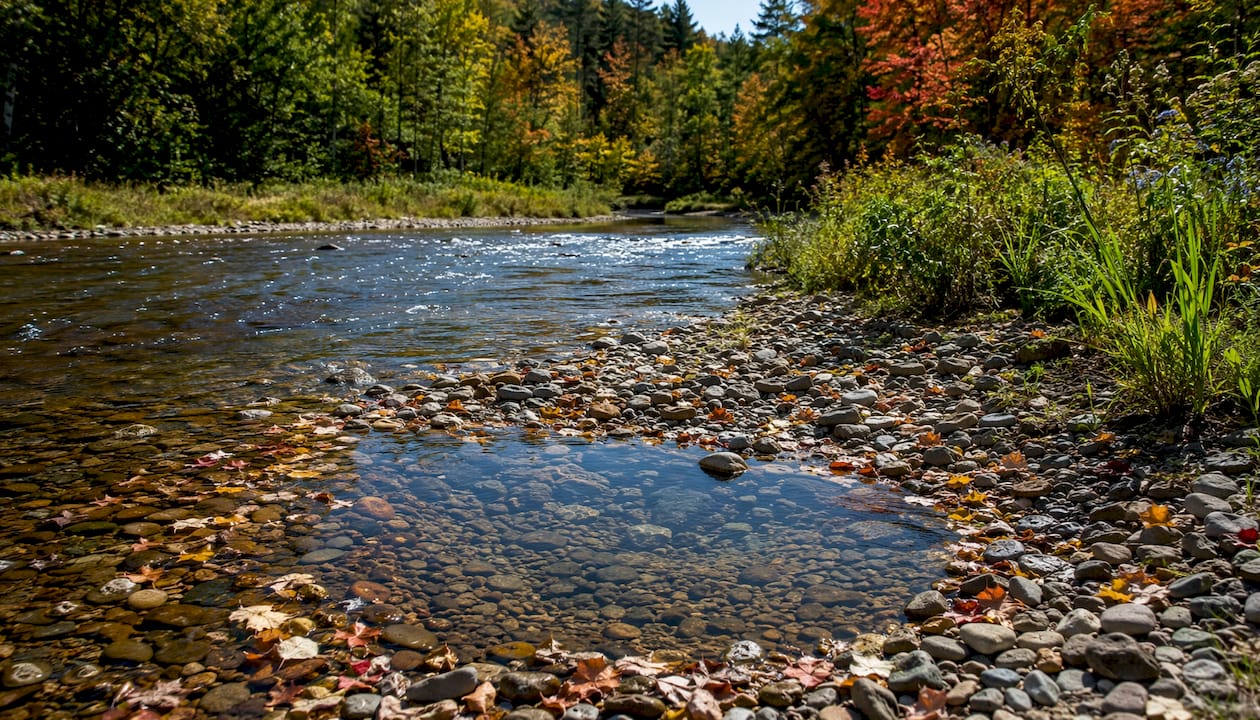
Idaho: Idaho’s A-run steelhead return from the ocean typically in early to mid-summer, while B-run fish arrive later in summer to early fall. Both populations spawn from mid-spring to early summer in gravel and cobble riffles, with females selecting riffle areas below pools to dig their redds.
| Region | Wild Run Timing | Hatchery Run Timing | Notes |
|---|---|---|---|
| Coastal PNW | Nov–March (winter) | Similar, often earlier | Hatchery fish may enter rivers earlier |
| East Cascades/Inland | April–Sept (summer) | Varies by program | Some hatchery programs extend seasons |
| Great Lakes | Oct–May | Oct–April | Hatchery fish dominate most tributaries |
| Idaho | July–Oct | Aug–Oct | B-run fish are larger, later arrivals |
Why steelhead biology makes spawn timing so interesting
Steelhead are iteroparous, meaning they can spawn more than once. That sets them apart from most Pacific salmon, which die after a single spawn. Fish over 28 inches are almost always repeat spawners, returning to the ocean between spawning migrations to rebuild condition before coming back.
Summer-run and winter-run steelhead are the same species. The difference is when they enter freshwater and how mature they are at entry. Summer-run fish enter immature and spend months in freshwater maturing before spawning. Winter-run fish arrive ready to go and spawn within weeks. That holding behavior in summer-run fish is what creates those long freshwater residency windows anglers can target.
During spawning, females select riffle areas below pools and use their bodies and tails to displace gravel, creating redds. Males fertilize eggs as they’re deposited, and the female covers them by continuing upstream, letting the current carry gravel back over the nest. A male may spawn with several females, and more males than females typically die during the spawning period.
Pro Tip: Look for redds in gravel riffles just downstream of deeper pools. The tail-out of a pool, where current picks up and gravel is clean and well-oxygenated, is classic redd water. Spotting active redds tells you fish are present, but wade around them, not through them.
How spawn timing connects to your fishing success
Matching your tactics to where steelhead are in their biological cycle is the fastest way to put more fish on the bank. Colder water slows fish activity and reduces strikes, so fishing the same water at 38°F versus 45°F produces completely different results. When temps push above 40°F, fish become more active and more likely to respond to presentations.
Summer-run fish in their holding phase are notoriously tight-lipped. They’re in freshwater but not yet ready to spawn, and they can be elusive and unresponsive for weeks. The bite often improves as spawning readiness approaches and water temperatures align. Winter-run fish, by contrast, are already mature at entry and move more aggressively toward spawning areas.
Seasonal tactics by run type:
- Winter-run: fish closer to river mouths and lower reaches early in the season; move upstream as the season progresses
- Summer-run holding fish: slow down your presentation, fish deeper, and target known holding lies rather than active feeding lanes
- Pre-spawn fish: egg patterns, beads, and cured roe are deadly when fish are staging near redds
- Post-spawn kelts: recognize and release them immediately; kelts are fragile and critical for future repeat spawning populations
Pro Tip: Check your steelhead terminal gear before the season opens. Hook size, leader weight, and bead color all need to match the water clarity and fish behavior specific to your region’s spawn window.
Water flow matters as much as temperature. Higher flows combined with rising temps trigger steelhead runs, and fish avoid moving during low-water conditions. Watching USGS stream gauge data alongside temperature readings gives you a real-time picture of when fish are likely moving.
How climate change is reshaping steelhead spawn timing
Warmer winters and earlier snowmelt are compressing and shifting steelhead spawn windows across the West. When spring arrives weeks earlier than historical averages, water temperatures hit spawning thresholds sooner, pulling fish into spawning behavior before traditional peak periods. That mismatch between historical fishing calendars and current conditions catches anglers off guard.
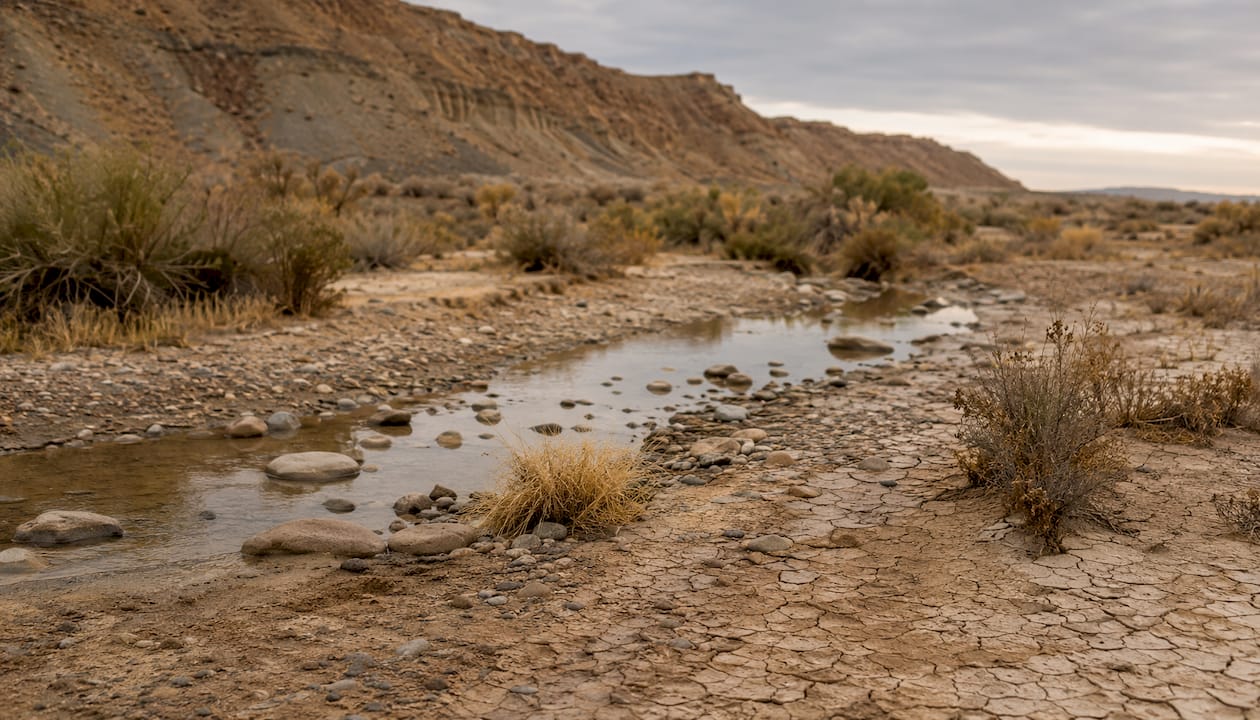
Drought years create low-water conditions that delay or block upstream migration entirely. Fish stack at river mouths or in lower reaches, waiting for flows to rise before pushing upstream. In severe drought years, some populations skip spawning runs altogether or experience dramatically reduced returns. Above 60°F, thermal stress causes fish to relocate unpredictably, abandoning traditional holding water for cooler refuges like spring-fed tributaries or deep pools.
The practical takeaway for anglers is to stop relying solely on fixed calendar dates and start tracking real-time conditions. A year with a warm February can push peak spawn activity three to four weeks earlier than a cold, wet year on the same river.
How fisheries managers and anglers track spawn timing
State fish and game agencies use a combination of weir counts, snorkel surveys, and radio or acoustic telemetry to monitor steelhead movements and spawn timing. NOAA Fisheries coordinates broader population assessments across the Pacific Coast, integrating escapement data with environmental variables to project run timing and abundance.
For anglers, the most useful real-time tools are USGS stream gauge networks, which track flow and temperature at stations across most major steelhead rivers. State agency run-timing reports, updated weekly during active seasons, give reach-by-reach counts that tell you exactly where fish are in the system. Idaho Fish and Game, Washington Department of Fish and Wildlife, and the Michigan DNR all publish these reports publicly during steelhead seasons.
Creel surveys and angler report cards also feed into spawn timing models. When you report your catch, that data contributes to the population estimates managers use to set seasons and bag limits the following year.
Why spawn timing matters for steelhead conservation
Several steelhead populations across the Pacific Coast carry Endangered Species Act listings, particularly in California, Oregon, and the Snake River basin. Spawn timing sits at the center of recovery planning because it determines when and where fish are most vulnerable to habitat degradation, water withdrawals, and fishing pressure.
Hatchery programs complicate the picture. Hatchery steelhead often enter rivers earlier and spawn at slightly different times than wild fish, which can lead to genetic mixing and altered spawn timing in wild populations over generations. Fisheries managers track wild versus hatchery escapement separately to assess whether natural reproduction is sustaining populations independent of hatchery supplementation.
For anglers, respecting spawn timing means more than following regulations. Avoiding active redds, practicing kelt awareness, and fishing during open seasons in ways that minimize stress on spawning fish all contribute to the long-term health of runs you want to fish for years to come. The steelhead fishing calendar you plan around today depends on the fish that successfully spawn this season.
Gear up with Highclasstackleco for steelhead season

Steelhead season rewards anglers who show up prepared. Highclasstackleco builds premium steelhead tackle for real-world river conditions across the Pacific Northwest and beyond. From terminal gear to bait additives, every product in our lineup is designed by anglers who chase these fish hard. Whether you’re targeting winter-run fish on a coastal river or summer-run steelhead holding in an inland canyon, we’ve got the gear to match the moment. Shop the full lineup and get ready for the water.
Key Takeaways
Steelhead spawn primarily from January through May across most of North America, with water temperature reaching 40°F as the primary trigger, not the calendar date.
| Point | Details |
|---|---|
| Core spawn window | Most steelhead spawn between January and May, peaking February through April across regions. |
| Primary spawn trigger | Water temperature reaching ~40°F initiates spawning behavior regardless of calendar date or region. |
| Run type differences | Winter-run fish spawn shortly after freshwater entry; summer-run fish hold for months before spawning the following winter or spring. |
| Great Lakes peak timing | Great Lakes tributaries see peak spawning in spring, with fish entering rivers from fall through spring. |
| Conservation priority | Post-spawn kelts are fragile and critical for repeat spawning populations; recognize and release them immediately. |
Recommended
- How Steelhead Enter Rivers: Migration Guide for Anglers – High Class Tackle Co.®
- Steelhead Terminal Gear Checklist for PNW Anglers – High Class Tackle Co.®
- Steelhead Spoon Fishing Rivers: PNW Angler’s Guide – High Class Tackle Co.®
- Reading Steelhead Holding Water: River Guide 2026 – High Class Tackle Co.®
0 comments