

A steelhead terminal gear checklist is the curated set of hooks, leaders, sink tips, and accessories designed to optimize hooking, presentation, and fish handling in Pacific Northwest rivers. Steelhead are powerful, fast, and unforgiving of weak setups. The right terminal tackle for steelhead is not about carrying more gear. It is about carrying the right gear for each situation. This checklist cuts through the noise and gives you exactly what belongs in your kit, organized by function so you spend more time fishing and less time digging through a box of filler.
1. What belongs on your steelhead terminal gear checklist
The steelhead terminal gear checklist covers five core categories: hooks, leaders, sink tips, floats or strike indicators, and accessories. Each category serves a specific function in your presentation. Miss one, and your setup breaks down at the worst moment. The goal is a lean, functional kit where every item earns its spot.
Terminal tackle, as the industry calls it, refers to everything attached to the end of your main line. That includes hooks, swivels, leaders, weights, and any hardware that contacts the water directly. For steelhead, the stakes are higher than trout fishing. These fish run hard, hold in heavy current, and test every connection in your rig.
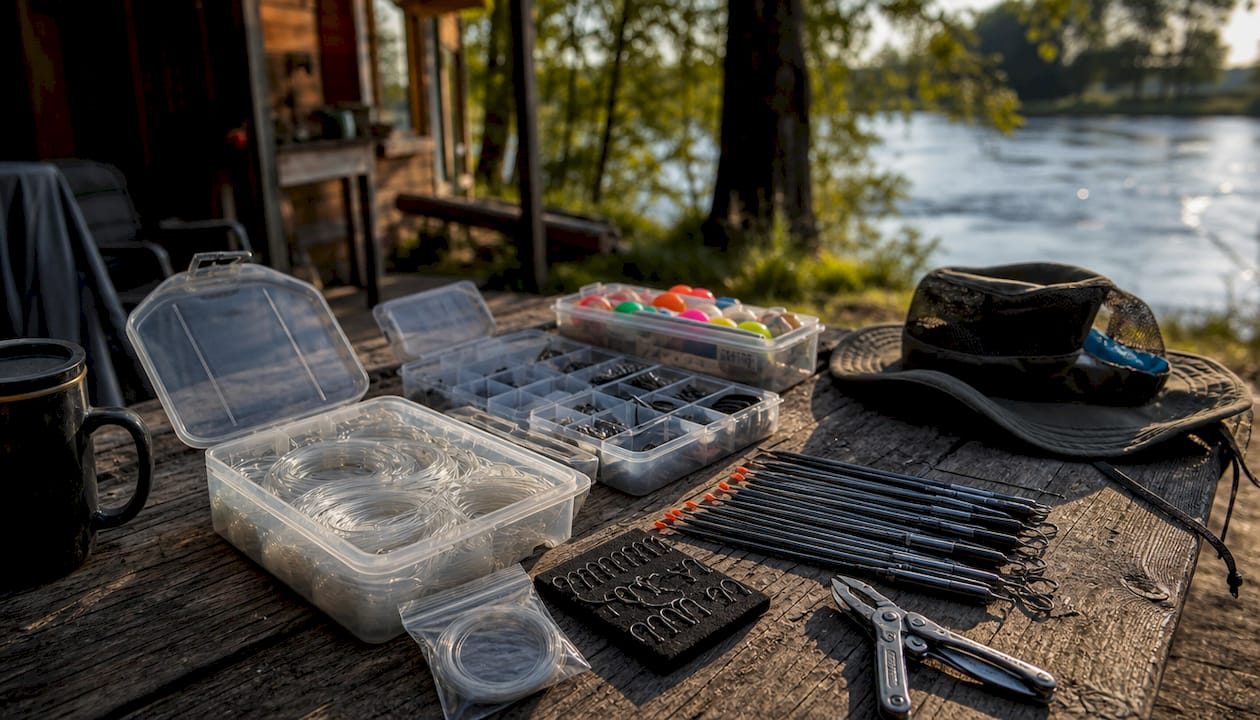
2. Hooks and trailer hooks: sizes, styles, and compliance
Hook selection is the single most consequential decision in your terminal tackle setup. For steelhead swinging flies or running hardware, sizes #2 to #4 cover the majority of situations. Octopus-style hooks and tube hooks are the two most reliable styles for steelhead because both provide a wide gap and strong bite angle.
Barbless hooks are not optional in most Pacific Northwest waters. Many PNW regions require barbless hooks for catch-and-release fishing, and failing to comply can cost you your license. Carry a dedicated pair of pliers specifically for crimping barbs on any hook that does not come barbless from the factory.
Hook material matters more than most anglers realize. High-carbon steel hooks hold a sharp point longer in rocky, abrasive river environments. Replace hooks after every fish or after any contact with rocks. Dull hooks are the leading cause of missed strikes on steelhead.
- Octopus hooks in sizes #2 and #4 for most swing and drift presentations
- Tube hooks for spey and two-handed rod setups
- Barbless or crimped barbs for regulatory compliance
- High-carbon steel for durability in abrasive conditions
- Replacement hooks in a small waterproof case for quick swaps
Pro Tip: Carry at least six replacement hooks per outing. Steelhead rivers chew through terminal gear fast, and running out mid-session on a hot bite is a painful lesson.
3. How to choose fluorocarbon leaders for steelhead fishing
Leader selection separates anglers who land fish from those who lose them at the bank. Swing setups call for 3–5 foot fluorocarbon leaders in 8–15 lb test, attached directly to your sink tip. Indicator or nymphing rigs run longer leaders, typically 8–12 feet, to get flies down through the water column naturally.
Standard trout fluorocarbon is too soft for steelhead. Steelhead rivers are full of sharp rocks, submerged wood, and abrasive gravel. You need a stiffer, abrasion-resistant fluorocarbon line. Super FC Sniper and P-line are two widely recognized options built for this kind of punishment.
Pound test range depends on water clarity and fish size. Clear, low water calls for lighter leaders in the 8–12 lb range. High, off-color water allows you to go heavier, up to 20 lb, without spooking fish. Match your leader to the conditions, not just your personal preference.
Pro Tip: Pre-tie your leaders at home and store them on a leader wallet. Tying knots with cold, wet hands on a winter river costs you time and accuracy. A pre-rigged leader takes 30 seconds to swap.
4. Sink tips and floats: controlling depth and presentation
Sink tips are the engine of your fly presentation in moving water. Sink tip weights T8, T11, and T14 in lengths of 7.5–12.5 feet give you the control to place your fly at the exact depth where steelhead are holding. Heavier tips get down faster in deep, fast runs. Lighter tips work better in shallow tailouts and slower pools.
Choosing the wrong sink tip is one of the most common mistakes on big PNW rivers. A T8 in a fast, deep slot will ride too high. A T14 in a shallow riffle will drag bottom and snag constantly. Matching tip weight to current speed and depth is a skill that takes time, but the table below gives you a starting framework.
| Sink Tip Weight | Best Current Speed | Ideal Depth | Typical Length |
|---|---|---|---|
| T8 | Slow to moderate | 2–4 feet | 7.5–10 feet |
| T11 | Moderate to fast | 4–6 feet | 10–12.5 feet |
| T14 | Fast and heavy | 6+ feet | 10–12.5 feet |
Strike indicators and floats serve a different purpose. They suspend your fly or bait at a fixed depth and signal subtle takes that you would otherwise miss. Foam indicators work well in choppy water. Yarn indicators are more sensitive in slower, clear conditions. Carry both styles and match them to the water you are fishing that day.
Pro Tip: Check out the PNW fishing line guide from Highclasstackleco to understand how your main line interacts with sink tip selection. The two choices are connected.
5. Five functional roles your terminal gear must cover
A complete terminal tackle kit covers five functional jobs: slow presentation, fast or reaction bait, quick-swap hardware, replacement hooks, and cutting tools. Role-based thinking keeps your kit lean and fully functional. Every item you carry should map to one of these five roles.
- Slow presentation. This is your swing fly or drifted bead setup. It covers holding water where steelhead are resting. A weighted fly on a T11 tip with a 4-foot fluorocarbon leader is the classic example.
- Fast or reaction bait. Spinners, spoons, and bright hardware trigger reaction strikes in off-color water or when fish are not actively feeding. Keep at least two ready-to-fish options in this role.
- Quick-swap hardware. Snap swivels and barrel swivels let you change presentations in under a minute. Carry a small selection in sizes 4 and 6. They weigh almost nothing and save enormous time.
- Replacement hooks. Hooks dull, bend, and break. This role is non-negotiable. A small waterproof box with pre-sharpened hooks in your two primary sizes covers this job.
- Cutting tools. Nippers or line scissors belong in your vest pocket, not buried in your pack. You use them constantly for trimming knots and cutting leaders. Dull or inaccessible cutters slow everything down.
Role-focused kits eliminate redundant gear and increase your adaptability on the water. If an item does not fill one of these five roles, it probably does not belong in your kit.
6. Situational accessories every steelhead angler should carry
Essential terminal tackle accessories include hemostats, nippers, polarized sunglasses, and waterproof packs for quick access and gear protection. These items do not hook fish directly, but they determine how efficiently you work on the water. Slow access to tools costs you fish.
- Hemostats: Remove hooks quickly and safely from fish without damaging them. Locking hemostats are the standard choice for catch-and-release steelhead fishing.
- Nippers or line scissors: Trim knots cleanly and cut leaders without fraying. Keep them clipped to your vest or chest pack.
- Barb-crimping pliers: Dedicated pliers for modifying hooks to meet barbless regulations. Do not rely on your general-purpose pliers for this job.
- Polarized sunglasses: Spot fish, read current seams, and protect your eyes from errant casts. Amber or copper lenses work best in low-light PNW conditions.
- Waterproof storage: A small dry bag or waterproof box keeps your terminal components dry and organized. Wet leaders tangle. Wet hooks rust. Protect your gear.
A chest pack or a well-organized vest puts all of these tools within arm’s reach. Digging through a backpack while a steelhead is running is not a situation you want to be in. Organize your kit before you step into the river.
Key takeaways
A lean, role-focused steelhead terminal gear checklist built around quality hooks, stiffer fluorocarbon leaders, matched sink tips, and the right accessories gives you the best chance of landing fish in Pacific Northwest rivers.
| Point | Details |
|---|---|
| Hook size and style | Use octopus or tube hooks in sizes #2–#4 with barbless compliance for PNW waters. |
| Leader material matters | Choose stiffer, abrasion-resistant fluorocarbon in 8–20 lb test matched to water clarity. |
| Sink tip selection | Match T8, T11, or T14 tips to current speed and depth for accurate fly placement. |
| Role-based kit building | Organize gear around five functional roles to eliminate filler and stay adaptable. |
| Accessories save time | Hemostats, nippers, polarized sunglasses, and waterproof storage keep you fishing efficiently. |
What I have learned building a lean steelhead kit
The biggest mistake I see beginners make is buying a pre-packaged kit and calling it done. Most pre-packaged kits contain roughly 70% filler items. That means you are paying for a lot of gear you will never use, while the three components that actually matter, hooks, leaders, and sink tips, are often the lowest-quality items in the box.
Building your own kit by role changed how I fish. When I know every item in my vest has a specific job, I move faster, adapt quicker, and lose less time fumbling. The five-role framework is not theory. It is what I use every time I step into a PNW river from october through march.
My honest advice on upgrades: start with your hooks and your fluorocarbon. Those two components touch every fish you hook. Cheap hooks bend. Soft leaders break. Spend money there first, then work outward to sink tips and accessories. Regulatory compliance, especially barbless hooks, is not something to cut corners on. A citation on the water is a terrible way to end a great day.
— Nick
Highclasstackleco has your terminal tackle covered
Highclasstackleco is built by PNW anglers who fish these rivers hard and know exactly what terminal gear performs when it counts. The hooks and components collection carries quality hooks, leaders, and terminal accessories selected for real steelhead conditions, not just catalog appeal.
If you are building your kit from scratch or upgrading specific components, the Highclasstackleco lineup gives you the pieces to do it right. Browse the full tackle selection and put together a kit that actually works on the water. No filler. No guesswork. Just gear that earns its spot in your vest.
FAQ
What hooks are best for steelhead terminal tackle?
Octopus and tube hooks in sizes #2 and #4 are the most effective for steelhead. Use barbless versions or crimp the barbs to comply with most Pacific Northwest regulations.
How long should my steelhead leader be?
Swing setups use 3–5 foot fluorocarbon leaders in 8–15 lb test. Nymphing or indicator rigs run 8–12 feet to get the fly down naturally through the water column.
What sink tip weight should I use for steelhead?
T8 works best in slow to moderate currents at 2–4 feet of depth. T11 and T14 handle faster, deeper water. Match the tip weight to the current speed and depth of the run you are fishing.
Do I need barbless hooks for steelhead fishing in the Pacific Northwest?
Yes. Many PNW rivers and national park waters require barbless hooks for catch-and-release steelhead fishing. Carry dedicated barb-crimping pliers to modify any hooks that are not already barbless.
What is the difference between terminal tackle and regular fishing gear?
Terminal tackle refers specifically to the components at the end of your line that contact the water, including hooks, leaders, swivels, weights, and sink tips. It is distinct from your rod, reel, and main line.
Recommended
- Steelhead Spoon Fishing Rivers: PNW Angler’s Guide – High Class Tackle Co.®
- 360 Flasher Guide for PNW Salmon and Steelhead – High Class Tackle Co.®
- Types of fishing line for steelhead: a PNW guide – High Class Tackle Co.®
- Salmon plug fishing rivers: Proven PNW tactics and gear – High Class Tackle Co.®
0 comments