

You’ve been on the water long enough to know the difference matters. But steelhead vs salmon differences trip up even experienced Pacific Northwest anglers, especially when both species share the same river systems and look deceptively similar in the right light. One wrong identification and you’re dealing with a regulation violation, a misplaced cast, or a table meal that doesn’t hit the way you expected. This guide breaks down the biological, behavioral, visual, and culinary distinctions between steelhead and salmon so you can fish smarter, stay legal, and respect the resource that keeps us all on the water.
Table of Contents
- Biological differences between steelhead and salmon
- Behavioral and migratory differences
- Visual identification: how to tell steelhead from salmon
- Culinary and nutritional differences: steelhead vs salmon
- Fishing strategies and conservation considerations
- Why distinguishing steelhead and salmon matters beyond the catch
- Top tackle and gear for steelhead and salmon fishing
- Frequently asked questions
Key Takeaways
| Point | Details |
|---|---|
| Biological distinction | Steelhead are sea-run rainbow trout capable of spawning multiple times; salmon mostly spawn once and die. |
| Migration timing | Salmon run late spring to fall in large groups; steelhead run winter to early spring in smaller numbers. |
| Identification tips | Look for hooked jaws and color changes in salmon; steelhead stay streamlined and silvery with pink stripes. |
| Fishing strategies | Steelhead feed in freshwater and take varied lures; salmon stop feeding and require different lure choices. |
| Culinary differences | Steelhead has milder flavor and leaner flesh; salmon is richer, fattier, and more flavorful. |
Biological differences between steelhead and salmon
Most of the confusion starts at the species level. Steelhead are sea-run rainbow trout, classified as Oncorhynchus mykiss, not salmon at all. They’re technically the same species as inland rainbow trout. The “steelhead” label just applies to the migratory form that enters saltwater, grows dramatically, and returns to freshwater to spawn.
Pacific salmon, on the other hand, belong to multiple Oncorhynchus species. Chinook, coho, sockeye, pink, and chum are all distinct salmon species varieties you’ll encounter in Pacific Northwest rivers. Atlantic salmon belong to an entirely different genus, Salmo. That’s a significant taxonomic split that shapes everything from their bodies to their behavior.
The most critical biological distinction for anglers is this: steelhead are iteroparous, meaning they can survive spawning and return to the ocean to spawn again. Most Pacific salmon are semelparous, meaning they spawn once and die. That single difference changes how you think about harvest ethics, catch-and-release decisions, and the long-term health of your favorite run.
Key biological facts at a glance:
- Steelhead (O. mykiss) are sea-run rainbow trout, not salmon
- Pacific salmon include five species: Chinook, coho, sockeye, pink, and chum
- Steelhead can spawn two to four times in a lifetime
- Pacific salmon complete their life cycle in one spawning event
- Both share anadromous behavior, migrating between saltwater and freshwater
Understanding the difference in steelhead and salmon life cycle is not just trivia. It directly influences regulations on rivers across Oregon, Washington, and Idaho. If you’re rigging up treble hooks for river fishing, knowing your target species before you hit the water matters for both the fish and your license.
Now that we’ve clarified who these fish are biologically, let’s explore how their behaviors differ in nature.
Behavioral and migratory differences
Timing is everything in Pacific Northwest fishing. And these two species run on completely different schedules.
Pacific salmon migrate upriver in large, conspicuous groups from late spring through fall. You’ll see crowded spawning beds, fish stacked on top of each other in shallow gravel bars, and rivers that practically come alive with color and chaos. It’s one of the most dramatic wildlife events in North America, and it draws anglers from every direction.
Steelhead runs work differently. Winter steelhead push into rivers from November through March. Summer steelhead, a distinct run found in some systems, enter earlier but often hold in rivers for months before spawning. Either way, steelhead travel in smaller, scattered numbers compared to salmon. You’re hunting a fish, not a crowd.
- Salmon run in large groups during late spring through fall
- Steelhead run in winter and early spring, in far smaller numbers
- Steelhead rest in deeper, slower pools between runs
- Salmon congregate in shallow, crowded spawning beds
- Steelhead continue feeding actively in freshwater; salmon shut down and stop feeding upon river entry
That last point is a game changer for your steelhead fishing tips. Because steelhead keep feeding, they respond to a wide variety of presentations. Jigs, spinners, plugs, drift rigs, and fly patterns all work. Salmon, by contrast, have moved past feeding instincts. You’re triggering aggression or reaction strikes with egg imitations, bright attractor patterns, and anything that invades their space.
Pro Tip: When targeting steelhead, work your presentation through deeper slots and tailouts, not the shallow gravel bars where salmon stack up. Steelhead hold where the current gives them rest, not where spawning gravel calls them in.
With these behavioral patterns in mind, let’s examine their physical features to help you identify them correctly on the water.
Visual identification: how to tell steelhead from salmon
On a fresh-run fish, telling steelhead from salmon takes practice. But once you know the markers, it clicks fast.
Spawning salmon develop hooked jaws called kypes, especially males. Chinook and coho turn deep red, maroon, and olive as they progress through their spawn cycle. Sockeye turn a vivid, unmistakable red with a green head. Pink salmon develop humped backs. These are dramatic physical changes that you simply don’t see on steelhead.
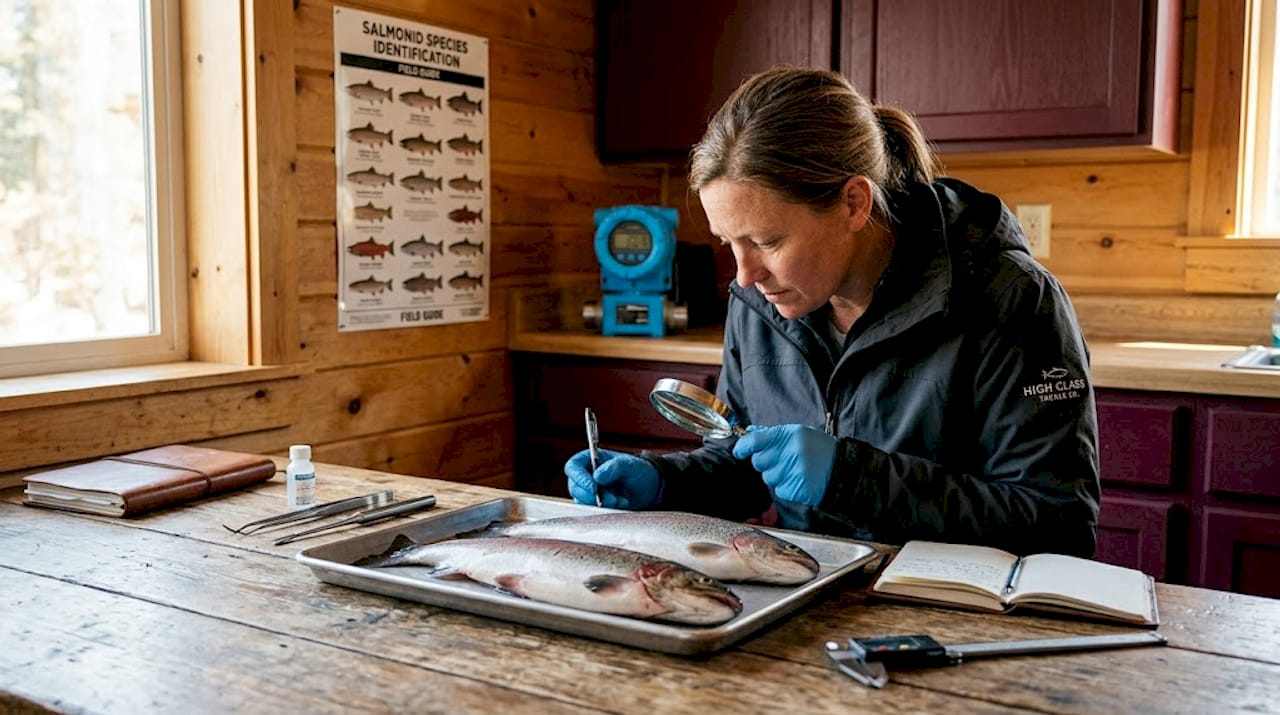
Steelhead hold their shape. They stay streamlined and silvery with a faint pink or rose lateral stripe running from gill to tail. Their spots tend to be smaller and more evenly distributed compared to the larger, irregular spots on some salmon species. A sea-bright steelhead fresh from saltwater looks more like a chrome torpedo than a spawning fish.
Key visual markers side by side:
| Feature | Steelhead | Pacific salmon |
|---|---|---|
| Jaw shape | Streamlined, minimal kype | Pronounced hooked kype (males) |
| Body color | Silvery with faint pink stripe | Red, maroon, olive, or green |
| Body shape | Sleek, torpedo-shaped | Variable; males may develop hump (pink salmon) |
| Spot pattern | Small, dense spots | Larger, irregular spots (species dependent) |
| Tail shape | Squarish, some spotting | Forked; varies by species |
- Steelhead lack the dramatic physical deterioration salmon show near spawn
- Chinook are the largest Pacific salmon, often exceeding 40 pounds
- Coho are often confused with steelhead due to silver coloration early in the run
- Check your state’s regulation handbook for species-specific identification requirements
Understanding these differences is critical for legal compliance. Oregon, Washington, and Idaho all maintain species-specific bag limits, seasons, and wild fish retention rules. Misidentifying a wild steelhead as a hatchery salmon is the kind of mistake that carries real consequences.
Now that you can tell them apart visually, let’s compare their flavors and nutritional profiles for your next meal or fishing trip preparation.
Culinary and nutritional differences: steelhead vs salmon
The steelhead vs salmon taste conversation is one of the most common ones at fish cleaning stations across the Pacific Northwest. And the answer isn’t as simple as “salmon tastes better.”
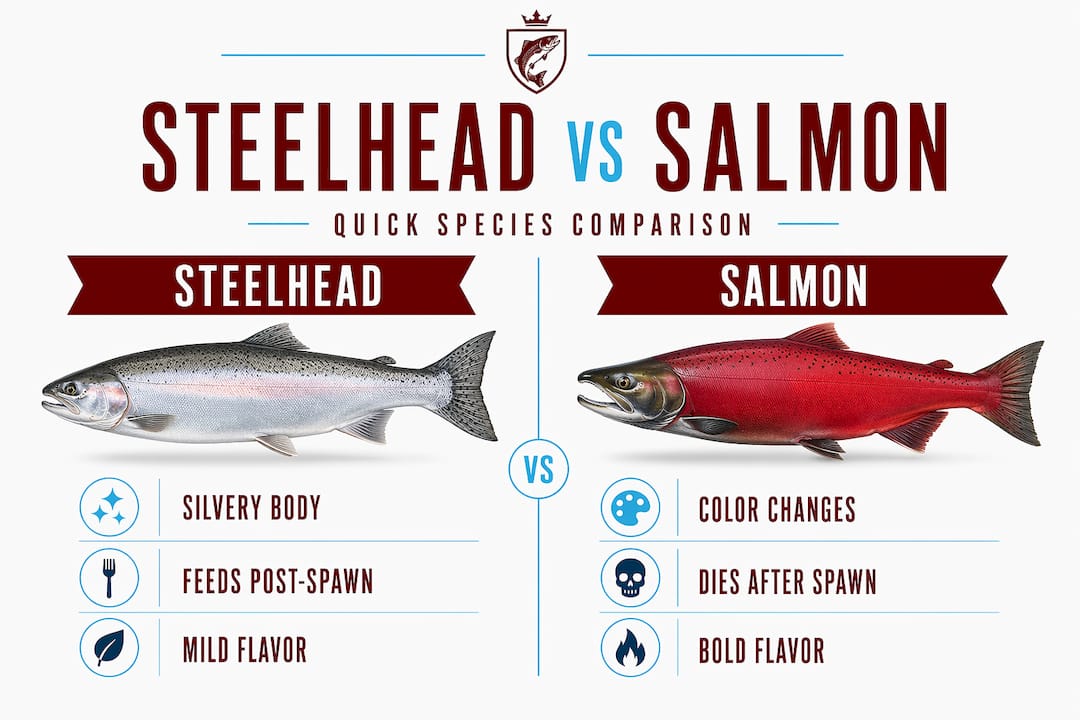
Steelhead flesh is lighter in color, tender, and carries a mild, slightly sweet flavor. It’s the fish you bring home for people who say they don’t love the “fishy” taste of salmon. Prepared simply, grilled or baked with lemon and butter, it’s genuinely approachable. Steelhead is leaner and more affordable than most salmon varieties, which makes it a solid choice for regular weeknight meals rather than special occasions.
Salmon comes with significantly more fat. King salmon, also called Chinook, is widely regarded as the richest and most buttery of all Pacific species. Sockeye offers a deep red flesh and an intense, bold flavor. Coho sits somewhere in the middle. That higher fat content also means higher omega-3 fatty acid concentrations, which contribute to salmon’s reputation as a health food staple.
Nutritional breakdown highlights:
- Steelhead: leaner, lower fat content, solid protein, mild flavor profile
- King/Chinook salmon: highest fat content, richest omega-3s, bold buttery taste
- Sockeye salmon: deep red flesh, intensely flavored, high astaxanthin (the pigment that creates the color)
- Coho salmon: moderate fat, firm texture, crowd-pleasing flavor
- Pink salmon: lowest fat among salmon species, mild, most commonly found canned
Pro Tip: Choose steelhead for cedar plank or light citrus preparations. Go with King or sockeye when you want a dish built around bold, unapologetic flavor. Match the fish to the recipe, not the other way around.
Beyond the plate, let’s explore what these differences mean for your fishing tactics and seasonal planning.
Fishing strategies and conservation considerations
Knowing the difference isn’t just about catching more fish. It’s about fishing with intention. And in Pacific Northwest rivers, where wild steelhead populations are under real pressure, fishing with intention means everything.
Misidentification can lead to illegal harvest of protected or out-of-season fish. Most rivers distinguish between hatchery and wild fish, and wild steelhead are frequently catch-and-release only. A clipped adipose fin signals a hatchery fish. An unclipped fin signals a wild fish you need to release. Know this before you wet a line.
Practical strategies for each species:
- Steelhead: fish deeper pools, tailouts, and seams; use a wider lure variety including jigs, plugs, spinners, and egg imitations because steelhead are actively feeding
- Salmon: focus on egg patterns, bright attractor flies, and reaction-strike presentations; position near spawning gravel and migration corridors
- Both: practice clean catch-and-release when regulations require it; barbless hooks reduce injury and improve survival rates
- Both: match your terminal tackle to water clarity; bright colors in stained water, natural tones in clear conditions
- Steelhead: early mornings and overcast days produce the most aggressive takes, especially during winter runs
Gear selection matters too. For salmon, heavier terminal setups and quality treble hooks that handle the hard, reactive strikes are worth the investment. For steelhead, finesse presentations often outperform power fishing, especially in pressured systems. The fish that gets targeted every weekend learns to ignore the obvious stuff.
Conservation isn’t a lecture. It’s the reason those rivers are still worth fishing. Every angler who takes the time to identify what they’ve caught, release it properly, and stay within legal limits is putting equity back into a system that gives us everything.
Having covered practical fishing and culinary insights, let’s share a fresh perspective on why understanding these differences truly matters.
Why distinguishing steelhead and salmon matters beyond the catch
Here’s what most fishing articles skip: the steelhead vs salmon distinction isn’t just a biology lesson. It’s a cultural dividing line in Pacific Northwest fishing communities, and it has real consequences for how fisheries are managed and who gets access to them.
Steelhead have a devoted cult following. Winter steelheaders are a specific type of angler. They’re out in the rain in February, swinging flies or plunking eggs into swollen, cold rivers for a fish that might not show. There’s a reverence for steelhead, particularly wild fish, that borders on spiritual. That’s not an accident. These fish are increasingly rare in many systems, and every wild steelhead hooked feels significant.
Salmon fishing draws a different crowd. Bigger numbers, more action, more community on the bank. There’s a festival energy to a good salmon run that steelheading simply doesn’t have. And both of those things are worth protecting.
“Anglers should evaluate fisheries by cultural and ecological context, valuing both wild and hatchery fish for their recreational worth.” — Joe Cermele, Field & Stream
The hatchery versus wild debate runs hot in steelhead circles. But the honest reality is that hatchery programs, despite their flaws, have kept rivers fishable and communities connected to the water for generations. Dismissing hatchery fish entirely ignores their cultural and economic value to working-class fishing communities across Washington, Oregon, and Idaho.
The anglers who understand the difference between steelhead and salmon, who know when to keep and when to release, who read regulations and respect the resource, are the backbone of healthy fisheries. That’s not about being a purist. It’s about being the kind of angler whose kids and grandkids will still have something to fish for.
Top tackle and gear for steelhead and salmon fishing
You’ve got the knowledge. Now make sure your tackle matches your ambition. At High Class Tackle Co., we build gear for the exact conditions Pacific Northwest anglers face, from swollen winter rivers to wide-open saltwater salmon runs.
Stock up on our size 2 treble hooks pack for improved hookups on both steelhead and salmon, built to handle the hard hits and aggressive runs these fish are known for. Rig your salmon spreads with our hoochie squid skirts that mimic baitfish and trigger reaction strikes in open water. And if you’re flying the High Class flag on the water, grab a High Class Tackle boat decal and let the river know who’s out there. Gear built by anglers. Designed for the Pacific Northwest.
Frequently asked questions
What are the main biological differences between steelhead and salmon?
Steelhead are a sea-run form of rainbow trout that can spawn multiple times, while most Pacific salmon spawn once and die after reproducing. They belong to different species classifications despite sharing the same river systems.
How can I visually identify a steelhead compared to a salmon?
Steelhead stay streamlined and silvery with a faint pink stripe, while spawning salmon develop hooked jaws and dramatic color changes that vary by species. Checking for an adipose fin clip also tells you whether you’re handling a hatchery or wild fish.
When are the best times to fish for steelhead versus salmon in the Pacific Northwest?
Salmon migrate from late spring through fall in large groups, while steelhead run primarily in winter and early spring in smaller numbers. Steelhead also occupy deeper holding water, so your river positioning needs to change depending on your target species.
Are there differences in flavor and cooking between steelhead and salmon?
Steelhead is milder and leaner with a subtly sweet flavor, while salmon offers richer, fattier flesh with a stronger, bolder taste that holds up to aggressive seasoning and high-heat cooking methods.
Why is it important to correctly identify steelhead and salmon while fishing?
Misidentification can result in illegal harvest of protected or out-of-season fish, which undermines conservation efforts and puts anglers at legal risk. Knowing what you’ve caught protects the fishery and keeps you on the right side of the regulations.
0 comments