

Swap treble hooks for single hooks whenever catch-and-release, safety, or reducing fish injury tops your priority list. The one rule that matters most: match the single hook’s gape to the treble’s width, lean toward inline or wide-gap models, and size up rather than down. Grab mini split-ring pliers, a couple of spare inline singles, and a small tackle mat before you touch a ring, and you’re set for a clean swap.
TL;DR:
- Swapping treble hooks for single hooks benefits catch-and-release, smaller fish, and conservation efforts, but may reduce hookup success in heavy cover or with aggressive species.
- Use precise tools like mini split-ring pliers and purpose-built inline singles, and size up the single hooks by 2 to 4 sizes based on actual gape measurement.
- Proper hook orientation and correct sizing help maintain hookup rates, and a firm, sweeping hookset is crucial for success with singles.
- Matching the single hook’s gape to the treble’s width ensures proper fit, while weighing the hooks can preserve lure balance and action.
- Field experience suggests that the benefits for fish survival and faster releases outweigh the slight theoretical loss in hookup probability for most applications.
Table of Contents
- When Should You Use Single Hooks Instead of Trebles?
- What Tools and Materials Do You Need for the Swap?
- How Do You Replace a Treble Hook With a Single Hook Step by Step?
- How Do You Pick the Right Single Hook Size?
- Does Hook Orientation Change How You Set the Hook?
- What Pro Techniques Speed Up Treble to Single Conversions?
- Do Single Hooks Actually Help Fish Survival?
- Why High Class Tackle Co. Backs the Switch to Single Hooks
- Get Your Treble-to-Single Conversion Kit
- Sources
- FAQ
When Should You Use Single Hooks Instead of Trebles?
Not every lure needs a conversion, but plenty do. If you’re fishing catch-and-release water, chasing conservation-minded outings, or running a boat with tournament rules that require single points, swap now. The same goes for days when you’re stacking up numbers on smaller fish. Fewer hook points means faster releases, less time fumbling with pliers, and fish that swim off strong instead of exhausted.
Trebles still earn their place in certain spots. Fast, slashing species like pike or musky often need every point a treble offers to convert a strike into a landed fish, and some baits are simply designed around treble geometry for the action to work right.
Run through this checklist before you decide:
- Is the fishery catch-and-release only or barbless-friendly? Convert.
- Are you targeting numbers of smaller fish in a day? Convert.
- Is the species known for violent, short strikes in heavy cover? Consider keeping the treble.
- Does the lure’s action depend on the exact weight and swing of a treble? Test before you commit.
Pacific Northwest anglers running barbless-required fisheries in Oregon already know this drill. Single hook conversion is just the next logical step.
What Tools and Materials Do You Need for the Swap?
You don’t need a workbench full of gear, but a few specific tools separate a clean swap from a mangled split ring. Here’s what belongs in your kit:
- Mini split-ring pliers (short, thin-jaw design)
- Needle-nose pliers as a backup or second hand
- Inline single hooks in wide-gap or purpose-built styles
- Spare split rings in a couple of sizes
- A small digital scale (optional, but useful)
- A hook cover or folded cloth to protect your hands
Mini pliers matter more than most anglers realize. Standard needle-nose jaws are built for general tackle work, but they’re often too thick to slip cleanly into the tight gap on a factory split ring, which leads to bent rings and scratched lure paint. Purpose-built inline singles also beat repurposed J-hooks because their eyes and gapes are sized to sit correctly on a split ring, giving you better articulation and hookup geometry than improvising with hooks meant for another job.
Pro Tip: If you’re replacing a light-wire treble, size up your single’s wire gauge slightly. A too-light single can bend out on a hard-fighting fish where the original treble would have held.
How Do You Replace a Treble Hook With a Single Hook Step by Step?
Follow this order and you’ll avoid the two most common mistakes: bent split rings and lost hooks mid-cast.
- Secure the lure. Clamp it in a hook cover or wrap it in a cloth so you’re not gripping bare hook points while you work.
- Locate the split ring’s gap. Every ring has a seam where the coils overlap. Slide the tip of your mini pliers into that gap, not anywhere else on the ring.
- Open the ring carefully. Twist the pliers just enough to create a slot, without prying the ring into an oval shape. Overworking the metal here is what causes failures down the road.
- Remove the treble. Spin the ring around the treble’s eye, using your needle-nose as a second point of control if the ring is stubborn.
- Slide the single hook in. This is where the simultaneous slide technique pays off: feed the new single into the ring while the old treble is still partially seated, holding the ring open, then spin the treble the rest of the way off. It keeps the ring from snapping shut mid-swap.
- Seat the single fully. Make sure it’s riding in the same position the treble occupied, with free rotation and no binding against the lure body.
- Check line attachment and articulation. Give the ring a tug test and make sure the hook swings freely.
- Test lure action before casting. Twitch the rod tip with the lure hanging in front of you. If it wobbles off-axis or sits crooked, something’s off with weight or hook position.
Do this a few times and the whole process shrinks from a clumsy ten-minute fight to something you can knock out between casts.
How Do You Pick the Right Single Hook Size?
Numeric hook sizes lie to you. A #4 treble from one manufacturer and a #4 from another can have noticeably different gapes, so matching the actual gape rather than the printed number is the only reliable method.
Here’s the process: measure the treble’s width point to point, then find a single whose gape (the distance from point to shank) comes close to or slightly exceeds that measurement. Anglers converting regularly report sizing up by 2 to 4 sizes compared to the original treble, since single hook sizing runs smaller for a given gape than treble sizing does. When you’re not sure which way to round, go bigger. A slightly oversized single still hooks up fine; an undersized one lets fish slip off.

Weight matters just as much as gape. Trebles and singles rarely weigh the same for a comparable size, and that difference throws off suspending jerkbaits and topwater walkers fast. Weigh your original trebles and your candidate singles on a small digital scale if you have one. If the single comes up light, you’ve got three fixes: step up to a heavier-gauge single, use a slightly larger split ring, or add a small strip of tape or lead to the hook hanger. Preserving the original balance keeps a jerkbait diving at the right angle and a topwater walking the dog instead of rolling over.
Gauge and eye alignment round out the picture. A single with an eye that doesn’t sit flush in the split ring will hang crooked, and a crooked hook throws off both action and hookup angle no matter how well you matched the gape.
Does Hook Orientation Change How You Set the Hook?
Orientation isn’t a minor detail. Get it backward and you’ll lose fish you should have landed. The general rule: point the rear hook backward and the front hook forward, though certain lure designs call for adjustments.
- Rear single: point facing backward, away from the lure body.
- Front single: point facing forward in most applications, unless the lure’s action or heavy cover conditions call for a different angle.
- Check that neither hook masks against the lure body at rest, since a hidden point misses strikes.
This orientation isn’t arbitrary. It optimizes hookup geometry and keeps the point exposed exactly where a striking fish’s mouth will close around it.
Your strike technique needs a small adjustment too. With fewer points in play, a soft hookset leaves fish unpinned more often than it did with a treble. Keep your rod tip higher through the strike, set with a firm sweep instead of a twitch, and maintain steady pressure all the way to the net. Topwater lures benefit from a slight pause before the hookset. Suspending jerkbaits and deep divers reward a longer, sweeping set since the fish often has more time to fully commit.
What Pro Techniques Speed Up Treble to Single Conversions?
Field-tested anglers lean on a handful of tricks that turn a slow, fumbling swap into a fast one.
- Use 4.5-inch thin-jaw mini pliers. The narrow tip fits factory split ring gaps that standard needle-nose pliers can’t reach.
- Practice the simultaneous slide technique on a few throwaway lures first. Feeding the new hook in while the old one still holds the ring open is what cuts swap time from roughly ten minutes to about one.
- Try the two-plier method on stubborn rings: one plier holds the ring open, the other guides the hook through, which keeps you from losing control mid-swap.
- Reach for a second split ring only when you need extra clearance or articulation. Every extra link is another spot that can fail under pressure, so add one deliberately, not by default.
Pro Tip: Keep your old trebles. Anglers routinely stash them in labeled baggies for stinger rigs or bait setups down the road instead of tossing them.
Do Single Hooks Actually Help Fish Survival?
Swapping trebles for singles isn’t just a feel-good move. It changes real outcomes for released fish. Converting reduces damage to a fish’s mouth and gills, speeds up dehooking, and stops fish from using a second or third point as leverage to tear free mid-fight, all of which lowers post-release stress and injury according to Sport Fishing Magazine’s reporting on hook conversions.
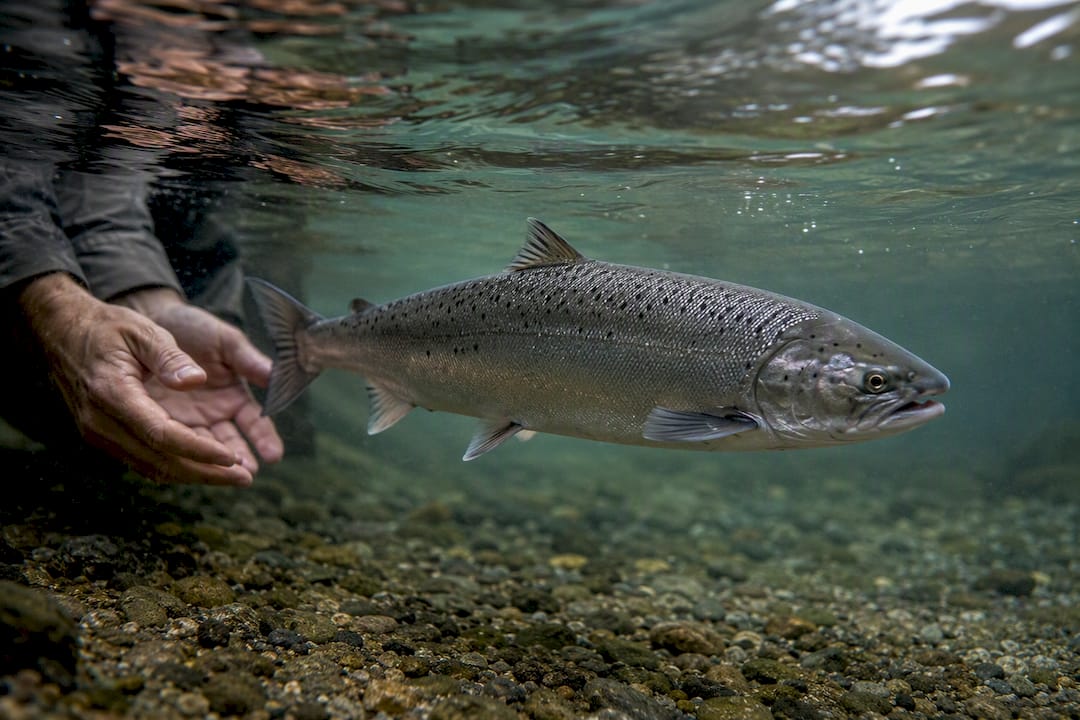
There’s a safety upside for you too. Fewer exposed points on a thrashing lure means fewer chances of a hook finding your hand instead of the fish’s mouth.
The tradeoff is real but manageable: fewer points mean a lower theoretical chance of a strike converting into a solid hookup. Correct sizing, proper orientation, and a heavier-gauge single close most of that gap, and field experience suggests bad orientation or undersized hooks cause far more missed fish than the conversion itself.
Why High Class Tackle Co. Backs the Switch to Single Hooks
We’ve swapped enough trebles on our own boats to know the difference shows up fast, cleaner releases, faster hookset routines, fewer mangled rings when you use the right pliers. Our take: trial conversions on a couple of go-to lures before you commit your whole box. Keep the original trebles in a labeled bag; you’ll want them for stinger rigs eventually. And if you convert a plug that surprises you, good or bad, send us a photo. That kind of field feedback is exactly what shapes better tackle.
— Nick
Get Your Treble-to-Single Conversion Kit
Converting a box full of plugs is a lot faster when you’re not hunting three drawers for the right split ring. High Class Tackle Co. stocks the components that make a swap painless: inline singles in a couple of gape sizes, spare split rings, and mini pliers built for the job, all pulled from our terminal tackle and components collection.

If you’d rather grab everything pre-sorted, our ‘NEW’ component tackle box works as a ready-to-go conversion starter, hooks, rings, and small tools bundled so you can skip the shopping list entirely. Pair either option with a pack of heavier-gauge inline singles sized to your usual lure lineup, and you’re stocked for a season of clean releases. Head to the terminal tackle collection and build your kit before your next trip.
Sources
- Single hooks versus trebles | Sport Fishing Magazine
- Treble to Single Hook Conversion: Field-Tested Size Chart | Master Fishing Mag
- How to replace treble hooks with single hooks the right way | Florida Sportsman
- How to replace treble hooks with single hooks | FishTalk Magazine
FAQ
What size single hook replaces a treble?
Match the single’s gape to the treble’s point-to-point width rather than trusting the numeric size label, since sizing isn’t standardized across brands. Most anglers size up by 2 to 4 sizes from the original treble.
Do fish remember getting hooked?
There’s no solid evidence that fish retain hook encounters the way you’d remember an event, but repeated stress from rough handling or slow releases does affect their short-term recovery and survival odds. Reducing injury at the point of release, which single hooks help do, matters more than any memory question.
Is fishing with a single hook better than a treble hook?
For catch-and-release fishing, yes. Singles cause less mouth and gill damage and dehook faster, though trebles can still hold an edge for fast, slashing species in heavy cover where extra points make the difference.
How do you change out treble hooks on lures?
Open the split ring at its seam with mini pliers, slide the new single hook in while the old treble still holds the ring open, then spin the treble free. Test the lure’s action before you cast it.
Does swapping to single hooks hurt my hookup rate?
It can, slightly, in theory, since you’re running fewer points. In practice, correct gape sizing, proper orientation, and a firm, sweeping hookset recover most of that lost hookup probability.
0 comments