

Fishing flashers are defined as trolling attractor devices that mimic baitfish by reflecting light and generating vibrations to trigger feeding responses in predatory fish. The role of fishing flashers is direct: they pull salmon, trout, and walleye toward your bait when nothing else is working. They are standard equipment for West Coast trolling, particularly in deep or low-visibility water where fish need a stronger signal to commit. Highclasstackleco builds flashers specifically for Pacific Northwest conditions, where the difference between a blank day and a screaming rod often comes down to what is spinning behind your downrigger ball.
How do fishing flashers work to attract fish?
Fishing flashers attract predatory fish by mimicking baitfish movement through two primary mechanisms: reflected light and physical vibration. When a flasher spins or wobbles through the water, it catches sunlight or artificial light and throws off flashes that resemble the scales of a fleeing baitfish. Fish see those flashes from a long distance, even in murky or deep water.
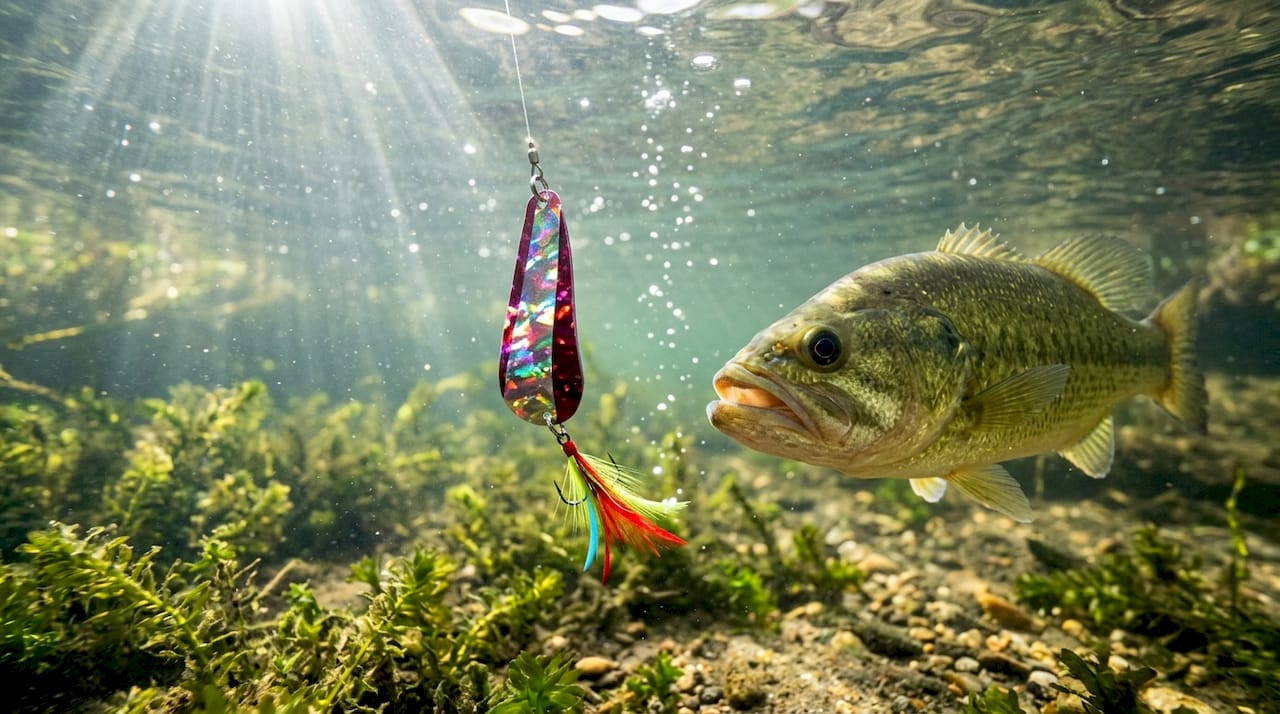
The second mechanism is vibration. Fish detect pressure waves through their lateral lines, a sensory organ that runs along each side of the body. Flashers generate high-frequency vibrations that register on that lateral line system, signaling the presence of a struggling or schooling baitfish. That combination of visual flash and physical vibration is what separates a flasher from a plain lure.
Color and pattern matter more than most anglers expect. Bright UV colors work well in deep or stained water because they retain visibility where natural light fades. Darker, more natural patterns perform better in clear, shallow conditions where fish are already visually alert. Some flashers also produce faint sonic cues as they spin, adding a third layer of attraction that covers fish with poor visibility angles.
360-degree flashers create a broader behavioral cue than flat-spinning models because they throw light in every direction simultaneously. That wider signal radius is why they are the go-to choice for deep-water salmon and lake trout.
- Reflected light: Mimics baitfish scales and draws fish from distance
- Lateral line vibration: Signals the presence of prey through water pressure waves
- Color contrast: UV and bright colors for deep water; natural tones for clear water
- Sonic cues: Faint sounds from spinning flashers add a third sensory trigger
- 360-degree models: Full-circle flash coverage for maximum attraction radius
Pro Tip: Match your flasher’s action to your trolling speed. A flasher that barely wobbles at 1.5 mph will spin out of control at 3.0 mph. Test your setup at the side of the boat before you drop it down.
When are flashers most beneficial for fishing?
Flashers deliver the biggest advantage when fish are present but not actively feeding. Flashers are most beneficial in deep or murky water and become less effective, or even counterproductive, in very clear, shallow water where the extra commotion can spook fish instead of attract them.
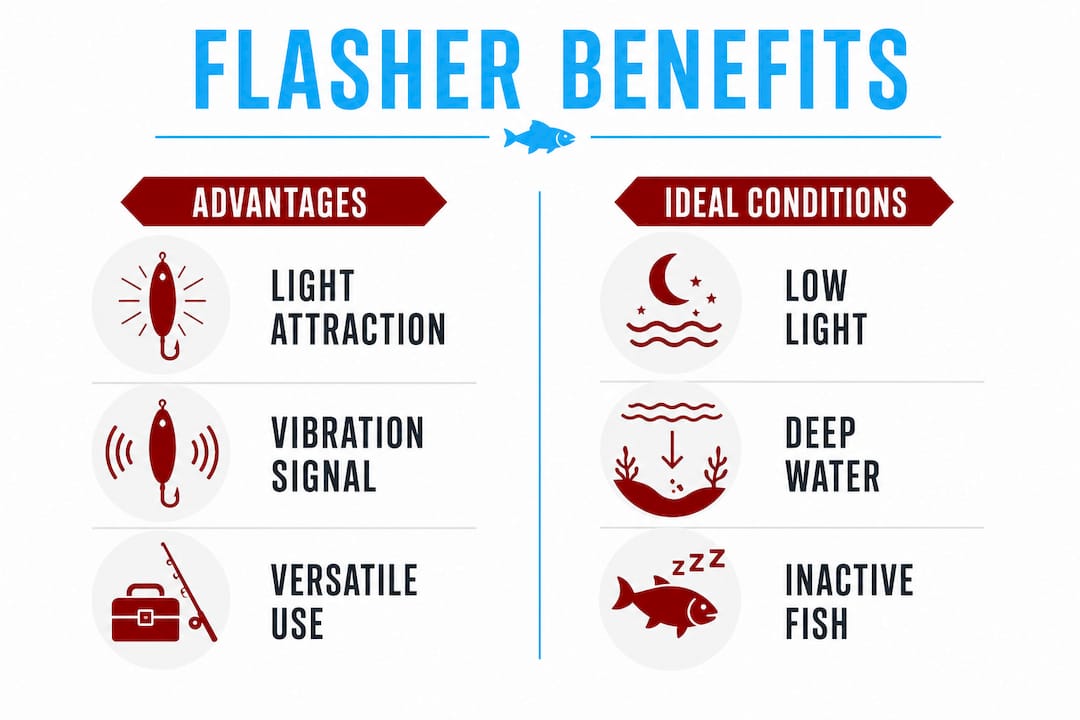
The ideal depth window for flasher use is 60–120 feet. At those depths, natural light is reduced and fish rely more heavily on lateral line detection and contrast-based vision. A flasher operating in that zone gives fish a reason to investigate when they would otherwise ignore a plain bait presentation.
Timing also matters. Early morning and evening conditions are when schooling predators like salmon and walleye are most active and most responsive to flasher attraction. During midday in clear water, the same flasher that produced fish at dawn can push them away.
- Best conditions: Deep water (60–120 feet), murky or stained water, low-light periods
- Best species: Chinook salmon, coho, lake trout, walleye, kokanee
- Best timing: Early morning, evening, overcast days
- Avoid: Very clear, shallow water; slow-moving or stationary presentations
- Trolling: Flashers are designed for trolling, not still fishing or casting
Pro Tip: Keep your leader length between flasher and lure at 6–12 inches. Too long and the lure loses the flasher’s action. Too short and the lure tangles on every turn.
How do flashers differ from dodgers?
Flashers and dodgers both attract fish, but they do it differently.
, while dodgers use a side-to-side sweeping action that produces more lateral movement and less rotational flash. That difference in motion changes how each device affects the trailing lure.
A flasher imparts strong spinning action to whatever follows it. That works well with hoochies, squid skirts, and cut-plug herring because those baits are designed to spin or flutter. A dodger, by contrast, gives the trailing lure a side-to-side wobble, which suits spoons and plugs that need a different action to look natural.
| Feature | Flashers | Dodgers |
|---|---|---|
| Primary motion | Spin or wobble | Side-to-side sweep |
| Flash coverage | 360 degrees | Lateral only |
| Best trailing lure | Hoochie, squid, cut-plug | Spoon, plug, fly |
| Best conditions | Deep, murky water | Moderate depth, clearer water |
| Vibration output | High | Moderate |
The choice between the two comes down to species and conditions. Salmon anglers trolling deep water in the Pacific Northwest almost always reach for flashers first. Dodgers earn their place when you want a subtler presentation or when fish are reacting negatively to the aggressive spin of a flasher. Knowing both tools and when to swap them is what separates consistent producers from occasional lucky anglers.
How to rig and use fishing flashers effectively
Proper rigging turns a flasher from a spinning piece of hardware into a fish-catching machine. The setup starts with leader length. Attach a 6–12 inch leader between the back of the flasher and your lure. That short connection keeps the lure inside the flasher’s action zone and prevents tangling during turns.
Trolling speed is the next critical variable. For 8 to 11-inch flashers, the optimal trolling speed is 2.0–2.5 mph to produce effective tail-kicking action and vibration. Speed below that range and the flasher barely moves. Speed above it and the flasher spins erratically, killing the presentation. Check your speed with a GPS unit, not just the boat’s speedometer.
- Set leader length at 6–12 inches between the flasher and your trailing lure to maintain action and prevent tangles.
- Match trolling speed to flasher size. Run 8 to 11-inch flashers at 2.0–2.5 mph for maximum vibration and tail kick.
- Choose color based on depth and water clarity. UV and glow finishes for deep or stained water; natural greens and blues for clearer conditions.
- Select flasher shape for your target species. Wider flashers produce more vibration for salmon. Narrower profiles suit trout and kokanee.
- Consider stacked flasher rigs for more attraction. Double-flasher rigs increase flash and vibration but require heavier gear and careful line management to avoid tangles.
- Check your setup at the surface before dropping to depth. Watch the action and confirm the flasher is spinning correctly at your target speed.
For the best bait presentations paired with flashers, match your trailing lure to the forage fish in your target water. Anchovies and herring work for Chinook. Small squid skirts and pink hoochies are consistent producers for coho and kokanee.
Pro Tip: When running a double-flasher rig, upgrade your main line to at least 30-pound braid. The drag from two spinning flashers at trolling speed is significant, and lighter line will cost you fish.
Key Takeaways
Fishing flashers work because they combine reflected light and lateral line vibration to trigger predatory feeding responses that plain bait cannot produce alone.
| Point | Details |
|---|---|
| Core function | Flashers mimic baitfish using reflected light and vibration to trigger strikes. |
| Best conditions | Deploy in 60–120 feet of water, murky conditions, or low-light periods for maximum effect. |
| Optimal trolling speed | Run 8 to 11-inch flashers at 2.0–2.5 mph to achieve proper action and vibration. |
| Leader length | Keep the leader between flasher and lure at 6–12 inches to prevent tangles and maintain action. |
| Flasher vs. dodger | Choose flashers for deep, murky water and spinning lures; use dodgers for subtler presentations with spoons. |
What field experience actually teaches you about flashers
I have watched anglers spend serious money on premium flashers and then run them at the wrong speed, with a 3-foot leader, in 15 feet of clear water. The gear was not the problem. The setup was.
The rule I live by is simple: don’t argue with the fish. If a certain flasher is producing and another is not, you do not need to understand why. You need to run more of what is working. Fish are not reading your logic. They are responding to the right combination of thump, flash, and color for that specific day and depth.
The mistake I see most often is anglers who pick a flasher color based on what looks good in the tackle shop and never adjust it on the water. Water color, cloud cover, and depth all change what fish actually see. A chartreuse flasher that screamed in the morning can go completely dead by noon when the sun angle shifts. The anglers who catch fish consistently are the ones who rotate colors and track what produces at each depth and time.
Experimentation is not optional. It is the job. Start with a proven color for your target species, then make one change at a time until the rod loads up. When it does, lock in that setup and run it hard. The 360-degree flasher guide for PNW salmon covers a lot of the color and depth combinations we have found to be consistent on the West Coast, and it is worth reading before your next trip.
— Nick
Gear up with Highclasstackleco’s flasher lineup
Highclasstackleco builds flashers for the conditions West Coast anglers actually fish. Every flasher in the lineup is designed to perform in the deep, cold, and often murky water that defines Pacific Northwest salmon and steelhead fishing.
The selection covers a range of sizes, colors, and action styles for salmon, kokanee, and trout. Whether you are running a single flasher rig on a downrigger or stacking doubles for a big-water spread, the full tackle lineup has what you need. Pair your flashers with terminal tackle from the hooks and components collection to build a complete, fish-ready rig. Built by anglers, tested on the water, and ready to produce.
FAQ
What is a flasher in fishing?
A fishing flasher is a trolling attractor device that reflects light and generates vibrations to mimic baitfish and trigger strikes from predatory fish like salmon, trout, and walleye.
How deep should you run fishing flashers?
Flashers are most effective at depths of 60–120 feet, where reduced natural light makes their reflective and vibrational cues most detectable by fish.
What is the best trolling speed for fishing flashers?
The optimal trolling speed for 8 to 11-inch flashers is 2.0–2.5 mph, which produces the tail-kicking action and vibration that attracts salmon and trout.
What is the difference between a flasher and a dodger?
Flashers spin or wobble to create 360-degree light flashes and high vibration, while dodgers sweep side to side with more lateral movement and less rotational flash.
How long should the leader be between a flasher and a lure?
Keep the leader between 6 and 12 inches. That length keeps the lure inside the flasher’s action zone and prevents tangling during turns.
Recommended
- 360 Flasher Guide for PNW Salmon and Steelhead – High Class Tackle Co.®
- Spinner Blades: The Ultimate Hack for Reeling in More Salmon – High Class Tackle Co.®
- Super Bait Secrets: Top Picks for Salmon and Steelhead – High Class Tackle Co.®
- Custom Spinner Blades for Salmon and Steelhead Success – High Class Tackle Co.®
0 comments