

Scent is the single most underrated trigger in fishing, and most anglers are leaving bites on the table by ignoring it. The role of scent in fishing comes down to one biological fact: fish use highly sensitive olfactory systems to detect water-soluble chemical cues that drive feeding decisions. Species like Pacific salmon and catfish can detect amino acids at concentrations as low as 10^-11 molar. That is not a rounding error. That is a level of chemical sensitivity that makes your nose look broken by comparison. Understanding how fish smell changes how you rig, how you handle bait, and what products you reach for on the water.
How does the role of scent in fishing work biologically?
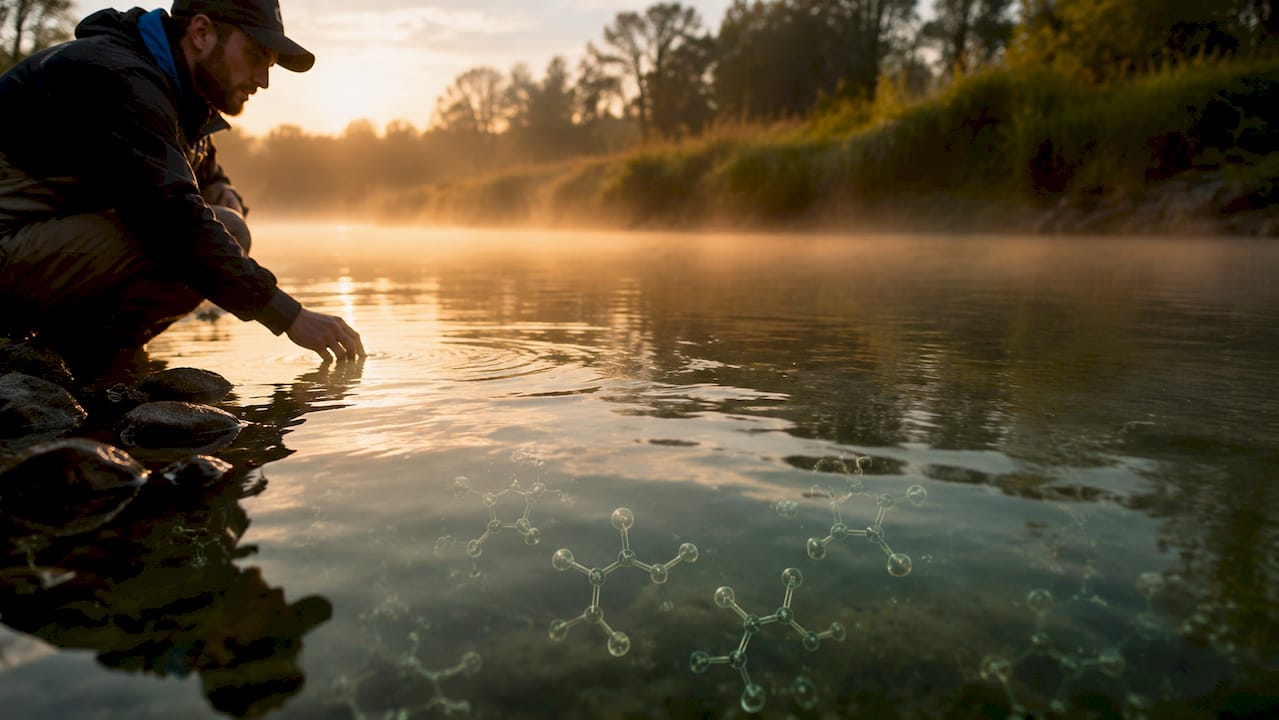
Fish olfaction, the scientific term for a fish’s sense of smell, operates through chemoreception. Fish pull water across sensory cells in their nasal passages, and those cells fire when they contact specific dissolved molecules. The system is built for one job: finding food and avoiding danger.
The molecules fish respond to most are amino acids. L-Alanine and L-Cysteine are two of the most powerful feeding triggers identified in research. Catfish can register these compounds at 10^-11 molar concentration. That means a single drop of attractant in a massive body of water is still detectable.
Not all species are equal in olfactory power. Sharks can detect chemical cues several hundred yards away, which disproves the popular myth that they can smell blood from miles off. Salmon sit in a different category entirely. Pacific salmon use olfactory imprinting to memorize the chemical signature of their natal stream as juveniles, then navigate back to it years later as adults. That is why natural-profile scents consistently outperform generic synthetic compounds when targeting migratory species.
Water solubility is the key filter. Fish olfaction only works on molecules dissolved in water. If a scent compound does not dissolve, the fish never detects it. This single fact explains why product chemistry matters more than marketing claims.
Pro Tip: When targeting salmon or steelhead, choose scents that mimic the amino acid profile of their natural prey. Generic “fish scent” sprays often miss the specific compounds that trigger a feeding response in these species.
What types of scent attractants actually work?
The scent attractant market splits into four main categories: water-soluble gels, oil-based liquids, dry powders, and natural baits. Each behaves differently in water, and that difference directly affects whether a fish ever detects your offering.
Oil-based scents form droplets that float away from the lure rather than dissolving into the water column. Fish olfaction requires dissolved molecules. An oil-based product sitting on the surface of your bait is largely invisible to a fish’s nose. Water-soluble polymer gels, by contrast, stay dissolved and create a consistent scent trail that fish can follow upstream to the source.
| Scent Type | Dispersion | Best Use | Drawback |
|---|---|---|---|
| Water-soluble gel | Excellent, stays dissolved | All conditions, especially current | Needs reapplication every 20–30 minutes |
| Oil-based liquid | Poor, forms floating droplets | Limited effectiveness in most scenarios | Fails to reach fish olfactory receptors |
| Dry powder/cure | Good when wet | Curing eggs, soft baits | Requires prep time before fishing |
| Natural bait | Excellent, full amino acid profile | Any species, any condition | Perishable, harder to manage |
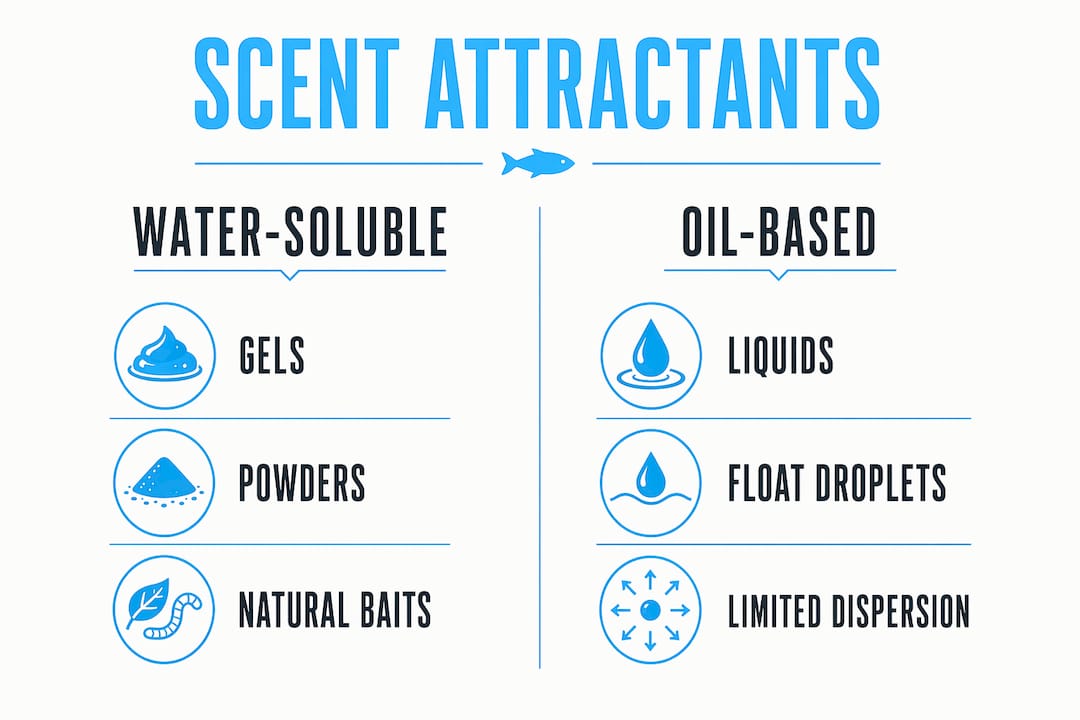
Natural baits win on chemistry because they contain the full spectrum of amino acids fish are wired to recognize. Products like NW Bait & Scent Juju Gel are formulated to replicate that dissolved amino acid profile in a water-soluble format that actually reaches fish receptors.
Human scent is a serious problem that most anglers overlook. Your skin secretes L-serine, an amino acid that functions as an alarm signal for salmonids and other species. Touching your bait with bare hands can actively repel fish. Scent attractants also mask repellent odors like sunscreen, fuel, and insect repellent that transfer from your hands to your lure.
Pro Tip: Before handling any bait or lure, wash your hands with unscented soap or rub them with fresh anise, shrimp, or the natural slime from a caught fish. This removes L-serine and adds a feeding trigger at the same time.
How do environmental conditions change your scent strategy?
Water conditions determine how far your scent travels and how much fish rely on it. Adjusting your approach based on conditions is what separates good anglers from great ones.
Here are the four conditions that most directly affect scent effectiveness:
-
Current and water flow. Scent needs movement to spread. In still water, a scent cloud stays tight around your bait. In moving water, a dissolved scent trail can carry hundreds of feet downstream. Suspending bait in the active current layer creates a scent plume that fish can track back to the source. A bottom rig in the same spot produces a scent field of only 2–6 inches. That is the difference between one fish finding your bait and twenty.
-
Water clarity and light. In clear water with good light, fish rely heavily on vision. In stained, murky, or deep water, olfaction becomes the primary detection cue. When visibility drops, scent stops being a bonus and becomes your main weapon. This is especially true for night fishing or fishing in glacial runoff conditions common in Pacific Northwest rivers.
-
Water temperature. Cold water slows the diffusion of scent molecules. In near-freezing conditions, reapply scent more frequently because the molecules spread slower and break down at a different rate. Warm water accelerates diffusion but also degrades some scent compounds faster.
-
Water chemistry and pH. Highly acidic or alkaline water can alter how scent molecules behave. In extreme pH conditions, some amino acid attractants lose effectiveness. This matters most in tailwaters below dams or in heavily tannin-stained rivers.
How to apply scent attractants for maximum catch rates
Knowing the biology is one thing. Putting it to work on the water is another. These are the practices that actually move the needle on your catch rate.
-
Apply scent every cast or every 20–30 minutes. Water washes attractants off lures fast, especially in current. Reapplication is not optional. Treat it like checking your drag.
-
Use gloves or bait scent spray before handling terminal gear. L-serine from your hands transfers to hooks, swivels, and lures. A quick spray of attractant before rigging neutralizes this and adds a feeding trigger.
-
Suspend your bait in the current, not on the bottom. Advanced anglers maximize scent plume formation by keeping bait in the active water column. Drift rigs, float setups, and side-drifting techniques all accomplish this naturally.
-
Combine scent with vibration and visual triggers. Scent paired with vibration and visual cues produces the strongest feeding response across all water conditions. Colorado blades, spinner rigs, and flashers add vibration and flash that draw fish in from a distance. Scent closes the deal once they arrive.
-
Use scent as a confidence trigger, not just an attractant. Scent causes fish to hold bait longer, bypassing the visual inspection phase. This is critical for lethargic fish in cold water or heavily pressured fish that have seen every lure in your box.
-
Match scent to target species. Shrimp and krill profiles work well for kokanee. Anise and herring profiles are proven for salmon and steelhead. Check out the Northwest bait and scent guide for species-specific recommendations built around Pacific Northwest fisheries.
Pro Tip: For pressured fish that have seen heavy boat traffic, switch to a scent that masks repellent odors rather than just adding attractant. Products designed to neutralize human and fuel odors give you a clean chemical slate before the fish even reaches your lure.
Key takeaways
Scent is a biological trigger, not a gimmick. Water-soluble attractants that match the amino acid profile of natural prey consistently outperform oil-based sprays and generic formulas.
| Point | Details |
|---|---|
| Water solubility is non-negotiable | Only dissolved scent molecules reach fish olfactory receptors; oil-based products largely fail. |
| Human scent repels fish | L-serine from your skin signals alarm to salmonids; wash hands or apply attractant before handling gear. |
| Suspend bait in current | Bait in the active current layer creates a scent plume hundreds of feet long vs. 2–6 inches on the bottom. |
| Match scent to species | Migratory fish like Pacific salmon respond best to natural-profile amino acid scents tied to their prey. |
| Scent extends bite duration | Fish hold scented bait longer, giving you more time to set the hook, especially on lethargic or pressured fish. |
What i’ve learned after years of fishing scent wrong
I spent the first several years of my fishing life treating scent like an afterthought. Spray something on, toss it in, hope for the best. I was doing almost everything wrong.
The biggest shift came when I started paying attention to how I handled my gear. I was coating my lures in L-serine every single time I touched them. Once I started using unscented gloves and applying gel attractant before rigging, my hook-up rate on pressured steelhead improved noticeably. Not because I found a magic product. Because I stopped actively repelling fish.
The second mistake I see constantly is anglers using oil-based scents on hard lures and wondering why they get no results. The oil sits on the surface of the lure and floats off the moment it hits the water. It never reaches the fish’s nose. Switching to a water-soluble gel on the same lure, in the same spot, on the same day, produces a completely different result.
The third thing most anglers miss is rig position. Fishing a scented bait on the bottom in slow current is like whispering in a hurricane. Nobody hears it. Get that bait up in the water column where the current can carry the scent trail downstream. That is how you turn one fish into a school of fish following your presentation.
Scent is not a shortcut. It is a biological tool. Use it with the same intentionality you bring to your rod selection or your knot tying, and it will pay off.
— Nick
Level up your scent game with Highclasstackleco
If this breakdown has you rethinking your scent setup, you are in the right place. At Highclasstackleco, we stock the NW Bait & Scent lineup because it is built around the same science covered in this article. Water-soluble gel formulas, species-specific amino acid profiles, and products designed for real Pacific Northwest conditions.

Whether you are chasing Chinook on the Columbia, kokanee in a mountain reservoir, or coho off the coast, the right scent product makes a measurable difference. Browse the full tackle and scent catalog at Highclasstackleco and find the attractants that match your target species. From the NW Bait & Scent Juju Gel to the Zillabait Z-Shrimpz powder, we carry what actually works on the water.
FAQ
What is the role of scent in fishing?
Scent in fishing refers to the use of water-soluble chemical cues that trigger feeding responses in fish. Fish detect dissolved amino acids through their olfactory systems, which drives them to locate, strike, and hold bait longer.
Can scent attract shy or pressured fish?
Yes. Scent acts as a confidence trigger that causes fish to hold bait longer, bypassing visual inspection. It also masks repellent odors like human skin oils and fuel that deter pressured fish.
Why do oil-based fishing scents underperform?
Oil-based scents form droplets that float away from the lure rather than dissolving in water. Fish olfaction requires water-soluble molecules, so oil-based products rarely reach the sensory cells that trigger a feeding response.
How often should i reapply scent to my lure?
Reapply scent every cast in fast current, or every 20–30 minutes in slower water. Water continuously washes attractants off lures, so consistent reapplication maintains an active scent trail.
Does water clarity change how much scent matters?
Absolutely. In clear water with good light, fish rely more on vision. In stained, turbid, or deep water, olfaction becomes the primary detection method, making scent your most important tool in those conditions.
Recommended
- Why Anglers Use Scent Attractants for Salmon and Bass – High Class Tackle Co.®
- Northwest Bait and Scent Guide for Serious Anglers – High Class Tackle Co.®
- Super Bait Secrets: Top Picks for Salmon and Steelhead – High Class Tackle Co.®
- What Is a Fishing Media Brand: Anglers’ Guide – High Class Tackle Co.®
0 comments