

The best types of hooks for steelhead fishing are defined by three factors: hook size matched to bait or bead diameter, wire gauge suited to the technique, and hook style aligned with your rigging method. Get all three right and your hook sets clean, your bait moves naturally, and your fish stays pinned. Get any one wrong and you’re losing fish you should have landed. This guide covers every major hook category Pacific Northwest steelhead anglers rely on, from octopus hooks for drift fishing to light wire dry fly hooks for summer runs in low, clear water.
1. Types of hooks steelhead fishing: why sizing is everything
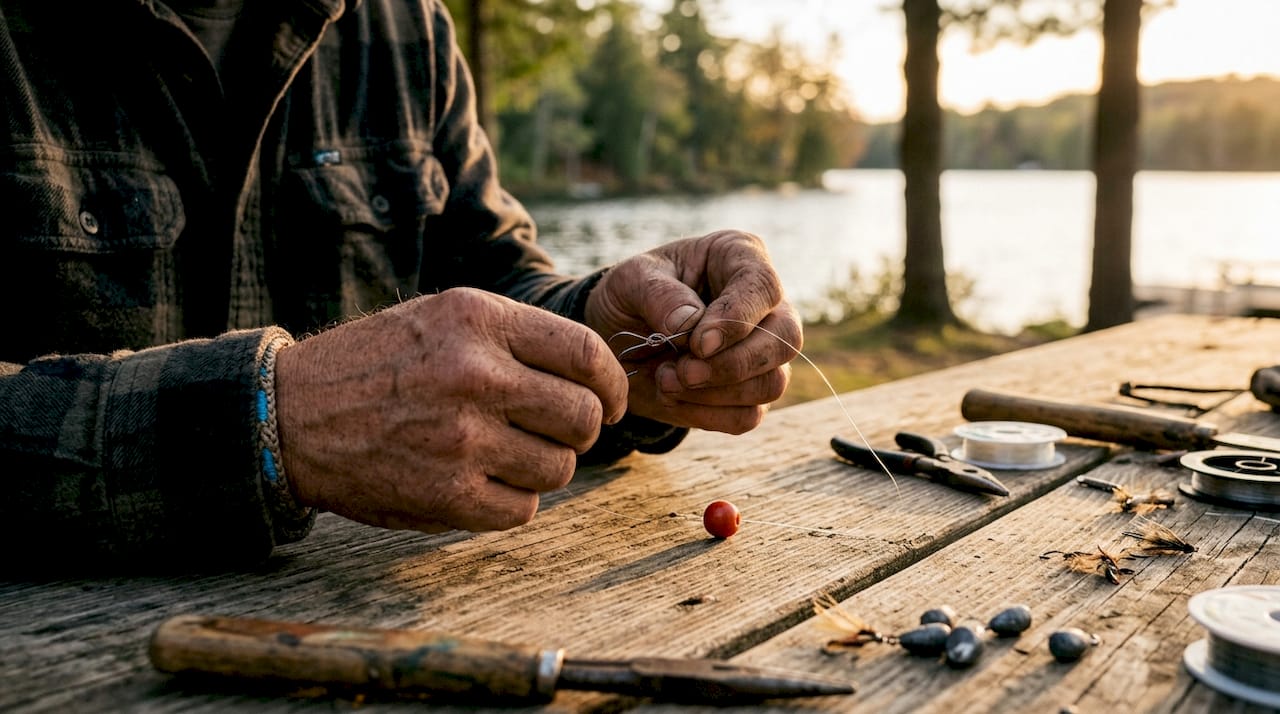
Hook size is the single most important variable in your steelhead terminal setup. Industry standards for bead fishing are specific: size 6 hooks for 6–8 mm beads, size 4 hooks for 8–10 mm beads, and size 2 or smaller for 12 mm or larger beads. These ratios exist because the hook gap must clear the bead cleanly on the strike to make contact with the fish’s jaw.
Mismatched hook and bead sizes reduce strike detection and hurt hook penetration. A hook that is too large causes the bead to bounce unnaturally on the drift, telegraphing a fake presentation to wary fish. A hook that is too small collapses under the pressure of a hard-running steelhead.
| Bead Size | Recommended Hook Size |
|---|---|
| 6–8 mm | Size 6 |
| 8–10 mm | Size 4 |
| 12 mm or larger | Size 2 or smaller |
Pro Tip: In low, clear water, drop one hook size smaller than the standard chart suggests. Steelhead in gin-clear Pacific Northwest rivers are sharp-eyed, and a slightly smaller hook profile makes your bead look more like natural salmon eggs drifting through the current.
2. Octopus hooks for drift fishing
The octopus hook is the workhorse of Pacific Northwest steelhead fishing. Its short shank, curved point, and wide gap make it ideal for bead rigs, egg clusters, and sand shrimp presentations. Drift fishing setups typically run size 1 to 2/0 octopus hooks, with size 1 and 1/0 covering most river conditions.
The offset point on an octopus hook rotates toward the fish’s jaw on the strike, which improves hook-up rates without requiring a hard hookset. This matters when you are fishing a long drift and the bite is subtle. Pair an octopus hook with a soft bead or cured roe and you have one of the most effective steelhead rigs in the Pacific Northwest.
3. Bead hooks: specialized for egg patterns
Bead hooks are a refined version of the octopus design, built specifically for fishing plastic or glass beads pegged above the hook. The key difference is the hook sits trailing below the bead, mimicking a single salmon egg that has drifted free of the skein. This presentation is deadly on winter steelhead stacked in tailouts.
The hook size must match the bead diameter precisely. Properly paired hook and bead sizes create better strike detection and cleaner hook sets because the gap clears the bead on impact. Many Pacific Northwest guides run bead hooks in size 4 as their default, adjusting up or down based on bead diameter and water visibility.
4. Jig hooks for float fishing
Jig hooks are designed with a 60-degree or 90-degree angled eye, which causes the hook to ride point-up when suspended under a float. This upward orientation dramatically reduces snags on rocky river bottoms, which is a major advantage on technical steelhead water like the Skagit or Hoh rivers. You can learn more about jig hook rigging and how different weights affect presentation depth.
Jig hooks are typically dressed with marabou, rabbit strip, or chenille to create a pulsing action in the current. Size 1 and 1/0 jig hooks cover most float fishing scenarios. The point-up ride also means the hook is positioned perfectly for an upward hookset, which is the natural motion when lifting a float rod.
5. Siwash hooks for lure fishing
Siwash hooks are the standard replacement for treble hooks on spoons and spinners. They feature a long shank, open eye for easy attachment, and a single point that penetrates deeply. Many Pacific Northwest rivers now require barbless single hooks on lures, and a siwash hook satisfies that regulation while maintaining solid holding power.
Lure fishing setups typically use size 2 to 1/0 treble hooks, but swapping to a siwash in the same size range keeps your lure action intact. Siwash hooks also cause less damage to fish, which matters for catch-and-release anglers targeting wild steelhead. Pair a siwash with your spinner blade setup for a clean, regulation-friendly lure rig.
6. Treble hooks: when and where they are legal
Treble hooks remain effective on plugs and some spoons where the three-point design improves hookup rates on short-striking fish. Size 2 to 1/0 treble hooks cover most steelhead plug applications. The trade-off is that treble hooks cause more injury to fish and are banned on many Pacific Northwest rivers, particularly those with wild steelhead runs.
Always check Washington Department of Fish and Wildlife or Oregon Department of Fish and Wildlife regulations before rigging trebles. Many rivers require barbless hooks year-round. When trebles are legal, they perform best on diving plugs like Kwikfish or Flatfish, where the hook hangs below the body and intercepts fish striking from underneath.
7. Wire gauge and hook style: light wire vs. heavy wire
Wire gauge determines how much force is needed to drive the hook point through a fish’s jaw. Light wire hooks require less force to penetrate and are the preferred choice for bait fishing, where a subtle hookset is often all you get. They also cause less tissue damage, which is a real advantage for catch-and-release anglers.
Heavy wire or 1X heavy hooks are built for streamer and wet fly presentations where the hook must withstand the torque of a running steelhead without bending. 1X heavy wire hooks retain fly shape and performance in turbulent water without sacrificing swim action. The choice between light and heavy wire comes down to technique first, then fish size and river conditions.
Key wire gauge considerations:
- Light wire: Best for bait fishing, egg clusters, and dry fly presentations where penetration ease matters
- Standard wire: Covers most octopus and bead hook applications for drift and float fishing
- 1X heavy wire: Required for wet flies, streamers, and any application where fly shape must hold under pressure
- Barbless options: Mandatory on many Pacific Northwest rivers; crimping a barb on a standard hook is legal in most areas
Sharpness matters above all. Even the best hook design fails if the point is dull. A chemically sharpened hook fresh out of the package is your baseline. Everything that happens on the river after that is maintenance.
8. Best hooks for steelhead fly fishing
Fly fishing for steelhead demands the most nuanced hook selection of any technique. The hook weight directly affects how the fly swims, sinks, and presents in the water column. Get the weight wrong and your fly either rides too high or drags unnaturally through the current.
Light wire hooks are preferred for dry flies because they maintain natural floatation and allow the fly to skate or wake on the surface without sinking. For wet flies and intruder-style patterns, 1X heavy wire hooks balance durability with effective swimming action in stronger currents. Low-water conditions require smaller, sparser flies on lighter hooks because clear water spooks fish easily.
| Fly Type | Hook Weight | Conditions |
|---|---|---|
| Dry fly / skating fly | Light wire | Low water, summer runs |
| Wet fly / traditional | Standard wire | Moderate flows |
| Streamer / intruder | 1X heavy wire | High water, winter runs |
| Low-water sparse fly | Light wire, small size | Clear, low summer flows |
Pro Tip: In low, clear summer water on rivers like the Deschutes or Klickitat, drop to a size 8 or 10 light wire hook and tie your fly sparse. Fish in those conditions have seen every pattern in the box. A smaller, lighter hook lets the fly move more freely and looks far more natural.
Fly anglers must adapt hook selection seasonally and geographically, especially in sensitive low-water environments. A winter run on the Skykomish calls for a completely different hook than a summer run on the Grande Ronde.
9. Maintaining hook sharpness for consistent hookups
Chemically sharpened hooks are the industry standard for factory hooks, but they dull quickly after contacting rocks in a typical Pacific Northwest river. Serious anglers sharpen or replace hooks multiple times per day to maintain reliable hook sets. A dull hook is the most common reason for missed strikes that anglers blame on fish behavior.
The fingernail test is the fastest way to check sharpness on the water. Drag the hook point lightly across your thumbnail. A sharp hook catches and drags. A dull hook slides. Dull hooks should be sharpened or replaced immediately, not at the end of the session.
Maintenance essentials to carry every day on the river:
- A diamond hook file or ceramic sharpening rod
- A spare hook wallet with multiple sizes and styles
- Needle-nose pliers for crimping barbs and swapping hooks quickly
- A magnifying loupe if you are tying small fly hooks in the field
Pro Tip: Sharpen your hooks before you rig up in the morning, not after you miss your first fish. Starting the day with a verified sharp point costs you nothing and could be the difference on a slow bite.
Key takeaways
The most effective steelhead hooks combine correctly matched size, appropriate wire gauge, and the right style for your specific technique to maximize hook penetration and fish retention.
| Point | Details |
|---|---|
| Match hook size to bead diameter | Use size 6 for 6–8 mm beads, size 4 for 8–10 mm, and size 2 or smaller for 12 mm-plus beads. |
| Choose wire gauge by technique | Light wire for bait and dry flies; 1X heavy wire for wet flies, streamers, and high-water presentations. |
| Know your hook styles | Octopus for drift, jig for float, siwash for lures, and light wire for fly fishing cover most steelhead scenarios. |
| Check regulations before rigging | Many Pacific Northwest rivers require barbless hooks; verify Washington DFW or Oregon DFW rules before every trip. |
| Sharpen hooks daily | Use the fingernail test throughout the day and replace or sharpen any hook that slides instead of catches. |
What I’ve learned about hook selection after years on Pacific Northwest rivers
Most anglers overthink hook brand and underthink hook maintenance. I have watched skilled fishermen lose fish after fish because they were running a hook that had dragged across a gravel bar six drifts ago and never got resharpened. The hook was the right style, the right size, and the right wire gauge. It was just dull. That is a fixable problem that costs nothing except attention.
The other thing I have come to believe is that light wire hooks are underused in bait fishing. Anglers reach for heavier wire because it feels more durable, but that extra gauge requires more force to set. On a subtle bite in cold water, that extra resistance is the difference between a pinned fish and a pulled hook. I run light wire for almost every bait presentation now and I lose far fewer fish at the hook.
For fly fishing, the seasonal adjustment matters more than most anglers realize. A hook that works perfectly on the Skykomish in november is wrong for the Deschutes in august. Water clarity, fish behavior, and fly size all shift with the season, and your hook selection needs to shift with them. Build a hook wallet that covers light wire in small sizes for summer and 1X heavy in larger sizes for winter. That range covers the full Pacific Northwest steelhead calendar.
The less common hook styles, particularly jig hooks for float fishing, are worth experimenting with if you have not already. The point-up ride eliminates a huge percentage of snags on technical water, and the hookset angle is naturally aligned with a float rod lift. If you fish rivers with rocky, complex bottoms, jig hooks will change how you approach those runs. Check out reading steelhead holding water to pair your hook choice with smarter positioning on the river.
— Nick
Highclasstackleco has the terminal tackle you need
Highclasstackleco is built by Pacific Northwest anglers who fish the same rivers you do. The terminal tackle and components collection covers the full range of steelhead hooks, from octopus and bead hooks for drift and float rigs to siwash and jig hooks for lure and fly setups. Every hook in the lineup is selected for sharpness, durability, and real-world performance in West Coast river conditions.

Whether you are rigging up for a winter chrome run on the Skykomish or chasing summer steelhead on the Deschutes, Highclasstackleco has the components to build your rig right. Browse the full bait and lure setups guide for pairing hooks with the right presentation for your target water.
FAQ
What size hook is best for steelhead bead fishing?
Size 6 hooks work best for 6–8 mm beads, size 4 for 8–10 mm beads, and size 2 or smaller for 12 mm or larger beads. Matching hook size to bead diameter is critical for clean hook sets and proper bait presentation.
What is the difference between octopus and jig hooks for steelhead?
Octopus hooks have a curved shank and offset point ideal for drift fishing with bait or beads. Jig hooks have an angled eye that causes the hook to ride point-up under a float, reducing snags on rocky river bottoms.
Are barbless hooks required for steelhead fishing in the Pacific Northwest?
Many Pacific Northwest rivers require barbless hooks, particularly on waters with wild steelhead runs. Always verify current Washington Department of Fish and Wildlife or Oregon Department of Fish and Wildlife regulations before your trip.
What wire gauge should I use for steelhead fly fishing?
Light wire hooks suit dry flies and low-water presentations where natural movement matters most. 1X heavy wire hooks are the right choice for wet flies and streamers in stronger currents, where durability and fly shape under pressure are the priority.
How often should I sharpen my steelhead hooks?
Serious anglers sharpen or replace hooks multiple times per day on rocky rivers. Use the fingernail test to check sharpness throughout your session and replace any hook that slides across your thumbnail instead of catching.
0 comments