

A baitcaster reel is a fishing reel mounted on top of the rod with a rotating spool controlled directly by your thumb, giving you superior casting accuracy and power over other reel types. Known in the industry as a baitcasting reel, this design sits in a class of its own for anglers targeting bass in heavy cover, salmon in Pacific Northwest rivers, or any situation demanding precise lure placement. Brands like Abu Garcia, Shimano, and Lew’s have built their reputations on baitcasting reel performance. The reason anglers upgrade to baitcasters is simple: no other reel puts this much control in your hands.
What is a baitcaster reel and how does it differ from other reels?
A baitcasting reel sits on top of the rod, with the spool oriented parallel to the rod blank. That design is the core difference from a spinning reel, where the spool sits below the rod and line peels off the front. With a baitcaster, the spool physically rotates during every cast, and your thumb rides directly on it to control speed and distance. That direct contact is what makes precision casting possible.
Experienced anglers pick baitcasters for precise lure placement and power in bass fishing and heavy cover situations. That precision comes from the thumb acting as a live brake, letting you stop the lure exactly where you want it. Spinning reels cannot replicate that level of control because the line flows freely off a fixed spool. For salmon and steelhead anglers working tight river runs, that difference is everything.
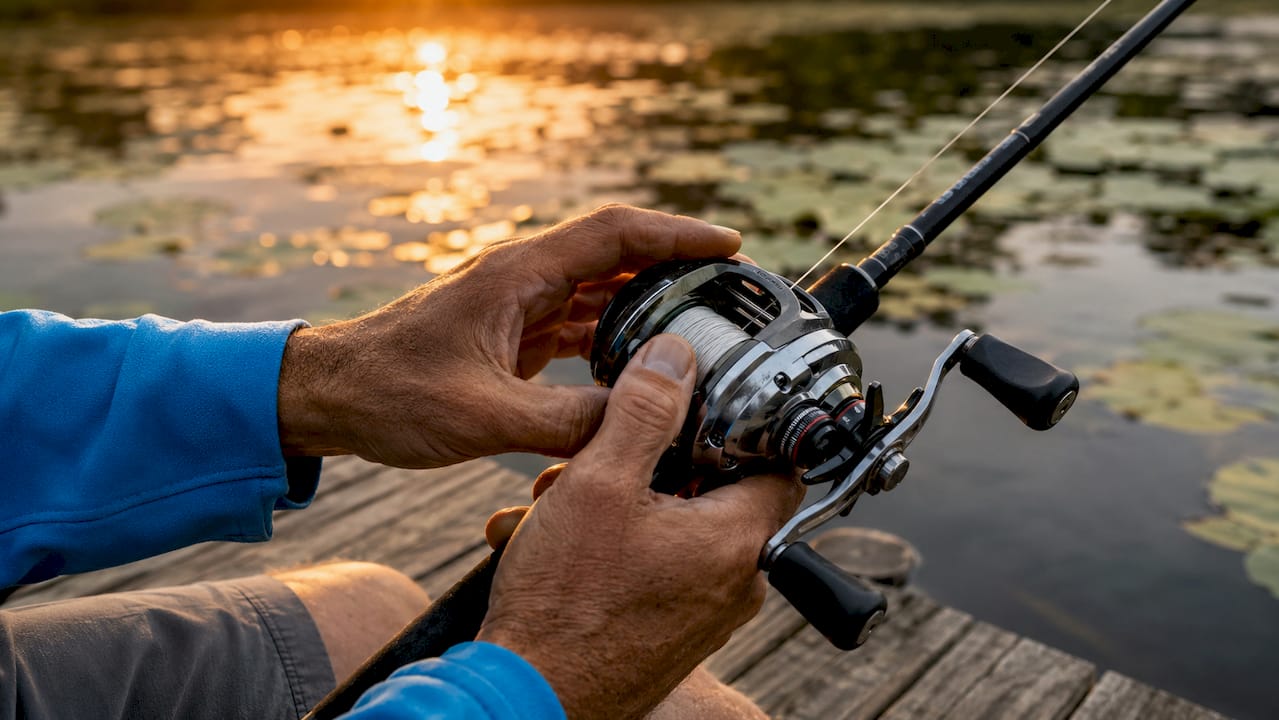
Baitcasters also handle heavier lines and lures more naturally than spinning reels. A spinning reel struggles with braided line above 30 lb test and heavy jigs, while a quality baitcaster from Shimano or Abu Garcia handles both without issue. That strength makes baitcasters the go-to tool for power fishing techniques like flipping, pitching, and punching through thick vegetation.
How do baitcaster reels work? Mechanics and components explained
The core of every baitcasting reel is the rotating spool. When you cast, the spool spins to release line. The problem is that the spool can spin faster than the line leaves the rod tip, creating a tangle called backlash. Every mechanical feature in a baitcaster exists to prevent or manage that one problem.
Here are the key components and what each one does:
- Spool tension knob: Controls how freely the spool rotates. Tighten it to slow the spool down, loosen it for longer casts.
- Braking system: Either magnetic or centrifugal. Magnetic brakes use adjustable magnets to slow the spool. Centrifugal brakes use friction pins that engage at high speed. Both reduce backlash, especially on the back half of the cast.
- Gear ratio: Expressed as a number like 7.1:1, this tells you how many times the spool rotates per handle turn. High ratios like 8.1:1 retrieve line fast for open water. Lower ratios like 5.4:1 deliver more torque for pulling fish out of heavy cover.
- Level-wind system: A moving line guide that distributes line evenly across the spool during retrieval. Disengaging level-wind systems stop the guide during the cast, reducing friction and improving casting distance by 10–15% compared to non-disengaging models. That distance gain matters when you are reaching feeding fish across a wide flat.
- Drag system: A star-shaped dial on most baitcasters that controls how much resistance a fish feels when pulling line. A smooth, powerful drag is critical for landing big salmon or steelhead.
The worm gear and pawl inside the level-wind mechanism are the parts most prone to wear. Keep them clean and lubricated to prevent uneven line distribution and line breakage during hard casts.
Pro Tip: After every few trips, drop a small amount of reel oil onto the level-wind worm gear. It takes 30 seconds and adds months to your reel’s life.
Advantages of baitcaster reels vs. spinning reels
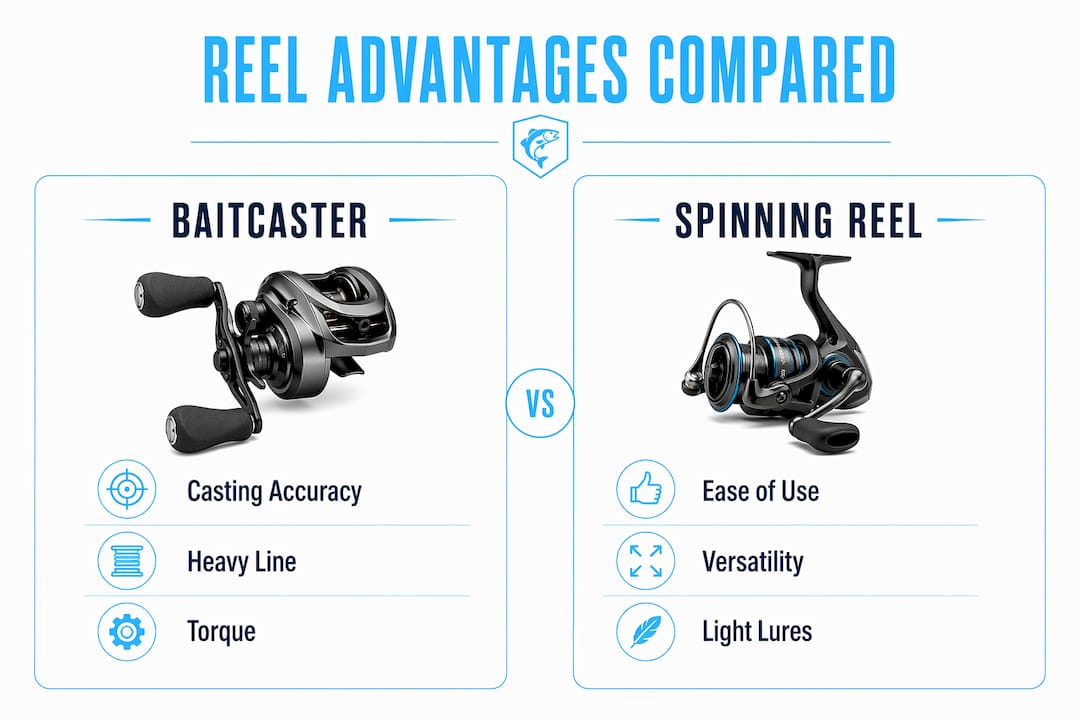
Baitcasters provide greater casting distance and accuracy than spinning reels and handle heavier lures and lines with less effort. That is not an opinion. It is the reason tournament bass anglers, Pacific Northwest salmon guides, and saltwater inshore anglers reach for baitcasters when conditions get serious.
The key advantages stack up fast:
- Casting accuracy: Thumb control lets you feather the spool and stop the lure mid-flight, dropping it exactly on target.
- Line capacity and strength: Baitcasters load heavier monofilament, fluorocarbon, and braid without the line twist problems that plague spinning reels.
- Torque: Lower gear ratios on baitcasters generate real pulling power for dragging fish out of structure.
- Ergonomics: Baitcasters are compact and ergonomic, sitting naturally in the palm during long casting sessions without fatigue.
Here is how the two reel types compare directly:
| Feature | Baitcaster reel | Spinning reel |
|---|---|---|
| Casting accuracy | High, thumb-controlled | Moderate |
| Heavy lure handling | Excellent | Limited |
| Backlash risk | Present, manageable | None |
| Gear ratio options | Wide range | Limited |
| Learning curve | Steep | Gentle |
| Line twist | Minimal | Common with braid |
| Best use | Bass, salmon, heavy cover | Light lures, finesse, beginners |
The spinning reel wins on ease of use, especially for first-season anglers. The baitcaster wins on nearly every performance metric once you put in the practice time. For anglers targeting Pacific Northwest salmon and steelhead with the salmon and steelhead setups that demand heavy gear and precise presentation, the baitcaster is the right tool.
Common challenges with baitcaster reels and how beginners can overcome them
Backlash is the single biggest obstacle for new baitcaster users. It happens when the spool spins faster than the line exits the rod tip, creating a bird’s nest of tangled line. Every beginner hits this wall. The good news is that it is completely fixable with the right approach.
Most first-time baitcaster users experience multiple backlashes per session in their first weeks. Expect 2–4 weeks of consistent practice before your casts become reliable. That timeline sounds long, but the payoff in casting control is worth every untangled knot.
Follow these steps to build your baitcasting skills fast:
- Start with tight brakes. Adjustable magnetic brakes help tailor cast control. Set them at maximum when you begin and ease off gradually as your thumb control improves.
- Use heavier lures first. A 3/8 oz or 1/2 oz lure loads the spool more predictably than a light finesse bait. Heavier lures are forgiving and build your feel for spool speed faster.
- Practice short casts. Start at 20–30 feet before trying to bomb casts across open water. Short casts build muscle memory without punishing backlash consequences.
- Keep your thumb on the spool. The moment the lure hits the water, press your thumb down to stop the spool. That single habit eliminates most backlash.
- Choose a beginner-friendly reel. Look for reels with both magnetic and centrifugal braking options, a wide spool for easy line management, and a comfortable grip. Abu Garcia’s Revo series and Shimano’s Curado line are solid starting points.
Most anglers transition to baitcasters after gaining confidence with spinning reels first. There is no shame in that path. Spinning reels teach you casting mechanics without the backlash penalty, and that foundation makes the baitcaster transition smoother.
Pro Tip: Practice in a grass field before hitting the water. No wind, no fish pressure, and no wasted fishing time while you dial in your thumb control.
How to choose the right baitcaster reel for your fishing style
Choosing a baitcasting reel comes down to matching the reel’s specs to your target species, fishing environment, and casting technique. A reel that crushes it for bass in a Georgia reservoir may be the wrong call for steelhead on the Clearwater River.
Gear ratio and technique matching
Gear ratio selection is the most important spec decision you will make. High ratios (7.1:1 and above) work best for fast-moving baits like topwater lures, spinnerbaits, and jerkbaits. Low ratios (5.4:1 to 6.4:1) deliver the torque you need for deep cranking, swimbaits, and pulling big fish from heavy structure. Match the ratio to your technique before you match anything else.
Frame material and durability
Aluminum frames are heavier but stiffer, which keeps the spool aligned under load. That alignment matters when a 20 lb king salmon is pulling drag. Graphite frames are lighter and resist corrosion better, making them a smart pick for saltwater or wet Pacific Northwest conditions. For the best fishing lakes in Northern Wisconsin or West Coast river systems, aluminum frames hold up to the abuse.
Freshwater vs. saltwater considerations
Saltwater baitcasters need sealed bearings, corrosion-resistant coatings, and stainless steel components. Freshwater reels can get away with less protection but still benefit from regular cleaning. If you fish both environments, a sealed saltwater-rated reel works in freshwater, but a freshwater reel will corrode fast in salt.
Hand orientation and fit
Reel fit in the palm and right or left hand orientation directly affect casting efficiency and comfort. Right-handed casters typically use a right-hand retrieve reel, though many bass anglers prefer left-hand retrieve to avoid switching the rod between hands after the cast. Try both before committing.
Here is a quick spec reference for matching reels to fishing scenarios:
| Fishing scenario | Recommended gear ratio | Frame material | Key feature |
|---|---|---|---|
| Bass in heavy cover | 6.4:1 to 7.1:1 | Aluminum | Strong drag, low profile |
| Open water fast retrieves | 7.1:1 to 8.1:1 | Graphite or aluminum | High speed, light weight |
| Salmon and steelhead | 5.4:1 to 6.4:1 | Aluminum | High line capacity, sealed bearings |
| Saltwater inshore | 6.4:1 to 7.1:1 | Aluminum, sealed | Corrosion resistance |
| Beginner freshwater | 6.4:1 | Graphite | Adjustable brakes, ergonomic grip |
Key takeaways
A baitcaster reel delivers superior casting accuracy, heavier line capacity, and more torque than a spinning reel, making it the right choice for anglers ready to put in the practice time.
| Point | Details |
|---|---|
| Core definition | A baitcasting reel mounts on top of the rod with a thumb-controlled rotating spool for precision casting. |
| Braking systems matter | Magnetic and centrifugal brakes reduce backlash; beginners should start with maximum brake settings. |
| Gear ratio drives technique | Match high ratios (7.1:1+) to fast retrieves and low ratios (5.4:1) to heavy cover and big fish. |
| Learning curve is real | Expect 2–4 weeks of practice before casting reliably; heavier lures and short casts speed up the process. |
| Material affects durability | Aluminum frames suit heavy loads and saltwater; graphite frames offer lighter weight and corrosion resistance. |
Why I think most beginners give up on baitcasters too soon
Here is something most gear articles will not tell you: the first two weeks with a baitcaster are supposed to be frustrating. Every bird’s nest you pick out is teaching your thumb something a spinning reel never could. The anglers who quit during that window miss the point entirely.
I have watched people pick up a baitcaster for the first time, throw three backlashes in a row, and immediately reach back for their spinning rod. That reaction is understandable. But it is the wrong call. The thumb control you develop on a baitcaster changes how you fish permanently. You start reading the cast differently. You feel the lure in the air. You stop the spool before the lure hits the water instead of after.
The other thing I see beginners get wrong is chasing the lightest, fastest reel right out of the gate. A 8.1:1 high-speed reel is not a beginner reel. It spins fast, the spool accelerates hard, and backlash happens before your thumb even registers the problem. Start with a 6.4:1 or 7.1:1 reel with strong magnetic brakes. Build your feel. Then upgrade when you are ready.
Pairing your baitcaster with the right lure matters just as much as the reel itself. Check out the PNW spinnerbait guide for lure pairings that work well with baitcasting setups in West Coast conditions. The reel is only half the equation.
— Nick
Gear up with Highclasstackleco for your next cast
Ready to put a baitcaster in your hands? Highclasstackleco carries a curated lineup of premium fishing tackle built for real-world West Coast conditions, from Pacific Northwest river systems to saltwater inshore flats. Whether you are rigging up for your first baitcasting session or dialing in a salmon setup that can handle serious weight, the gear at Highclasstackleco is built to perform when it counts.

Browse the full collection at Highclasstackleco and find tackle designed by anglers who fish the same waters you do. While you are there, grab a component tackle box to keep your baitcasting accessories organized and ready for every trip. No fluff. Just gear that works.
FAQ
What is a baitcaster reel used for?
A baitcaster reel is used for casting heavier lures and lines with precision, making it the preferred choice for bass fishing, salmon, steelhead, and any technique requiring accurate lure placement in heavy cover or open water.
How long does it take to learn to use a baitcaster?
New users typically need 2–4 weeks of consistent practice before casting reliably without frequent backlashes. Starting with tight brake settings and heavier lures speeds up that learning curve significantly.
What is the difference between a baitcaster and a spinning reel?
A baitcaster mounts on top of the rod with a rotating spool you control with your thumb, while a spinning reel hangs below the rod with a fixed spool. Baitcasters offer more accuracy and handle heavier gear; spinning reels are easier to learn and better for light lures.
What gear ratio should a beginner choose?
A 6.4:1 gear ratio is the best starting point for most beginners. It offers a balance of retrieval speed and torque without the aggressive spool acceleration of high-speed reels that increases backlash risk.
Do baitcaster reels work for salmon and steelhead fishing?
Yes. Baitcasters with aluminum frames, sealed bearings, and high line capacity are well suited for salmon and steelhead. Low gear ratios in the 5.4:1 to 6.4:1 range deliver the torque needed to control big fish in fast Pacific Northwest river currents.
Recommended
- Super Bait Secrets: Top Picks for Salmon and Steelhead – High Class Tackle Co.®
- What Is a Fishing Media Brand: Anglers’ Guide – High Class Tackle Co.®
- Spinnerbait guide: boost your Pacific Northwest fishing – High Class Tackle Co.®
- Spinfish Explained: Techniques, Gear, and Lures – High Class Tackle Co.®
0 comments