

A family fishing tradition is a recurring, shared practice where family members fish together regularly, building bonds, passing down gear, and creating rituals that outlast any single catch. It’s not about the fish. It’s about the people on the bank beside you, the rod your grandfather handed you, and the inside joke your family has about “the spot with the big oak tree.” These traditions run deep, and once they take hold, they tend to stick for generations.
What is a family fishing tradition, really?
At its core, a family fishing tradition is a pattern of shared fishing experiences that becomes woven into a family’s identity. The Missouri Department of Conservation describes fishing as a way for families to escape life’s busyness and create memories that last across generations. What separates a tradition from a one-off trip is repetition, ritual, and meaning.
You know you’ve got a real tradition when these elements show up:
- Scheduled trips that happen annually, seasonally, or even weekly, regardless of weather or fish counts
- Legacy gear passed from parent to child, like a favorite lure or a worn tackle box that carries more history than hardware
- Shared rituals such as the same breakfast spot before hitting the water, or a fish fry at the end of every outing
- Private language including secret names for fishing holes and jokes only your family gets
- Mentorship moments where older family members teach younger ones how to tie a knot, read the water, or stay patient
- Inclusion markers like gifting a child their first rod as a rite of passage into the family’s fishing culture
The tradition lives in those details, not in the size of the catch.
What rituals actually keep family fishing traditions alive?
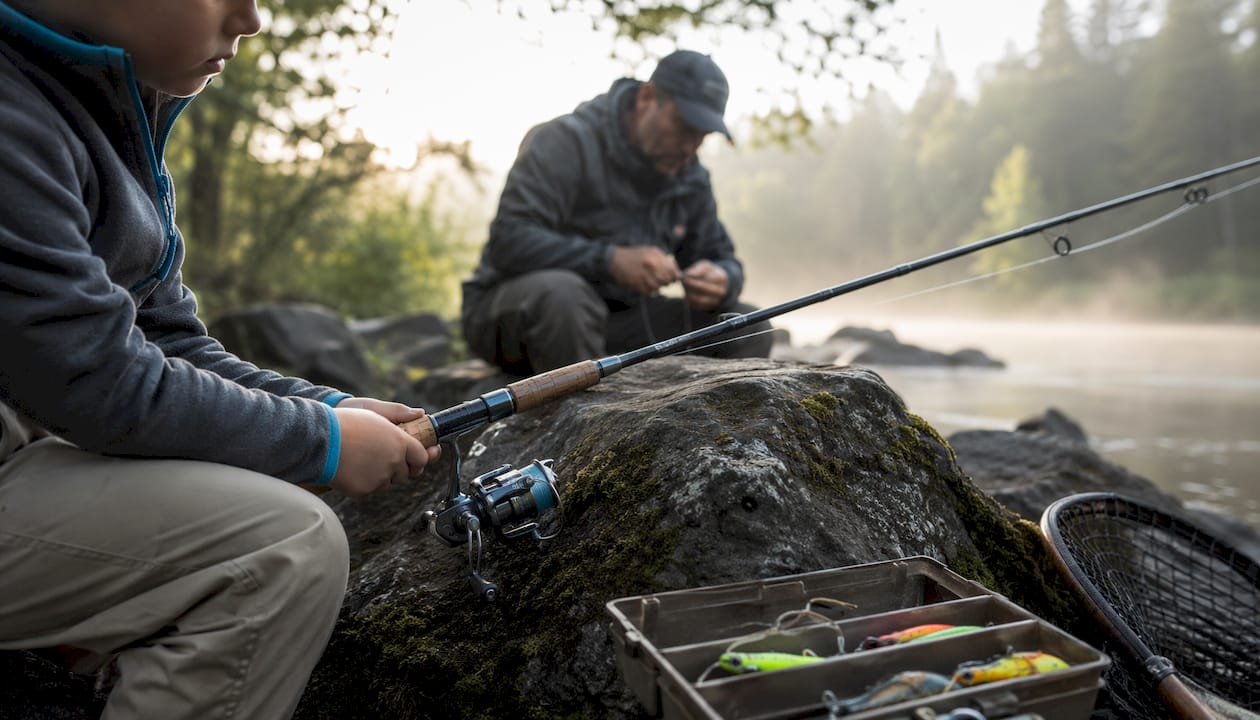
Rituals are the glue. Without them, a fishing trip is just a fishing trip. With them, it becomes something your kids will tell their kids about.
Family fishing traditions commonly include scheduled trips, passing down legacy gear, shared inside jokes, harvest-and-fry rituals, and gifting children fishing rods early to symbolize inclusion. Each of these practices does something specific: it creates a repeatable experience that signals belonging.
- Annual or weekly trips anchor the tradition to the calendar, giving everyone something to anticipate
- Heirloom gear like a grandfather’s lure or a battered tackle box creates a physical family connection that no photo album can replicate
- Harvest-and-fry rituals turn the catch into a communal meal, adding a sensory memory to the experience
- Secret spot names and private jokes build a shared family language that outsiders simply don’t have access to
- First rod gifting signals to a child that they are now part of something bigger than themselves
Pro Tip: Gift a child their first rod before they even ask for one. That early gesture of inclusion plants the seed of lifelong interest far more effectively than waiting until they show enthusiasm.
Safety and conservation: what every family needs to practice on the water
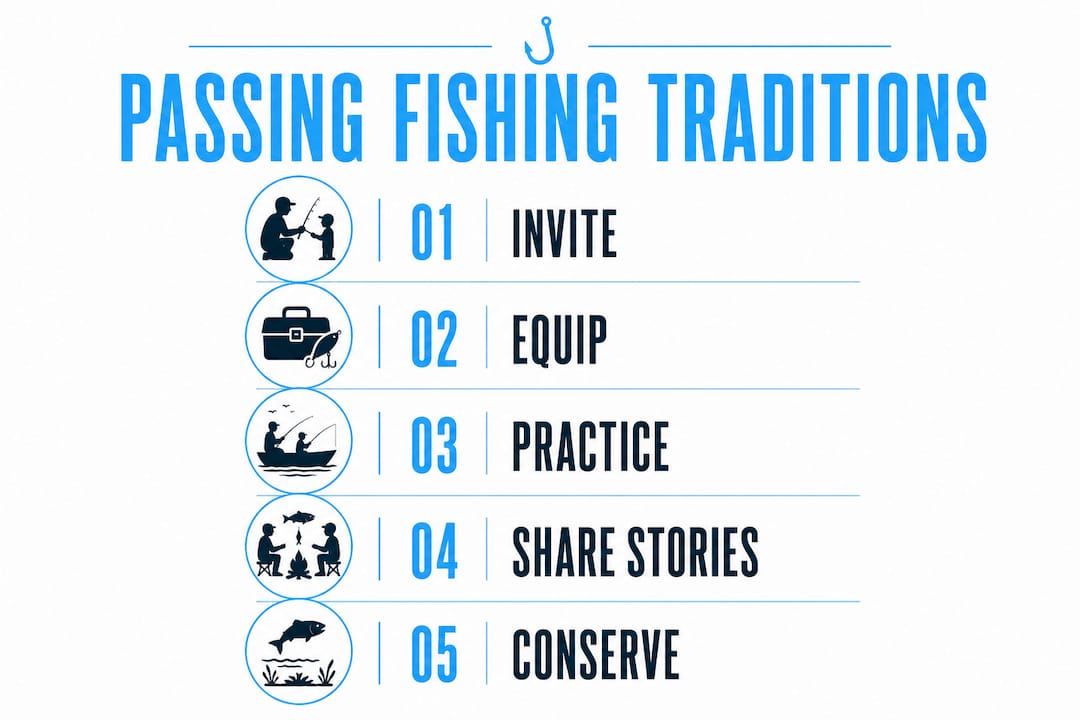
Safety and conservation aren’t optional add-ons. They’re part of what makes a fishing tradition worth passing down. Teaching kids to respect the water and the fish in it is as much a part of the tradition as teaching them to cast.
Responsible catch-and-release, protection of aquatic habitats, and multi-generational environmental awareness are core principles families should model on every outing. Here’s what that looks like in practice:
- Life jackets for all ages near open water, no exceptions, regardless of swimming ability
- Sun protection including UV-rated hats and sunscreen, especially for children with sensitive skin. A UV-protection fishing hat keeps kids comfortable and protected during long sessions
- Catch-and-release technique taught early, including proper fish handling to minimize stress on the fish
- Leave no trace habits like packing out all line, hooks, and packaging to protect wildlife
- Fishing license awareness so kids grow up understanding that regulations exist to protect the resource they love
- Weather monitoring before and during any outing, particularly on open water
Conservation mindfulness sustains the fishery for the next generation. When your kids understand why you release a small bass or avoid disturbing spawning beds, they carry that ethic forward.
Gear and techniques that actually work for families with kids
The fastest way to kill a family fishing tradition before it starts is to make it too hard, too long, or too gear-heavy for beginners. Short, enjoyable sessions that prioritize patience and shared quiet over catching big fish keep children engaged and coming back.
Start with the right gear:
- Child-sized spinning rods in the 4–5 foot range with lightweight reels are far easier for small hands to manage
- Pre-tied rigs with bobbers and small hooks eliminate frustration and let kids focus on the experience
- Barbless hooks reduce injury risk and make catch-and-release faster and less stressful
- Tackle storage that kids can manage themselves, like a small component tackle box, builds ownership and pride
Techniques that work for beginners:
- Bobber fishing for panfish like bluegill and perch. The visual strike is exciting and the fish are cooperative.
- Bank fishing at ponds where kids can move around, explore, and stay engaged without needing boat skills
- Worm-and-hook rigs that require minimal casting skill and produce consistent results
- Mini competitions like “first fish” or “most fish” that add playful stakes without pressure
Forcing the tradition on children backfires. The best results come from gifting the experience and letting curiosity do the work. Keep sessions under two hours for younger kids, and always end on a high note.
Why family fishing traditions carry real cultural weight
The value of a family fishing tradition runs deeper than most people expect. High Country News notes that successful fishing traditions focus less on the fish caught and more on the intergenerational space of mentorship and bonding the activity provides. That’s the real catch.
“Fishing allows us to escape the hub-bub of life, and we can use the time to reflect on life and all of its twists and turns.” — James and Katie Dockery, Missouri Department of Conservation
Fishing creates a neutral, distraction-free space where a 10-year-old and a 65-year-old can sit side by side with equal stakes in the outcome. There are no screens, no schedules competing for attention, and no performance pressure. That kind of shared physical presence is rare in modern family life, and fishing delivers it naturally.
Pro Tip: Bring a small journal on family fishing trips. Logging the date, location, weather, and what was caught turns a single outing into a record your family will treasure for decades.
How deep do American fishing traditions actually run?
Fishing is woven into the American story from the start. Indigenous nations across North America built entire cultures around fishing long before European contact, with the Pacific Northwest’s salmon traditions among the most documented and enduring. Colonial-era families fished for survival, and that practicality evolved into recreation as the country industrialized. By the early 20th century, figures like President Grover Cleveland and later Dwight Eisenhower were publicly associated with fishing as a cherished American pastime.
Today, fishing remains one of the most participated-in outdoor activities in the United States, with millions of licenses sold annually across all 50 states. State agencies like the Missouri Department of Conservation and Michigan Sea Grant actively promote family fishing programs precisely because the tradition has proven value for community health, conservation awareness, and outdoor engagement across generations.
How fishing traditions actually get passed down
The transfer happens in layers, not in a single moment. It starts with proximity: a child who watches a parent fish absorbs the rhythm of it before they ever hold a rod. Then comes participation, first as a helper, then as a student, then as a peer. By the time that child is an adult, the tradition feels less like something they were taught and more like something they simply are.
Heirloom gear plays a specific role in this transfer. A lure that belonged to a grandparent carries emotional weight that a brand-new one never can. Families who pass down fishing gear as heirlooms create a tactile link to previous generations that reinforces the tradition’s continuity. The gear becomes a physical story.
Language matters too. Families who name their fishing spots, develop shorthand for certain techniques, or share recurring jokes about past trips build a private vocabulary that signals membership. That language is part of what gets passed down alongside the rods and reels.
Where American families fish together: popular spots and events
Some locations have become synonymous with family fishing in the United States. Oregon’s Timothy Lake in the Mount Hood National Forest draws families for its calm waters and consistent trout fishing. The Great Lakes region, particularly Lake Huron and its tributary creeks, has produced multi-generational fishing families for over a century. The Florida Keys offer accessible saltwater options for families chasing snapper and grouper. The Ozarks in Missouri and Arkansas remain a heartland destination for bass and catfish traditions.
On the events side, National Fishing and Boating Week, held each june, includes free fishing days in most states where license requirements are waived to encourage new families to try the sport. Many state DNR agencies host youth fishing derbies and family fishing clinics throughout the spring and summer months, giving new families a structured entry point into the tradition.
The emotional payoff of keeping a fishing tradition going
Families who fish together consistently report something that goes beyond recreation. The Missouri Department of Conservation captures it well: fishing crafts lifelong bonds and passes on values that transcend the sport itself. Patience, resilience, respect for nature, and the ability to sit quietly with someone you love are all things fishing teaches without ever announcing them as lessons.
For children, participating in a family fishing tradition builds confidence, sharpens attention, and provides a sense of belonging that structured activities often can’t replicate. For adults, it’s a reliable way to reconnect with both family and the natural world. The tradition creates a shared emotional vocabulary that families draw on long after the rods are put away.
Gear up with Highclasstackleco
Ready to build something worth passing down? Highclasstackleco was built by anglers who understand that the right gear is part of the story. From premium tackle and flashers to custom blades and terminal gear, everything we make is designed to perform on real water and hold up across generations. Whether you’re outfitting a first-timer or upgrading a family tackle collection, we’ve got what you need. Shop terminal tackle components and start building your family’s tradition the right way.
Key Takeaways
Family fishing traditions are built on repeated shared experiences, meaningful rituals, and the deliberate passing of knowledge and gear from one generation to the next.
| Point | Details |
|---|---|
| Tradition over catch | The value lies in mentorship and bonding, not in how many fish you land. |
| Rituals create identity | Scheduled trips, heirloom gear, and private spot names build a family’s unique fishing culture. |
| Start simple with kids | Short sessions, bobber rigs, and mini competitions keep children engaged and coming back. |
| Safety and conservation belong | Teaching catch-and-release and water safety early makes the tradition responsible and sustainable. |
| Passing it down takes layers | Proximity, participation, and heirloom gear all work together to transfer the tradition across generations. |
Recommended
- What Is a Fishing Lifestyle Subscription for Anglers – High Class Tackle Co.®
- What Is a Fishing Tournament? Your Complete Guide – High Class Tackle Co.®
- What is a fishing content series? An angler’s guide – High Class Tackle Co.®
- What Is a Fishing Collab? Your Complete Angler’s Guide – High Class Tackle Co.®
0 comments