

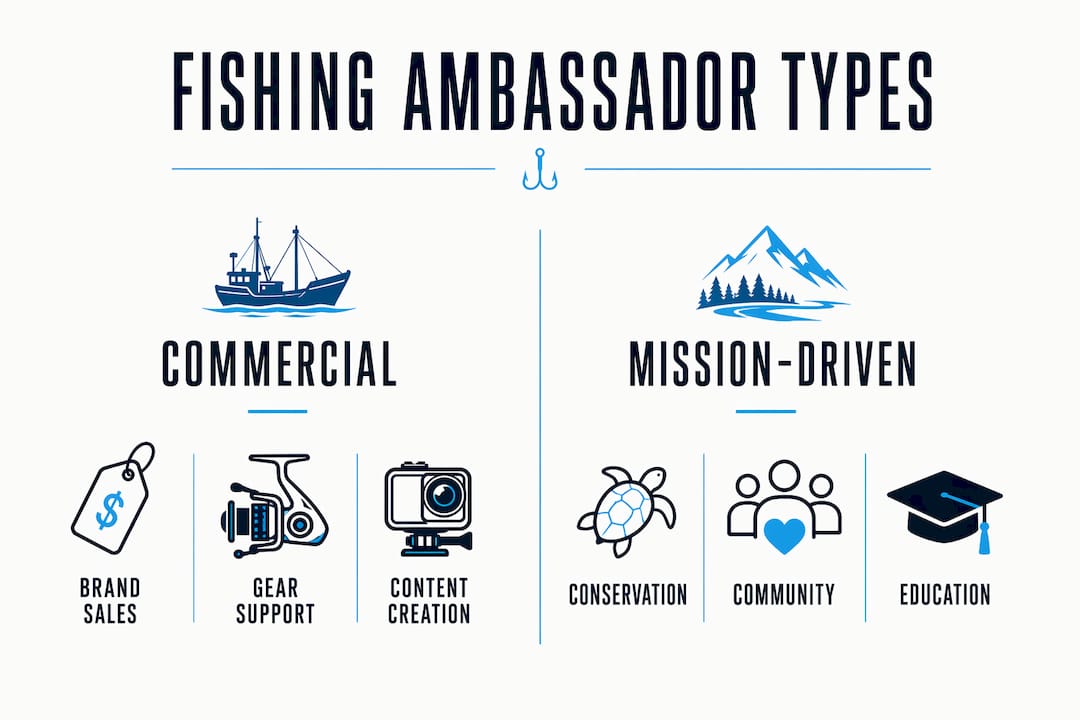
A fishing ambassador is a trusted angler who represents a brand, community, or conservation group through outreach, content, and hands-on engagement. The role splits into two tracks: commercial brand ambassadors often receive paid contracts, free gear, discounts, or affiliate commissions, while mission-driven community ambassadors typically volunteer or earn a modest stipend.
- Who they are: Active anglers who carry a brand or cause into the real world
- What they do: Create content, host events, teach newcomers, and represent organizations publicly
- Compensation reality: Commercial roles can pay; community roles often reward with gear, training, and access rather than cash
Table of Contents
- What is a fishing ambassador, exactly?
- What do fishing ambassadors do day-to-day?
- Do fishing ambassadors get paid?
- How to become a fishing ambassador, step by step
- What skills and time do brands actually look for?
- Ethics, FTC rules, and conservation responsibilities
- How to measure your impact and grow the role
- How Highclasstackleco runs ambassador relationships
- Key Takeaways
- Why ambassadors are the real engine of fishing culture
- Ready to fish with Highclasstackleco?
- Useful sources
What is a fishing ambassador, exactly?
Fishing ambassadors operate in two primary categories, and knowing which one fits your goals changes everything about how you apply and what you expect.
Commercial brand ambassadors work with tackle companies, apparel lines, and gear manufacturers. Their job is to drive awareness and sales through authentic content, product testing, and local presence. Brands expect social posts, photo and video assets, event appearances, and honest product feedback. Incentives range from free gear and affiliate commissions to paid contracts for high-performing ambassadors.
Mission-driven community ambassadors serve conservation groups, state fish agencies, nonprofits, and programs like Fishing for the Mission 22. Their focus is volunteer leadership, local outreach, and representing fishing communities in public forums. The Fish On Ambassador Program, for example, recruits everyday anglers to participate in public meetings and provides stipends to offset time and travel costs. No policy expertise required.
Pro Tip: Authenticity and local trust beat follower count every time. A 2,000-follower angler who runs a weekly bank-fishing meetup in their county will outperform a 20,000-follower account with zero local engagement for most community programs.
What do fishing ambassadors do day-to-day?
The work is more varied than most people expect. Here is a realistic look at how duties spread across a typical season:
| Activity | Frequency | Notes |
|---|---|---|
| Social media posts (photos, reels, stories) | 2–4x per week | Usually requires brand approval for product claims |
| Product testing and written feedback | Monthly | Gear reviews, field notes, or video walkthroughs |
| Hosting or staffing events (clinics, tournaments, meetups) | 2–6x per season | May require training or certification first |
| Teaching newcomers (casting, rigging, safety) | Ongoing | Core to community programs |
| Public forum or commission appearances | As needed | Mission-driven programs; training provided |
| Recruiting new participants | Ongoing | Especially during spring and fall outreach windows |

Seasonal rhythms matter. Spawning runs on the West Coast drive heavy engagement windows for salmon and steelhead ambassadors in fall and winter. Tournament season in spring and summer means event staffing spikes. Conservation ambassadors often see their busiest periods align with public comment windows for fisheries management decisions.
Some activities, especially public statements on behalf of an agency or brand, require pre-approval. Know the rules before you post or speak.
Do fishing ambassadors get paid?
Compensation varies widely, and setting realistic expectations upfront saves a lot of frustration.
- Paid contracts: Reserved for ambassadors with proven reach, consistent deliverables, and strong engagement. More common in commercial programs.
- Product-for-content: The most common entry-level arrangement. You receive gear; you create content featuring it.
- Affiliate commissions: You get a referral code or link; you earn a percentage of sales you drive.
- Discounts: Typically discounts off retail, sometimes with a small gear package at signing.
- Stipends: Common in mission-driven programs like Fish On, where they offset time and travel rather than pay a wage.
- Volunteer with non-monetary perks: Training, loaner gear, event access, and community credibility. Oregon’s community fishing ambassador program provided loaner rods and apparel to remove barriers to participation and generated real media assets in return.
When a brand offers only samples or discounts, that is still compensation under FTC rules. Disclose it. More on that below.
How to become a fishing ambassador, step by step
The path is straightforward. The execution is what separates applicants who get callbacks from those who don’t.
- Pick your niche and lane. Salmon on the Columbia? Kokanee in the high lakes? Saltwater off the coast? Specificity signals credibility. Brands and programs want someone who owns a geography or species, not a generalist.
- Build a content portfolio. Aim for at least 3–5 posts that show your fishing knowledge, your personality, and your ability to create clean photos or short video. A fishing content series built around a single technique or location is a strong portfolio anchor.
- Get active locally. Attend club meetings, volunteer at youth fishing events, show up at public comment sessions. Local engagement is the single biggest differentiator for community programs.
- Gather basic media assets. A headshot, 3–5 action photos, and one short video clip (30–60 seconds) are the minimum most brands expect from an application.
- Write your pitch and send it.
Sample outreach email
Subject: Ambassador Application — [Your Name] | [Region/Species]
Hi [Brand/Program Contact],
I’m [Name], a [species] angler based in [city/region]. I’ve been fishing [waters] for [X] years and recently started creating content around [specific technique or topic]. My current audience is small but engaged, and I’m most active in [platform].
I’d love to represent [Brand/Program] because [specific reason tied to their product or mission]. I can offer [content type, event support, local outreach] in exchange for [gear/partnership/stipend].
I’ve attached a short portfolio. Happy to jump on a call.
[Name | Handle | Link]
Portfolio checklist before you hit send:
- 3–5 photos featuring you fishing (clear, well-lit, action or catch shots)
- 1 short video clip showing technique or personality
- Your top 3 posts by engagement (screenshot or link)
- One reference from a club, event organizer, or guide
- A one-paragraph bio with your species, region, and experience
Pro Tip: Demonstrate local trust with actions, not words. Lending gear to a beginner at a public access site, running a free rigging clinic at a bait shop, or organizing a cleanup on your home river tells a brand more than any follower count.
What skills and time do brands actually look for?
Core skills that matter most:
- Content creation: Photography, short-form video, and basic caption writing. You don’t need a film crew, but blurry phone photos won’t cut it.
- Teaching and mentoring: The ability to explain a technique to a first-timer without condescension.
- Event hosting: Comfort running a small group, managing logistics, and representing a brand professionally in public.
- Communication: Responding to brand contacts promptly, hitting deadlines, and flagging issues early.
Time commitment typically runs 3–8 hours per week during active season, with spikes around events. Vermont’s ambassador case study found that tracking volunteer hours and recruiting from related outdoor audiences helped programs grow participation and retention.
Brands consistently prioritize community trust, niche fit, and authentic engagement over raw follower counts. Geographic relevance matters too. A West Coast brand running salmon gear wants ambassadors on West Coast rivers, not accounts posting from the Gulf.
Ethics, FTC rules, and conservation responsibilities
The legal piece is simple but non-negotiable. The FTC requires that any material connection between you and a brand, including free gear, discounts, or commissions, must be clearly disclosed in every post where you feature that brand. Common phrasing: #ad, #sponsored, or “I received this product from [Brand] to review.” Bury it in a caption wall and you’re still liable.
Key ethical guidelines:
- Disclose every compensated relationship, every time, on every platform
- Avoid representing two directly competing brands simultaneously without written permission from both
- When speaking at public meetings or commission hearings on behalf of a program, stick to facts, cite sources, and represent the community accurately rather than advocating beyond your knowledge
- Conservation ambassadors carry a responsibility to represent fisheries data and regulations accurately. Overstating a fish population or downplaying a regulation to sound optimistic erodes the trust that makes the role valuable
Pro Tip: At public meetings, lead with your personal experience on the water, not policy arguments. “I’ve fished this stretch for 12 years and here’s what I’ve observed” carries more weight than a contested statistic and keeps you on solid ground.
This article is general information, not legal advice. Confirm current FTC disclosure requirements at ftc.gov for your specific situation.
How to measure your impact and grow the role
Brands and programs want proof. Build a simple monthly report that combines numbers and narrative.
KPIs to track:
- Event attendance (headcount at clinics, meetups, or tournaments you hosted or staffed)
- Referral code or affiliate link sales and clicks
- New sign-ups or registrations you drove
- Engagement rate on ambassador content (likes, comments, shares, saves)
- Content assets produced (photos, videos, posts delivered vs. agreed)
Once you have 3–6 months of consistent data, you have leverage. Convert demonstrated community outcomes into a negotiation: “I drove 40 new workshop sign-ups and produced 18 content assets last season. I’d like to discuss moving to a travel-covered arrangement for next year’s events.” That conversation lands very differently than “I’ve been loyal and I work hard.”
Growth path: supporting ambassador to lead field rep usually requires consistent deliverables over at least one full season, completion of any brand or program training, and at least one documented community outcome (a clinic you ran, a public comment you delivered, a recruitment event you organized).
How Highclasstackleco runs ambassador relationships
Highclasstackleco is a Pacific Northwest tackle brand built around salmon, steelhead, kokanee, and saltwater fishing. The brand runs community events, produces outdoor content, and collaborates with anglers who share its culture-forward identity. That context shapes exactly what a strong ambassador application looks like.
| Program Component | What Highclasstackleco Offers | What the Ambassador Provides |
|---|---|---|
| Gear support | Terminal tackle, apparel, and branded product | Field-tested content featuring the gear |
| Event presence | Tournament and event participation | On-site representation and content capture |
| Content rights | Co-branded media use | Photos, reels, and written posts |
| Region coverage | Pacific Northwest and West Coast focus | Local water access and community credibility |
To approach Highclasstackleco, align your pitch to their commercial objectives: drive product awareness, create local content that resonates with West Coast anglers, and support events. Their fishing collab guide is a direct window into how they think about partnerships. Read it before you write your pitch.
Pro Tip: Retail brands need content that sells gear. Show Highclasstackleco a post where you used their terminal tackle on a real fish, explain the technique, and tag the product. That single piece of content tells them more than a three-paragraph pitch letter.
Key Takeaways
A fishing ambassador earns trust on the water first, then translates that credibility into content, community, and commercial value for the brands and programs they represent.
| Point | Details |
|---|---|
| Two distinct types | Commercial brand ambassadors drive sales; mission-driven ambassadors lead community outreach and conservation. |
| Compensation varies | Paid contracts, gear-for-content, affiliate commissions, stipends, and volunteer perks are all legitimate arrangements. |
| Local trust wins | Authentic community engagement and niche focus outperform raw follower counts in most selection processes. |
| Disclose every time | FTC rules require clear disclosure of any material connection, including free gear, on every platform and every post. |
| Highclasstackleco fit | West Coast anglers with field-tested content and event experience are the strongest candidates for Highclasstackleco ambassador relationships. |
Why ambassadors are the real engine of fishing culture
The conventional wisdom says you need a big following to land an ambassador role. That framing gets it backwards. The programs that actually move the needle, from Oregon’s loaner-gear community model to Fish On’s public-forum stipend program, consistently recruit for local credibility and genuine passion first. Follower count is a lagging indicator of trust, not a leading one.
What brands and programs actually want is someone the local fishing community already listens to. That person might have 800 followers and a reputation for knowing every productive hole on a stretch of river. They show up, they teach, they create content because they love it, and they represent the brand or cause with the kind of conviction that no paid campaign can manufacture.
The ambassador role is also one of the most direct paths to a real career in the fishing industry. Field reps, brand managers, content directors, and program coordinators at tackle companies and conservation organizations overwhelmingly came up through ambassador and volunteer roles. The resume line matters less than the demonstrated track record of showing up and delivering.
Ready to fish with Highclasstackleco?
Highclasstackleco is the West Coast tackle brand for anglers who fish hard and want gear that keeps up. From terminal tackle and components built for salmon and steelhead to apparel that holds up on the water, the brand backs anglers who represent it with the same energy they bring to every trip.
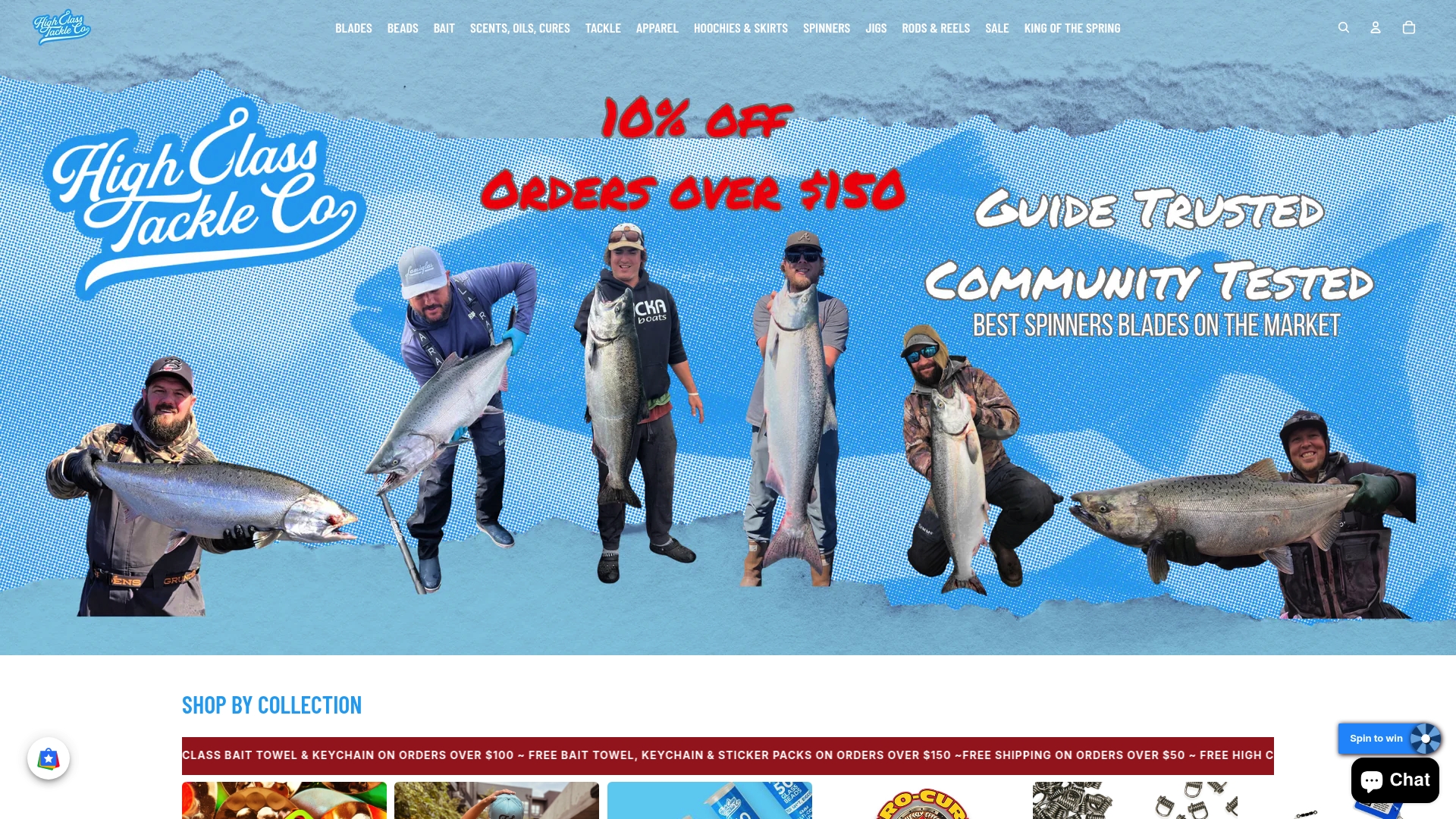
If you’re ready to connect with the Highclasstackleco community and explore ambassador opportunities, here’s what to include when you reach out:
- A portfolio link with 3–5 posts featuring real fishing content
- Community proof: a club membership, event you organized, or local waters you know cold
- A short pitch (3–5 sentences) explaining why you fish the same waters and share the same values as the brand
Head to highclasstackleco.com to explore the full product lineup and get in touch.
Useful sources
- Take Me Fishing (RBFF) — The national platform behind multiple ambassador case studies and program frameworks; start here for program design research.
- OR Community Fishing Ambassador Case Study — Detailed breakdown of how Oregon’s loaner-gear ambassador model recruited and retained participants.
- VT Retaining Anglers with Social Media Influencers — Vermont’s case study on tracking volunteer hours and recruiting from diverse outdoor audiences.
- Fish On Ambassador Program — Example of a stipend-supported public-forum ambassador program; useful for understanding mission-driven compensation models.
- Fishing for the Mission 22 — Volunteer ambassador job description for a veterans-focused fishing program; good template for community role expectations.
- American Museum of Fly Fishing Ambassador Program — Long-running outreach ambassador program established in 2012; useful for understanding museum and heritage organization ambassador structures.
- Okuma Ambassador Program — Manufacturer ambassador page showing typical eligibility criteria, content expectations, and media asset requirements.
- FTC Endorsement Guides (ftc.gov) — Primary source for disclosure requirements; consult directly for current rules on paid and gifted content.
Recommended
- What Is a Fishing Media Brand: Anglers’ Guide – High Class Tackle Co.®
- What Is a Fishing Collab? Your Complete Angler’s Guide – High Class Tackle Co.®
- What is a fishing content series? An angler’s guide – High Class Tackle Co.®
- What Is a Fishing Tournament? Your Complete Guide – High Class Tackle Co.®
0 comments