

A fishing collab is a partnership where two or more parties join forces to enhance fishing experiences, create unique gear, or manage fisheries sustainably. The term covers three distinct worlds: brand product partnerships like Fish Monkey teaming with Whitewater fabrics, recreational boater and co-angler teams working a tournament together, and multi-stakeholder fisheries management efforts led by organizations like the Sustainable Fisheries Partnership. Each form of fishing collaboration shares one core trait. Two or more parties bring different strengths to the table and walk away with results neither could achieve alone.
What is a fishing collab in brand gear partnerships?
Fishing brand collaborations are strategic partnerships that merge technical expertise from two companies into a single co-branded product. The goal is always the same: build something neither brand could engineer as well on its own. The result for anglers is gear that performs harder and lasts longer than standard single-brand offerings.
The Fish Monkey and Whitewater collab is the clearest example of this done right. Fish Monkey brought ergonomic glove design, and Whitewater contributed weather-defense fabrics. Together, they produced a continuous weather defense system running from sleeve cuff to fingertips, protecting anglers from sun and abrasion without sacrificing tactile control. That kind of uninterrupted protection is nearly impossible to achieve when one brand designs the whole product from scratch.
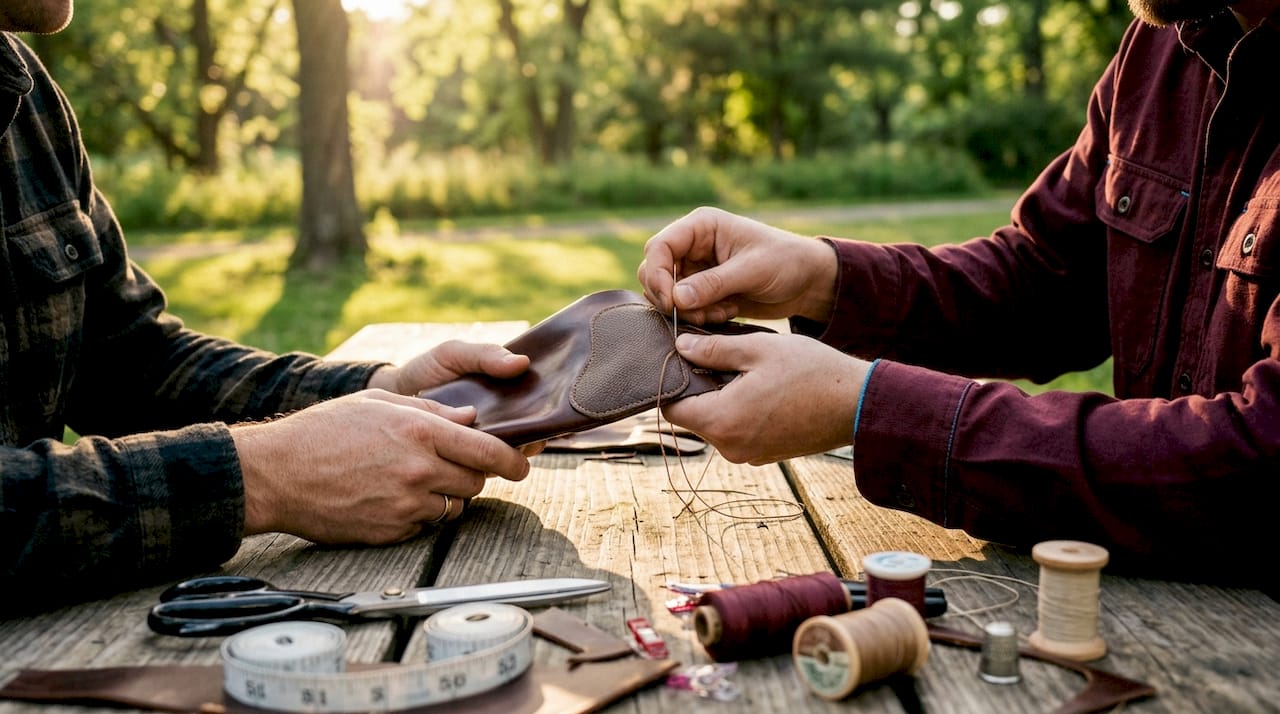
Not every fishing collab is purely technical. Simms and the Grateful Dead launched the “Dead on the Water” collection in 2025, blending technical fishing apparel with music culture and lifestyle identity. That collab proves fishing partnerships can carry emotional weight, not just performance specs. When a collab feels authentic rather than formulaic, it generates a stronger connection with anglers who live the culture every day.
The best brand collabs deliver these specific advantages:
- Technical integration: Each brand contributes a specialized skill set, such as fabric engineering or ergonomic design, that the other lacks.
- Weather and durability performance: Co-engineered materials address real field conditions, from Pacific Northwest rain to full-sun saltwater days.
- Style and identity: Cultural collabs like Simms x Grateful Dead connect gear to a lifestyle, making the product mean something beyond function.
- Market reach: Each brand brings its own audience, so a collab expands exposure for both parties simultaneously.
- Consumer trust: A below 2% product failure rate on the Fish Monkey x Whitewater glove line shows what rigorous co-engineering produces.
Pro Tip: When evaluating a brand collab, look for complementary expertise between the two partners. If both brands do the same thing, the collab is marketing. If each brings a distinct technical skill, the collab is engineering.
How does fishing teamwork operate for recreational anglers?
Recreational fishing teamwork is the practice of two or more anglers dividing roles, sharing knowledge, and coordinating tactics to catch more fish than either would alone. The most structured version of this is the boater and co-angler format used in tournament bass fishing, where one angler controls the boat and the other fishes from the front deck. Both roles carry specific responsibilities, and the partnership only works when each angler respects the other’s job.
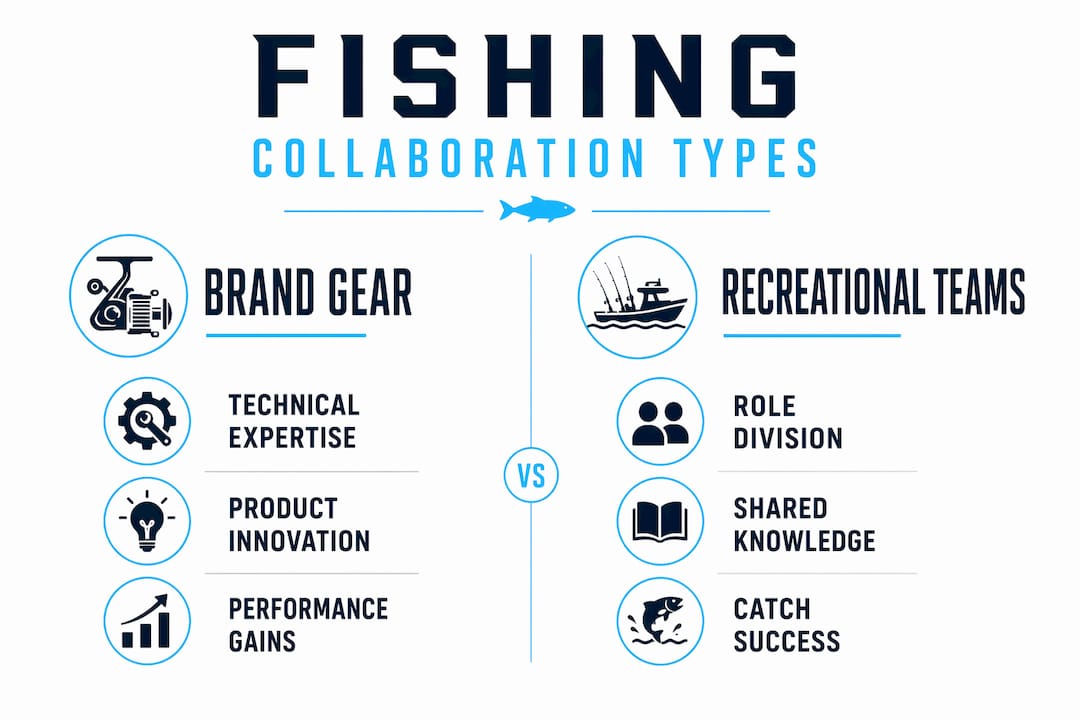
Pre-trip communication is the single most important factor in recreational fishing collaboration. Co-anglers who contact their boater before a tournament to discuss tackle, target species, and water conditions arrive with a shared game plan instead of competing agendas. That alignment directly improves results on the water.
Here is how successful fishing teamwork breaks down step by step:
- Make contact the night before. Discuss weather contingencies, equipment needs, and target areas. Night-before coordination calls between anglers align expectations and prevent confusion at the launch ramp.
- Assign clear roles. The boater manages boat positioning and navigation. The co-angler focuses on fishing and landing fish cleanly. Blurred roles create friction.
- Use zone coverage tactics. Each angler targets complementary water areas or uses varied lure presentations to cover more water efficiently. This is especially effective in tandem kayak setups or multi-boat teams.
- Respect gear etiquette. Keep your tackle organized and out of your partner’s space. A cluttered deck slows both anglers down and creates tension fast.
- Debrief after the trip. Talk about what worked, what did not, and what each angler learned. This is where the real knowledge transfer happens.
Pro Tip: If you are fishing as a co-angler, bring only what you need and ask your boater about their preferred boat layout before you load up. Showing up prepared and considerate sets the tone for the whole day.
The benefits of recreational fishing partnerships go beyond catch counts. Anglers who fish with more experienced partners absorb new techniques faster than those who fish alone. Shared trips also build the kind of trust that turns a one-time fishing partner into a long-term crew.
How do fisheries management collaborations work?
Collaborative fisheries management is a governance model where governments, commercial fishers, scientists, and NGOs jointly set rules and limits for fish stocks. No single party holds all the answers. Scientists bring population data, fishers bring on-the-water experience, and governments bring regulatory authority. The combination produces decisions that are more accurate and more widely accepted than top-down mandates.
The 2026 Sustainable Fisheries Partnership emphasizes unifying diverse data sources and stakeholder cooperation for long-term resource viability. That means catch limits, marine protected areas, and adaptive management strategies are built from multiple data streams, not just government surveys. The result is a more resilient system that can adjust when fish populations shift unexpectedly.
Incorporating fishers’ experiential knowledge alongside scientific data produces better fisheries governance and stronger support for co-management rules. Fishers who helped shape a regulation are far more likely to follow it. That buy-in is a practical outcome of genuine collaboration, not just a philosophical benefit.
Key elements that make fisheries collaborations succeed:
- Shared goals: All parties must agree on what a healthy fishery looks like before debating how to get there.
- Transparent data sharing: Scientific surveys and fisher logbooks both contribute to the decision-making pool.
- Adaptive governance: Management plans built on 20-year horizons with built-in review points outperform rigid annual rules.
- Marine protected areas: Collaboratively designed no-take zones protect spawning habitat while giving fishers input on boundaries.
“Trust is the foundation for effective collaborative decision-making in fisheries management. Without it, even the best data produces conflict instead of solutions.” — NOAA Fisheries
What are the benefits and challenges of fishing collaborations?
Fishing collaborations produce real gains across every context, but they also carry predictable friction points. Knowing both sides helps anglers and brands set up partnerships that actually deliver.
The benefits are concrete. Brand collabs produce gear with measurable performance gains. Recreational teams catch more fish and learn faster. Fisheries partnerships create sustainable catch limits that protect stocks for future generations. Community building is a quieter benefit, but it is just as real. Shared fishing experiences and co-branded products create identity and belonging within the angling community. Highclasstackleco is built on exactly this idea, connecting Pacific Northwest anglers through gear, events, and fishing lifestyle apparel that carries cultural meaning.
The challenges are equally predictable. Misaligned goals kill collabs before they produce anything. A brand partnership where one company wants performance and the other wants brand exposure will stall at the design phase. Recreational teams fall apart when roles are unclear or one angler dominates decisions. Fisheries collaborations collapse when trust breaks down between scientists and fishers who feel their knowledge is being dismissed.
| Collaboration type | Primary goal | Key participants | Example outcome |
|---|---|---|---|
| Brand gear partnership | Product innovation | Two fishing brands | Fish Monkey x Whitewater glove line |
| Recreational team fishing | Improved catch results | Boater and co-angler | Tournament success through role clarity |
| Fisheries management | Sustainable fish stocks | Governments, fishers, scientists, NGOs | Adaptive catch limits and marine protected areas |
The fix for most collaboration failures is the same across all three types. Define the goal clearly before the partnership starts, assign roles that match each party’s strengths, and build in regular check-ins to catch misalignment early.
Key Takeaways
A fishing collab succeeds when each partner brings a distinct strength, roles are clearly defined, and shared goals are agreed upon before the work begins.
| Point | Details |
|---|---|
| Brand collabs require complementary expertise | Gear partnerships work best when each brand contributes a unique technical skill, not overlapping capabilities. |
| Pre-trip communication drives team fishing success | Co-anglers who contact boaters the night before arrive with aligned tactics and better results. |
| Fisheries management needs trust to function | NOAA Fisheries confirms trust is the foundation for effective multi-stakeholder fisheries decisions. |
| Zone coverage maximizes water fished | Teams using varied presentations and complementary positions catch more fish than anglers duplicating each other’s approach. |
| Cultural collabs build community, not just products | Partnerships like Simms x Grateful Dead show that fishing collabs can carry emotional and identity value beyond gear performance. |
Why fishing collaborations matter more than most anglers realize
I have watched the fishing collab space evolve from simple co-branded hats to full technical engineering partnerships and multi-stakeholder conservation efforts. The shift is real, and it matters. Most anglers still think of a collab as two logos on one product. That is the surface. The deeper reality is that the best collabs change what is possible.
The Fish Monkey and Whitewater partnership did not just make a glove. It solved a protection gap that neither brand could close alone. That is the version of collaboration worth paying attention to. The same principle applies on the water. When a boater and co-angler actually communicate the night before, share roles without ego, and debrief honestly after the trip, they fish at a level neither could reach solo.
What I find underrated is the fisheries management side. Most recreational anglers never think about collaborative governance, but those partnerships directly determine whether the fish are there to catch in ten years. Anglers who engage with local fisheries boards or support organizations like the Sustainable Fisheries Partnership are participating in the most consequential fishing collab of all.
My honest take: the fishing community is better at collaboration than it gives itself credit for. The culture already runs on shared knowledge, borrowed rigs, and tips passed across the dock. Formalizing that into intentional partnerships, whether brand, team, or conservation, just makes it more powerful.
— Nick
Gear built for anglers who fish together
Highclasstackleco was built by anglers who understand what it means to fish as a team and push the culture forward. Every product in the lineup reflects that same collab mindset: gear designed for real conditions, real partnerships, and real results on the West Coast.
Whether you are rigging up for a salmon run with your crew or looking for tackle that performs when it counts, Highclasstackleco has you covered. Check out the full tackle and gear lineup and find the tools that match how you fish. If you want to grab something for a fishing partner, the digital gift card is the easiest collab gift you can give. Tight lines and good partners make every trip worth it.
FAQ
What is a fishing collab in simple terms?
A fishing collab is a partnership where two or more parties combine strengths to create better gear, improve fishing results, or manage fish stocks sustainably. The term applies to brand partnerships, recreational angler teams, and fisheries governance efforts.
How do brand fishing collaborations benefit anglers?
Brand collabs merge specialized expertise from two companies into a single product, producing gear with better performance than either brand could build alone. The Fish Monkey and Whitewater glove partnership achieved a below 2% product failure rate through co-engineered weather defense and ergonomic design.
What does fishing teamwork look like in tournaments?
Tournament fishing teamwork centers on the boater and co-angler format, where each angler holds a defined role. Pre-trip communication, zone coverage tactics, and clear gear etiquette are the three practices that separate high-performing teams from those who just share a boat.
Why is trust important in fisheries management collaborations?
NOAA Fisheries identifies trust as the foundation for effective collaborative fisheries decision-making. Without it, even accurate scientific data produces conflict rather than workable management solutions among governments, fishers, and scientists.
How can I find a good fishing collab partner?
Start by identifying what each angler brings to the trip, whether that is boat access, local knowledge, or specific gear. Contact potential partners before the trip, align on goals and roles, and treat the first shared trip as a test run for a longer partnership.
Recommended
- What Is a Fishing Tournament? Your Complete Guide – High Class Tackle Co.®
- What is a fishing content series? An angler’s guide – High Class Tackle Co.®
- What Is a Fishing Media Brand: Anglers’ Guide – High Class Tackle Co.®
- What Is a Baitcaster Reel? A Complete Angler’s Guide – High Class Tackle Co.®
0 comments