

A fishing influencer is a content creator who builds an audience around fishing, using platforms like TikTok, Instagram, and YouTube to educate, entertain, and drive purchasing decisions for both followers and brands. They sit at the intersection of content, community, and commerce, and that triple role is exactly why the fishing industry takes them seriously.
Three reasons this matters right now:
- Audience education and entertainment: Fishing influencers teach tactics, review gear, and share on-water stories that keep anglers coming back for more.
- Purchase influence: Followers trust creator recommendations over traditional ads, making influencers a direct line to buying decisions on tackle, apparel, and accessories.
- Brand value: Fishing brands increasingly rely on creators for authentic reach into niche communities that paid digital ads struggle to penetrate.
This guide walks you through everything: daily responsibilities, monetization paths, realistic earnings, legal basics, the gear you actually need, and a practical six-month plan to get started.
Table of Contents
- What does a fishing influencer actually do every day?
- How do fishing influencers make money?
- Which platforms work best for fishing content?
- How to become a fishing influencer: your first 6 months
- How much do fishing influencers actually earn?
- FTC disclosure, fisheries ethics, and staying above board
- What gear do you actually need to start?
- How Highclasstackleco works with creators: what brands actually look for
- Key Takeaways
- What new creators get wrong (and what actually works)
- Ready to fish with a brand that gets it?
- Useful sources and further reading
What does a fishing influencer actually do every day?
The label sounds glamorous. The reality is a mix of fishing, filming, editing, and a lot of community management. Most creators spend as much time behind a screen as they do on the water.
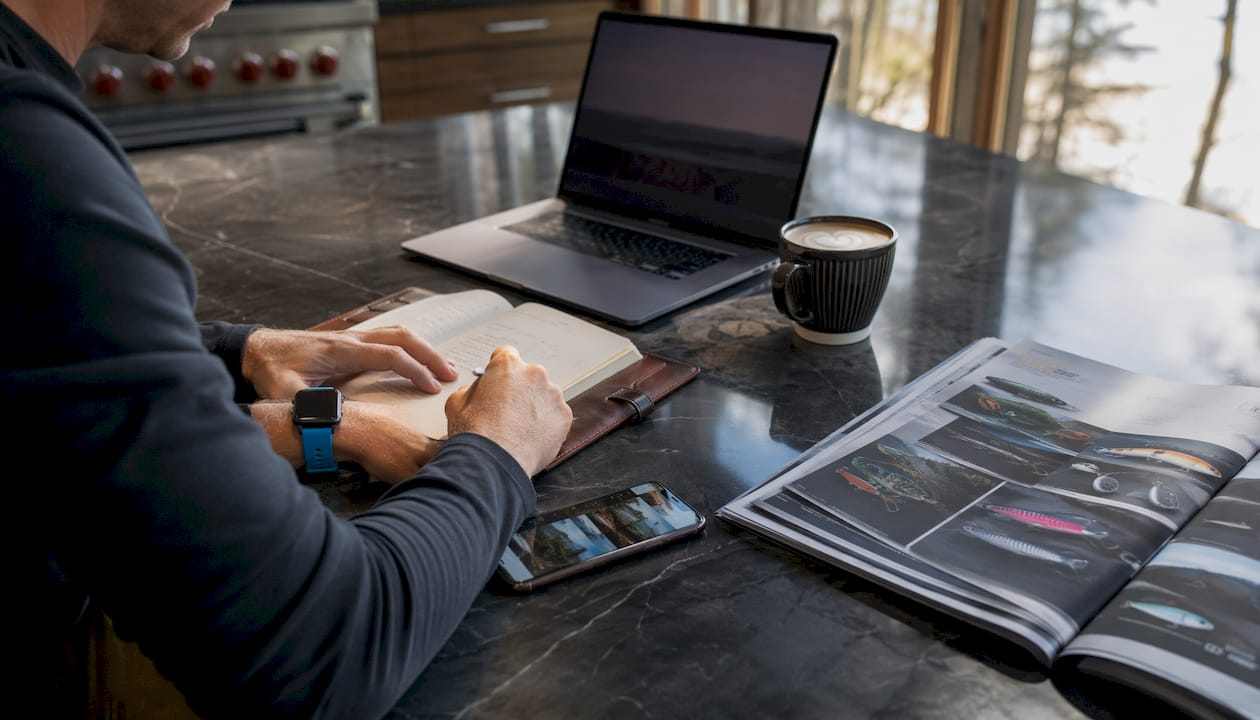
A typical week looks like this: planning a shoot location and target species, filming on the water (often solo), editing raw footage into short clips or longer tutorials, writing captions, responding to comments and DMs, reviewing analytics, and reaching out to brands or managing existing partnerships. None of that happens automatically.
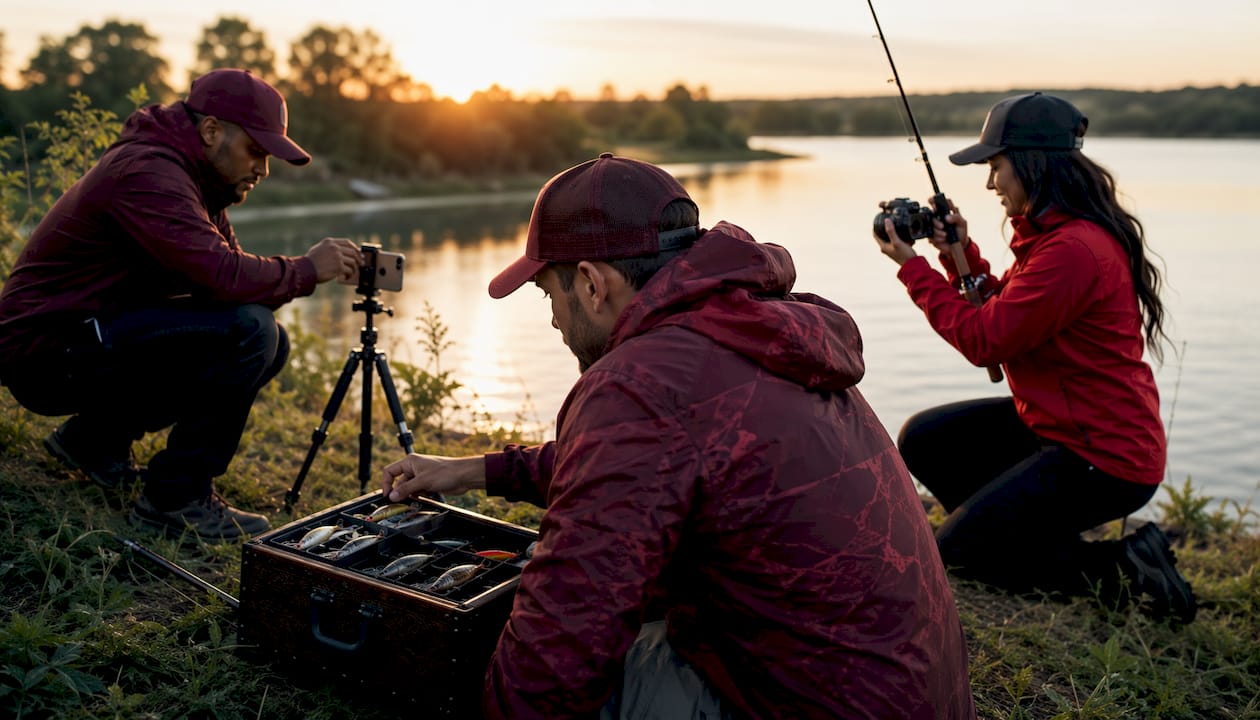
Content formats that perform in the fishing niche go well beyond “here’s my catch.” How-to clips showing specific rigging techniques, honest tackle reviews, trip vlogs that follow the full arc from launch to cooler, seasonal tips tied to migration patterns, and on-water tutorials that teach beginners a single skill per video all build loyal audiences. The creators who grow fastest combine all three elements: education, entertainment, and personal story. Take Bay Area creator Bui, who built over 440,000 TikTok followers by focusing almost exclusively on Dungeness crab fishing at Ocean Beach, documenting not just the catch but the whole family ritual around it. She wasn’t trying to teach. She was sharing enthusiasm, and that authenticity drove millions of views per video.
The creators who stall out are usually the ones who treat every post as a highlight reel. Audiences connect with the process, the failed sets, the early mornings, the small wins. That’s the story that builds trust.
How do fishing influencers make money?
Monetization in this space follows a clear progression, and most creators move through several stages before landing consistent cash income.
- Brand sponsorships: The core revenue driver for mid-to-large creators. Brands pay for posts, videos, or campaign deliverables. Top creators can earn high five figures from sponsorships, while newer creators typically start with free product.
- Affiliate links and promo codes: Creators earn a commission on tracked sales. This is usually the first paid arrangement a new creator lands.
- Ad revenue: YouTube pays per thousand views through its Partner Program. Instagram and TikTok have creator fund programs, though payouts vary significantly by platform and audience size.
- Merch and digital products: Apparel drops, tackle bundles, or digital guides (knot charts, species ID sheets) add a direct revenue stream that doesn’t depend on brand deals.
- Events and guide work: Some creators monetize their expertise through fishing clinics, tournament appearances, or guiding, using their platform to fill spots.
The typical deal progression runs: free product → affiliate or commission arrangement → per-post cash deals → long-term ambassadorships. Micro-influencers with smaller but highly engaged audiences are often attractive to fishing brands precisely because they drive stronger purchase influence per follower. A creator with 8,000 followers who posts weekly salmon content on the Columbia River can be more valuable to a Pacific Northwest tackle brand than a generalist with 80,000 followers spread across every outdoor category.
Brands in tackle and outdoors increasingly use creator content in their own brand channels and campaigns, not just as one-off promotions. That means your content has shelf life beyond the post date.
Which platforms work best for fishing content?
Short answer: start on TikTok or Instagram Reels, build toward YouTube, and use Facebook to hold community. Here’s how each platform stacks up.
| Platform | Best content format | Strengths | Posting cadence |
|---|---|---|---|
| TikTok | Short vertical clips (15–90 sec) | Fastest organic growth, discovery algorithm | 3–5x per week |
| Instagram Reels | Short vertical + Stories | Brand awareness, DM outreach to sponsors | 3–5x per week |
| YouTube | Long-form tutorials, vlogs (8+ min) | Ad revenue, evergreen search traffic | 1–2x per week |
| Community groups, repurposed clips | Engaged older demographic, group community | 3–4x per week | |
| Blog | Written guides, gear reviews | SEO traffic, affiliate link placement | 1–2x per month |
Short-form vertical video shot on a phone is currently the highest-growth format for fishing creators when authenticity and immediacy take priority over cinematic polish. Mike Loughran of Fish Like Mike started with a GoPro taped to a hockey stick and built a fast-growing brand by prioritizing vertical video and on-camera personality over production value. His lesson: face-forward content converts followers better than viral animal clips because people follow the person, not just the fish.
One practical move: shoot one outing and cut it three ways. A 60-second highlight for TikTok, a 90-second Reel with a tip overlay for Instagram, and a 12-minute full-trip vlog for YouTube. One shoot, three posts, three audiences. Building a fishing content series around a recurring format (weekly species spotlight, monthly gear test) also trains your audience to expect and return for your content.
Anglers frequently engage in other outdoor activities like camping and kayaking, which opens cross-category content opportunities and broadens the brands that might want to work with you.
How to become a fishing influencer: your first 6 months
This is where most guides get vague. Here’s a concrete month-by-month plan.
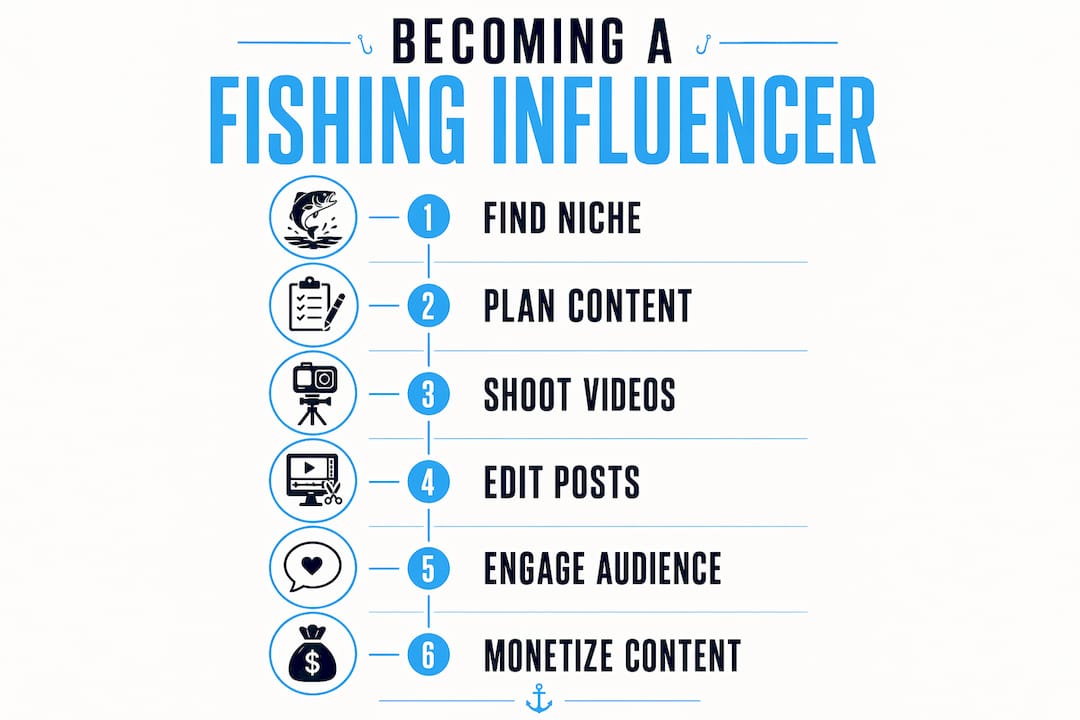
- Month 1: Pick your lane and publish your first 10 posts. Choose a specific niche: species (salmon, bass, crappie), location (Pacific Northwest rivers, Gulf Coast flats), audience (family fishing, women anglers, beginners). Post 10 pieces of content before you worry about growth. Consistency beats perfection at this stage.
- Month 2: Lock in your posting rhythm and start tracking. Commit to a schedule you can hold for six months. Three posts per week is realistic for most people with day jobs. Start tracking saves, comments, and shares, not just views.
- Month 3: Engage hard and build your first media kit. Reply to every comment. Follow creators in adjacent niches. Build a one-page media kit: your niche, your platforms, your follower counts, your engagement rate, and two or three of your best-performing posts. Keep it clean and brand-focused.
- Month 4: Send your first five outreach messages. Approach brands the way you’d approach a marketing proposal. Show what you’ll deliver and how it benefits them, not just what you want. A simple pitch: “I create [niche] fishing content for [audience description]. My last five posts averaged [X] comments and [Y] saves. I’d love to feature [product] in an upcoming [format] and can offer [deliverables].”
- Month 5: Refine based on data. Double down on the content format that drives the most saves and follows. Cut what isn’t working. Apply to one or two brand ambassador programs where you genuinely use the product.
- Month 6: Review, pitch bigger, and plan your next 90 days. By now you have a track record. Use it. Revisit your media kit with updated numbers and reach out to brands with a stronger case.
Pro Tip: Don’t apply to ambassador programs until you have at least 10 published posts that show your niche clearly. Brands want to see what they’re buying before they commit, even for a free-product deal.
A clear, niche-focused approach combined with consistent on-water content builds trust faster than chasing follower counts. Brands care about audience fit and measurable engagement, not raw numbers alone.
How much do fishing influencers actually earn?
Realistic ranges vary widely by stage, niche, and deal structure.
Salary context: One influencer compensation listing at a fishing brand shows yearly pay figures that help set expectations for mid-level creator compensation in the tackle space.
Here’s how earnings typically break down by stage:
- Hobbyist/early stage (under 5K followers): Free product, occasional affiliate commissions. Cash income is rare at this stage.
- Micro (5K–50K followers): Affiliate commissions, small per-post deals ($50–$300 per post is common), product seeding with usage rights. This is where most creators first see real income.
- Mid-tier (50K–200K followers): Per-post cash deals, short-term campaign contracts, recurring ambassador arrangements. Rates climb with engagement data.
- Macro (200K+ followers): Multi-post campaigns, exclusivity premiums, high five-figure annual sponsorship packages for top performers.
The variables that move rates up or down: engagement rate (comments and saves matter more than likes), audience demographics (age, location, income), content format (video commands higher rates than static posts), usage rights (brands pay more if they want to repurpose your content in their own ads), and exclusivity (locking out competitors adds a premium).
Your first paid deal will probably be a product-for-post arrangement. Track every link with a UTM parameter or affiliate code from day one. That attribution data is your strongest negotiating tool when you move to cash deals.
FTC disclosure, fisheries ethics, and staying above board
The FTC requires clear, conspicuous disclosure whenever you receive compensation, free product, or anything of value in exchange for promoting a brand. “Compensation” includes free gear. The disclosure must appear where viewers will actually see it, not buried in a caption or hidden in a hashtag pile. On video, say it out loud or display it on screen. On Instagram, use the paid partnership label or a clear “#ad” at the start of the caption.
Fisheries ethics matter just as much. Follow all local and state regulations for the species and waters you fish. Show proper handling. If you’re practicing catch-and-release, do it correctly on camera. Don’t promote unsafe behavior, illegal methods, or undersized keeps for the sake of a better shot. Your audience is watching, and so are regulators.
Pro Tip: Keep a simple log of every sponsored post: the brand, the date, what you received, and what you disclosed. If the FTC ever asks, you want a paper trail. A basic spreadsheet works fine.
Conservation credibility also builds audience trust. Creators who show respect for the resource attract followers who share those values, and those followers tend to be exactly the engaged, niche audience that fishing brands want to reach.
This article is general information, not legal advice. Confirm current FTC disclosure requirements at ftc.gov and consult a qualified professional for your specific situation.
What gear do you actually need to start?
You don’t need a cinema rig. You need reliable, waterproof, and stable.
- Camera: A modern smartphone (iPhone 15 or Samsung Galaxy S24 class) shoots excellent vertical video. A GoPro Hero series adds versatility for underwater or rod-tip angles.
- Stabilization: A phone gimbal like the DJI OM series keeps footage smooth on a moving boat or in surf. A simple flexible tripod (Joby GorillaPod) handles bank and dock shots.
- Audio: A clip-on wireless mic (Rode Wireless GO II or DJI Mic) makes a massive difference for talking-head segments. Wind is brutal on built-in mics near water.
- Mounts: Suction cup mounts for boat consoles, rod holder mounts, and chest harnesses let you capture angles that static tripods can’t.
- Waterproofing: A waterproof phone case or dry bag for your gear. Salt water and electronics don’t mix.
- Spare batteries and power banks: Cold mornings and long shoots drain batteries fast. Carry at least one spare for every device.
For editing, CapCut handles mobile-first short-form content well and is free. DaVinci Resolve is a capable free desktop editor for longer YouTube cuts. Adobe Premiere Rush sits in the middle for creators who want cross-device workflow without a steep learning curve.
For creators building content around salmon, steelhead, or saltwater setups, a solid inlet fishing gear guide gives you the product knowledge to speak credibly on camera about what you’re running and why.
How Highclasstackleco works with creators: what brands actually look for
Highclasstackleco evaluates creators the same way most serious fishing brands do: audience fit first, follower count second. A creator who posts weekly Pacific Northwest salmon content with strong engagement is a better fit for a West Coast tackle brand than a generalist with three times the followers.
Here’s what a typical collaboration path looks like:
- Initial evaluation: Does the creator’s audience match the brand’s buyer? Pacific Northwest anglers aged 18–65 who purchase gear online are the target. Content quality, posting consistency, and authentic product use all factor in.
- Product seeding: The brand sends product. The creator uses it on the water and posts honest content showing it in action. No script, no forced talking points.
- Performance review: The brand tracks engagement, saves, link clicks, and any affiliate or UTM data. Creators who drive real interaction move to the next stage.
- Scaled ambassadorship: Recurring deliverables, co-branded drops, or featured placement in brand campaigns. This is where the relationship becomes a real partnership.
When you pitch a brand like Highclasstackleco, lead with specifics. Name the species you target, the waters you fish, and the audience you’ve built. Show two or three posts that performed well and explain why they connected. Timing matters too: pitch ahead of peak seasons (spring salmon runs, fall steelhead) when brands are actively planning campaigns and have budget to move.
Understanding what a fishing collab actually involves before you pitch puts you ahead of 90% of the creators who send generic outreach emails.
Key Takeaways
A fishing influencer builds audience trust through consistent, niche-focused content, and that trust is the asset brands pay for, from free product deals up to annual sponsorship packages worth well into the high five figures for top-performing creators.
| Point | Details |
|---|---|
| Niche beats broad | Pick a specific species, location, or audience type and own it before expanding. |
| Engagement drives deals | Saves, comments, and affiliate conversions matter more to brands than raw follower count. |
| Monetization follows a path | Expect free product first, then affiliate commissions, then cash per-post deals as your data builds. |
| FTC disclosure is non-negotiable | Disclose every free product and paid partnership clearly, conspicuously, and in every post. |
| Highclasstackleco partners with creators | The brand evaluates audience fit and content quality for product seeding, co-branded drops, and ambassador programs. |
What new creators get wrong (and what actually works)
Most new fishing influencers make the same mistakes. Here’s the honest version.
Do: Pick one niche and stay in it for at least six months. Post on a schedule you can hold when fishing is slow and life gets busy. Track your engagement rate from week one. Turn down brand deals that don’t fit your audience, even when the free gear looks good.
Don’t: Chase viral audio trends that have nothing to do with fishing. Post only highlight catches and skip the process. Ignore comments for weeks, then wonder why engagement dropped. Send generic pitch emails with no deliverables listed.
The counterintuitive lesson: slower, community-first growth almost always outperforms a viral spike. Mike Loughran noted that a video of a salamander with viral audio pulled millions of views but converted almost no followers, while face-forward content where he talked directly about fishing drove far better retention and brand recognition. The views felt good. The follows and the sponsorships came from the other kind of content.
One more thing: a content rhythm that fits your real life is more valuable than an ambitious schedule you’ll abandon in month two. Three solid posts per week, every week, for six months beats ten posts in January and silence in March.
Ready to fish with a brand that gets it?
Highclasstackleco is built by anglers, for anglers, and that’s exactly the kind of creator we want to work with. Whether you’re posting your first salmon trip or building toward a full ambassador partnership, there’s a real path here.
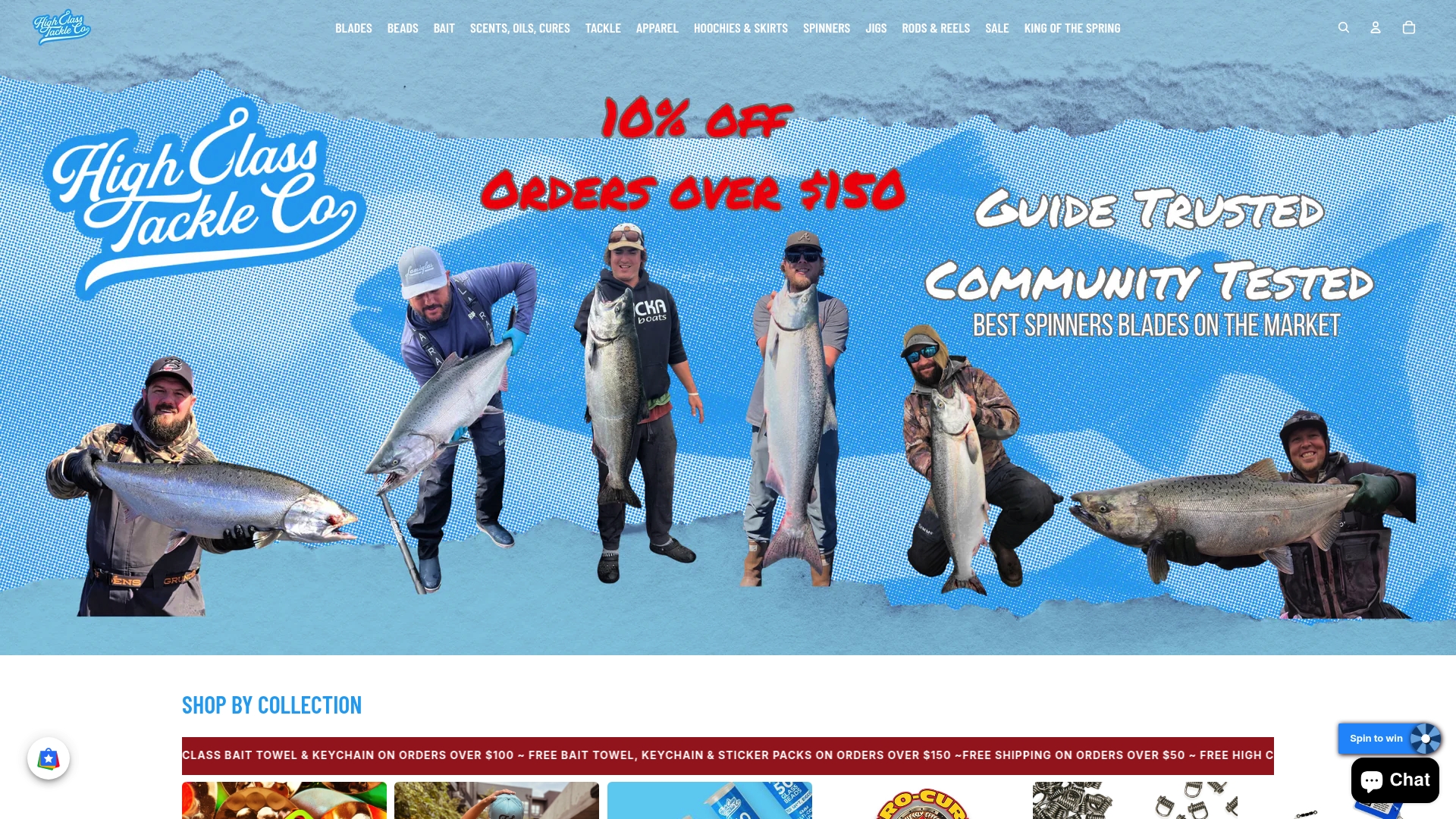
Collaboration types include product seeding for creators who show Pacific Northwest salmon, steelhead, kokanee, and saltwater content, co-branded drops for creators with established audiences, and ambassador programs for creators who consistently drive engagement and authentic product use. When you reach out, lead with your niche, your best-performing posts, and what you can deliver. Keep it specific and brand-focused.
A sample pitch opener: “I create [species/location] fishing content for [audience description] on [platform]. My recent posts average [X] comments and [Y] saves. I’d love to feature your [product category] in an upcoming [format] ahead of [season].”
Browse the full tackle and gear lineup to see what fits your content, then reach out. The water’s waiting.
Useful sources and further reading
These are the primary sources used to build this guide. Each one is worth bookmarking.
| Source | What it covers | How to use it |
|---|---|---|
| FTC Endorsement Guides (ftc.gov) | Official FTC rules on disclosures for sponsored content | Use to write your disclosure language and check compliance |
| KQED: Bay Area Crab Fishing Influencer | Profile of a niche creator who built 440K+ TikTok followers on local, authentic content | Read for niche and storytelling strategy examples |
| Outdoor Life: Do Hunting and Fishing Influencers Get Paid? | Industry-level breakdown of deal structures, compensation shapes, and brand spend | Use for realistic monetization expectations |
| ZeroDrk: How to Become a Fishing Influencer | Step-by-step guide covering niche selection, content strategy, and ambassador outreach | Use as a practical checklist alongside this guide |
| ZeroDrk: How to Get Sponsored by Fishing Brands | Detailed breakdown of sponsorship types, pitch structure, and what brands evaluate | Use when building your media kit and outreach messages |
| IZEA: Fishing Influencers Report | Data on angler behavior and cross-category content opportunities | Use to understand your audience’s broader interests |
| Indeed: Influencer Salaries at Fishing Brands | Salary data point for mid-level influencer compensation at a fishing brand | Use as a benchmark when evaluating compensation offers |
| Tom Rowland Podcast: Mike Loughran / Fish Like Mike | Case study on building a viral fishing brand from scratch with minimal gear | Read for vertical video strategy and brand-building lessons |
| Nicole Stone: Making Money as a Fishing Influencer | First-person account of building a multi-platform fishing influencer career over 8 years | Use for platform diversification and authenticity strategy |
0 comments