

A jig head is defined as a weighted fishing hook with a molded lead or tungsten head near the eye, designed to pair with soft plastic lures and create a sinking presentation that mimics injured prey. It is one of the most versatile pieces of terminal tackle you can carry. The weight and hook are fused into one unit, which gives you direct, immediate feedback from your rod tip to the lure. Whether you are chasing bass in heavy cover or working kokanee in open water, jig head fishing puts you in full control of the presentation.
What is a jig head and how does it work?
A jig head combines a molded weight with a hook shank into a single, fixed unit. That fixed connection is what separates it from modular rigs like the Texas rig or Cheb rig. With those setups, the weight slides or sits separately from the hook. With a jig head, weight and hook are locked together, giving you consistent sink rates and predictable lure action on every cast.
The molded head sits at the front of the hook near the eye. When you pair it with a soft plastic, the head pulls the nose of the bait down as it sinks. That nose-down angle mimics a wounded baitfish or fleeing crawfish. Fish key in on that motion hard. The presentation works across species including bass, walleye, trout, and even saltwater targets like rockfish and lingcod.
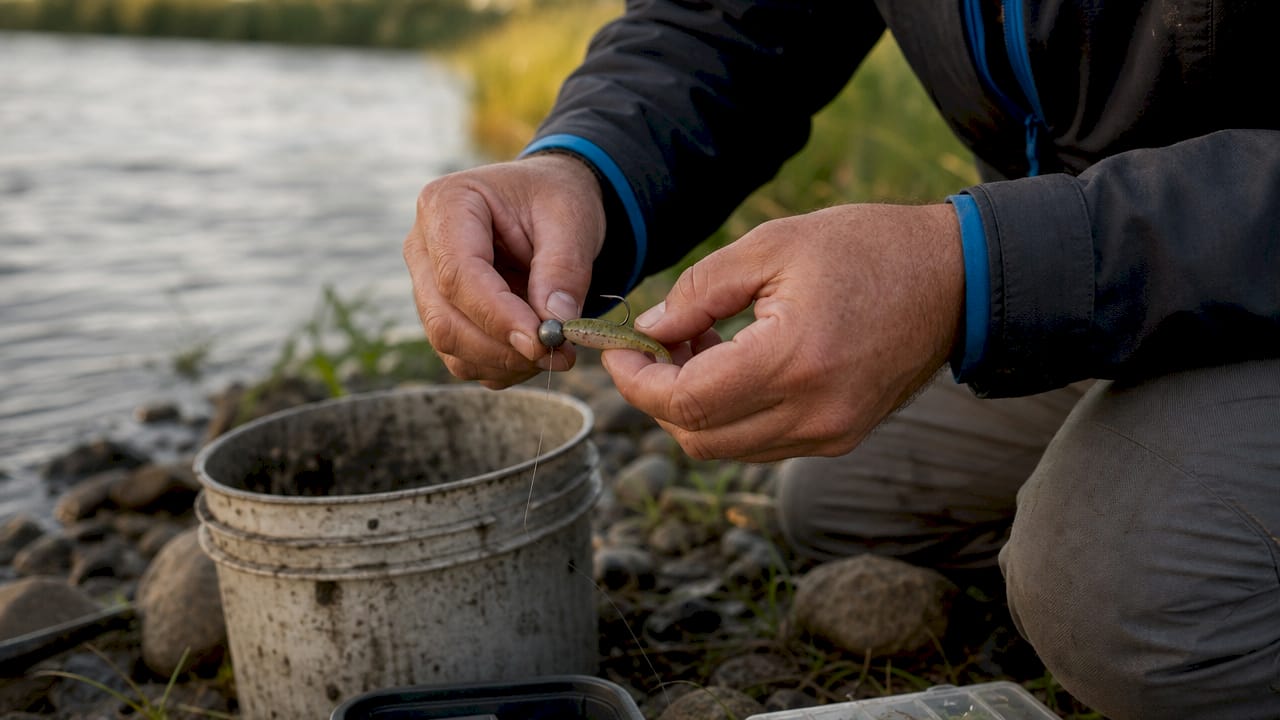
Lead is the most common head material because it is cheap and easy to mold. Tungsten is denser, so a tungsten head is physically smaller than a lead head of the same weight. That smaller profile cuts through water faster and feels more natural in a fish’s mouth. Tungsten also transmits bottom contact better, which helps you read structure as you retrieve.
What are the main types of jig heads?
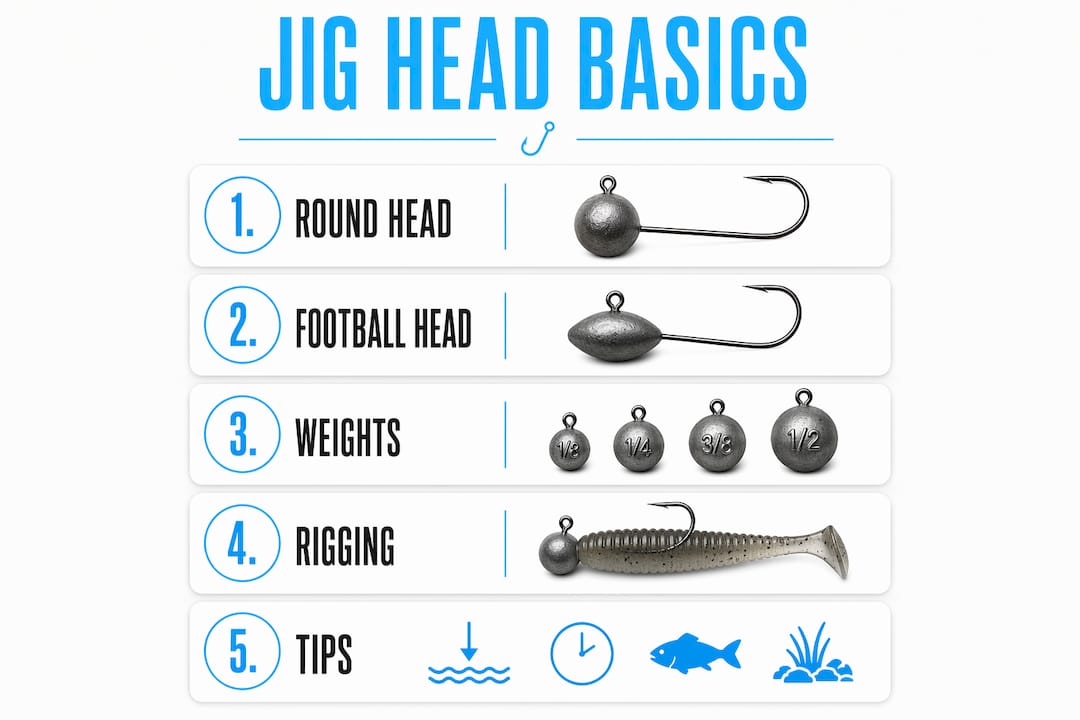
Head geometry is the single biggest factor in how a jig head performs. Different shapes are built for specific environments, and using the wrong shape in the wrong spot costs you fish.
| Head Shape | Best Use | Key Advantage |
|---|---|---|
| Round | Open water, general use | Versatile, falls naturally in any direction |
| Football | Rocky bottoms, structure | Flat base prevents tipping and rolling |
| Bullet/Cone | Vegetation, heavy current | Narrow profile cuts through weeds and water |
| Darter | Finesse, clear water | Erratic darting action triggers reaction strikes |
| Weedless | Heavy cover, grass mats | Wire or plastic guard blocks snag points |
Here is what each shape does on the water:
- Round heads are the all-around workhorse. They fall naturally, work at any depth, and perform across species. If you only carry one style, make it a round head.
- Football heads have a flat, oval base that keeps the lure upright on rocky structure. They rock side to side as you drag them, which triggers strikes from bass and walleye holding tight to the bottom.
- Bullet and cone heads cut through vegetation and current without catching debris. They are the right call for fishing grass beds, river current seams, and any situation where a round head would constantly foul.
- Darter heads have an angled, pointed face that causes the lure to dart sideways on the fall. They shine in clear water where fish are pressured and need something unpredictable to commit.
- Weedless jig heads use a wire or plastic guard over the hook point. Weedless designs prevent snags in heavy cover situations where open hooks fail. They let you fish places most anglers skip entirely.
How do you rig a jig head with soft plastic bait?
Rigging a soft plastic straight on a jig head is the single most important skill in this style of fishing. A crooked bait spins on the retrieve, looks unnatural, and catches far fewer fish.
- Hold the bait next to the hook. Line up the hook shank along the body of the soft plastic. Note where the hook point should exit the bait to keep it straight.
- Mark the exit point. Press your thumbnail or a marker into the bait at that spot. Marking exit points before threading ensures the hook point emerges centered every time.
- Thread the bait onto the hook. Push the hook point into the nose of the bait and run it straight through the body. Bring the point out at your marked exit spot.
- Check the alignment. Hold the rigged bait up and look down the shank. The bait should run perfectly straight. Any curve or twist means it will spin on the retrieve.
- Seat the bait against the keeper ring. Most quality jig heads have a barbed keeper ring or collar behind the head. Press the nose of the bait firmly against it. That keeper holds the bait firmly through multiple casts and fish, extending the life of your soft plastic before you need to re-rig.
Pro Tip: Before you cast, drag the rigged bait through the water beside the boat or bank. Watch it from above. A straight bait glides. A twisted bait spins immediately. Fix it before it hits the water.
For retrieves, the most effective approach is usually the simplest. A slow, steady retrieve with occasional pauses lets the soft plastic do the work. Subtle presentations outperform aggressive jigging in clear or pressured water. Let the bait fall on a semi-slack line and watch for the line to jump or go slack. That is often a fish eating on the drop.
How do you choose the right jig head weight and size?
Weight selection controls three things: sink rate, casting distance, and how well you feel the bottom. Getting it right for your conditions is what separates consistent anglers from casual ones.
- Shallow water (under 8 feet): Use 1/16 oz to 1/8 oz heads. These ultra-light weights keep the bait in the strike zone longer without dragging bottom.
- Mid-depth water (8 to 20 feet): The 1/4 oz to 3/8 oz range covers most situations. These weights cast well, sink at a natural pace, and give solid bottom contact.
- Deep water or heavy current: Go 1/2 oz and above. Heavy presentations cut through current and reach depth fast. You need to feel the bottom to fish it effectively.
Hook size must match the soft plastic you are using. A hook that is too small tears out of the bait. A hook that is too large distorts the body and kills the action. As a rule, match the hook gap to the thickest part of the soft plastic body.
Stamped weight markings on jig heads save real time on the water. When you are switching weights to dial in depth or current, you do not want to guess. Heads with clear weight stamps let you grab the right one fast without reading tiny print or testing each one. That detail matters when fish are actively feeding and every second counts.
Cover type also drives weight choice. In thick grass or brush, a lighter head gets hung up less. In open rocky structure, a heavier head gives you better feel and keeps the bait in contact with the bottom where fish hold.
How do different jig heads perform in specific environments?
The right jig head for a grass flat is the wrong one for a rocky point. Environment drives selection more than any other factor.
- Rocky bottoms and structure: Football heads are the clear winner. The flat base keeps the bait upright between rocks and the side-to-side wobble on the drag triggers reaction bites from bass and walleye.
- Heavy cover and grass mats: Weedless jig heads with wire guards are the only practical option. They let you punch through matted vegetation and present the bait in places where fish hide from pressure.
- Open water and suspended fish: Round heads shine here. Their natural fall angle and versatile action cover water column presentations from top to bottom.
- River current and vegetation: Bullet and cone heads cut through both. Their narrow profile does not catch weeds or get pushed sideways by current, keeping your bait tracking straight.
Pro Tip: In heavy current, go one weight class heavier than you think you need. Current lifts and pushes a light jig head off the bottom constantly. A heavier head stays in the strike zone where fish are actually holding.
For Pacific Northwest anglers targeting species like steelhead, salmon, and rockfish, jig head fishing with soft plastics has become a go-to technique. Pairing a bullet head with a paddle-tail swimbait in river current produces aggressive strikes from steelhead that ignore traditional presentations. Check out twitching jig techniques for more on working jig heads with action-based retrieves.
Key takeaways
A jig head is the most direct connection between your rod and your lure, and choosing the right shape, weight, and rigging method determines whether you catch fish or go home empty.
| Point | Details |
|---|---|
| Fixed weight and hook | Jig heads lock weight and hook together for direct, consistent lure feedback. |
| Shape drives performance | Round heads are versatile; football heads suit rocky bottoms; bullet heads cut vegetation. |
| Straight rigging is critical | Mark exit points and use keeper rings to keep soft plastics aligned and lasting longer. |
| Match weight to conditions | Use 1/16–1/8 oz for shallow water and 1/2 oz-plus for deep water or heavy current. |
| Weedless guards open new water | Wire or plastic guards prevent snags in heavy cover where open hooks cannot fish. |
Why I always go back to the round head first
Every season I watch anglers show up with specialty jig heads for every situation, and half the time they are overthinking it. Round jig heads are recommended for beginners because they are forgiving, but the honest truth is they are what experienced anglers reach for when they are not sure what the fish want. They are not a beginner’s compromise. They are a smart default.
The mistake I see most often is overworking the bait. Anglers hop, twitch, and rip their jig heads constantly, and the fish ignore them. The best bites I have had came from letting the bait fall on a slack line and doing almost nothing. Fish eat on the drop more than any other moment. The less you do, the more the soft plastic moves the way it is supposed to.
The other thing I will stand behind is knowing your exact jig head weight at all times. When you are on the water and the bite is on, you do not want to dig through a box guessing. Heads with stamped weights are worth paying a little more for. That small detail has saved me more time than any fancy retrieve technique ever has.
— Nick
Highclasstackleco has the tackle to back your game
At Highclasstackleco, we build gear for anglers who fish hard and fish often. Whether you are rigging soft plastics for steelhead on a Pacific Northwest river or working jig heads for bass in heavy cover, you need terminal tackle that holds up and performs.

Browse the full lineup of hooks and jig components to build your ideal setup from the hook up. Need to stock a full kit? The component tackle box keeps everything organized and ready to fish. If you are shopping for a fellow angler, a digital gift card from Highclasstackleco lets them pick exactly what they need. Head to highclasstackleco.com and gear up.
FAQ
What is a jig head used for in fishing?
A jig head is used to add weight to a soft plastic lure and create a realistic, sinking presentation that mimics injured prey. It works across species including bass, walleye, trout, steelhead, and saltwater fish.
What is the best jig head weight for beginners?
The 1/4 oz weight is the best starting point for most freshwater situations. It casts well, sinks at a natural pace, and gives enough bottom feel to learn the technique without overcomplicating the setup.
What is the difference between a round and football jig head?
A round jig head falls naturally in any direction and works in open water and general presentations. A football jig head has a flat base that keeps the bait upright on rocky structure and rocks side to side on the drag.
How do you keep soft plastics from spinning on a jig head?
Rig the soft plastic straight by marking the hook exit point before threading. Seat the bait nose firmly against the keeper ring behind the head. A crooked bait spins on the retrieve and catches far fewer fish.
Are tungsten jig heads better than lead?
Tungsten jig heads are denser than lead, so they are smaller at the same weight. That smaller profile cuts through water faster, transmits bottom contact more clearly, and feels more natural in a fish’s mouth. They cost more but perform better in most conditions.
0 comments