

The Kwikfish is a banana-shaped, wide-wobble plug lure built to trigger aggressive strikes from salmon and steelhead. Manufactured by Luhr Jensen, it’s been a staple in Pacific Northwest tackle boxes for over half a century. The lure’s exaggerated side-to-side wobble mimics an injured baitfish struggling in the current, and that action is exactly what sends a spring chinook into attack mode. Sizes K13 through K16 cover most river situations, with color options ranging from classic silver and green chartreuse to glow finishes like Dill Pickle.
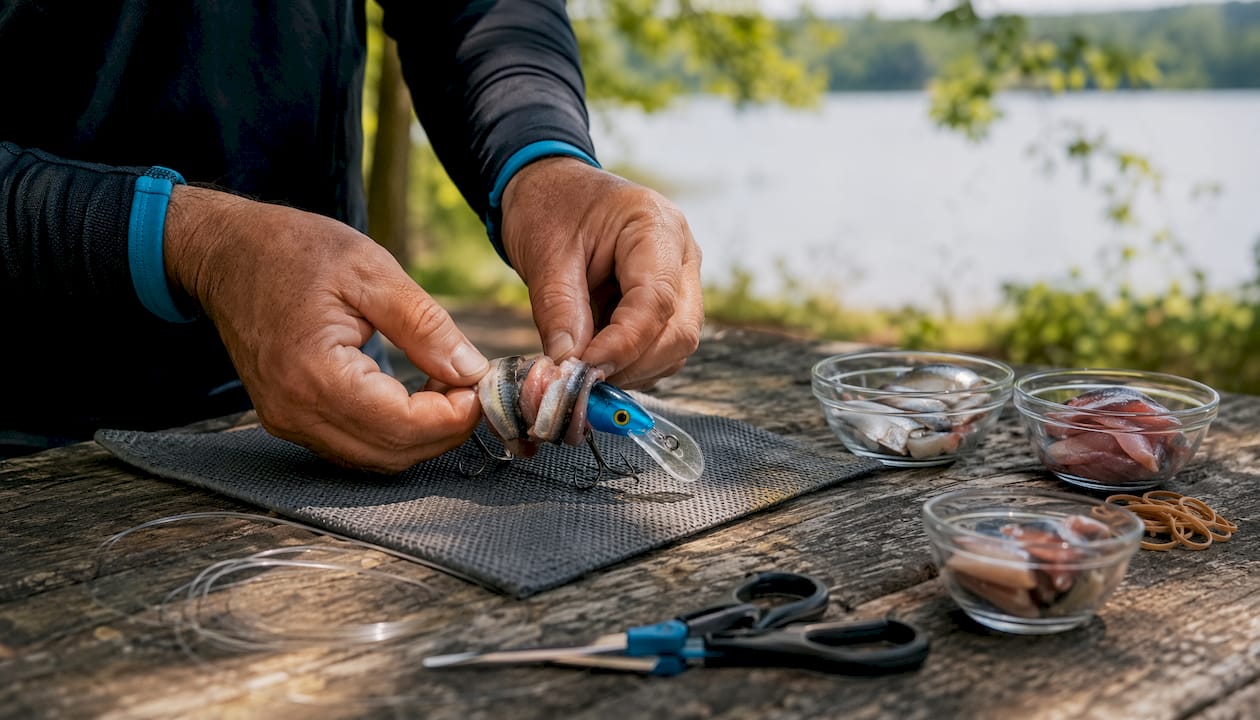
The Kwikfish features an adjustable screw eye at the nose where your snap attaches. That single detail is what separates a well-tuned plug from a lure that spins out and kills your presentation. Get the action dialed in, wrap it with a fresh sardine fillet, and you’ve got one of the deadliest salmon setups in the Pacific Northwest.
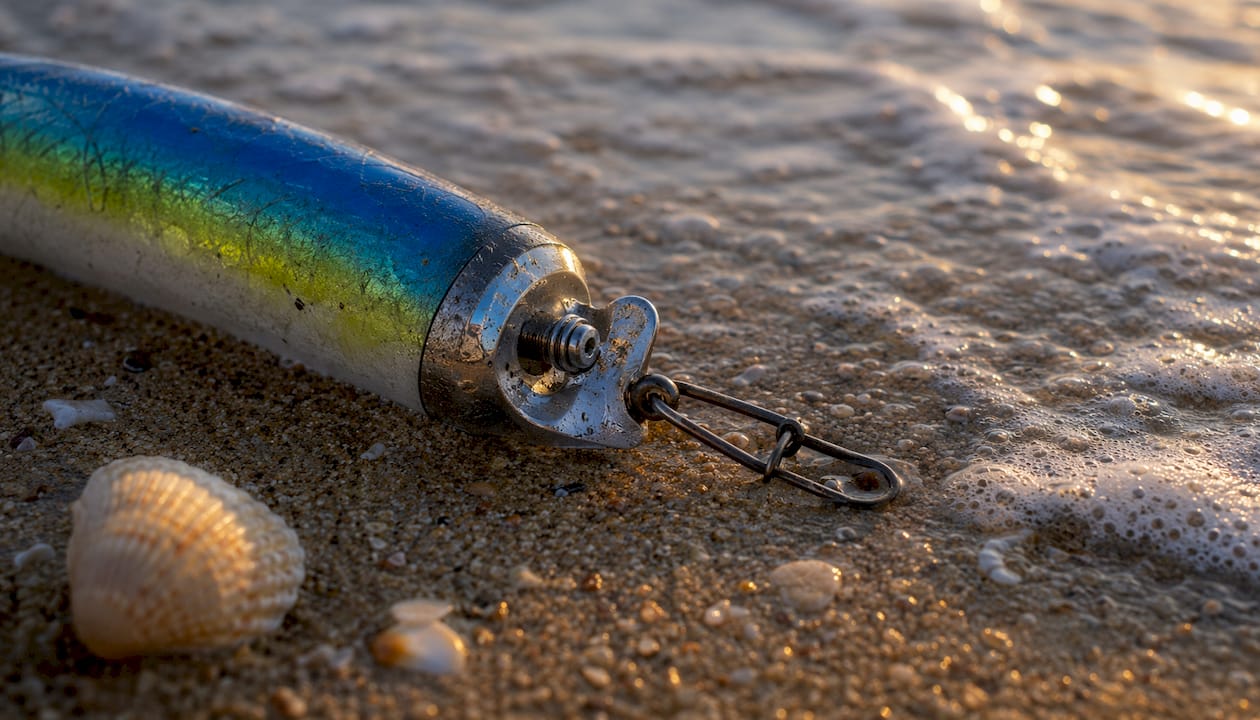
Pro Tip: Before you ever drop a Kwikfish in the water, pull it upstream by hand and watch how it tracks. A lure that veers even slightly will fight your setup all day.
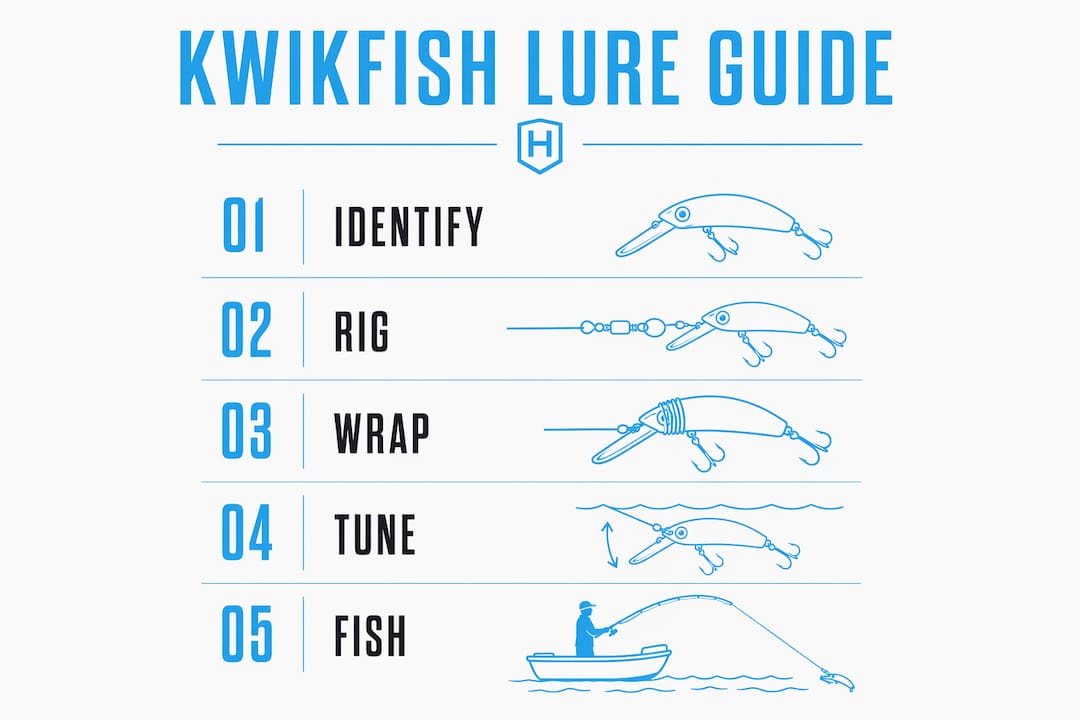
How to rig a Kwikfish lure for salmon and steelhead
Rigging a Kwikfish correctly is the difference between a rod that loads up and one that sits dead in the holder all morning. The two most common setups are plunking from shore and back-trolling from a drift boat, and each demands slightly different hardware.
For plunking, the Washington Department of Fish & Wildlife recommends this setup:
- 8.5- to 9-foot extra-heavy rod
- 40–60 lb monofilament or braided mainline
- Slip your mainline through a swivel or slider, add 4–6 beads, then tie to a barrel swivel
- Tie 4–6 feet of 40–60 lb monofilament leader from the swivel directly to a duo-lock snap on the Kwikfish
- Attach an 18–30-inch piece of 15 lb leader to the slider and clip on 1–8 ounces of lead
That lead weight anchors the rig on the bottom while the Kwikfish wobbles in the current above it. The slider setup lets a fish pick up the lure without feeling the full weight of the lead, which keeps them from dropping it before you can react.
Hook configurations worth knowing:
- Belly hook only: Standard for most Kwikfish sizes; the treble sits at the belly eye and catches fish that strike from below.
- Belly and tail hook: Common on K15 and K16 sizes; the tail treble catches short-strikers that nip the back of the plug.
- Single hook swap: Some guides replace trebles with single hooks to reduce snags in rocky runs.
Pro Tip: Always use a duo-lock snap, not a split ring, to attach the Kwikfish. It lets you swap lures fast without re-rigging your entire leader.
Wrapping a Kwikfish with sardine fillets and other natural baits
Wrapping the belly of a Kwikfish with a sardine fillet adds scent and slows the lure’s wobble slightly, which is exactly what big chinook tend to prefer. West Coast guides have relied on this technique for decades, and it’s the single biggest upgrade you can make to a bare plug.
Alternative baits that work:
- Herring: Slightly firmer than sardine, holds up longer in fast current
- Anchovies: Oily and aromatic, excellent scent trail in cold water
- Sand shrimp: Killer for steelhead, especially in winter and early spring runs
Step-by-step sardine wrap:
- Fillet a fresh sardine and trim the fillet to roughly three-quarters of the plug’s width and half its length.
- Keep the edges clean and the thickness consistent across the fillet.
- Split the fillet down the middle for about three-quarters of its length, creating a fork that slides over the belly hook eye.
- Center the fillet on the belly of the plug, sliding the slit over the belly eye so the fillet sits symmetrically.
- Start wrapping with stretchy bait thread or Magic Thread from the tail end, holding the fillet firmly in place.
- Wrap forward with tight, overlapping passes, flipping the belly hook back toward the tail as you pass the hook eye.
- Wrap back toward the tail with looser passes, finish with a few half-hitches, and break or trim the thread.
Symmetry is everything here. An off-center wrap creates drag on one side and forces the lure to veer, which you’ll then misdiagnose as a tuning problem. Get the fillet centered before you throw a single wrap.
Scent from bait wraps fades fast, typically lasting 20–45 minutes before losing potency. The most experienced guides on the West Coast replace wraps frequently during active fishing.
Pro Tip: Prep four or five wrapped Kwikfish before you launch. Wrapping on the water burns time and fish don’t wait. Keep extras in a small cooler with the baitfish to stay firm and fresh.
For a deeper look at how natural scents affect presentation, check out bait scent strategies that top Pacific Northwest guides swear by.
How to tune a Kwikfish so it tracks straight
A Kwikfish that veers left or right is a wasted cast. Tuning takes thirty seconds and it’s the step most beginners skip entirely.
How to test and tune:
- Pull the lure upstream through calm, shallow water and watch its path.
- If it dives left, turn the screw eye clockwise a small amount.
- If it dives right, turn the screw eye counter-clockwise.
- Make small adjustments and retest after each one until the plug swims straight without veering.
Bait wrap symmetry directly affects how often you need to retune. An uneven wrap creates drag on one side, and even slight off-centering forces repeated adjustments throughout the day. Wrap tight and centered, and your tuning holds much longer between checks.
Pro Tip: Retune every time you rewrap. Even a perfectly tuned plug will drift after a fresh fillet goes on. It takes ten seconds and saves a lot of frustration.
Practical fishing tips for Kwikfish targeting salmon and steelhead
Plunking is the dominant Kwikfish technique on big Pacific Northwest rivers like the Columbia, and it rewards patience more than any other method. You cast the rig into a holding area or migratory path, let the weight settle on the bottom, and wait. The Kwikfish wobbles in the current above the lead, broadcasting vibration and scent downstream to fish holding in the run.
Key tactics:
- Use smaller Kwikfish sizes in faster water and larger sizes in slower, deeper holes.
- Set your rod in a rod holder once the weight is settled. Don’t hold it.
- Wait for the fish to pull the rod tip down to water level at least three times before setting the hook. Premature hooksets are the number one cause of lost fish on Kwikfish.
- Back the lure downstream slowly until the weight plants firmly on the bottom and the plug is still wobbling.
Common mistakes to avoid:
- Setting the hook on the first tap or bump
- Using a wrap that’s too thin or too short to slow the action
- Skipping the tuning step after wrapping
- Running too heavy a lead in fast water, which kills the lure’s action
Pro Tip: Spring chinook season on the Columbia River, typically march through may, is prime time for plunking Kwikfish. Target the tail-outs of deep pools where fish rest on their upstream migration.
Expert insights on Kwikfish sizing and bait wrapping
Experienced West Coast guides make their Kwikfish size calls based on current speed and water clarity, not just personal preference. The rule is simple: larger sizes in slow water, smaller in faster water. A K16 in ripping current will spin out and lose its action entirely, while a K13 in a slow, deep hole won’t generate enough wobble to attract fish holding far off the bottom.
Bait selection by target species:
- Sardines: First choice for chinook; ultra-oily, slow-release scent trail
- Herring: Excellent for coho and steelhead, firmer texture holds up in current
- Anchovies: Strong scent, works well in off-color water
- Sand shrimp: Top pick for winter steelhead, especially in coastal rivers
Wrapping symmetry is the most overlooked skill in Kwikfish fishing. Off-center wraps cause drag that forces the lure to track sideways, and most anglers blame their tuning rather than the wrap itself. Get the fillet centered over the belly eye before throwing a single wrap, and you’ll spend far less time at the screw eye.
Scent lifespan is short, typically lasting 20–45 minutes before losing effectiveness. Highclasstackleco’s approach to Pacific Northwest fishing is built on this kind of real-world detail, the stuff that separates a good day from a great one on the water.
Pro Tip: Keep your baitfish partially frozen when wrapping. Firm, cold sardines or herring are dramatically easier to fillet cleanly and wrap symmetrically than soft, room-temperature bait.
Where the Kwikfish lure came from
The Kwikfish traces its roots to Luhr Jensen, an Oregon-based tackle manufacturer that built its reputation on banana-style plugs for Pacific Northwest salmon. Over the last half century, the Kwikfish and its close relative the Flatfish became synonymous with spring chinook fishing throughout the Columbia River system and beyond. The lure was never originally designed for salmon, but the physical properties of its wide, slow wobble turned out to be perfect for triggering strikes from large, aggressive salmonids holding in moderate current.
Luhr Jensen continued refining the design over the decades, eventually introducing the Kwikfish Extreme, a version that runs true without a tunable screw eye. That model appeals to anglers who want a reliable, low-maintenance option, though most serious guides still prefer the adjustable original for the control it gives them over action and tracking.
How to maintain and care for your Kwikfish lures
Kwikfish lures are tough, but they need basic care to stay effective season after season. Bait wrapping is the biggest source of wear, since the thread, oils, and fish slime left on the plug after a session will degrade the finish and corrode the hardware if you don’t clean it off.
After every trip:
- Rinse the lure thoroughly with fresh water to remove bait residue, slime, and river sediment.
- Remove any leftover bait thread or Magic Thread before storing. Old thread traps moisture and accelerates hook rust.
- Dry the lure completely before putting it away. Wet storage in a closed tackle box is the fastest way to rust out your treble hooks.
- Check the screw eye for corrosion or looseness. A screw eye that spins freely without resistance has lost its grip and needs to be replaced or re-set with a small amount of epoxy.
Inspect your hooks after every few trips. Treble hooks on Kwikfish take a beating from rocks, gravel, and the occasional snag, and a dull or bent hook will cost you fish. Sharp hooks are non-negotiable on a lure where the fish often hook themselves. Stock up on quality replacement trebles and swap them at the first sign of wear. You can find the right hooks and rigging components to keep your Kwikfish setups running sharp all season.
Highclasstackleco is built by Pacific Northwest anglers who fish these same rivers every season. Whether you’re rigging up for your first Columbia River plunking trip or dialing in a new wrap technique for winter steelhead, we’ve got the terminal tackle and gear to back you up. Gear up at Highclasstackleco.
Key Takeaways
The Kwikfish is the most proven banana-plug setup for Pacific Northwest salmon and steelhead, and its effectiveness depends on proper rigging, symmetrical bait wrapping, and consistent tuning.
| Point | Details |
|---|---|
| Lure sizing by water speed | Use K13 in fast current, K15–K16 in slow, deep water for best action. |
| Bait wrap lifespan | Scent fades in 20–45 minutes; replace wraps frequently during active sessions. |
| Tuning the screw eye | Turn clockwise to correct left drift, counter-clockwise to fix right drift. |
| Hook set timing | Wait for the rod tip to pull down to water level three times before setting the hook. |
| Wrap symmetry | Center the fillet over the belly eye to prevent drag and reduce retuning. |
Recommended
- Super Bait Secrets: Top Picks for Salmon and Steelhead – High Class Tackle Co.®
- Spinnerbait guide: boost your Pacific Northwest fishing – High Class Tackle Co.®
- Spinfish Explained: Techniques, Gear, and Lures – High Class Tackle Co.®
- What Is a Fishing Media Brand: Anglers’ Guide – High Class Tackle Co.®
0 comments