

A salmon teaser is a molded plastic bait-retaining head that holds a whole herring or anchovy and forces a controlled rolling spin that mimics a wounded baitfish — the exact trigger that makes Chinook and Coho commit. Run a leader long enough for the bait to rotate freely, with monofilament strong enough to handle fighting salmon, set a lead treble or 5/0 single to curve the bait, and hang a trailing 5/0 single set slightly back from the lead hook. Before you leave the dock, drop the rig in the water at idle speed and watch it spin. You want a smooth, pencil-like rotation, not a helicopter wobble.
Pro Tip: A good roll looks like a spinning bullet. If the tail swings wide or the bait tumbles, your bend is too sharp or your toothpick has gone slack. Fix it at the dock, not over the fish.
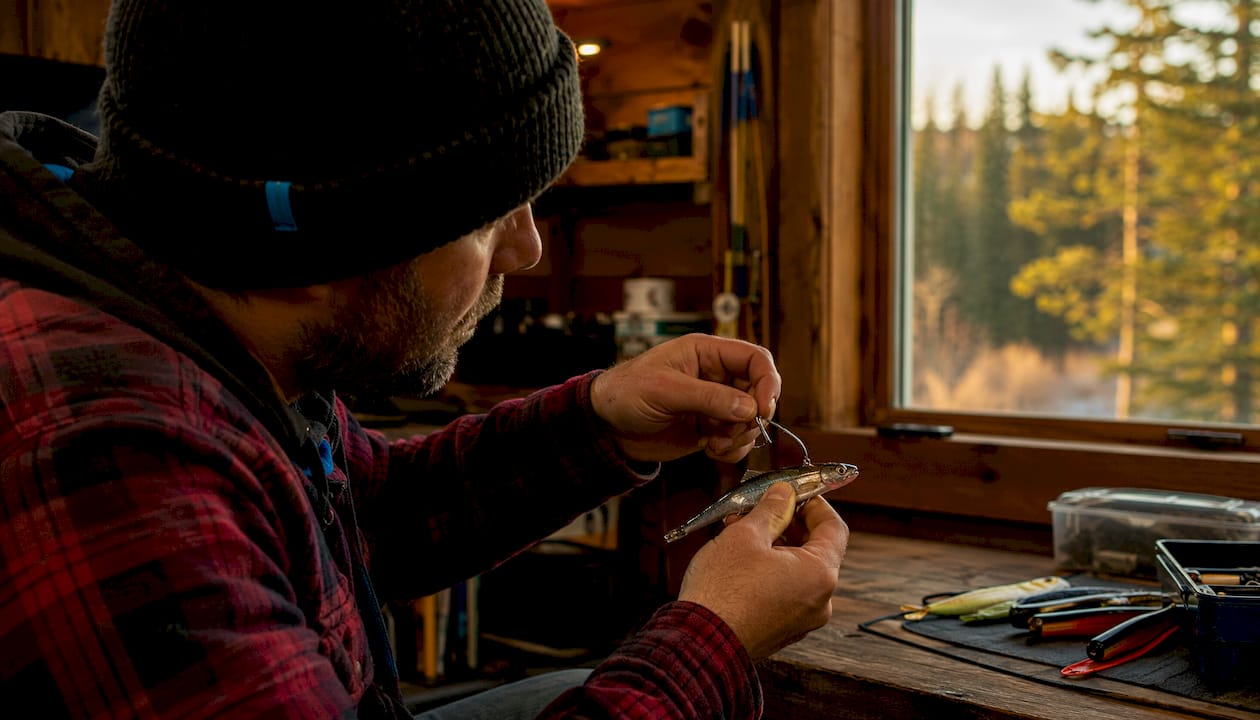
Highclasstackleco stocks the terminal components you need to build these rigs right, from leader material to crimps to trailing singles. Check current regulations with NOAA and your state fish and wildlife agency before heading out — hook counts, bait rules, and season windows vary by water.
Table of Contents
- What does a salmon teaser head actually do?
- When should you reach for a teaser head?
- How to rig a teaser head step by step
- What leader length, pound test, and hooks should you use?
- Why some anglers wire-rig their teaser heads
- Flasher or naked teaser — which one should you run?
- What trolling speed works best for Chinook and Coho?
- How to fix a bad roll on the water
- Safety and regulations you need to know
- Key Takeaways
- What a productive teaser day actually looks like
- Build your teaser rigs with Highclasstackleco gear
- Useful sources for deeper reading and regulatory checks
What does a salmon teaser head actually do?
The teaser head is a molded plastic device with a cavity that cradles the nose of a whole herring or anchovy. When trolled, the curvature built into the bait by the lead hook and tensioning toothpick (or wire) causes the entire baitfish to rotate in a consistent spin. That rotation is the whole game.
Why does the roll trigger strikes? Three reasons work together. First, the spinning silhouette creates a constantly changing visual profile, which mimics a disoriented or injured baitfish. Second, the rotation generates a distinct low-frequency pressure wave that salmon detect through their lateral line. Third, the whole-bait presentation keeps the natural scent trail intact, something a cut plug cannot match once the flesh starts to break down.
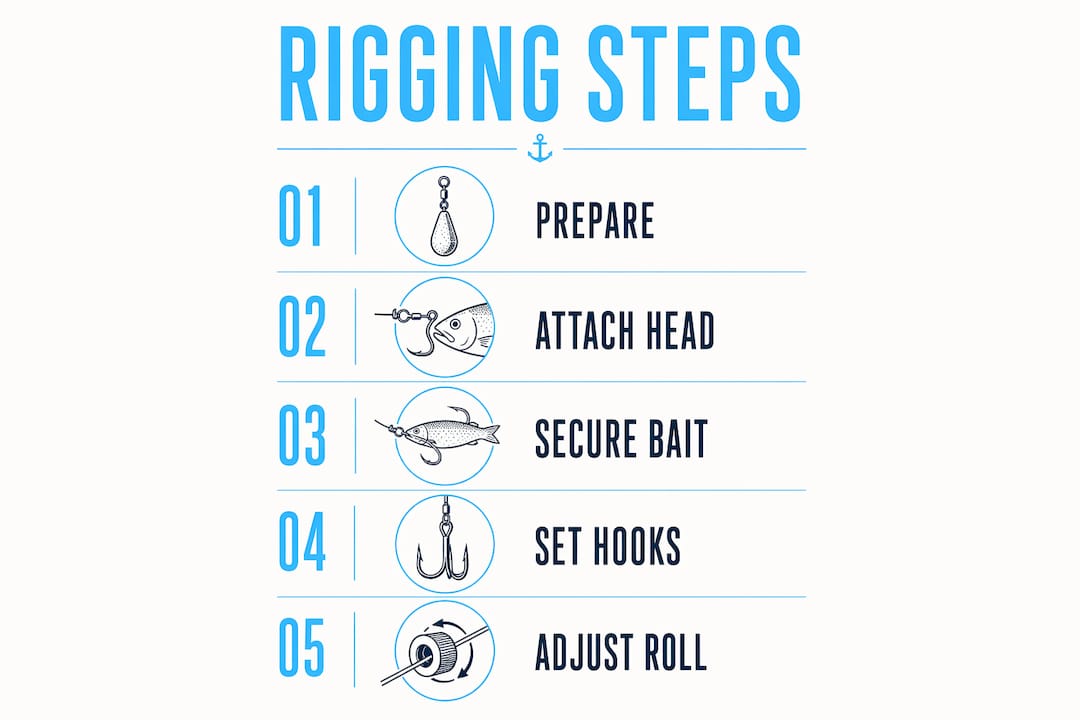
Teaser heads often outfish cut plugs in pressured areas, and whole-bait presentations hold their integrity longer in the water. When every other boat in the bay is running cut plugs, a teaser head is a different look that jaded fish haven’t seen all morning.
Signs of a correct roll — check all four at the dock:
- The bait rotates smoothly, one full turn at a time, with no stuttering
- The tail follows the head in a tight, consistent arc (not swinging wide)
- The lead hook point stays oriented correctly and doesn’t drag the bait sideways
- The rotation rate is steady across a small speed range, not speed-dependent
When should you reach for a teaser head?
The teaser head earns its spot in the spread when conditions push against cut plugs. Pressured bays, lodge-heavy fisheries, and early-season runs where fish have already seen hundreds of cut plugs are exactly where a whole-bait presentation separates you from the crowd. Big Chinook, in particular, tend to favor the larger profile and slower, tighter roll of a properly rigged teaser.
Species objectives drive how you tune the rig. For large Chinook, you want a slow, subtle spin — less than one rotation per second — that reads as a big, struggling baitfish. Coho respond to a faster, more active roll, up to two rotations per second, especially when paired with a flasher that adds flash and vibration ahead of the bait. Adjust your bend and trolling speed to hit those targets.
Bait selection matters as much as the rig itself. Fresh herring in the 5–8" range is the standard for Chinook; smaller anchovies work well for Coho and in areas where anchovy is the dominant forage. Brined bait firms up the flesh and holds the bend longer, which is a real advantage when you’re running teaser heads all day. For bait preparation tips that keep your herring and anchovy in top shape, it pays to have a solid curing routine before launch day.
How to rig a teaser head step by step
Get your materials sorted before you start. A rushed rig at the dock costs you fish.
Materials checklist:
- Teaser head (sized to match your bait — standard heads fit 5–8" herring or anchovy)
- Whole fresh or brined herring or anchovy
- Dry round toothpicks (or 16–18 gauge stainless locking wire as an alternative)
- Bead-chain swivel
- 6–7 ft of 30–40 lb monofilament (Maxima Ultragreen or equivalent)
- Lead hook: treble (#2 or #4) or 5/0 single
- Trailing 5/0 single hook
- Crimps or snaps where needed
- Pliers and flush cutters
Step-by-step assembly:
- Cut your leader to 6–7 ft of 30–40 lb mono. Tie or crimp a bead-chain swivel to one end.
- Thread the free end of the leader through the teaser head from back to front, so the swivel sits at the rear of the head.
- Tie your trailing 5/0 single using a salmon egg loop knot, leaving roughly 3" of separation between the trailing hook and the lead hook position.
- Attach the lead hook (treble or 5/0 single) at the front of the leader, sized to the bait.
- Insert the bait nose-first into the teaser head cavity. Push the lead hook point through the bait so it exits on the opposite side, curving the bait into a gentle arc.
- Set the trailing hook so its point sits roughly level with the tail of the bait.
- Take a dry toothpick and insert it through the pre-drilled holes in the teaser head, across the leader, to create tension. Clip the toothpick flush with the head on both sides.
- Lower the rig into the water at idle speed and watch the roll. Adjust the bend or toothpick tension until you get a smooth, consistent spin.
Knot notes: The salmon egg loop is the go-to for the trailing single because it holds the hook at a fixed point without slipping. For the leader-to-swivel connection, a loop knot or uni knot preserves the natural action better than a clinch, since it allows the swivel to pivot freely. Stiff connections kill the roll.
What leader length, pound test, and hooks should you use?
The standard leader setup for teaser heads is a length sufficient to keep the bait free to roll and monofilament strong enough to handle abrasion and long fights without killing the action. When fishing heavy structure or targeting large Chinook in fast current, stepping up in pound test is reasonable, but going too heavy can interfere with the bait’s roll.
Hook choice is where a lot of anglers leave fish in the water. A lead treble (#2 or #4) reduces missed strikes on smaller salmon and Coho, but it can tear out during a long, high-tension fight with a big Chinook. A 5/0 single lead hook holds better under pressure and makes catch-and-release cleaner. The trailing 5/0 single is the hook that actually lands most fish — it catches the salmon that swipes at the tail of the bait without fully committing to the head.
| Species | Leader Test | Lead Hook | Trailing Hook |
|---|---|---|---|
| Chinook (large) | Medium-strong monofilament | 5/0 single | 5/0 single |
| Chinook (standard) | Moderate-strong monofilament | Treble or single lead hook | Single trailing hook |
| Coho | Medium monofilament | Smaller treble lead hook | Trailing single hook |
Pro Tip: Angle the lead hook so it tensions the bait into the curve rather than tearing through the flesh. A hook that rips the bait sideways kills the roll and shortens how long the bait holds together. Thread it clean, point out the opposite side, and let the toothpick do the tensioning work.
Why some anglers wire-rig their teaser heads
Toothpicks work, but they have a real weakness: wood swells when wet and shrinks when dry. That cycle loosens tension, and a loose toothpick means a dead roll. Replacing the toothpick each morning is standard practice for serious teaser anglers, but wire eliminates the problem entirely.
Stainless locking wire at 16–18 gauge (0.040–0.048" diameter) inserted along the baitfish’s backbone locks the bend in place. The wire holds the curve through speed changes, tide swings, and repeated runs without losing tension. It also lets you run the bait at a wider range of speeds without the roll going erratic, which matters when you’re adjusting for changing current.
Wire installation steps:
- Cut a 4" piece of 16–18 gauge stainless locking wire (longer than needed — trim to just past the dorsal fin once you compare it to the bait)
- Insert the wire into the bait parallel to the backbone, starting just behind the head
- Bend the bait into your desired curve (gentle for a tight roll, sharper for a wider spin)
- Thread the leader through the teaser head as normal, then insert the wire ends through the pre-drilled head holes to lock the curve
- Crimp or fold any exposed wire ends flush so no sharp tips are exposed
Pro Tip: Pre-bend several pieces of wire at home and store them flat in a small tin. On the water, you can wire a fresh bait in under a minute. Label each tin by bend angle so you know which curve you’re grabbing.
Safety note: File or crimp all wire ends before use. Exposed stainless tips are sharp enough to puncture skin during a fast landing. Use proper crimps or swages on any wire connection, and never leave a raw cut end exposed on a rig you’re handling in a moving boat.
Flasher or naked teaser — which one should you run?
Both setups catch fish. The decision comes down to what the fish are doing that day.
A flasher ahead of a teaser head adds flash, vibration, and visibility. It pulls fish in from a wider radius and is especially effective when Coho are active and responding to visual stimulation. In stained or deeper water where visibility drops, a flasher gives the rig a presence it would not otherwise have. The trade-off is that a flasher adds resistance, which changes the roll rate and requires a slightly faster trolling speed to maintain action.
A naked teaser runs quieter and subtler. It works best when salmon are pressured, when the water is clear and calm, or when you want to offer a completely different look from the rest of your spread. For big Chinook holding deep in pressured bays, a naked teaser on a long lead can be the most effective rod in the boat.
For spread placement, a common setup is one flasher-plus-teaser rod and one naked teaser rod. Run the flasher combo on a shorter lead (around 20–30 ft back from the downrigger ball) and the naked teaser on a longer lead to keep the presentations separated. Flasher color selection for Pacific Northwest waters: green or chartreuse in green or murky water, blue or purple in clear conditions. For more on tide and spread positioning in salmon bays, the current conditions dictate where each rod sits in the spread.
What trolling speed works best for Chinook and Coho?
Speed is the variable most anglers set once and forget. That’s a mistake. The roll rate of your teaser is directly tied to boat speed, and the right roll rate depends on the species you’re targeting.
For big Chinook, you want a slow, tight spin achieved at low trolling speeds over the bottom (GPS speed, not water speed) for a naked teaser. For Coho or when using a flasher-plus-teaser combo, increase the trolling speed to get a faster, more active roll. Roll rates and speed targets vary by rig and bait size, so always confirm at the dock before you set lines.
| Species | Target Roll Rate | Trolling Speed | Setup |
|---|---|---|---|
| Chinook (large) | Less than 1 rotation/sec | — | Naked teaser, long lead |
| Chinook (standard) | ~1 rotation/sec | — | Naked or flasher combo |
| Coho | Up to 2 rotations/sec | — | Flasher + teaser preferred |
Tide and current affect your actual speed over the bottom significantly. Running with a strong flood tide can drop your effective trolling speed below the productive range without you realizing it. Use GPS speed, not engine RPM or water speed, as your reference. When the tide turns, check the roll again by slowing to idle and watching the bait before resetting your lines.
How to fix a bad roll on the water
A teaser that isn’t rolling right is a teaser that isn’t catching fish. The good news: most roll problems have a fast fix if you know what to look for.
Diagnosing common roll problems:
- Wobble or helicopter spin: The bend is too sharp. The bait is rotating too wide, which looks unnatural and creates drag. Straighten the curve slightly and re-test.
- No roll at all: The bait is too straight, the toothpick has gone slack, or the lead hook is pulling the bait sideways instead of curving it. Re-tension the toothpick (or replace it with a fresh dry one) and check hook placement.
- Tailing (tail swings wide): The trailing hook is too heavy or too far back, pulling the tail out of alignment. Shorten the trailer gap slightly or switch to a lighter trailing hook.
- Roll stops at speed: The bend is too gentle for faster speeds. Add a slight sharper curve or switch to a wire rig to hold the bend under higher resistance.
- Bait breaks down quickly: The flesh is too soft or the hook is tearing rather than threading. Use firmer brined bait and re-thread the lead hook cleanly through the body.
Prep at least three rigs before launch with slightly different bend angles — one gentle, one moderate, one sharper. When you hit the water and the fish aren’t responding, you swap rigs instead of re-rigging from scratch. That’s the difference between a productive morning and a frustrating one.
Pro Tip: Pack pre-tuned rigs in individual snack bags labeled with the bend angle and the speed they tested best at. On a moving boat with fish around, you don’t have time to experiment. Grab the bag, clip it on, and go.
Safety and regulations you need to know
Sharp wire ends, exposed treble points, and a rocking boat are a bad combination. File or crimp all wire ends before you store rigs, and always use pliers to handle trebles when baiting up or landing fish. A barbless or single-hook setup is worth considering for catch-and-release fisheries — it simplifies the unhook and reduces injury to both the fish and the angler.
This article is general fishing guidance, not legal advice. Confirm current rules for your specific fishery with the relevant regulatory authority before heading out.
Key Takeaways
A properly rigged teaser head with a smooth pencil-spin roll, a 6–7 ft leader of 30–40 lb mono, and species-matched trolling speed is one of the most effective whole-bait presentations for Chinook and Coho in pressured Pacific Northwest waters.
| Point | Details |
|---|---|
| Leader and hook specs | Use 6–7 ft of 30–40 lb mono; 5/0 single lead and trailing single for big Chinook, treble lead for Coho. |
| Roll quality first | A smooth pencil spin is the goal; fix wobble, tailing, or no-roll at the dock before setting lines. |
| Toothpick vs. wire | Replace toothpicks daily or switch to 16–18 gauge stainless wire for a more consistent bend under varying speeds. |
| Speed by species | For Chinook, target the slowest speed that gives a tight roll; for Coho, use a slightly faster speed for a quicker roll, especially with a flasher. Always confirm roll rate at idle before fishing. |
| Highclasstackleco components | Highclasstackleco stocks the terminal tackle — hooks, crimps, swivels, and leader material — to build these rigs ready to fish. |
What a productive teaser day actually looks like
The rigs go together the night before, not at the ramp. That’s the first real difference between a guide day and a casual trip. Three rigs minimum, each with a slightly different bend angle, some on toothpicks and at least one wired. The wired rig goes out first because it holds its action longest and handles speed changes without needing attention.
At the dock, every rig gets a roll test at idle. If it doesn’t spin clean in the slip, it doesn’t go in the water. That five-minute check has saved more mornings than any other habit on the boat. Once lines are set, the GPS speed gets locked in and checked every time the tide shifts.
Mid-trip is when the real decisions happen. If the flasher-plus-teaser rod is quiet and the naked teaser is producing, the flasher comes off. If Coho start crashing the spread, the speed bumps up and the roll rate follows. The ability to read what the fish are telling you and swap rigs or adjust speed without losing time is what separates a good teaser day from a great one. For a deeper look at bait presentations that complement teaser tactics, it’s worth having a few options ready before you leave the dock.
Build your teaser rigs with Highclasstackleco gear
Highclasstackleco is the go-to source for West Coast anglers who want the right components without hunting through a dozen different suppliers. The terminal tackle collection covers the essentials for teaser rigs: trailing singles, crimps, bead-chain swivels, and leader material built for real fishing conditions on the Pacific Coast.
For bait scenting and curing that keeps your herring and anchovy firm through a full day of trolling, the Pro-Cure additive lineup has you covered. Need to stock up on everything at once? The component tackle box is a fast way to get the essentials in one order. Head to Highclasstackleco and grab what you need before the season heats up. Other legal and ethical tackle options exist, but the components featured in this article are exactly what you’ll find in stock.
Useful sources for deeper reading and regulatory checks
- The Rhys Davis Story — Island Fisherman Magazine: History and design intent behind the original teaser head production heads.
- Teaser Head Herring: Part 1 — Island Fisherman Magazine: Step-by-step rigging, leader specs, and flasher vs. naked guidance.
- Teaser Head Herring: Part 2 — Island Fisherman Magazine: Roll rate targets, toothpick maintenance, and dock-test routine.
- Wire-Rigging a Teaserhead — On Fishing (DC Reid): Practical wire-rigging method with materials and installation steps.
- Teaser Head Modifications — The Science of Salmon Fishing: Practitioner modifications including hook swaps and bait sizing for large Chinook.
- What Is a Teaser? — Captain Experiences Glossary: General definition of teasers in a broader fishing context.
- NOAA Fisheries — West Coast Salmon Regulations: Current federal season, size, and gear regulations for Pacific salmon.
- Your state fish and wildlife agency website: Check for state-specific hook rules, bait restrictions, and season windows before every trip.
Recommended
- Best Bait Presentations for Salmon Fishing in 2026 – High Class Tackle Co.®
- Custom Spinner Blades for Salmon and Steelhead Success – High Class Tackle Co.®
- Salmon plug fishing rivers: Proven PNW tactics and gear – High Class Tackle Co.®
- Great Lakes Salmon Gear Differences: 2026 Angler’s Guide – High Class Tackle Co.®
0 comments