

Bank fishing is defined as fishing directly from the shore, a riverbank, a dock, or a pier without using a boat or wading into the water. It is one of the most accessible forms of angling in both freshwater and saltwater environments. You need minimal gear, zero watercraft, and no special license beyond a standard fishing license in most states. Whether you are casting into a local pond or working a river bend for steelhead, the bank is your platform. This guide covers the gear, techniques, timing, and locations that make shore fishing one of the most rewarding ways to catch fish.
What is bank fishing and why does it matter?
Bank fishing is the practice of casting from shore, banks, piers, or docks without entering the water or using watercraft. The industry term is “shore fishing,” and both terms are used interchangeably by anglers and fishery managers alike. What makes it matter is simple: it removes every barrier between a person and the water. No boat registration, no trailer, no launch fees. You park, walk to the water, and fish.
The cost advantage is real. A basic spinning setup costs a fraction of what a boat and motor run. That low entry point makes bank fishing the starting point for most anglers in the United States. It also keeps experienced anglers coming back because certain spots on the bank simply produce better than a boat can reach.
Shore fishing works in rivers, lakes, reservoirs, ponds, tidal flats, and ocean surf. The species range is just as wide: bass, trout, crappie, bluegill, salmon, steelhead, and striped bass all fall to anglers working the bank. The method is not a consolation prize. It is a legitimate and often deadly approach.
What gear do you need for bank fishing?
The right gear for bank fishing balances portability with fish-catching ability. Heavy, bulky setups slow you down and tire you out before you cover enough water.
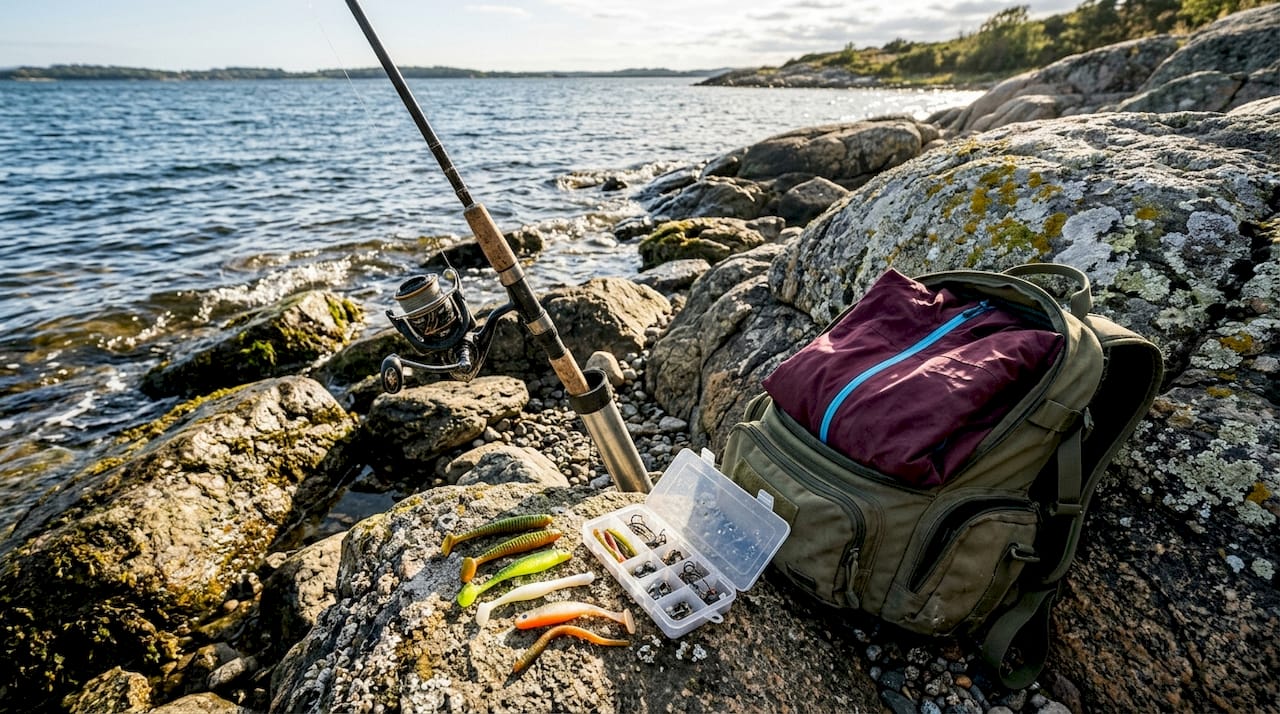
Rod and reel setup
Spinning rods in the 6–7 foot range with a medium or medium-heavy power rating are the standard starting point. They cast light lures easily, handle a wide range of species, and fit into most fishing backpacks. Pair your rod with a mid-size spinning reel spooled with 8–15 lb monofilament or fluorocarbon. That line range covers bass, trout, and panfish without needing to re-spool between spots. If you want to understand how baitcasting gear compares to spinning for shore work, this baitcaster reel guide breaks it down clearly.
Terminal tackle and lures
- Small inline spinners (sizes 1 through 3): deadly on trout, bass, and crappie in moving water
- Texas-rigged soft plastics: weedless presentation for bass near docks and submerged timber
- Jigs from 1/32 to 1/8 oz: versatile for panfish and bass in shallow water
- Spinnerbaits: cover water fast and trigger reaction strikes along weed edges
- Topwater lures: early morning and evening surface action for bass and trout
- Bait rigs with live or cut bait: catfish, carp, and trout respond well to natural presentations
Stock your terminal tackle with a mix of hooks, split shot weights, and swivels. These small components make the difference between a lure that swims right and one that spins uselessly.
Pack light and move fast
Minimalist gear carried in a backpack reduces fatigue and increases the amount of water you cover. A fishing vest or small daypack with rod holders keeps both hands free while you move along the bank. Carry only what you will use. Two or three rod setups, a small tackle tray, pliers, and a net cover most situations.
Pro Tip: Pre-rig two rods before you leave the truck. One with a topwater, one with a soft plastic. You switch presentations in seconds instead of re-tying at the water.
What are the best techniques for bank fishing?
Technique separates anglers who occasionally catch fish from those who consistently fill the cooler. Shore fishing rewards anglers who move, read water, and cast with purpose.
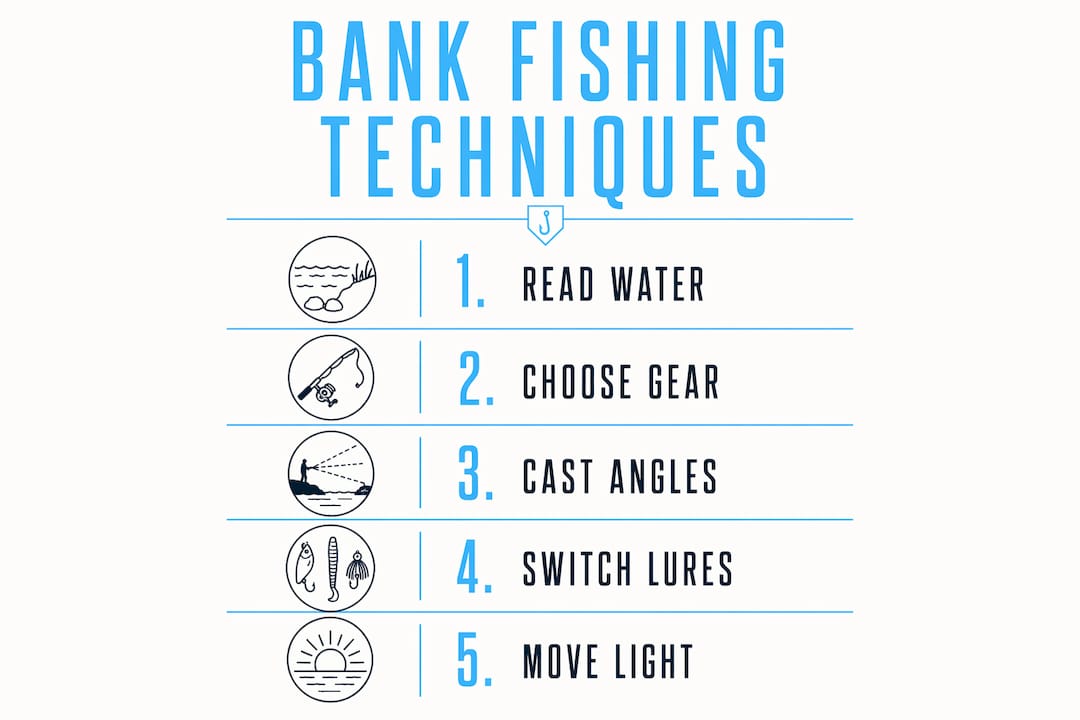
Cast angles that keep lures in the strike zone
Casting parallel or at a 45-degree angle to the bank keeps your lure in productive water far longer than casting straight out. Fish hold tight to the shoreline edge, near cover and structure. A perpendicular cast crosses that zone in a second. A parallel cast works through it for the entire retrieve. This single adjustment produces more strikes than any lure change.
Fan casting for full coverage
Work each spot methodically before moving on. Fan casting means working through a clock pattern from roughly 10 o’clock to 5 o’clock, covering all angles from your position. Covering water efficiently means starting with a topwater or fast-moving lure to locate active fish, then following up with slower, deeper presentations for fish that did not commit.
- Approach the bank quietly. Vibrations from footsteps travel through the ground into the water and spook fish in shallow areas. Walk slowly and stop a few feet back from the water’s edge before casting.
- Start with your fastest lure. Spinnerbaits and topwaters cover water and reveal where fish are holding.
- Work the fan pattern. Cast from 10 o’clock to 5 o’clock, overlapping each cast by a few feet.
- Switch to slower presentations. After the fan, drop a Texas rig or jig into the most promising spots.
- Move if nothing bites. Give each position 15–20 minutes, then relocate down the bank.
Pro Tip: Read the water before you cast. Look for color changes, current seams, foam lines, and shadows from overhanging trees. Fish stack in these spots. Cast to the edge of the structure, not into the middle of it.
When and where is bank fishing most successful?
Timing and location are the two variables that control your catch rate more than any piece of gear.
Seasonal timing
Spring is the most productive season for shore anglers because water temperatures between 55°F and 75°F pull bass, crappie, bluegill, and trout into water just 2–8 feet deep near the bank. These fish are feeding aggressively before and after spawning. You do not need to reach deep water. The fish come to you.
| Species | Best season | Ideal water temp | Key structure |
|---|---|---|---|
| Largemouth bass | Spring, fall | 60–75°F | Docks, weed edges, timber |
| Crappie | Spring | 55–65°F | Brush piles, dock pilings |
| Bluegill | Spring, summer | 65–75°F | Shallow flats, lily pads |
| Trout | Spring, fall | 50–65°F | Current seams, deep pools |
| Catfish | Summer, night | 70–80°F | Muddy bottoms, channel bends |
Location strategies
- South-facing banks warm faster in spring and attract baitfish and predators earlier in the season
- Submerged timber and brush piles hold crappie and bass year-round
- Dock pilings create shade and ambush points for multiple species
- Weed edges are feeding lanes where bass and bluegill patrol for prey
- Drop-offs near the bank concentrate fish transitioning between shallow and deep water
Experienced bank anglers use depth mapping apps and natural observations like current breaks and color changes to identify underwater structure from shore. You do not need sonar. You need to read what the water is telling you.
Saltwater bank fishing follows different rules. Tidal movement drives fish activity more than temperature alone. Fish moving tidal flats and jetties during incoming tides when baitfish push into shallow water. Outgoing tides concentrate fish at channel mouths and cuts.
What mistakes kill your bank fishing results?
Most anglers who struggle from the bank make the same handful of errors. Fixing them costs nothing.
- Staying in one dead spot too long. Move if you get no bites after 15–20 minutes. Fish are not always where you want them to be. Cover water until you find them.
- Casting too hard and too far. Most fish sit within 20–30 feet of the bank. Blasting a cast to the middle of the lake skips right over them.
- Ignoring stealth. Stomping to the water’s edge before casting pushes fish out of the area before your lure hits the water.
- Using only one lure. Conditions change throughout the day. Carry topwaters, mid-depth lures, and bottom rigs. Rotate until something works.
- Skipping structure. Open water rarely holds fish. Cast to docks, fallen trees, rocks, and weed edges every time.
Shore fishing can outperform boats in tight, shallow structure because you position yourself better and avoid the noise and shadow of a hull. A bank angler who moves quietly and casts accurately beats a boat angler every time in those spots. That is not opinion. That is physics and fish behavior.
Pro Tip: Carry a small notebook or use your phone to log where you caught fish, what lure worked, and what the water temperature was. Patterns repeat. Your notes become a personal fishing map over time.
Key takeaways
Bank fishing is the most accessible and often most effective way to catch fish from shore when you combine smart positioning, mobile tactics, and the right terminal tackle.
| Point | Details |
|---|---|
| Definition is clear | Bank fishing means fishing from shore, docks, or piers without a boat or wading. |
| Gear stays simple | A 6–7 ft spinning rod with 8–15 lb line and a mix of jigs, spinners, and soft plastics covers most situations. |
| Casting angle matters | Parallel and 45-degree casts keep lures in the strike zone far longer than perpendicular casts. |
| Spring is prime time | Water temps between 55°F and 75°F pull bass, crappie, and trout into shallow bank water. |
| Mobility wins | Move every 15–20 minutes if you get no bites. Covering water beats waiting in one spot. |
Why bank fishing deserves more respect
Bank fishing is its own discipline. Full stop. I have watched anglers treat the bank like a last resort, something you do when you cannot get a boat. That thinking costs them fish.
The best bank sessions I have had came from treating the shore like a puzzle. You read the water, you move with purpose, and you adapt your presentation based on what the fish are doing. There is no trolling motor to reposition you. No graph to show you where the fish are. You earn every bite with your eyes and your feet.
What I have found is that the bank forces you to become a better angler faster than a boat does. You cannot rely on technology or horsepower. You rely on reading structure, understanding fish behavior, and making accurate casts. Those skills transfer everywhere. The angler who masters shoreline fishing strategies becomes a better boat angler too, because the fundamentals are the same.
My advice to anyone starting out: go light, move often, and stop worrying about what you do not have. The fish do not care about your gear budget. They care about your presentation.
— Nick
Gear up with Highclasstackleco
Shore anglers need gear that performs without weighing them down. Highclasstackleco builds tackle for real fishing conditions, and that includes the bank.
The terminal tackle collection at Highclasstackleco carries the hooks, components, and rigging essentials that shore anglers rely on for Texas rigs, drop shots, and live bait setups. For lures that flat-out produce, the Brads Superbaits lineup gives you proven baits built for West Coast species and beyond. Whether you are chasing bass on a local reservoir or working a river bank for steelhead, Highclasstackleco has the terminal gear to back you up. Check out the full fishing tackle selection and build your bank fishing kit the right way.
FAQ
What is bank fishing exactly?
Bank fishing is fishing from the shore, a riverbank, a dock, or a pier without using a boat or wading into the water. It requires minimal gear and works in both freshwater and saltwater environments.
What is the best rod for bank fishing?
A 6–7 foot medium or medium-heavy spinning rod paired with a spinning reel spooled with 8–15 lb line covers the widest range of bank fishing situations for beginners and intermediate anglers.
What are the best baits for bank fishing?
Small inline spinners, Texas-rigged soft plastics, and jigs from 1/32 to 1/8 oz are the most effective terminal tackle options for shore anglers targeting bass, trout, and panfish.
When is bank fishing most productive?
Spring is the most productive season for bank fishing because water temperatures between 55°F and 75°F pull bass, crappie, bluegill, and trout into shallow water within easy casting range of the shore.
Can bank fishing beat boat fishing?
Shore fishing outperforms boats in tight, shallow structure because bank anglers position more accurately and avoid the noise and shadow a boat creates. Pro anglers confirm that mobility and water reading are the keys to consistent bank fishing success.
Recommended
- What Is Bar Fishing? Techniques, Tips, and Top Spots – High Class Tackle Co.®
- What Is a Baitcaster Reel? A Complete Angler’s Guide – High Class Tackle Co.®
- Spinfish Explained: Techniques, Gear, and Lures – High Class Tackle Co.®
- What Is a Fishing Tournament? Your Complete Guide – High Class Tackle Co.®
0 comments