

Bar fishing is the practice of targeting fish from shorelines or shallow underwater structures called bars, where currents concentrate baitfish and create natural ambush points for predatory species. Salmon, steelhead, and sturgeon are the primary targets at bars like the Fraser River and Niagara Bar, two of the most productive bar fishing locations in North America. The method blends shore fishing discipline with a deep read of water structure, tides, and fish behavior. Whether you’re plunking a weighted rig into a river bar or working an oyster reef at high tide, bar fishing rewards anglers who understand the water beneath them.
What is bar fishing and why does it work?
Bar fishing is defined as angling from or near a bar, which is a natural underwater structure formed by sediment, shell, or rock that rises from the surrounding bottom. These structures are not random. Bars create current breaks where baitfish stack up and predators move in to feed. The physics are simple: fish burn less energy holding in the slack water behind a bar while ambushing prey swept through the current seam.
Bars come in several forms. River bars form at confluences and bends where sediment deposits. Oyster bars are shell reefs in coastal estuaries. Sandbars appear in both freshwater and saltwater environments. Each type concentrates fish differently, but the core principle stays the same: structure creates opportunity.
The Niagara Bar is a textbook example. Its shallow shelf drops sharply from 20–50 feet into depths of 100–300 feet, creating a wall of cold, nutrient-rich water that king salmon, coho, steelhead, and lake trout follow from april through fall. That depth gradient is what makes the bar deadly. Fish stage on the edge before moving shallow to feed.
What makes a bar productive for fish?
Not all bars fish equally. Bars with complex shapes hold more fish than flat, uniform ones. A horseshoe-shaped bar or a broken bar with gaps and pockets gives fish multiple places to stage and feed. A solid, featureless bar offers little reason for fish to stop.
The best bars share a few key traits:
- Mixed structure: Sandy spots mixed with oyster clumps create multiple ambush points. Fish use the clumps for cover and the open sand to chase baitfish.
- Current seams: Where fast water meets slow water, baitfish pile up. Predators sit just off the seam and pick off easy meals.
- Depth transitions: A bar that drops from 10 feet to 60 feet in a short distance gives fish a quick escape route and a feeding shelf.
- Tidal influence: Rising tides push baitfish onto bars. Falling tides pull them off. Fish follow that movement predictably.
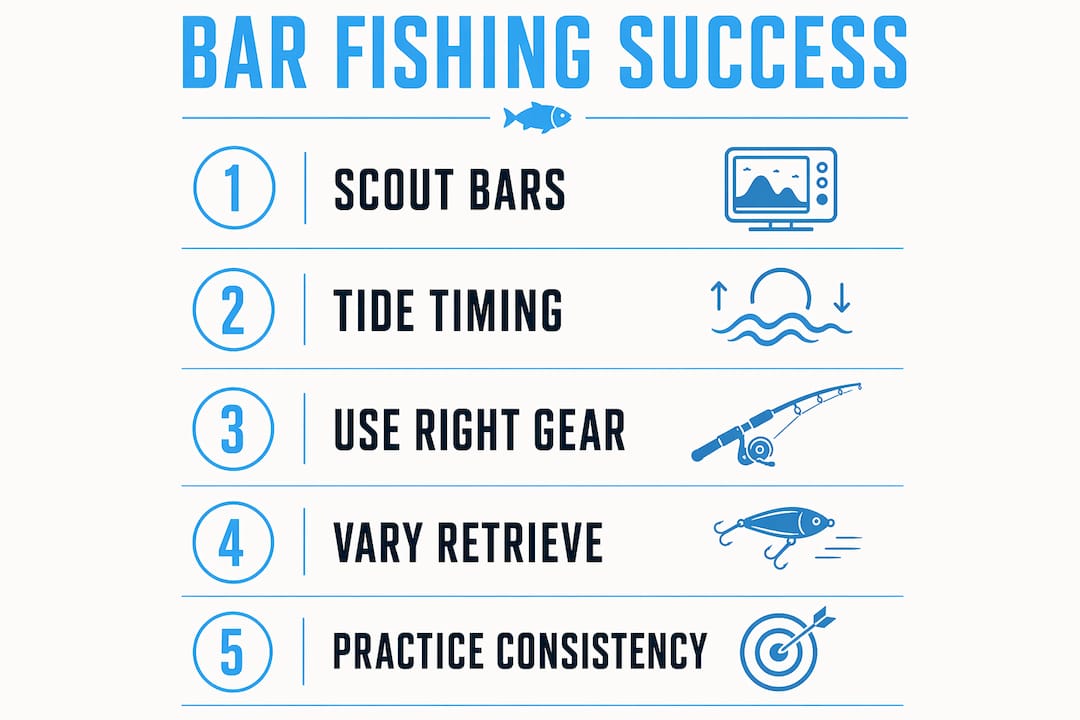
Pro Tip: Scout bars at low tide when the structure is visible. Note the shape, the sandy pockets, and the drop-off edges. Those are your target zones when the water comes back up.
Tidal timing is the single biggest variable in bar fishing success. A bar that is dead at low tide can turn on hard within an hour of the flood. Depth awareness relative to tide stage is the most overlooked factor among anglers new to this style of fishing.
How to fish bars effectively: techniques and gear
Bar fishing methods split into two main categories based on water depth and environment. Plunking from shore is the standard approach at river bars. Trolling with downriggers suits deeper saltwater bars where salmon suspend well below the surface.
Plunking setup for river bars
- Heavy sinker rig: Use a sliding sinker heavy enough to hold bottom in current. A 4–8 ounce sinker is standard for most river bars.
- Double-hook rig: Two hooks baited with shrimp, tuna, or cured roe cover more of the water column and increase hookup odds.
- Braided mainline: 20–25 pound braid gives you sensitivity and strength. It transmits bottom feel and bite detection better than mono.
- Fluorocarbon leader: Use 30–40 pound fluorocarbon between your mainline and hooks. Near oyster bars and rocky structure, fish will run into the reef. Light leaders snap instantly.
- Rod position: Point your rod toward the water at a low angle. This keeps slack out of the line and lets you detect subtle bites.
Pro Tip: Vary your retrieve speed on every third cast. A slow two-turn crank followed by a pause often triggers strikes from fish that ignored a static presentation.
For deeper saltwater bars, trolling with flashers and hoochies or spoons is the go-to method. Presentation and depth control matter more than bait choice alone. Use a fish finder or downrigger to locate the thermocline and run your gear just above it. That is where salmon stack during warm months. For salmon and steelhead bait selection at river bars, check out top salmon and steelhead picks from Highclasstackleco.
Best bar fishing spots and their unique characteristics
Premier bar fishing locations each have a distinct personality shaped by geography, species, and season.
| Bar | Location | Target Species | Peak Season | Key Feature |
|---|---|---|---|---|
| Niagara Bar | Lake Ontario, NY | King salmon, coho, steelhead | April through October | Sharp drop from 20–50 ft to 300 ft |
| Fraser River bars | British Columbia, Canada | Chinook, sockeye, sturgeon | June through September | Strong current seams, multiple bar systems |
| Frenchman’s Bar | Columbia River, WA | Chinook salmon, steelhead | Spring and fall runs | Shore access, community fishing culture |
| Possession Bar | Puget Sound, WA | Chinook salmon, coho | Summer through fall | Saltwater tidal bar with deep drop-offs |
The Niagara Bar draws anglers from across the Great Lakes region because it attracts king salmon, coho, steelhead, and lake trout through most of the fishing season. The Fraser River system in British Columbia offers some of the most diverse bar fishing in North America, with multiple bars along the lower river holding Chinook and sockeye during summer runs.
Frenchman’s Bar on the Columbia River is a community institution. Shore access is easy, and the bar holds fish during both spring and fall Chinook runs. Saltwater bars like Possession Bar in Puget Sound require a boat to reach the productive edges, but the depth transitions there hold coho and Chinook through the summer.
Common mistakes and pro tips for successful bar fishing
Most bar fishing failures come down to a handful of repeatable errors. Fixing them does not require better gear. It requires better awareness.
- Ignoring tide timing: A bar that fishes well on a rising tide may be completely dead at low water. Tidal fluctuations can render bars inaccessible or unproductive at certain stages. Check a tide chart before you leave the house.
- Using light leaders near structure: Oyster reefs and rocky bars will cut through 12 or 15 pound fluorocarbon in seconds when a fish runs. Use 30 pound minimum near abrasive structure.
- Camping one spot all day: Bar hopping during tide cycles is a proven tactic. As water levels change, fish move. Moving with them keeps you in the action.
- Crowding other anglers: Bar fishing is often a social experience. Positioning and group compatibility matter more than secret spots at popular bars like Frenchman’s Bar. Respect the space of anglers already set up.
- Skipping the depth finder: Fishing blind at an unfamiliar bar wastes time. A basic fish finder shows you where the structure breaks and where fish are holding.
Pro Tip: At oyster bars, look for the irregular edges where shell clumps meet open bottom. Those transition zones are where redfish, speckled trout, and other species stage. Cast to the edge, not the middle.
How to integrate bar fishing into your angling routine
Bar fishing is not a one-time technique. It is a system that rewards anglers who build it into their regular practice.
- Scout local bars: Walk your river or coastline at low tide. Identify structure, depth changes, and current seams before you fish them.
- Learn the tide schedule: Download a tide app or print a monthly tide chart for your area. Match your fishing windows to rising or incoming tides for maximum productivity.
- Check regulations before every trip: Consulting regional fisheries authorities is mandatory before fishing bars on the Fraser River and most regulated waters. Open seasons and legal species change by location and year.
- Join a local fishing group: New anglers benefit from established groups for access, local knowledge, and practical tips that no article can fully replace. Forums like ifish.net are active communities with real-time reports.
- Build a bar-specific kit: Keep a dedicated tackle setup for bar fishing. Heavy sinkers, fluorocarbon leaders, and a selection of baits and spinner blades for salmon should be ready to go at all times.
Consistency is what separates anglers who occasionally catch fish at bars from those who clean up every season. The anglers who know their local bars, read the tides, and show up at the right time are the ones with bent rods.
Key takeaways
Bar fishing rewards anglers who combine structural knowledge, tide awareness, and the right gear to put fish in the net consistently.
| Point | Details |
|---|---|
| Bars concentrate fish | Current breaks and depth transitions stack baitfish and attract predators naturally. |
| Tide timing is critical | Fish bars on rising tides and move between bars as water levels change throughout the day. |
| Use heavy leaders near structure | 30–40 pound fluorocarbon prevents break-offs when fish run into oyster reefs or rocky bars. |
| Bar structure quality matters | Broken, irregular bars with mixed sandy and shell bottom hold far more fish than uniform ones. |
| Community knowledge accelerates learning | Joining local fishing groups gives new bar anglers faster access to productive spots and real-time conditions. |
What bar fishing taught me that no guide ever mentioned
I have fished a lot of bars. River bars on the Columbia, oyster bars along the coast, and the deep saltwater edges of Puget Sound. The thing that took me the longest to learn was not the rig or the bait. It was patience with the tide.
Early on, I would show up at a bar, fish for two hours, catch nothing, and leave. What I did not understand was that I was often arriving at the wrong stage of the tide. The bar was not bad. My timing was. Once I started building my schedule around the tide rather than around convenience, my catch rate changed completely.
The other thing nobody talks about enough is the social side. Bar fishing at popular spots like Frenchman’s Bar is a community event. The anglers who have been fishing that bar for twenty years know things that are not written anywhere. Introduce yourself. Ask questions. Respect the unwritten rules about spacing and noise. You will learn more in one morning with the right group than in a full season fishing alone.
Sustainability matters too. Bar fishing concentrates anglers and fish in the same small areas. Practice selective harvest. Release wild fish when regulations allow it. The bars that are still producing today are the ones where anglers treated the fishery with respect for decades.
— Nick
Gear up for your next bar fishing trip with Highclasstackleco
Bar fishing demands tackle that can handle abrasive structure, heavy current, and hard-running fish. Highclasstackleco builds gear specifically for the conditions Pacific Northwest anglers face on the water.
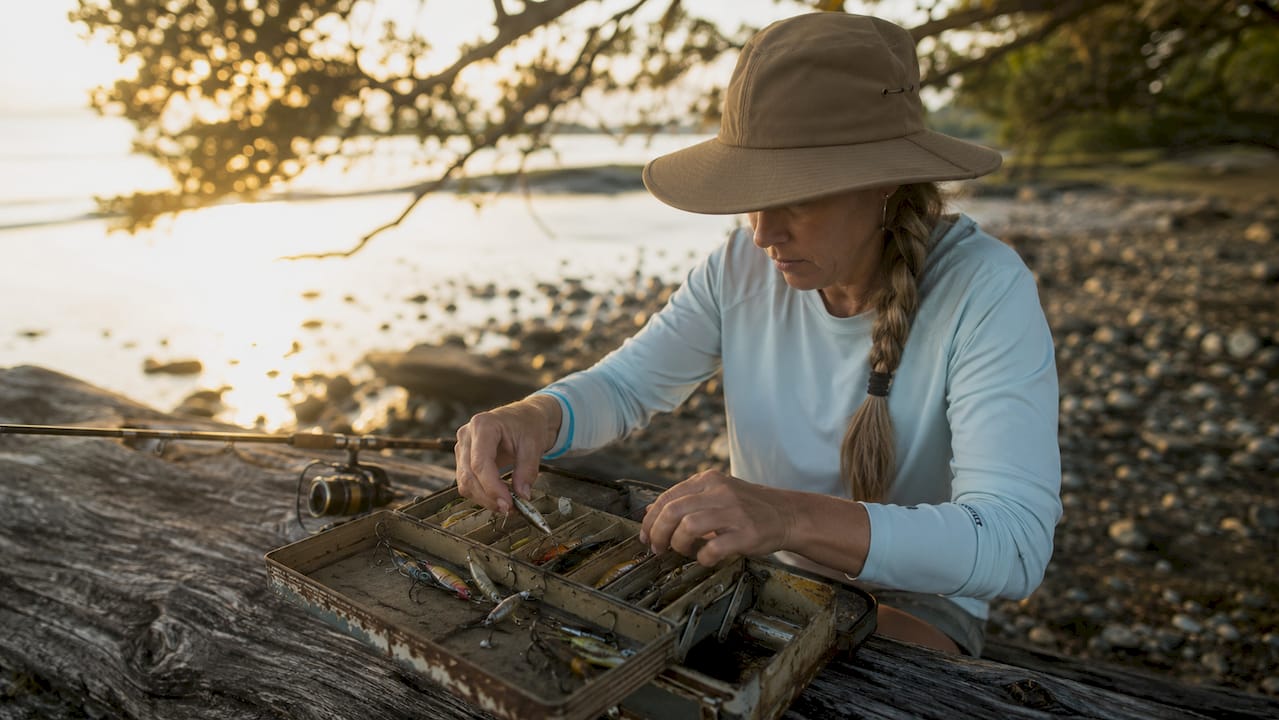
From component tackle boxes built to organize your bar fishing rigs to premium flashers, blades, and terminal gear that perform in real current, Highclasstackleco has what you need to fish bars with confidence. The full lineup at Highclasstackleco covers salmon, steelhead, and saltwater setups designed by anglers who fish these same bars. Gear up right and spend more time with bent rods.
FAQ
What is bar fishing in simple terms?
Bar fishing is shore or shallow water fishing that targets fish holding near natural underwater structures called bars, where currents concentrate baitfish and create feeding zones for predatory species like salmon and steelhead.
What gear do you need for bar fishing?
The core bar fishing setup includes a heavy sinker rig, a double-hook leader, 20–25 pound braided mainline, and a 30–40 pound fluorocarbon leader to handle abrasive structure and hard-running fish.
What are the best bar fishing spots in the Pacific Northwest?
The Fraser River bars in British Columbia and Frenchman’s Bar on the Columbia River are two of the top bar fishing locations in the Pacific Northwest, targeting Chinook salmon, sockeye, and steelhead during spring and summer runs.
When is the best time to fish a bar?
Rising and incoming tides are the most productive windows for bar fishing. Fish move onto bars as water levels rise and baitfish push onto the structure, making the first two hours of a flood tide the prime window.
How do tides affect bar fishing success?
Tides directly control where fish hold on a bar and whether the bar is fishable at all. Some bars go dry at low tide and turn on hard during the flood, which is why matching your fishing time to tide stage is the most important variable in bar fishing.
Recommended
- Spinfish Explained: Techniques, Gear, and Lures – High Class Tackle Co.®
- Super Bait Secrets: Top Picks for Salmon and Steelhead – High Class Tackle Co.®
- Spinnerbait guide: boost your Pacific Northwest fishing – High Class Tackle Co.®
- Brad Cut Plug Mastery: Expert Rigging Guide for PNW Anglers – High Class Tackle Co.®
0 comments