

Float fishing is defined as an angling technique that suspends bait at a precise, targeted depth using a buoyant float attached to the line. The float serves four core functions: bite detection, depth control, casting mass, and natural bait drift. These functions make float fishing one of the most versatile methods in freshwater and coastal angling. Whether you’re chasing steelhead on a Pacific Northwest river or panfish in a local pond, understanding how floats work gives you a real edge on the water.
What is float fishing and why does it work so well?
Float fishing works because it puts your bait exactly where fish are feeding, not where the current or gravity decides to drag it. The float holds your bait at a set depth while also acting as a visual alarm the moment a fish touches your offering. That combination of depth control and instant feedback is what separates float fishing from bottom rigs and lure casting.
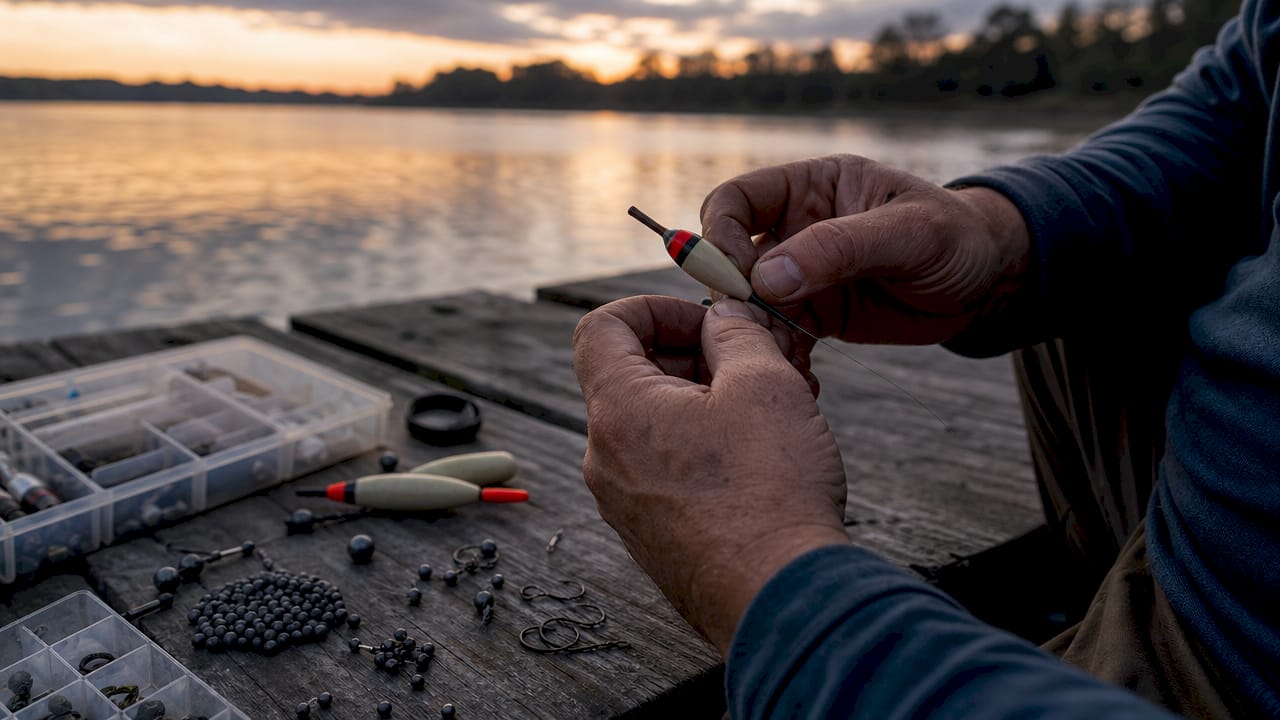
The technique is also known as bobber fishing in North America, though serious anglers use the term float fishing to reflect the broader range of rigs and methods involved. Both terms describe the same core principle: a buoyant indicator on the line suspends bait mid-column or near the surface. The difference is in execution. Bobber fishing often means a simple fixed clip-on setup, while float fishing covers fixed floats, slip floats, waggler rigs, and more.
Float fishing connects anglers directly to underwater activity through visual bite detection. That direct connection is what makes it so addictive. You watch the float, you read its movements, and you react. There is no guessing what is happening below the surface.
Floats also let you fish above snaggy structures and through flowing current by suspending bait at a controlled height. That opens up water that bottom rigs simply cannot reach effectively.
What gear and rig setup do you need for float fishing?
The right gear makes float fishing feel natural and easy. The wrong gear turns it into a frustrating tangle fest. Here is what a solid float fishing setup looks like.
Rod, reel, and line
A standard float fishing rig starts with a rod in the 10–13 foot range. Longer rods give you better line control, cleaner mends in current, and more reach when you need to guide your float through a run. For reels, you have three solid options: spinning reels for ease and versatility, centerpin reels for pure drift fishing on rivers, and baitcasting reels for anglers who want more control over their presentation. Monofilament line is the go-to choice for most float setups because it balances visibility, stretch, and strength. The stretch in mono also acts as a shock absorber when a fish hits hard.
Float types: fixed vs. slip
Two main float types cover most situations. Fixed floats clip or tie directly to the line at a set point. They work best in shallow water where you can cast the full rig without the float riding too high above the bait. Slip floats slide freely on the line until they hit a stopper knot, which lets you set the depth far deeper than your rod length. Slip floats are the choice for deeper water, river pools, and any situation where you need to adjust depth quickly without re-rigging.
Essential components checklist
- Rod: 10–13 feet, medium to medium-light action
- Reel: spinning, centerpin, or baitcasting depending on technique
- Main line: monofilament, 6–12 lb test depending on target species
- Float: fixed or slip style matched to conditions
- Stopper knot and bead for slip float rigs
- Split shot weight sized to balance the float
- Swivel to connect leader and reduce line twist
- Leader: lighter fluorocarbon, 18–24 inches
- Hook: sized to bait and target species
- Bait: worms, roe, shrimp, or soft plastics
A small bead placed between the stopper knot and the float prevents the float eyelet from sliding over the knot. This one detail eliminates most of the tangling problems beginners run into with slip float rigs.
Pro Tip: Match your float’s buoyancy so tightly to your bait and split shot weight that only a small, bright tip sits above the waterline. That tiny tip is your bite alarm. The more of the float you can see above water, the less sensitive your rig becomes.
How do float fishing techniques work?
Float fishing rewards anglers who understand how to read water and present bait naturally. The technique changes depending on depth, current, and target species.
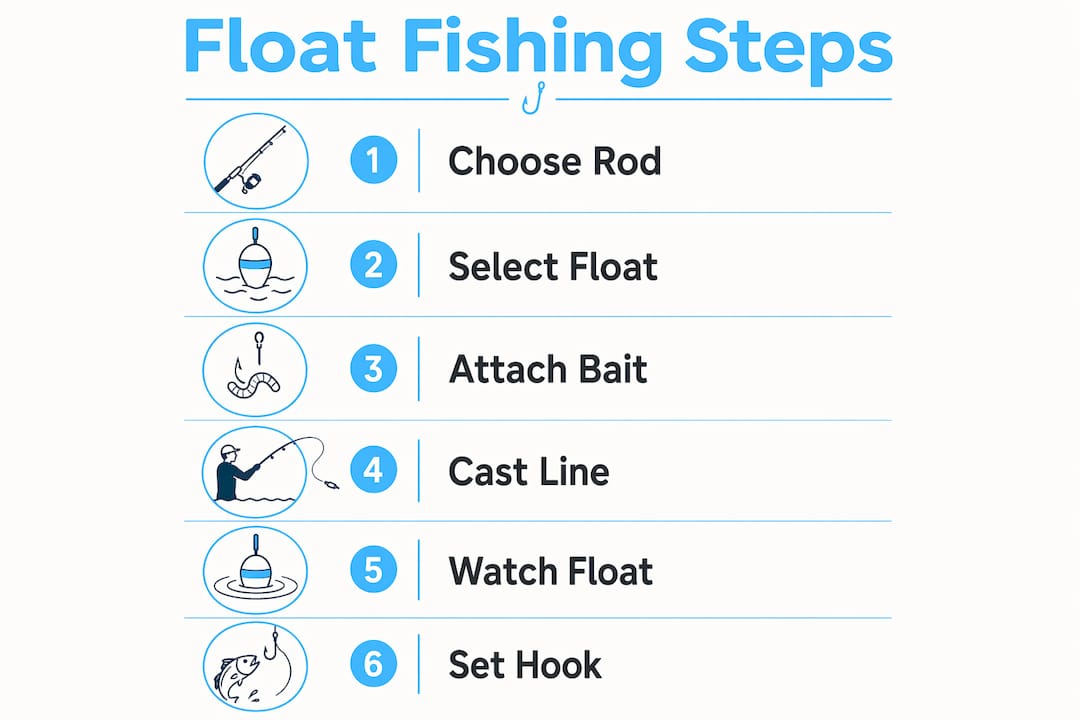
- Set your depth. For fixed floats, slide the float up or down the line and lock it at the depth you want. For slip floats, tie a stopper knot at the target depth and thread on a bead before attaching the float.
- Add your weight. Pinch a single split shot onto the line below the float, positioned about two-thirds of the way between the float and the hook. This keeps the bait hanging naturally.
- Cast accurately. Swing or lob the rig gently to avoid tangling. Longer rods help you place the float precisely without spooking fish near the bank.
- Read the float. A float that bobs slightly signals a fish mouthing the bait. A float that slides sideways or shoots under the surface means a solid take. Strike on any unnatural movement.
- Work the current. In flowing water, let the float drift naturally downstream. Mend your line upstream occasionally to keep the float moving at the same speed as the current. This is called a natural drift, and it is the most effective presentation in river float fishing.
- Adjust depth until you find fish. If you are not getting bites, move the stopper knot up or down in small increments. Fish often hold at a very specific depth, and a 12-inch adjustment can be the difference between a blank day and a full cooler.
- Strike and fight. When the float goes under, lift the rod tip firmly. Float fishing rigs use lighter hooks and leaders, so keep steady pressure without forcing the fish.
The fixed float technique suits shallower, calmer water where you want a simple, stable presentation. The slip float technique handles deeper pools, faster current, and situations where you need to change depth quickly. Float fishing is active and visual, which is what separates it from passive bottom fishing where you wait for a rod tip to twitch.
Pro Tip: In current, hold your rod tip high and slightly upstream. This keeps slack off the water and gives you a faster, cleaner strike when the float dips.
Float fishing tips, tricks, and mistakes to avoid
Most float fishing failures come down to a few fixable mistakes. Nail these details and your catch rate climbs fast.
- Use one split shot, not several. A single, properly sized split shot improves casting distance and cuts down on line twist. Multiple small weights tangle more often and throw off your bait presentation.
- Match float size to conditions. Float size and weight selection depends on current strength, bait size, and target fish. A large float in calm, shallow water spooks fish. A tiny float in heavy current gets dragged under constantly.
- Watch for subtle movements. A float that barely trembles or lifts slightly often signals an “up-bite,” where a fish grabs the bait and swims upward. These light takes are easy to miss if your float sits too high in the water.
- Use a bead with slip floats. Skipping the bead between the stopper and float causes the knot to jam inside the float eyelet. That kills your depth adjustment and usually costs you the whole rig.
- Choose bait that stays on the hook. Worms, salmon eggs, shrimp, and soft plastic grubs all work well. Avoid baits that wash off quickly in current, since a bare hook catches nothing.
- Adjust for light conditions. Bright orange or yellow float tips are easy to see in low light and overcast conditions. Switch to high-visibility colors when fishing at dawn or dusk.
Pro Tip: Experiment with float colors based on the background. A bright orange float disappears against fall foliage. A white or yellow tip stands out better in those conditions.
For bait selection targeting salmon and steelhead specifically, Highclasstackleco has a solid breakdown of top salmon and steelhead baits worth reading before your next river session.
How does modern technology improve traditional float fishing?
Float fishing is not stuck in the past. Modern tools have made it sharper and more effective than ever.
“Combining forward-facing sonar with slip-float rigs lets anglers place bait exactly in the strike zone, removing the guesswork from depth selection entirely.” — Game & Fish
Forward-facing sonar paired with slip floats lets you see fish holding at a specific depth on your screen, then set your stopper knot to match that exact depth before you cast. That level of precision was not possible with traditional float fishing alone. The result is fewer wasted drifts and more time with bait in front of fish.
Modern float designs have also improved significantly. Today’s floats use high-density foam and precision-molded bodies that offer better buoyancy consistency and longer casting distance than older balsa or cork designs. Some floats include weighted bodies that load like a casting lure, letting you reach water that was previously out of range with a standard float rig.
The combination of traditional float technique with modern electronics and float design is where serious anglers are finding their edge. Float fishing’s sophistication in managing current and natural drifts can outperform static bottom fishing in many river and lake situations. It is not a beginner-only method. It is a precision tool that rewards anglers who invest time in understanding it.
Key takeaways
Float fishing is the most direct and visual way to control bait depth and detect bites across a wide range of water types and target species.
| Point | Details |
|---|---|
| Float functions | Floats provide bite detection, depth control, casting mass, and natural bait drift in one rig. |
| Fixed vs. slip floats | Use fixed floats in shallow water and slip floats for deep water or fast depth adjustments. |
| Single split shot rule | One properly sized split shot improves casting accuracy and reduces line twist versus multiple weights. |
| Bead and stopper setup | A bead between the stopper knot and float prevents tangles and keeps slip float rigs running smoothly. |
| Modern tech integration | Pairing forward-facing sonar with slip floats puts bait at the exact depth where fish are holding. |
Why float fishing never gets old
Float fishing was the first technique I ever took seriously, and it is still the one I reach for when conditions get tricky. There is something about watching a float that keeps you locked in. You cannot zone out. Every twitch means something.
What I have learned after years on Pacific Northwest rivers is that most anglers underestimate float fishing. They treat it as a starter method and move on to lures or bottom rigs once they feel more confident. That is a mistake. A well-tuned slip float rig in a deep steelhead run will outfish a bottom rig on most days because the bait moves naturally with the current instead of sitting static on the riverbed.
The detail that changed my float fishing most was learning to balance the rig so only the tip shows. Once I started doing that, I started catching fish I never knew were there. Those subtle up-bites and sideways drifts that I used to miss became clear signals. The float tells you everything if you set it up right.
My advice to anyone learning how to float fish: spend your first sessions just watching the float move in different currents. Learn what normal looks like before you try to read what abnormal means. That foundation makes everything else click faster. And do not skip the bead. Seriously.
— Nick
Highclasstackleco gear for your float fishing setup
Float fishing demands the right terminal tackle, and having quality components makes every rig perform better from the first cast.

Highclasstackleco carries a full range of hooks, weights, and rig components built for real-world fishing conditions on the West Coast. Whether you are rigging up your first slip float setup or dialing in a centerpin rig for steelhead, the terminal tackle selection covers everything from swivels and leaders to the beads that keep your float rigs tangle-free. Built by anglers who fish these rivers and bays, Highclasstackleco curates gear that actually performs when it counts. Browse the full lineup at highclasstackleco.com and get your float rig dialed before the season heats up.
FAQ
What is float fishing in simple terms?
Float fishing is a technique that uses a buoyant float on the line to suspend bait at a set depth and signal bites visually. The float bobs or dips when a fish takes the bait.
What is the difference between a fixed float and a slip float?
A fixed float locks to the line at one point and works best in shallow water. A slip float slides freely on the line until it hits a stopper knot, allowing you to fish at depths greater than your rod length.
What rod length works best for float fishing?
A rod in the 10–13 foot range gives you the best line control, casting reach, and ability to mend line in current for a natural bait drift.
How do you detect bites when float fishing?
Watch for any unnatural float movement, including a sudden dip, sideways slide, or slight lift. A float that lifts upward signals an up-bite, where a fish grabbed the bait and swam toward the surface.
Can float fishing work for salmon and steelhead?
Float fishing is one of the most effective methods for salmon and steelhead in rivers. Slip float rigs let you present bait at the exact depth where fish are holding in deep pools and fast runs.
Recommended
- What Is a Fishing Tournament? Your Complete Guide – High Class Tackle Co.®
- What Is a Baitcaster Reel? A Complete Angler’s Guide – High Class Tackle Co.®
- What Is Bar Fishing? Techniques, Tips, and Top Spots – High Class Tackle Co.®
- What Is a Fishing Media Brand: Anglers’ Guide – High Class Tackle Co.®
0 comments