

Anglers distrust corporate brands because scale and profit-first incentives destroy the community signals anglers rely on to judge trustworthiness. When a brand gets acquired, goes direct-to-consumer, or swaps local reps for influencer campaigns, it severs the face-to-face relationships that anglers use as their primary credibility filter. Research on fisheries governance trust confirms that distant, centralized management consistently erodes both affinitive trust (shared values) and procedural trust (fair process). Highclasstackleco, built by West Coast anglers for anglers, is one of the brands actively pushing back against that drift.
Three mechanisms drive most of the distrust:
- Loss of face-to-face contact: No local rep means no accountability.
- Perceived profit-first ownership: Private equity or D2C pivots signal that margins matter more than the community.
- Information black-boxing: Corporate science or sourcing data that anglers can’t verify or challenge.
Pro Tip: When a brand you’ve trusted for years suddenly drops its local dealer network, treat it as an early warning sign, not a minor logistics change.
Key Takeaways
Anglers distrust corporate brands because profit-first ownership changes, D2C pivots, and the loss of local face-to-face relationships break the community trust signals anglers depend on to judge credibility.
| Point | Details |
|---|---|
| PE ownership is the trigger | Private equity acquisitions and D2C pivots are the most documented causes of retailer boycotts and angler backlash. |
| Face-to-face contact is irreplaceable | Research links local engagement directly to affinitive and procedural trust; remote service cannot substitute for it. |
| Distrust drives noncompliance | One study found a correlation of ρ = -0.717 between trust in scientists and noncompliance, a signal that applies to brand authority too. |
| Six questions reveal brand credibility | Ask about ownership, local reps, warranty terms, independent testing, community investment, and retailer relationships. |
| Community-first brands earn loyalty | Brands that co-design gear, run real events, and maintain transparent sourcing build durable trust that survives market pressure. |
Table of Contents
- Why anglers distrust corporate brands: the core drivers
- How distrust shows up on the water and in local shops
- What the research actually says about trust in fisheries
- What trust signals should anglers actually look for?
- How brands can actually rebuild anglers’ trust
- What you can do right now as an angler
- An honest take on where the industry is headed
- Sources
Why anglers distrust corporate brands: the core drivers
Private equity is the loudest alarm bell right now. Trade reporting documents how PE ownership and aggressive licensing erode retailer relationships, shrink product-service quality, and trigger community backlash in outdoor sectors. The surf industry watched it happen first. Fishing is next in line if brands aren’t careful.
The Simms story made it concrete. After a private equity takeover, retailers began dropping the brand and calling publicly for change. That’s not a fringe reaction. That’s the market telling you exactly where trust broke.
Beyond ownership, these drivers compound the problem:
- D2C pivots that cut out local shops: Anglers lose their trusted middlemen and their local knowledge network.
- Influencer-only marketing: Sponsored content without lived field experience reads as hollow to anyone who’s actually been on the water at 5 AM.
- Pricing and licensing shifts: Fee increases tied to new ownership feel like extraction, not investment.
- Vanishing sales reps: Retailers report that rep turnover is often the first visible sign of cultural decline after an acquisition.
- Black-box data: When brands cite proprietary science without sharing methods, anglers with decades of lived knowledge feel dismissed.
“Trust depends on both rational competence — transparent methods, consistent quality — and affective affinity — shared values, local presence. Brands that ignore either will erode trust.” (Fisheries governance research, Marine Policy, 2024)
Each driver maps to a specific trust failure: PE ownership breaks systems-based trust; D2C pivots break affinitive trust; black-box data breaks competence trust. You don’t need all three to lose an angler. One is usually enough.
How distrust shows up on the water and in local shops
Distrust isn’t passive. Anglers act on it fast and loudly.
- Local shops quietly pull corporate brands from their walls.
- Anglers shift spending to indie or garage-built tackle brands.
- Community forums run forensic teardowns of sponsored gear reviews.
- Sponsored advice from pro staff gets ignored in favor of word-of-mouth from trusted locals.
- Warranty and repair demands spike as anglers test whether a brand still backs its product.
- Noncompliance with corporate-led conservation initiatives rises when anglers don’t trust the messenger. Research shows trust in scientists correlates strongly with compliance decisions — and the same logic applies to brand authority.
The commentary around pro fishing culture confirms a broader shift: educational and entertainment roles are moving from sponsored pros to independent digital voices, and seasoned anglers are skeptical of both when the content smells like a paid placement.
Pro Tip: Before trusting a gear review, check whether the reviewer has ever posted a negative opinion about a sponsor’s product. If the answer is no, treat every recommendation as an advertisement.
What the research actually says about trust in fisheries
The academic literature on fisheries governance maps almost perfectly onto brand dynamics. A 2025 synthesis in Frontiers in Marine Science found that trust drives compliance, collaboration, and conflict resolution in natural-resource contexts. Low trust amplifies anxiety and negative perceptions of management actions. Replace “management” with “brand decisions” and the finding holds.
Key research-backed mechanisms:
- Face-to-face engagement builds affinitive and procedural trust faster than any digital channel.
- Perceived procedural fairness (anglers feel heard) predicts cooperation more reliably than outcome satisfaction.
- Information mismatches between corporate/scientific data and lived angler knowledge generate resentment, not deference.
- Affective drivers like anxiety about ecosystem threats or livelihood loss reduce trust quickly and require sustained two-way communication to repair.
One empirical study found a strong negative correlation between trust in scientists and self-reported noncompliance among fishers, with a reported correlation coefficient of ρ = -0.717. That’s a powerful signal: when anglers stop trusting the source, they stop following the guidance.
Gear adoption research from the ICES Journal of Marine Science adds another layer. Voluntary uptake of proven fishing gear is rare. Anglers adopt new products when they perceive direct benefit, face impending regulation, or receive persistent face-to-face outreach. Single financial incentives rarely move the needle. Brands that rely on discount codes and influencer drops instead of local engagement are fighting the wrong battle.
What trust signals should anglers actually look for?
Positive signals worth your attention:
- Local reps or regional brand ambassadors who fish the same water you do.
- Transparent ownership disclosure (who bought the brand, when, and why).
- Consistent product quality across multiple seasons, not just launch year.
- Repair and warranty programs that don’t require a law degree to use.
- Gear trials co-designed with working anglers, not just sponsored pros.
- Independent field testing with published methodology, not just “field-tested” marketing copy.
- Community investment: tournaments, habitat events, youth programs that cost the brand real money.
Red flags that should make you pause:
- Sudden D2C pivot with no explanation and retailer cutouts.
- Vague or evasive answers about ownership or PE involvement.
- Heavy influencer promotion with zero local shop presence.
- Warranty terms that quietly shrank after an acquisition.
Six questions worth asking your local shop rep or the brand directly:
- Who owns this brand today, and has that changed in the last three years?
- Do you have a local sales rep I can talk to, or is everything handled remotely?
- What’s your repair and warranty process if a product fails mid-season?
- Can you show me independent field-test results, not just internal data?
- What community events or local programs does this brand fund in my region?
- Has your retailer relationship with this brand improved or declined recently?
How brands can actually rebuild anglers’ trust
Rebuilding trust takes longer than losing it. Here’s what works:
- Restore local rep networks. Remote customer service is not a substitute. Face-to-face contact is the fastest trust-builder the research identifies.
- Disclose ownership and sourcing openly. Anglers can handle complexity. They can’t handle feeling deceived.
- Institute third-party field testing with published methods. Share the data, including the results that aren’t flattering.
- Protect warranty and repair programs as a non-negotiable line item, even under margin pressure.
- Co-design gear with experienced anglers, not just marketing focus groups. Participatory design creates advocates, not just customers.
- Invest in real community events: tournaments, habitat restoration, youth fishing days. Not pay-to-play sponsorships.
Highclasstackleco models several of these practices from the ground up. Built in the Pacific Northwest by anglers who fish salmon, steelhead, and kokanee, the brand runs community events, produces fishing media content that reflects real angler culture, and designs gear through direct collaboration with the people who use it. That’s not a marketing position. That’s the operating model.
“Brands that want to survive the next wave of consolidation need cultural-protection clauses baked into any transaction — not as a PR gesture, but as a binding commitment to the community that built the brand’s value in the first place.” (Fishing Tackle Retailer, trade analysis)
Pro Tip: If your brand is ever in acquisition talks, push for explicit cultural-protection language in the deal documents. It’s the same logic that protects team names in sports franchise sales — and it’s enforceable.
The broader outdoor industry parallels are worth watching. Financial shifts affecting niche communities in adjacent gear markets show how quickly institutional decisions can fracture community trust when transparency is absent.
What you can do right now as an angler
You have more power than you think. Here’s how to use it:
- Ask the hard questions at your local shop before buying. The six questions above are your starting point.
- Vet sponsored content by checking whether the creator has ever criticized a sponsor’s product.
- Run back-to-back field checks on gear claims. Put two products on the same water, same conditions, and trust what you see.
- Buy locally for serviceable items (rods, reels, waders) where repair relationships matter. Use D2C for simple consumables where service isn’t a factor.
- Support indie and community-first brands with your wallet. Market signals are the loudest language corporate owners understand.
Community actions that move the needle:
- Band together to demand local reps from brands you care about.
- Organize independent field trials and publish the results publicly.
- Use public comment periods on fisheries management decisions to push for transparent, participatory processes.
Pro Tip: Explore custom and co-designed tackle options from brands that build with anglers, not just for them. The product quality difference is real, and so is the accountability.
An honest take on where the industry is headed
The consolidation wave hitting fishing brands isn’t slowing down. Private equity sees outdoor recreation as an undervalued asset class, and fishing brands with loyal communities are exactly the kind of target that looks attractive on a spreadsheet. What doesn’t show up on that spreadsheet is the trust those communities took decades to build.
The brands that survive this era won’t be the ones with the biggest marketing budgets. They’ll be the ones that kept their local reps, published their field-test data, and showed up at the boat ramp. Highclasstackleco’s approach, building community through tournaments, real media, and gear that performs in Pacific Northwest conditions, is the template that matters. Not because it’s nostalgic, but because it’s what the research says actually works.
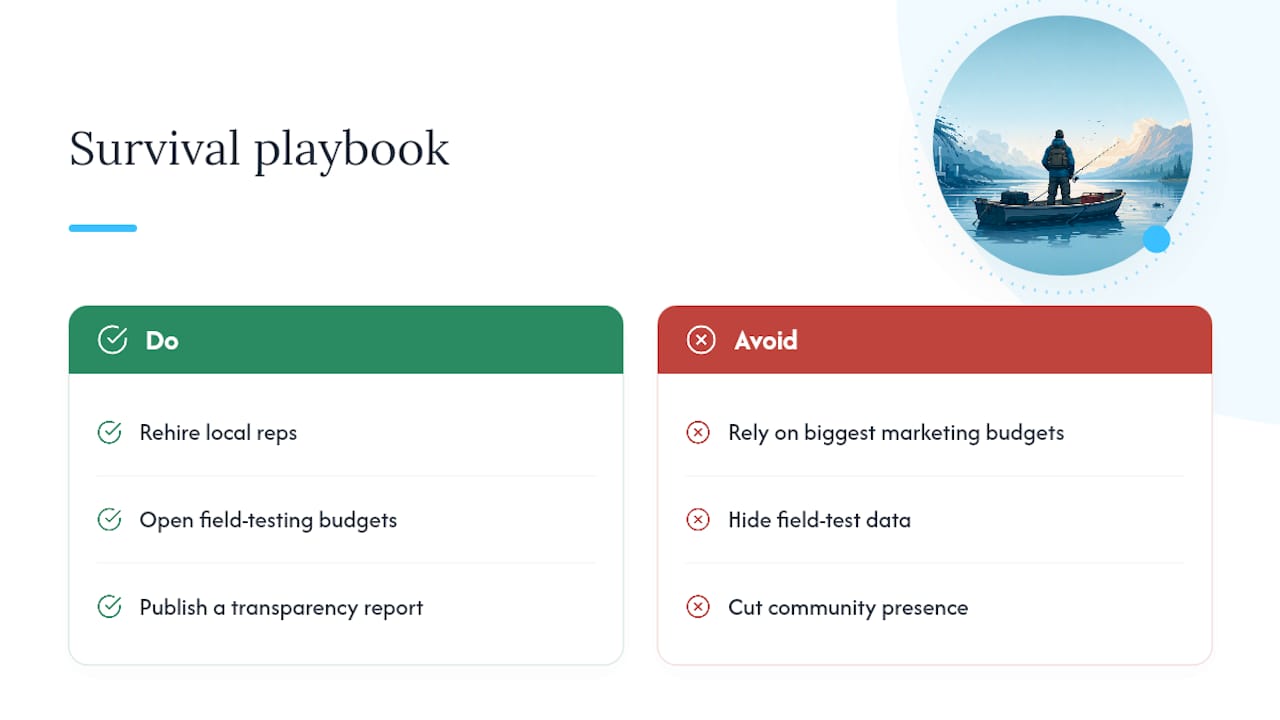
If you run a brand, the playbook is clear: hire back your reps, open your testing budgets, and publish a transparency report before someone else publishes a boycott story about you.
Sources
- The importance of rebuilding trust in fisheries governance in post-Brexit England
- Frontiers in Marine Science article on trust in fisheries management (2025)
- Private Equity Gutted Surf Brands — Is Fishing Next? - Fishing Tackle Retailer
- Fly-fishing brand Simms faces retail boycott after private equity takeover - Bloomberg
Recommended
- What Is a Fishing Media Brand: Anglers’ Guide – High Class Tackle Co.®
- Best Fishing Apparel Brands for Anglers: 2026 Expert Picks – High Class Tackle Co.®
- What Is a Family Fishing Tradition and Why It Matters – High Class Tackle Co.®
- What Is a Fishing Collab? Your Complete Angler’s Guide – High Class Tackle Co.®
0 comments