

Scent attractants are chemical compounds added to lures, baits, or tackle to trigger feeding responses in fish by mimicking the odor of natural prey. Why anglers use scent attractants comes down to one hard fact: fish locate food primarily through smell, not sight. Species like salmon, steelhead, and bass rely on olfactory pits to detect dissolved chemicals in the water, sending signals directly to feeding centers in the brain. Brands like Berkley MaxScent, Pro-Cure, and NW Bait & Scent have built entire product lines around this biology. When you match your scent to what fish already recognize as food, you stop guessing and start catching.
Why anglers use scent attractants: the fish biology behind it
Fish do not hunt the way predators on land do. They read the water chemically, constantly sampling dissolved particles to build a picture of what is nearby. Olfactory sensory neurons project directly to forebrain feeding centers, triggering automatic feeding programs before a fish ever sees your bait. That is not a minor advantage. That is a neurological shortcut straight to a strike.
The mechanics work like this:
- Olfactory pits sit on either side of a fish’s snout and funnel water across receptor cells that detect specific chemical compounds.
- Water currents carry dissolved scent molecules downstream, creating a plume that fish can track upstream toward the source.
- Species sensitivity varies widely. Salmonids like Chinook and coho are among the most scent-sensitive fish in freshwater, while sight-reliant species like largemouth bass still respond strongly to amino acid cues in low-visibility water.
- Water-solubility determines dispersion. Scent molecules must dissolve at the molecular level to travel effectively through current. Oil-based scents float and disperse poorly compared to water-soluble amino acid gels, which spread through the water column the way natural food odors do.
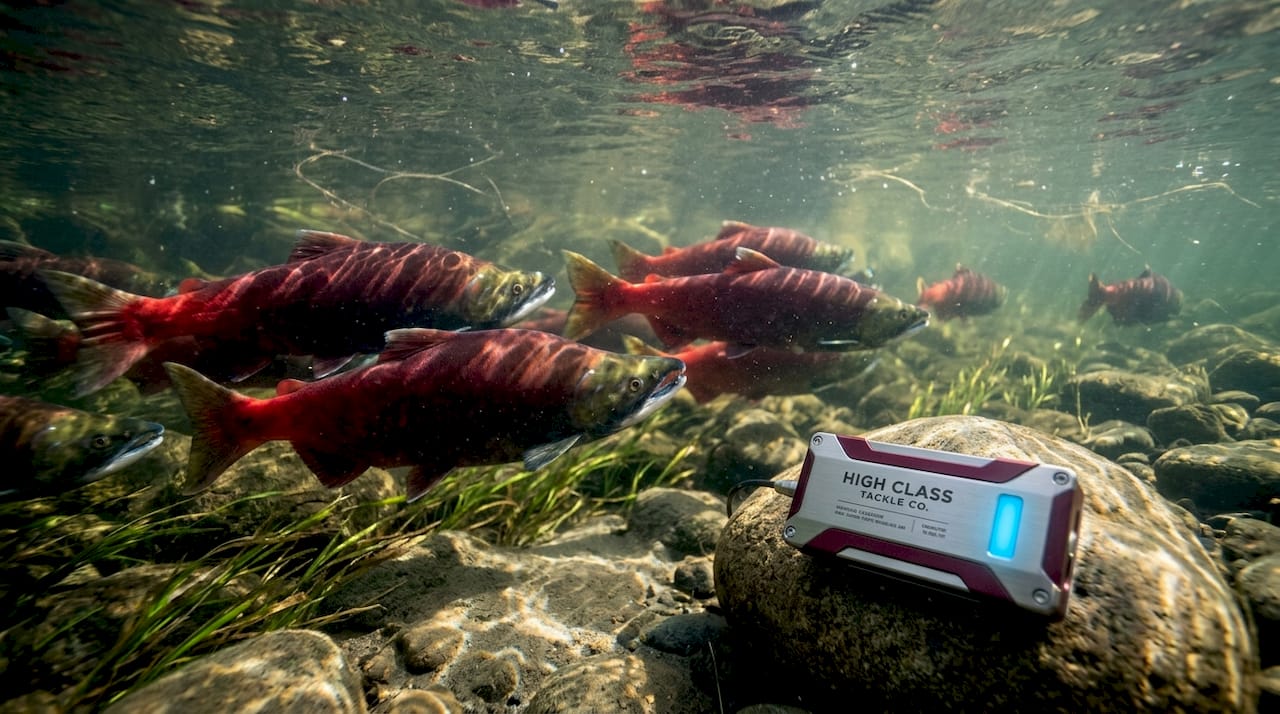
Migratory species like salmon rely on olfaction not just for feeding but for navigation and orientation, which explains why scent plays such an outsized role in salmon fishing compared to other species. Their olfactory systems are tuned to detect incredibly faint chemical signals across long distances. That sensitivity is your biggest tool.
Pro Tip: Rig your scented bait slightly elevated off the bottom so it enters active water flow. Scent molecules need moving water to disperse. A bait sitting dead on the riverbed in still water is barely broadcasting.
What types of scent attractants actually work
Not all scents are created equal, and the chemistry matters more than most anglers realize. The industry term for the most effective compounds is “feeding stimulants,” specifically free amino acids and protein hydrolysates that fish recognize as signals from living prey.
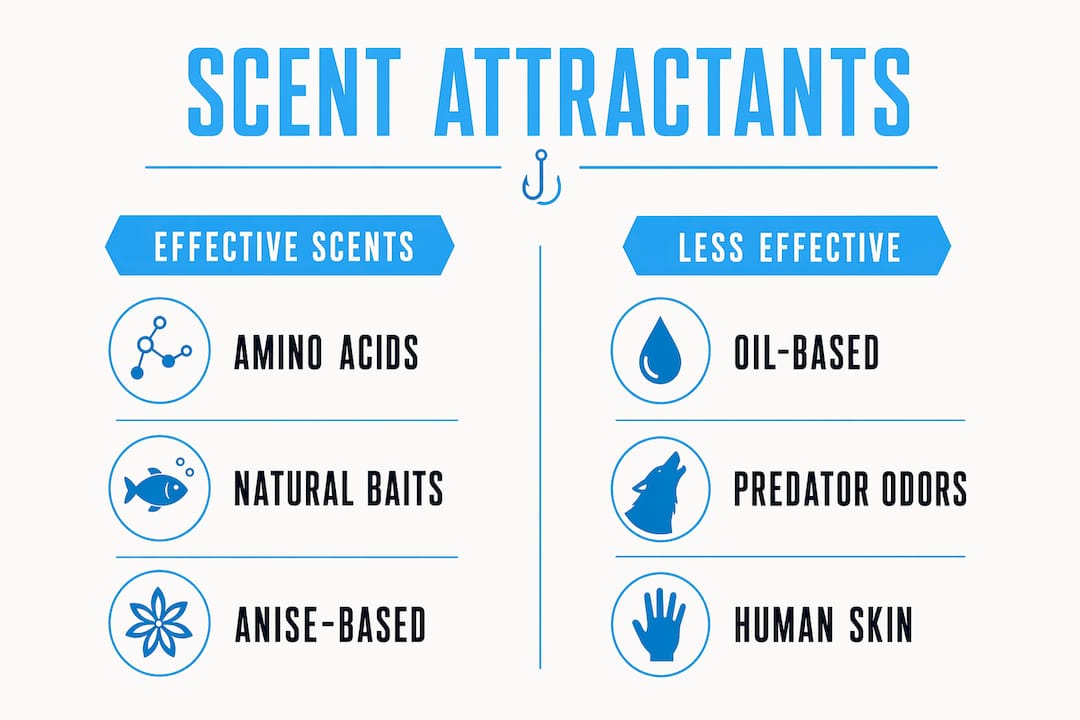
Free amino acids like L-Alanine and L-Arginine are universal feeding triggers across many species, reliably initiating feeding responses even at very low concentrations. This means a small amount of the right compound does more work than a large amount of the wrong one. Products built around these amino acids, like Berkley MaxScent soft plastics or NW Bait & Scent gel formulas, outperform generic scent sprays because they deliver the exact chemical signal fish are already wired to respond to.
Here is how the main product categories compare:
| Scent type | Dispersion in water | Best conditions | Weakness |
|---|---|---|---|
| Water-soluble amino acid gels | Excellent, molecular level | Moving water, cold temps | Needs reapplication |
| Oil-based scents | Poor, forms droplets | Warm, calm water only | Congeals below 50°F |
| Scent-infused plastics (e.g., Berkley MaxScent) | Continuous slow release | All conditions | Higher cost per bait |
| Powder cure scents (e.g., Zillabait) | Good when wet | Bait curing, egg sacks | Not for hard lures |
One category anglers overlook is the negative side of scent chemistry. Predator odor exposure caused up to a 68% reduction in feeding behavior in controlled trials. That number means the wrong scent on your hands or tackle does not just fail to attract fish. It actively shuts down feeding in the area. Fear odors and predator cues are real, and they work against you.
Pro Tip: Check out the NW Bait & Scent gel lineup for water-soluble options built specifically for Pacific Northwest salmon and kokanee. These gels disperse at the molecular level, which is exactly what you need in moving river current.
What are the real benefits of scent attractants on the water
The practical benefits of scent attractants go beyond just drawing fish in. They change the entire dynamic of how fish interact with your presentation, from the moment they detect it to the moment you set the hook.
- Extended strike zone. Smell functions for long-range attraction, pulling fish toward your bait from distances that visual cues cannot reach. In murky water or at depth, scent is the only signal that travels far enough to matter.
- Longer lure retention. Once a fish commits and mouths the bait, taste confirmation keeps it holding on. Scented baits give fish a reason to hold rather than spit. That extra second is often the difference between a hookup and a miss.
- Low-visibility performance. In muddy runoff, deep water, or night fishing conditions, scent is your primary tool. Sight-reliant presentations fail when the water is stained. Scent does not.
- Triggering inactive fish. Deadsticking a scented soft plastic in front of a lethargic salmon or bass that refuses to chase is a proven tactic. The scent plume does the work while the bait sits still.
- Species-specific effectiveness. Salmon and steelhead respond aggressively to shrimp, prawn, and herring-based scents because these match their natural forage. Bass respond strongly to crawfish and bluegill amino acid profiles. Matching the scent to the forage base in your specific fishery is the fastest way to see results. For bass anglers, understanding bass forage is the foundation of selecting the right scent profile.
The two-stage scent effect is what makes this whole system click. Anglers intentionally create a long-range attraction phase using dispersing scent molecules, then a short-range acceptance phase where taste confirms the bait is real food. Understanding that distinction changes how you rig and where you place your bait.
How to apply scent attractants for maximum effectiveness
Knowing which scent to use is half the battle. Applying it correctly is the other half. Most anglers under-apply or apply in ways that kill the scent trail before it reaches fish.
- Wash your hands before handling any tackle. Human skin secretes L-serine, a biological alarm signal that repels trout and salmon. Unscented soap or a commercial masking scent like anise or shrimp oil removes this before it contaminates your bait.
- Use water-soluble gels in cold or moving water. Oil-based scents congeal below 50°F and stop dispersing entirely. In Pacific Northwest rivers during fall salmon runs, a gel formula like NW Bait & Scent Slammin Sams Anti Pro stays active in cold current where oil products fail.
- Reapply every 15 to 20 minutes. Scent dissipates in moving water. Treat it like a consumable, not a one-time application.
- Position your bait in active current. Water-solubility and convection currents determine how far scent molecules travel. A bait in dead slack water broadcasts almost nothing. Get it into the current seam.
- Adapt your hook-set when using strong scents. Fish hold scented baits longer before spitting, which means you can wait for a more committed bite before setting. Rushing the hook-set on a fish that is still mouthing a scented bait costs you fish.
Pro Tip: For egg sack and bait curing applications, a powder stimulant like Zillabait Bite Stimulant adds amino acid chemistry directly into your cure, so the scent is built into the bait from the start rather than applied on top.
Key takeaways
Scent attractants work because fish olfaction is a direct neurological pathway to feeding behavior, and matching your scent chemistry to natural forage triggers strikes that visual presentations alone cannot produce.
| Point | Details |
|---|---|
| Fish smell before they see | Olfactory neurons trigger feeding automatically, making scent the first signal fish respond to. |
| Water-solubility is non-negotiable | Gel-based amino acid scents disperse at the molecular level; oil-based products fail in cold or moving water. |
| Wrong scents repel fish | Predator odors and human L-serine actively suppress feeding, so clean hands and correct chemistry matter. |
| Scent extends the strike zone | Long-range olfaction draws fish in; short-range taste keeps them holding the bait longer. |
| Match scent to forage | Salmon respond to shrimp and prawn profiles; bass respond to crawfish and baitfish amino acids. |
What I’ve learned after years of fishing with scent
I will be honest with you: I used to treat scent as an afterthought. Spray something on, cast out, hope for the best. It took a few blank days on rivers that should have been producing to make me actually study what was happening below the surface.
The biggest mistake I see anglers make is buying a scent product and assuming the work is done. Scent is not magic. It is information. If that information does not match what fish in that system are already eating, or if it is contaminated by your sunscreen or gas from the boat motor, you are broadcasting noise instead of a signal.
The second mistake is using oil-based products in cold Pacific Northwest water and wondering why they are not working. Below 50°F, those oils congeal. You are dragging a dead scent trail through water that needs a live one. Switch to a water-soluble gel and you will feel the difference in your catch rate within a session.
What I have found works best is layering sensory triggers. Scent draws fish in from distance. Flash and vibration from a quality blade or flasher gets their attention in the strike zone. Then scent again, this time as taste confirmation, seals the deal. None of these elements work as well alone as they do together. The Northwest Bait and Scent guide from Highclasstackleco is worth reading if you want to go deeper on matching scent profiles to specific Pacific Northwest species and conditions.
Scent technology is also getting better fast. Amino acid formulas are more targeted than they were five years ago, and the best products now build scent directly into the bait material rather than relying on surface application. That is the direction the whole category is moving, and it is worth paying attention to.
— Nick
Gear up with Highclasstackleco
If this article got you thinking about your scent game, Highclasstackleco has the products to back it up. We carry a full lineup of NW Bait & Scent gel and oil formulas built for Pacific Northwest salmon, steelhead, and kokanee, alongside premium flashers, blades, and terminal gear designed to work with your scent strategy, not against it.

Every product in our lineup is tested in real conditions on West Coast water. No filler, no guesswork. Head to Highclasstackleco to browse our full tackle and scent collection, and put together a setup that actually produces.
FAQ
What are scent attractants in fishing?
Scent attractants are chemical compounds applied to lures or bait to mimic the odor of natural prey and trigger feeding responses in fish. They work by activating a fish’s olfactory system, which sends signals directly to feeding centers in the brain.
Do fish really respond to scent attractants?
Yes. Fish rely on olfactory pits to detect dissolved chemicals in water, and species like salmon and trout are especially sensitive to amino acid compounds that signal living prey. Studies confirm that the right scent triggers automatic feeding behavior even in inactive fish.
What scents work best for salmon fishing?
Shrimp, prawn, herring, and anise-based scents are the most effective for salmon because they match the natural forage salmon feed on throughout their migration. Water-soluble gel formulas outperform oil-based products in cold Pacific Northwest river conditions.
Can the wrong scent repel fish?
Absolutely. Predator odors reduced feeding behavior by up to 68% in controlled trials, and human skin secretes L-serine, an alarm compound that repels trout and salmon. Always wash your hands before handling tackle and avoid oil-based products that can carry foreign chemical contamination.
Are water-soluble scents better than oil-based ones?
Water-soluble amino acid gels are more effective in most fishing conditions because they disperse at the molecular level through water currents. Oil-based scents form droplets that float and fail to disperse properly, and they congeal in cold water below 50°F, making them largely ineffective during fall and winter salmon seasons.
Recommended
- Northwest Bait and Scent Guide for Serious Anglers – High Class Tackle Co.®
- Custom Spinner Blades for Salmon and Steelhead Success – High Class Tackle Co.®
- Spinnerbait guide: boost your Pacific Northwest fishing – High Class Tackle Co.®
- NW BAIT & SCENT GRAYBILLS 2oz OIL SCENTS SALMON – High Class Tackle Co.®
0 comments