

Fishing is defined as a practice that blends skill, patience, tradition, and emotional connection far beyond any competitive outcome. Why fishing is more than sport is a question researchers, therapists, Indigenous communities, and millions of anglers have answered through lived experience and hard data. A 2025 Self-Determination Theory study of 364 older anglers confirmed that autonomy mediates 21% of fishing’s positive effect on well-being. That finding points to something most outsiders miss: fishing gives people control over their own experience in a world that rarely does. The National Wildlife Federation, Patriot Anglers, and the Paumari people of Brazil each prove that fishing carries weight as a cultural institution, a healing tool, and a conservation engine.
Why fishing is more than sport: the psychology behind it
Recreational angling satisfies three core psychological needs: autonomy, competence, and relatedness. According to Self-Determination Theory, these three needs drive human well-being across virtually every domain of life. Fishing hits all three simultaneously, which is rare for a single leisure activity.
Autonomy is the strongest factor. You choose where to go, what to target, how long to stay, and whether you keep or release. That self-directed freedom produces a measurable well-being effect that competitive sports, which are governed by rules, referees, and opponents, simply cannot replicate. Competence builds as you read water, match hatches, and feel the difference between a snag and a strike. Relatedness grows every time you share a boat, teach a kid to cast, or swap stories at the ramp.
The fishing lifestyle benefits extend into measurable mental health territory. Studies show fishing reduces cortisol levels, improves mood, and sharpens focus through sustained attention on a single task. That cognitive engagement is closer to mindfulness practice than to a pickup basketball game. Fishing for mindfulness is not a marketing phrase. It describes a real neurological process where the brain shifts from reactive mode into calm, present-moment awareness.
- Stress reduction through nature immersion and rhythmic casting motion
- Mood improvement from autonomy and self-directed goal setting
- Cognitive sharpening through sustained attention and problem solving
- Social bonding through shared experience without performance pressure
Pro Tip: If you fish primarily for relaxation, choose locations with low boat traffic and minimal competition. The quieter the environment, the stronger the autonomy effect on your mental state.
One honest caveat: fishing carries physical risks including overuse injuries to shoulders, wrists, and lower back. Therapeutic narratives about fishing must include ergonomic coaching alongside emotional benefits. Ignoring the physical side undermines the credibility of fishing’s healing reputation.
How fishing programs heal veterans and vulnerable youth
Fishing as therapy is not a metaphor. Programs like Reel Impact Angling and Patriot Anglers have built structured, evidence-informed models that use the water as a treatment environment without ever calling it treatment. That distinction matters enormously.
Reel Impact Angling works with children facing mental health challenges. The program avoids labeling fishing as therapy because that label creates resistance and stigma. Instead, it creates a supportive environment where kids open up naturally, build confidence through small wins like landing their first fish, and develop social skills through shared experience. The water does the heavy lifting.
Patriot Anglers, a Texas-based nonprofit, has guided over 4,600 veterans since 2013 through fly-fishing experiences designed to address PTSD. The program uses structured routines: casting practice, knot tying, reading the river, waiting. Those routines create a container for conversation that clinical office settings rarely achieve. Veterans who resist traditional therapy will stand in a river for hours and talk freely. The structure of fishing gives them something to do with their hands and their eyes while their minds process what they cannot say directly.
- Structured casting and tying routines reduce anxiety and create focus
- Group outings build camaraderie without requiring vulnerability on demand
- Nature immersion lowers physiological stress markers independent of conversation
- Multiple sessions build trust and deepen social bonds over time
Pro Tip: If you know a veteran or young person struggling with stress or isolation, an invitation to fish is more powerful than an invitation to talk. The activity creates the safety that conversation needs.
Connection through fishing works because the activity is inherently non-judgmental. A fish does not care about your rank, your diagnosis, or your past. That equality on the water is part of what makes these programs so effective. Highclasstackleco sees this dynamic play out at every community event we run. The water levels the field every single time.
How does fishing connect culture, conservation, and identity?
Fishing is a social technology. That phrase comes from UNESCO’s 2026 coverage of the Paumari people of Brazil, who use hybrid fishery management combining traditional ecological knowledge with scientific monitoring to restore species and rebuild community pride. Their fishing regulations are not government mandates. They are cultural agreements embedded in identity. Breaking them is not a legal violation. It is a betrayal of who you are.
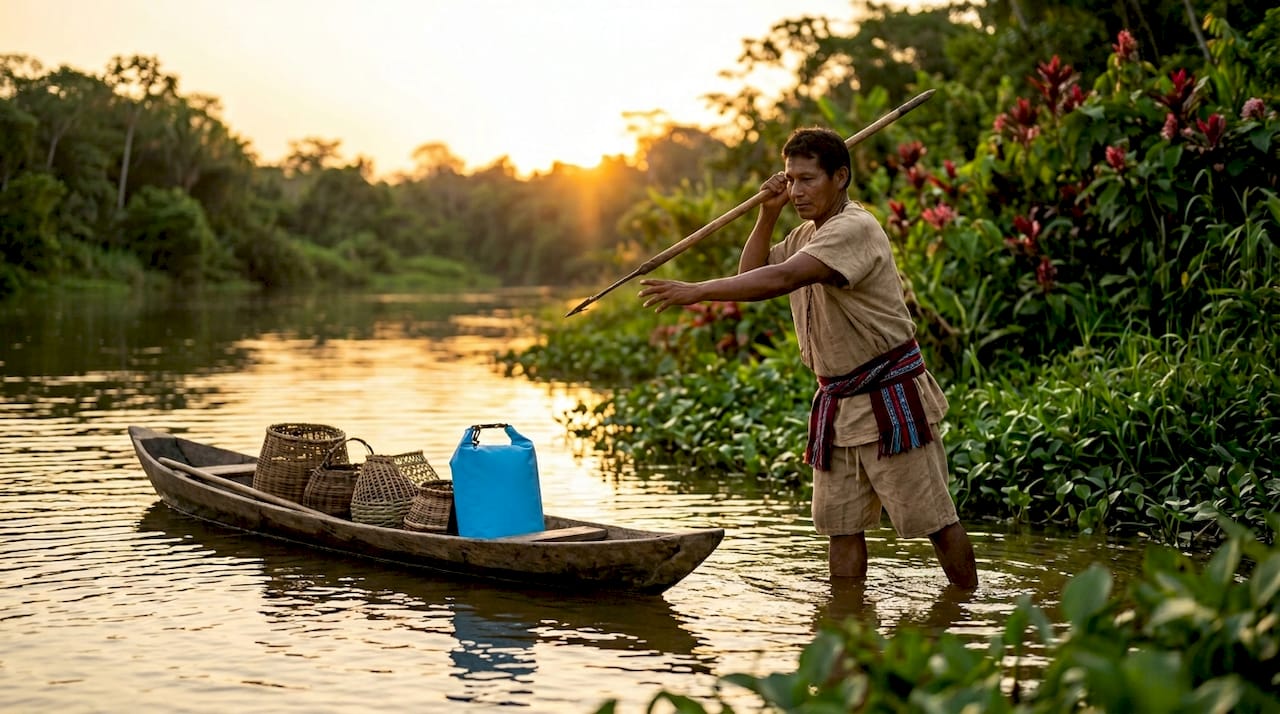
That model reveals something universal about fishing’s importance. When communities manage fisheries together, the act of fishing becomes inseparable from belonging. Harvest limits become shared values. Monitoring becomes collective stewardship. The fishing community impact extends far beyond the catch.
The National Wildlife Federation frames fishing as the link between sport, nature connection, and generational memory. That framing is accurate. The most powerful conservation advocates in America are not scientists or activists. They are people who fished with their grandparents and want their grandchildren to have the same experience. Fishing as a tradition creates stewards because it creates emotional stakes in the health of the ecosystem.
| Dimension | Fishing’s role | Traditional sport’s role |
|---|---|---|
| Cultural identity | Embeds community values and heritage | Builds team or regional pride |
| Conservation ethics | Creates personal stake in ecosystem health | Rarely engages environmental responsibility |
| Intergenerational connection | Passes down knowledge, memory, and place | Transfers skills and competitive drive |
| Community governance | Shapes local resource management decisions | Influences civic pride but not resource policy |
Catch-and-release practice is the clearest example of conservation ethics in action. An angler who releases a wild steelhead is making a choice that costs them a meal and gains them nothing immediate. They do it because they understand the fish’s value beyond the plate. That understanding does not come from a regulation. It comes from years of connection to the water and the species that live in it.
How does fishing compare to traditional sports?
Fishing differs from traditional sports in four measurable ways: physical intensity, competitive structure, environmental engagement, and social dynamics. Understanding those differences explains why fishing matters to people who have never cared about any other sport in their lives.
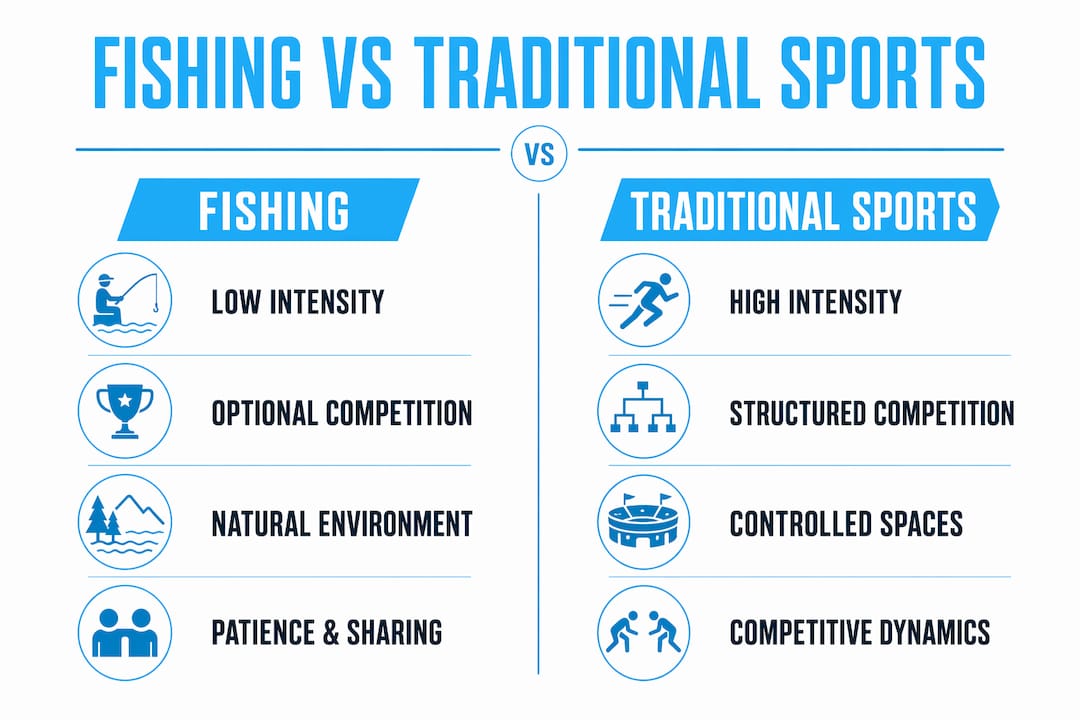
Physical intensity in fishing is low to moderate, combining casting mechanics, wading, and sustained standing with mental engagement and sensory awareness. That profile suits people who cannot or do not want high-impact activity. It also means fishing is accessible across age ranges in a way that basketball or soccer is not. A 70-year-old and a 12-year-old can fish the same river with equal engagement.
Competitive structure in fishing is optional. Tournament fishing exists and draws serious competitors. But the vast majority of anglers never enter a tournament and never feel the need to. The absence of mandatory competition is not a weakness. It is a feature that makes fishing more inclusive than almost any organized sport. You set your own goals. You define your own success.
Environmental engagement separates fishing from every traditional sport. A soccer field is a controlled surface. A river is a living system that changes by the hour. Reading that system, adapting to it, and respecting it builds a relationship with the natural world that no gym or stadium can replicate. That relationship is the core of the fishing lifestyle benefits that keep anglers coming back for decades.
Social dynamics in fishing reward patience and generosity over dominance. Sharing a spot, teaching a technique, or helping someone land their first fish are the social currencies of fishing culture. Those behaviors build community rather than hierarchy. That is why fishing communities tend to be remarkably welcoming to newcomers once you show genuine respect for the water.
Key takeaways
Fishing’s value is defined by its simultaneous impact on mental health, cultural identity, conservation ethics, and community belonging. No traditional sport delivers all four.
| Point | Details |
|---|---|
| Autonomy drives well-being | Self-directed fishing experiences satisfy psychological needs that competitive sports cannot replicate. |
| Therapeutic programs work without clinical labels | Reel Impact Angling and Patriot Anglers prove that structured fishing heals without formal therapy framing. |
| Cultural identity and conservation are linked | Communities like the Paumari embed conservation ethics directly into fishing traditions and collective identity. |
| Fishing is physically accessible | Low-to-moderate intensity makes fishing viable across age groups and physical abilities unlike most sports. |
| Community is built through generosity | Fishing culture rewards sharing knowledge and experience, creating belonging rather than hierarchy. |
What most newcomers completely miss about fishing
I have watched a lot of people pick up a rod for the first time expecting either a relaxing afternoon or a competitive rush. Most of them are surprised by what they actually get: a mirror.
Fishing forces you to slow down and pay attention in a way that modern life actively discourages. You cannot scroll while you are reading current seams or watching a float. The water demands your full presence. That demand is uncomfortable at first for people who are used to constant stimulation. Then it becomes the whole point.
What I have seen at Highclasstackleco events and on the water across the Pacific Northwest is that fishing changes people gradually. The angler who showed up for the fish starts showing up for the experience. They start caring about water temperature, habitat, and hatchery policy. They start teaching their kids not just how to cast but why the river matters. That transformation does not happen in a gym or on a field. It happens at the water’s edge, over years, through repetition and attention.
The importance of fishing is not something you can explain to someone who has never felt a wild fish on the line. But once they feel it, they understand immediately why this goes so far beyond sport.
— Nick
Gear built for anglers who fish for more than trophies
At Highclasstackleco, we build gear for anglers who understand that every trip is about more than the catch. Whether you are chasing salmon on a Pacific Northwest river, introducing a kid to their first steelhead, or just getting out to clear your head, the right tackle makes every moment on the water count.
Our component tackle box keeps your terminal gear organized so you spend less time digging and more time fishing. For anglers who want to explore the full range of what we build, our full tackle lineup covers salmon, steelhead, kokanee, and saltwater setups designed to perform in real conditions. Gear up with people who fish the same water you do.
FAQ
Why is fishing considered more than just a sport?
Fishing satisfies psychological needs for autonomy, competence, and relatedness simultaneously, which competitive sports rarely achieve. It also carries cultural, therapeutic, and conservation dimensions that place it in a category well beyond recreation.
How does fishing support mental health?
A Self-Determination Theory study of 364 older anglers found that autonomy mediates 21% of fishing’s positive effect on well-being. Programs like Patriot Anglers and Reel Impact Angling extend those benefits to veterans and at-risk youth through structured nature-based experiences.
What is fishing as therapy, and how does it work?
Fishing as therapy uses structured routines like casting, knot tying, and waiting as a container for stress reduction and social bonding. Programs avoid clinical labels deliberately because the informal environment produces openness that formal therapy settings often cannot.
How does fishing connect generations and support conservation?
The National Wildlife Federation identifies fishing as the primary link between generational memory and ecosystem stewardship. Anglers who fish with family develop personal stakes in habitat health, making them the most consistent conservation advocates in their communities.
How is fishing different from traditional sports?
Fishing combines low-to-moderate physical activity with mental engagement, nature immersion, and optional competition. That combination makes it accessible across age groups and meaningful to people who have no interest in conventional athletic competition.
0 comments