

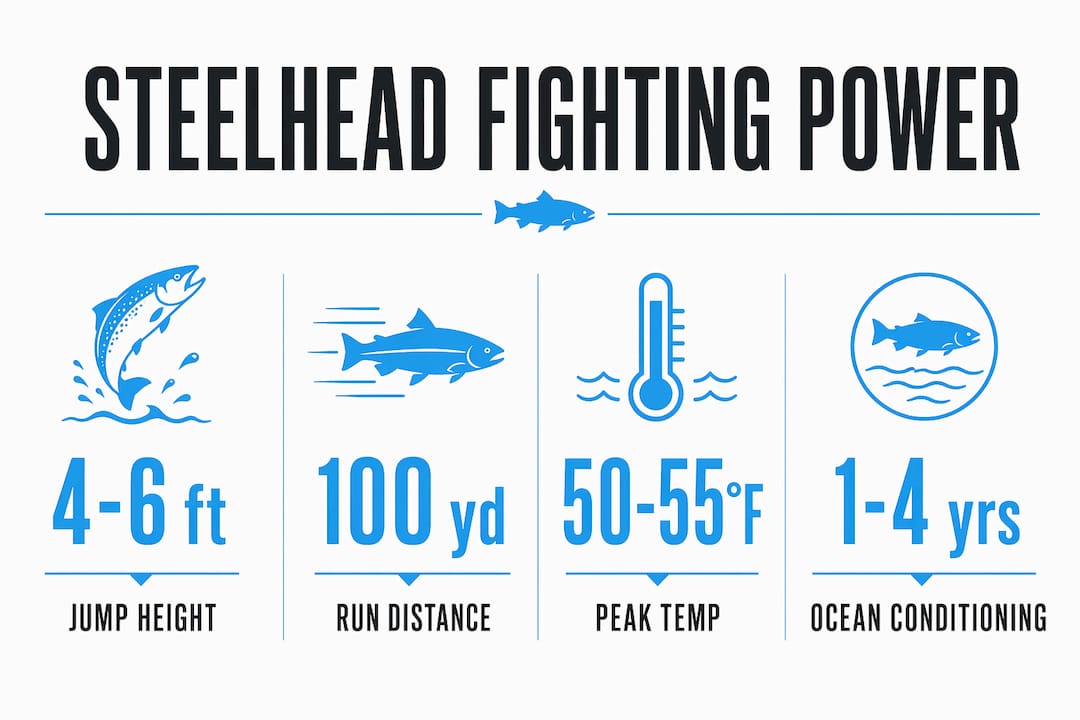
Steelhead are defined as the sea-run form of rainbow trout (Oncorhynchus mykiss), and they fight harder than nearly any other freshwater fish you will ever hook. The reason is not luck or myth. Steelhead combine ocean-conditioned muscle with a specialized metabolism and instinctive reactions that make them extraordinary opponents on the end of a line. They can jump 4–6 feet and strip over 100 yards of backing in a single run. Understanding why steelhead fight hard gives you a real edge on the water, and it makes every landed fish that much more satisfying.
Why do steelhead fight hard? The physiology behind their power
Steelhead fight hard because of a physiological concept called scope for activity. This is the difference between a fish’s resting metabolic rate and its maximum aerobic output. The wider that gap, the more explosive and sustained the fight. Steelhead have one of the widest scopes for activity among Pacific salmonids, and that gap peaks sharply at a water temperature of 50–55°F. At that temperature range, their muscles operate at peak efficiency, their cardiovascular system delivers oxygen fast, and their endurance is at its highest.
Ocean conditioning is the other half of the equation. Steelhead spend one to four years in the Pacific Ocean before returning to freshwater rivers. During that time, they feed aggressively on baitfish, squid, and krill, building dense, powerful muscle tissue. That muscle does not disappear when they enter the river. It stays loaded and ready. A steelhead fresh from the ocean carries the physical conditioning of a saltwater predator into a freshwater fight, which is why they feel nothing like a resident rainbow trout of the same size.
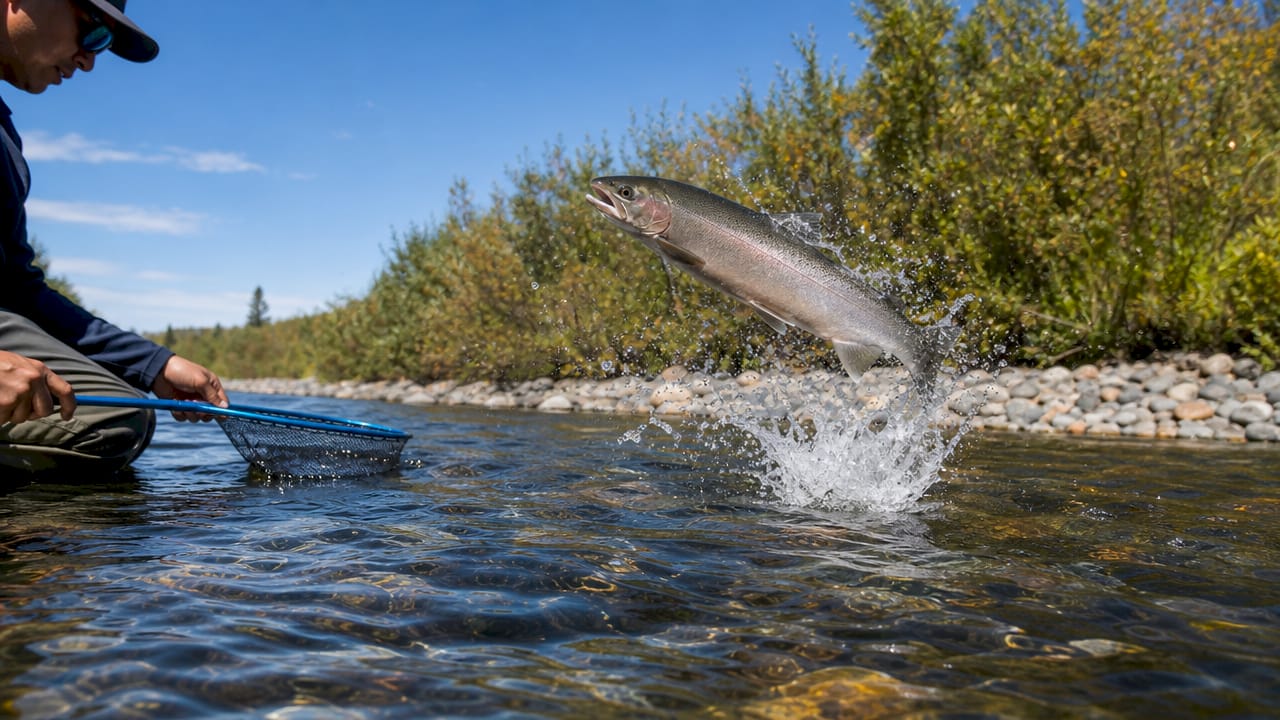
The numbers back this up. Steelhead jump 4–6 feet clear of the water and can run over 100 yards of backing in seconds. That combination of vertical and horizontal power is rare in any freshwater species. It is the direct result of ocean-built muscle meeting a river current that the fish knows how to use.
How water temperature shapes fighting ability
| Water Temperature | Metabolic Scope | Fight Quality |
|---|---|---|
| Below 36°F | Very low | Lethargic, minimal resistance |
| 36–49°F | Moderate | Sluggish, shorter runs |
| 50–55°F | Peak | Explosive jumps, long runs, full power |
| 56–67°F | Declining | Active but tiring faster |
| 68°F and above | Collapsed | Dangerous for fish; poor fight, high mortality |
Pro Tip: Carry a stream thermometer every time you fish for steelhead. When the water hits 50–55°F, you are in the prime window. When it climbs above 68°F, pack up. The fish cannot handle the combined stress of thermal load and a fight.
How does steelhead behavior drive their fight response?
Steelhead rarely feed during their freshwater migration. Their digestive systems begin shutting down as they transition from saltwater to river. So when a steelhead crushes your fly or lure, it is not hungry. It is reacting. That distinction matters because it changes how you think about presentation and what triggers a strike.
The grab is almost always instinctive. A fly that swings through a run and mimics an intruder or fleeing prey triggers a hardwired territorial or predatory response. The fish does not decide to eat. It reacts before it thinks. That reaction is fast, violent, and committed, which is exactly why the initial strike from a steelhead feels like a freight train compared to most other species.
The most vicious strikes happen at specific moments in the presentation. Strikes occur most often when the fly slows or changes direction, mimicking a baitfish losing momentum or a shrimp darting sideways. That micro-moment of vulnerability is what fires the instinct. Knowing this helps you control your swing speed and mend your line to create those triggering transitions deliberately.
Key behavioral triggers that cause steelhead to strike include:
- Fly speed change: A sudden slowdown at the end of a swing fires the grab reflex.
- Direction shift: Any lateral change in fly movement mimics fleeing prey.
- Intruder profile: Large, flowing patterns that suggest a competing fish or predator trigger territorial aggression.
- Water pressure change: Seams between fast and slow water concentrate fish and amplify their reactivity.
- Angler movement: Wading disturbance can shut down a run or, in some cases, briefly spike aggression in nearby fish.
Pro Tip: When your fly completes its swing and hangs directly downstream, let it sit for a full three seconds before lifting. That pause, followed by a slow hand-strip retrieve, mimics a wounded baitfish and triggers some of the most violent strikes of the day. Check out super bait tactics for more on triggering instinctive grabs.
Summer-run vs. winter-run fighting behavior
Summer-run steelhead are more aggressive and travel further than winter-run fish. They enter rivers months before spawning, carrying full ocean conditioning and high energy reserves. Winter-run fish arrive closer to spawn, often in colder water, with metabolic rates suppressed by temperature. Both races fight hard, but summer-run fish tend to be more acrobatic and willing to chase a fly across a wide arc. Winter-run fish often fight with raw, bulldogging power rather than aerial displays.
What makes the steelhead fight uniquely challenging to land?
Landing steelhead requires calm control and careful pressure management. The fish will test every weak point in your setup. Knots, rod tip angle, drag settings, and your own composure all matter. Most steelhead are lost not because the fish is too strong, but because the angler panics and applies the wrong pressure at the wrong moment.
The fight typically follows a pattern. The initial run is explosive and long. Then the fish jumps, often multiple times. Then it settles into shorter, probing runs as it tests for slack. Each phase requires a different response from you. During the run, let the drag do its job and keep the rod tip up at roughly a 45-degree angle. During jumps, drop the rod tip slightly to reduce tension and prevent a snapped tippet. During the probing phase, apply steady side pressure to steer the fish toward slower water.
Here is a step-by-step approach to managing the fight:
- Set the hook with a firm strip or rod sweep. A soft set loses fish. A violent hook-set breaks tippet. Find the middle.
- Keep the rod loaded at 45 degrees during runs. This absorbs shock and keeps constant pressure without snapping the line.
- Drop the rod tip during aerial jumps. Reducing tension when the fish is airborne prevents the hook from tearing free.
- Apply side pressure to tire the fish. Pulling the rod to the side, rather than straight up, works the fish’s lateral muscles and tires it faster.
- Move downstream if the fish runs hard. Chasing the fish reduces the angle and keeps you in control of the fight.
- Land the fish in slower water. Steer the fish toward the bank or a calm eddy before attempting to net or hand-land it.
Gear choices matter too. A rod with a medium-fast action absorbs the shock of jumps better than a stiff fast-action blank. For line selection, check out this PNW steelhead line guide to match your setup to the fight. A reel with a smooth, consistent drag is non-negotiable. Jerky drag causes line breaks at the worst possible moments.
How does water temperature affect steelhead fight behavior and ethical angling?
Water temperature is the single biggest variable controlling steelhead fight intensity and post-release survival. Targeting steelhead above 68°F is unethical because the fish’s metabolic system cannot handle the combined load of thermal stress and a prolonged fight. Even if you land and release the fish quickly, mortality risk is high. The fish may swim away and die hours later.
Below 36°F, steelhead have almost no energy. Their metabolic scope collapses, and they fight with minimal resistance. A dead-drift presentation works best in these conditions because it requires the fish to expend almost no energy to intercept it. You will still hook fish, but the fight will feel nothing like a summer-run steelhead in 52°F water.
The 50–55°F window is where everything comes together. The fish is fully aerobic, its muscles are warm enough to fire fast, and its instincts are sharp. That is the fight anglers talk about for years. Ignoring water temperature leads to poor results and high release mortality. Sustainable fishing means checking the thermometer before you wet a line.
Pro Tip: If you are fishing in warm conditions and a steelhead takes longer than 60 seconds to recover in the current before swimming away strongly, the water is too warm. Move to a shaded, cooler stretch or call it a day.
| Temperature Range | Fight Behavior | Ethical Consideration |
|---|---|---|
| Below 36°F | Lethargic, minimal fight | Safe to fish; use dead-drift |
| 36–49°F | Moderate, shorter runs | Fish carefully; limit fight time |
| 50–55°F | Peak power, full acrobatics | Ideal conditions; fish confidently |
| 56–67°F | Active but tiring faster | Minimize fight time; quick release |
| 68°F and above | Metabolic failure risk | Do not target; high mortality risk |
Key Takeaways
Steelhead fight hard because ocean conditioning, peak metabolic scope at 50–55°F, and instinct-driven strike behavior combine to make them the most powerful freshwater fish pound for pound in the Pacific Northwest.
| Point | Details |
|---|---|
| Ocean conditioning drives power | Years in the Pacific build dense muscle that stays loaded through the entire river fight. |
| Metabolic scope peaks at 50–55°F | Fight intensity is directly tied to water temperature; this range delivers the most explosive encounters. |
| Strikes are instinctive, not hunger-driven | Steelhead react to fly movement as an intruder or fleeing prey, not as a feeding opportunity. |
| Calm pressure management lands fish | Dropping the rod during jumps and applying side pressure during runs prevents most hook losses. |
| Fishing above 68°F is unethical | Thermal stress combined with a fight causes metabolic failure and high post-release mortality. |
What I have learned from years of chasing steelhead
Every angler who has hooked a steelhead remembers the first one. Not because it was the biggest fish they ever caught, but because nothing prepared them for what happened next. The fish went airborne before they even processed the strike. That moment tells you everything about what makes steelhead different.
The thing most anglers miss is that the fight starts before the hook-up. Reading water temperature, understanding which run holds active fish, and presenting a fly with the right speed and angle, these decisions determine whether you get a half-hearted nip or a full-on screaming run. The fish’s physiology is fixed. Your approach is not.
I have watched anglers with expensive setups lose fish back to back because they cranked down their drag and held on. Steelhead do not respond well to brute force. They respond to pressure that moves with them, not against them. The anglers who land the most fish are the ones who stay loose, read the fight in real time, and adjust. That patience is a skill, and it takes time to build.
The conservation piece matters to me personally. Fishing a river when the water is pushing 70°F because you drove four hours to get there is the wrong call. The fish that swims away looking fine can be dead by morning. Checking the thermometer and walking away when conditions are wrong is not weakness. It is what keeps these fisheries alive for the next generation of anglers. Highclasstackleco was built by people who care about that, and it shows in how the brand talks about steelhead fishing.
— Nick
Gear built for the fish that fights back
Steelhead do not give you second chances. Your tackle needs to be ready before the fish is on.

Highclasstackleco builds terminal tackle and components specifically for the demands of Pacific Northwest steelhead fishing. Every hook, swivel, and connector in the lineup is tested for the kind of explosive runs and aerial acrobatics that snap inferior gear. Whether you are swinging flies on a coastal river or drifting bait through a canyon run, the right components make the difference between a story and a lost fish. Browse the full Highclasstackleco tackle lineup and build a setup that can handle whatever the river throws at you.
FAQ
Why do steelhead fight harder than regular trout?
Steelhead spend years in the ocean building dense muscle mass before returning to freshwater. That ocean conditioning, combined with a wider metabolic scope for activity, makes them far more powerful than resident rainbow trout of the same size.
What water temperature produces the hardest steelhead fight?
Steelhead fight at peak intensity between 50–55°F. At this temperature, their aerobic capacity and muscle efficiency are both at their highest, producing the most explosive runs and jumps.
Do steelhead strike because they are hungry?
Steelhead rarely feed during freshwater migration. Strikes are triggered by instinctive reactions to fly or lure movement that mimics an intruder or fleeing prey, not by hunger.
Is it safe to fish for steelhead in warm water?
Targeting steelhead above 68°F is considered unethical because the combined stress of thermal load and a fight causes metabolic failure. Post-release mortality is high even when the fish appears to recover.
What is the biggest mistake anglers make when fighting steelhead?
Applying too much rod pressure during aerial jumps is the most common cause of hook loss. Dropping the rod tip slightly when the fish goes airborne reduces tension and keeps the hook seated.
Recommended
- Steelhead Spoon Fishing Rivers: PNW Angler’s Guide – High Class Tackle Co.®
- Types of fishing line for steelhead: a PNW guide – High Class Tackle Co.®
- Super Bait Secrets: Top Picks for Salmon and Steelhead – High Class Tackle Co.®
- Hanford Reach Blades: PNW Salmon and Steelhead Guide – High Class Tackle Co.®
0 comments