

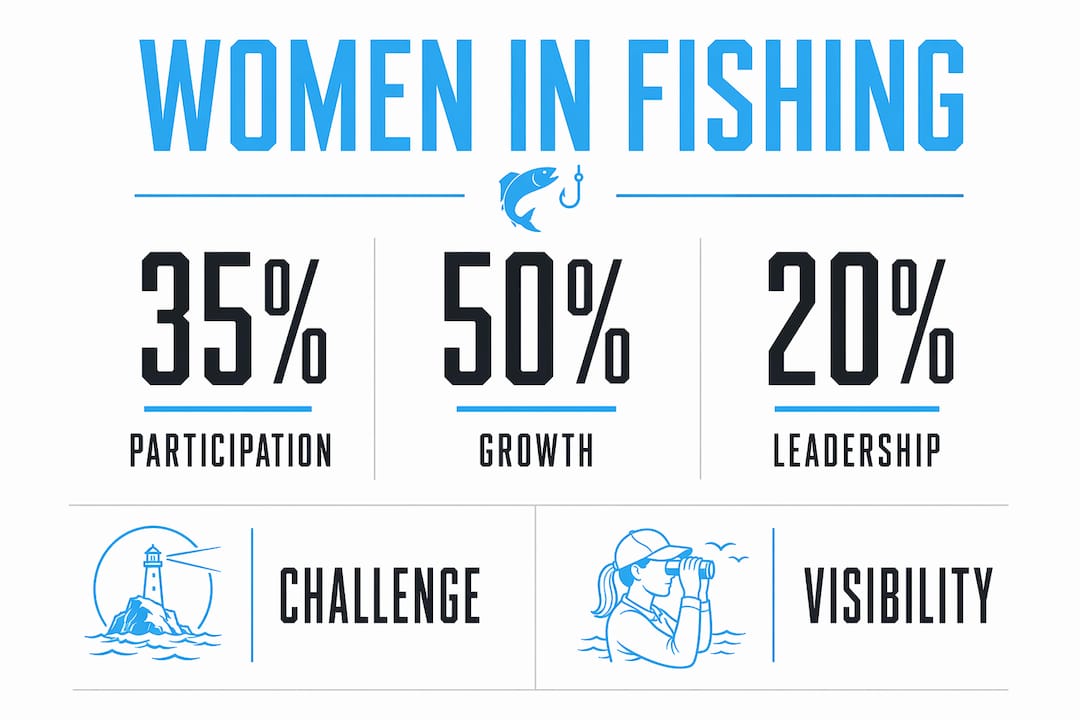
More women are joining fishing culture today than at any point in recent history, and the reasons go well beyond a love of the catch. Mental health benefits, social connection, personal confidence, and a hunger for community are all pulling women toward the water. Fishing offers better mood and stress management for many women anglers, with 25% citing mental health benefits as a core motivation (Recreational Boating & Fishing Foundation 2023 research). That single data point tells a bigger story: fishing culture is evolving, and women are driving a major part of that shift.
The core motivations behind women’s growing participation in fishing include:
- Mental well-being: Fishing offers stress relief, mindfulness, and a break from daily pressure.
- Social connection: Group trips, women-only clubs, and online communities build real friendships.
- Confidence building: Learning a new skill in a supportive environment creates lasting self-assurance.
- Family and intergenerational bonding: Younger women especially connect fishing to family traditions and shared experiences.
- Nature and freedom: The draw of open water, wildlife, and fresh air appeals across age groups.
- Representation: Seeing other women fish on social media normalizes participation and lowers the intimidation factor.
Despite this surge, a significant number of women anglers feel underrepresented in fishing marketing and advertising. The industry has been slow to catch up with who is actually standing on the riverbank. That gap between reality and representation is one of the sharpest tensions in fishing culture right now, and it is exactly what brands, researchers, and community leaders are working to close.
What roles do women actually play in fishing and fisheries?
Women’s roles in fishing span far more ground than most people picture. From casting a line on a weekend trip to running a fisheries cooperative, women show up across every level of the industry.
Recreational and competitive anglers are the most visible face of women in fishing culture. Women fish for sport, for food, for relaxation, and increasingly for competition. Research on female participation rates in Australia’s Northern Territory found that younger women are especially engaged in family-inclusive fishing activities, treating the sport as a social and cultural practice rather than a purely individual pursuit.
Women also hold critical positions in the commercial and industrial side of fisheries. Land-based roles in processing, marketing, sorting, and logistics have long depended on women’s labor, even when that contribution went unrecognized. As researcher Soejima noted in her work on Japanese fisheries communities:
Beyond labor, women serve as community leaders, sustainability advocates, and cultural preservers. Organizations focused on women in fishing, from informal local clubs to national networks, give women the structure to build skills and push for greater visibility. Here is a quick breakdown of where women show up across fishing sectors:
- Recreational: Weekend anglers, fly fishing clubs, tournament competitors, social fishing groups.
- Commercial: Processing, sorting, logistics, onshore operations, and increasingly vessel crew.
- Community and advocacy: Cooperative leadership, conservation work, youth education, and mentorship.
- Media and marketing: Content creation, social media influence, brand ambassadorship, and journalism.
The NOAA Fisheries feature on women’s global participation underscores that women’s contributions to fisheries are both broad and deeply embedded in the industry’s survival. The challenge is getting that contribution recognized at the institutional level.
What challenges do women face in the fishing industry?
The obstacles are real, and they show up at every level. Women entering fishing culture, whether recreationally or professionally, run into a mix of social, structural, and physical barriers that men rarely face.
The most documented challenges include:
- Underrepresentation in marketing: Many women anglers report feeling invisible in fishing advertising.
- Gender bias and microaggressions: Being asked if they are “here with their boyfriend” at a fishing event is a common experience, not an outlier.
- Physical demands in professional settings: Women entering deep-sea fishing face a double burden of physical intensity and social pressure as pioneers in male-dominated environments.
- Institutional exclusion: In Japan’s Fisheries Cooperative Associations, women were historically barred from membership, and even when admitted, their decision-making power remained limited.
- Financial constraints: Women in some fisheries contexts face barriers to accessing loans or business capital independently.
- Gear and apparel gaps: Equipment and clothing are still largely designed with male bodies and preferences as the default.
**Key stat: 75% of women anglers report feeling underrepresented in fishing marketing, showing a disconnect with actual participants (Recreational Boating & Fishing Foundation 2023 research).
Women in fisheries cooperatives often face minimized influence despite formal participation rights, a pattern researcher Soejima links to institutional inertia rather than genuine equality efforts. The shift toward including women in cooperatives has often been driven by shrinking memberships and financial pressure, not a real change in values. That distinction matters because it shapes the quality of inclusion women actually experience once they are inside the door.
Resilience is not optional in this environment. Women who stay and thrive in fishing culture tend to build skills deliberately, seek out supportive communities, and develop the confidence to push back against microaggressions. Women-only fishing organizations have proven especially effective at creating the safe, encouraging spaces where that skill-building can happen without judgment.
How do gender stereotypes shape women’s experience in fishing?
Fishing has been framed as a masculine pursuit for generations. The image is familiar: a lone man, rod in hand, measuring his worth by the size of the catch. That framing does real damage to women’s confidence and sense of belonging in fishing spaces.
Research on recreational fishing and gender confirms that persistent stereotyping characterizes fishing as masculine, emphasizing competition and control. The effects on women are predictable: they feel like outsiders, doubt their technical skills, and sometimes avoid fishing altogether rather than face condescension from male anglers.
Common stereotypes and their impacts include:
- “Real fishers compete”: Frames fishing as a contest, which alienates women who fish for relaxation or connection.
- “Women don’t know gear”: Creates an assumption of incompetence that women must constantly disprove.
- “Fishing is a man’s hobby”: Discourages women from starting, especially without a male family member to introduce them.
- “Women fish casually, not seriously”: Undermines competitive female anglers and dismisses their expertise.
Women push back in two distinct ways. Some adopt traditionally masculine fishing behaviors to gain credibility, a kind of performance that earns respect but also reinforces the existing hierarchy. Others take a different path entirely, building a non-competitive, relational style of fishing that emphasizes sunsets over trophy fish, conversation over scorecards. That second approach is not a lesser version of fishing. It is a genuine challenge to the idea that competition and dominance are what fishing is about.
Pro Tip: If you are new to fishing or introducing someone to the sport, seek out women-only clubs or beginner-friendly mixed groups where asking “how do I tie this fly?” is welcomed, not mocked. The right environment makes all the difference in whether someone sticks with the sport.
Dr. Jenny House, whose research at Charles Darwin University focused on women’s fishing experiences in Australia’s Northern Territory, put it directly: “Recreational fishing has often been framed through a masculine lens, all about competition, strength, and dominance over nature. But when women’s stories are missing or stereotyped, we lose sight of how diverse, social, and empowering this activity can be.”
How is women’s rising involvement changing fishing culture and the industry?
Women’s growing presence in fishing is not just a demographic footnote. It is reshaping the economics, culture, and future direction of the entire industry.
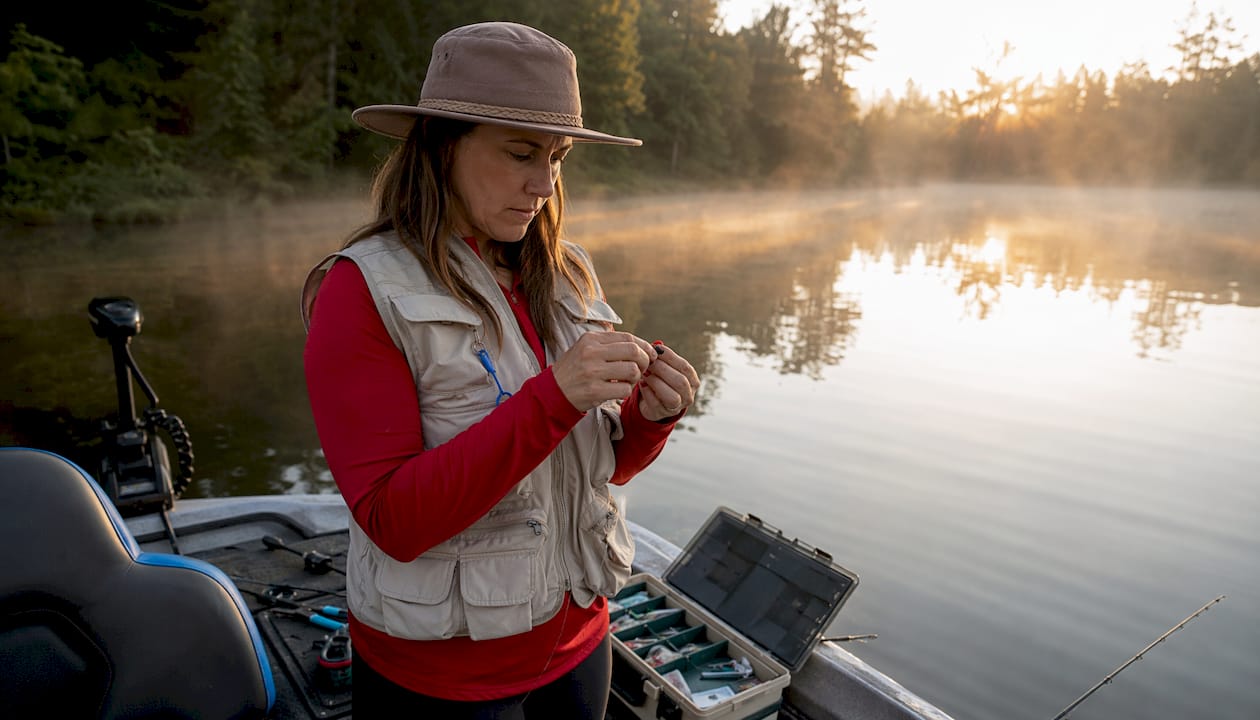
On the economic side, the rise in women anglers has created new demand for equipment, guided trips, apparel, and events designed with women in mind. Brands that recognize this shift are building product lines, sponsorships, and content strategies around female anglers. Those that ignore it are leaving a growing market segment on the table.
Culturally, the shift is even more significant. Women bring different values to fishing culture: less fixation on trophy catches, more emphasis on shared experience, environmental connection, and community. Research on women’s alternative fishing styles shows that these values actively challenge the dominance of hegemonic masculinity in recreational fishing spaces. That is not a soft cultural observation. It changes what fishing events look like, what fishing media covers, and what new anglers expect when they show up for the first time.
“The NT shows that when fishing is seen as everybody’s business, participation flourishes. If we want the sector to be sustainable, we need to recognize and value the full diversity of people who make up the fishing community.” — Dr. Jenny House, Charles Darwin University
Social media has accelerated everything. Digital visibility of female anglers helps newcomers feel less intimidated and normalizes women’s presence on the water. Expert Kijewski, cited in industry coverage, identifies social media as a major driver of inclusivity, lowering the intimidation barrier and expanding community participation. A woman scrolling through fishing content and seeing other women landing salmon or rigging terminal tackle gets a clear message: this is for you too.
Key impacts and opportunities from women’s rising participation:
- New product categories: Women-specific apparel, lighter gear, and ergonomic tackle designs.
- Event growth: Women-only tournaments, clinics, and guided trips are expanding across the country.
- Media representation: Female-led fishing content is growing on YouTube, Instagram, and TikTok.
- Conservation alignment: Women’s relational approach to nature often translates into stronger support for sustainable fishing practices.
- Industry longevity: Broader participation means a larger, more diverse angler base, which strengthens the sport’s long-term health.
The Recreational Boating & Fishing Foundation has tracked these trends closely, and their research consistently points to women as one of the most important growth demographics in recreational fishing. Brands and organizations that build genuine inclusion into their culture, not just their marketing, are the ones positioned to benefit most.
How Highclasstackleco shows what modern fishing culture can look like
Highclasstackleco is a Pacific Northwest fishing brand built by anglers, for anglers. Based on the West Coast and rooted in salmon, steelhead, kokanee, and saltwater fishing, the brand has built its identity around something the traditional tackle industry rarely prioritizes: community. Not just community as a buzzword, but real, grassroots connection on the water.
The brand’s approach to fishing culture reflects exactly the kind of shift researchers like Dr. House are calling for. Highclasstackleco pushes fishing culture forward through tournaments, community events, viral outdoor content, and collaborations that bring in new voices, including women who are done waiting for the industry to notice them. Their fishing collabs and community-driven storytelling actively work to expand who feels welcome at the water’s edge.
The brand’s media presence, apparel line, and tackle products all reflect a modern fishing identity that is bold, authentic, and inclusive. For women entering fishing culture, seeing a brand that treats them as core members of the community rather than an afterthought changes the experience entirely. Highclasstackleco’s fishing lifestyle apparel is one concrete example: gear designed for people who fish hard and want to look the part, regardless of gender.
The brand also understands that representation in fishing media matters. Their content strategy, built around authentic storytelling and real fishing experiences, addresses the gap that 75% of women anglers identified when they said they feel invisible in fishing advertising. Highclasstackleco’s answer is simple: show real people fishing real water.
Women in fishing: a history longer than most people realize
Women have fished for as long as humans have fished. The idea that fishing is inherently male is a modern cultural construction, not a historical fact. Indigenous communities across North America, the Pacific Islands, and coastal Asia have long traditions of women fishing, gathering shellfish, and managing aquatic resources as central economic and cultural contributors.
In Japan, the ama divers, women who free-dive for shellfish and seaweed, represent one of the oldest and most skilled fishing traditions in the world. Their practice dates back over two thousand years, and it has always been women’s work. That history directly contradicts the “fishing is masculine” narrative that dominates contemporary Western culture.
In the United States, women’s involvement in fishing communities has deep roots in both Indigenous traditions and immigrant fishing cultures along the coasts. Women in New England fishing towns, Gulf Coast shrimping communities, and Pacific Northwest salmon fisheries have always worked alongside men, even when their labor was classified as “support” rather than fishing. The NOAA feature on women’s global fisheries participation documents this history and makes clear that women’s exclusion from formal fishing roles was a social and institutional choice, not a natural order.
The shift happening now is not women entering fishing for the first time. It is women reclaiming visibility in a space they have always occupied.
Prominent women who are shaping fishing communities today
The women making waves in fishing culture right now are not waiting for permission. They are building platforms, winning tournaments, leading research, and creating the communities they wanted to find.
Dr. Jenny House stands out as one of the most important voices in contemporary fishing research. Her work at Charles Darwin University produced the first study of its kind examining women’s fishing experiences in Australia’s Northern Territory, a region where women and men participate in recreational fishing at equal rates. Her findings, published in Maritime Studies, challenge the entire industry to rethink who fishing is for and what it can offer.
Women-led fishing organizations in Sweden and the United Kingdom have also produced documented results. Field research and case studies from women-only fishing spaces show that these groups build real skills and real confidence, creating a pipeline of capable anglers who then integrate into mixed fishing communities with far more authority and ease.
In Japan, women like those leading the Nori Group have turned small-scale fisheries operations into internationally recognized businesses. The Nori Group’s seaweed products now sell in Paris, a result of women in a rural fishing community refusing to accept the limits placed on them by a male-dominated cooperative system. Researcher Soejima, who leads the Umi Hito Kurashi network, has spent years documenting and amplifying these stories, making the invisible visible.
In the United States, female anglers are building audiences on social media, competing in professional bass and fly fishing circuits, and launching their own tackle and apparel brands. The fishing tournament scene is slowly opening up, with more women-only divisions and mixed-team formats appearing at events across the country.
How policies and regulations are shifting to support women in fishing
Policy change in fishing has been slow, but it is moving. The most significant shifts are happening at the intersection of institutional access, workplace protections, and targeted funding for women in fisheries.
In Japan, the 2022 Fisheries Basic Plan explicitly called for greater inclusion of women in the industry. The plan lacks enforcement mechanisms, which limits its real-world impact, but it signals a shift in official priorities. Researcher Soejima is direct about the gap between policy language and lived experience: women are often welcomed as workers to fill labor shortages, not as equal decision-makers. Real change, she argues, requires a deeper shift in values, not just updated policy documents.
In the United States, federal agencies including NOAA have increased attention to gender equity in fisheries management and workforce development. The Gender and Fishing chapter from Virginia Tech’s Fish and Conservation curriculum documents how gender dynamics shape access to fishing resources, licenses, and institutional roles, and how policy frameworks can either reinforce or disrupt those dynamics.
Licensing and access reforms have made recreational fishing more accessible across the board, with many states offering discounted or free licenses for youth and beginners, programs that disproportionately benefit new entrants including women. Safety training programs specifically designed for women, like the first women-only sea survival course documented in the UK, represent another layer of institutional support that lowers barriers to professional participation.
The clearest policy lesson from the research is this: inclusion mandates without enforcement produce symbolic progress at best. The communities and organizations that have actually moved the needle on women’s participation are the ones that built structural support, safe spaces, and genuine mentorship into their operations, not just their mission statements.
Gear up and get on the water with Highclasstackleco
Women are reshaping fishing culture from the inside out, and Highclasstackleco is here for every part of that movement. Whether you are picking up a rod for the first time or you have been chasing salmon on the Pacific Coast for years, we build gear and community for anglers who fish with passion and purpose.
Explore our full lineup of premium tackle and fishing gear built for real conditions, real water, and real anglers. From terminal tackle to apparel that holds up on the water, everything we make is designed to perform. Check out our terminal tackle and components to build out your setup, or grab a digital gift card for the angler in your life who is ready to level up.
The water is calling. Come fish with us.
Key Takeaways
Women are joining fishing culture in growing numbers because the sport delivers real mental health benefits, social connection, and community, while the industry is only beginning to catch up with their needs and representation.
| Point | Details |
|---|---|
| Mental health drives participation | Fishing offers better mood and stress management for many women anglers, with 25% citing mental health benefits as a core motivation (Recreational Boating & Fishing Foundation 2023 research). |
| Marketing gap is documented | 75% of women anglers feel underrepresented in fishing marketing and advertising, showing a disconnect with actual participants (Recreational Boating & Fishing Foundation 2023 research). |
| Stereotypes limit growth | Framing fishing as masculine and competitive actively discourages women and shrinks the sport’s potential audience. |
| Women-only spaces build real skills | Organizations designed for women create safe learning environments that build confidence and proficiency. |
| Inclusion benefits the whole industry | Broader participation from women expands the angler base, drives new product demand, and strengthens fishing culture long-term. |
Recommended
- What Is a Fishing Challenge Online? Your 2026 Guide – High Class Tackle Co.®
- What Is a Fishing Collab? Your Complete Angler’s Guide – High Class Tackle Co.®
- What Is a Fishing Lifestyle Subscription for Anglers – High Class Tackle Co.®
- What Is a Fishing Tournament? Your Complete Guide – High Class Tackle Co.®
0 comments